


Once more, the Father’s Day tie picture — call me corny, but I love it.
Father’s Day wine 2022: Bring on the well-made and value-oriented wine for Dad
Yes, despite economic uncertainty and all the rest, we found wine for Dad for Father’s Day that fits what we do here — price and value, and not silliness. And don’t forget the blog’s wine gift-giving guidelines — don’t buy someone wine that you think they should like; buy them what they will like.
Father’s Day wine 2022 suggestions:
• Carol Shelton Wild Thing Zinfandel 2018 ($18, purchased, 14.5%): Spot-on California old vine zinfandel (60 years at least) that is somehow jammy (berries and berries and more berries), but not heavy or hot. Having said that it’s a big wine and a mouthful, and needs lots of red meat. Highly recommended.
• Domaine Bousquet Brut NV ($13, sample, 12%): Argentine bubbly with surprising structure, tight-ish bubbles, not too sweet, and apple and lemon fruit.Imported by Origins Organic
• Jean-Pierre Boisson Rose Domaine du Pere Caboche ($11, purchased, 12.5%): Full, rich and surprisingly complex $10 French rose, with almost cranberry fruit and what one tasting note calls grenadine. Highly recommended. Imported by Monsieur Touton Selection
• Chateau La Maroutine Blanc 2020 ($13, purchased, 13%): French white Bordeaux blends sauvignon blanc and semillion; the latter, though only 20 percent, is noticeable, and gives the wine a rounder, less citrsusy feel. Lots of stone and minerality. Imported by Frederick Wildman and Sons
This is what mushroom risotto looks like with arborio rice. Churro, the blog’s associate editor, forgot to take the picture for the post.
The Wine Curmudgeon pairs wine with some of his favorite recipes in this occasional feature. This edition: three wines with a mushroom risotto, but made with pearl couscous
The Wine Curmudgeon loves couscous. It’s cheap, it’s easy to make, it’s versatile, and it tastes good. I like it so much, in fact, that a friend who comes to dinner once asked: “What’s wrong? We’re not having couscous?”
I don’t do as much with the larger, pearl or Israeli-style couscous. For one thing, it’s not always easy to find in Dallas. For another, it’s not as versatile. But I did notice that, after it’s cooked, the larger couscous resembles short-grain and arborio rice. So why not try something risotto-like? (And not actual risotto, since that can only be made with arborio rice).
Hence, this recipe. I used button mushrooms, but adding dried mushrooms (and their soaking liquid) would work, too. It takes about one-quarter of the time of traditional risotto, and there isn’t any stock spooning or continual stirring. It’s not as creamy as the real thing, but it’s creamy in its own way.
• Frescobaldi Rèmole Toscana 2019 ($10, purchased, 12.5%): Classic cheap Italian Chianti-style wine — lots of sour cherry fruit, tannins pushed to the back, and an almost interesting finish. Needs food like the couscous. Imported by Shaw-Ross International
• CVNE Cune Crianza 2017 ($12, purchased, 14.5%): This Spanish tempranillo isn’t as well rounded as some others, but still professional, varietally correct, and a fine value. It’s a little oaky and the cherry fruit is more ripe, but neither is a problem. Imported by Arano LLC
• Banfi Col di Sasso 2019 ($10, purchased, 13.5%): Softer and fruitier (red berries and cherries), with more relaxed tannins than Banfi’s Centine, but still a fine value and still very Italian. Imported by Banfi Vintners
Blog associate editor Churro contributed to this post.
Reviews of wines that don’t need their own post, but are worth noting for one reason or another. Look for it on the fourth Friday of each month. This month, six rose reviews as part of the blog’s 15th annual rose fest.
• Inazio Urruzola Rosado 2020 ($20, sample, 10.5%): A tremendously interesting pink from the Basque region in Spain made with almost unknown grapes. It’s sort of a cross between pink vinho verde and a more traditional rose. Maybe a bit sweet, maybe not. Maybe a bit fizzy, maybe a bit not. Berry and orange fruit, very bright. Imported by Winesellers Ltd
• Chateau Minuty M 2021 ($25, sample, 13%): It’s easy to write nice things about the $20 Inazio because it’s weird; it ‘s almost painful to admit that the $25 M is worth every penny. It’s a Provencal rose that hits all the notes — garrigue, barely ripe strawberry fruit, minerality, pale color, and all the rest. Highly recommended. Imported by Vintus
• Funckenhausen Dry Rose 2021 ($13/1-liter, sample, 13.5%): Solid, cherry-ish Argentine rose that offers fine value in larger bottle. Imported by Global Vineyard Importers
• Liquid Geography Rose 2021 ($12, sample, 12%): That mencia, a little known Spanish grape, can produce wine of this quality speaks to how wonderful wine is. Almost savory and orange, with tart strawberry fruit, and very bright and refreshing. Highly recommended . Imported by Ole & Obrigado
• Le Paradou Rose 2021 ($11, purchased, 12.5%): Simple, light and not too fruity (berries) French pink. It’s not as well done as the La Vielle, but perfectly fine for the back porch in the heat of summer. Imported by European Cellars
• Santi Infinito Rose 2021 ($11, purchased, 12%): Another top-notch Italian rose, with a little dark fruit hidden between the strawberries and red cherries. Long and almost savory. Highly recommended; Hall of Fame quality wine. Imported by Frederick Wildman and Sons
Bring on the pink — it’s the WC’s rose season preview..
The blog’s 15th annual Memorial Day and rose celebration — bring on the pink, because we need value and quality more than ever
Let’s gloss over the bad rose news as the blog celebrates its 15th annual Memorial Day rose extravaganza. Forget about the trumped up $18 pinks, both domestic and foreign, that try to get by on a label aimed at younger wine drinkers, because they’re supposed to be too stupid to know what rose is. And don’t worry about the continuing and all too depressing trend of calling a rose dry when it is noticeably sweet. These wines are mostly domestic, but even some imports think this is smart business.
Instead, let’s focus on yet another vintage of delicious and affordable roses — maybe not quite as affordable as in past years (tariff and pandemic), but still not the $20 that the wine business considers the cutoff for “affordable.” (Honestly. They told us that at a seminar last week — $60 is expensive, but $20 is affordable.)
In fact, I tasted so many worthy roses this year that picking which to include today and tomorrow was more difficult than ever. Who would have expected that? Missing are blog favorites Scaia and Mont Gravet; have not seen the 2021 versions yet. And don’t forget the blog’s rose primer and the rose category (from the drop down menu on the lower right), which lists 15 years of rose reviews.
Today, six standout roses – each highly recommended. Tomorrow, six more roses worth writing about:
• Bielet Pere et Fils Sabine Rose 2021 ($13, sample, 12.5%): Prices are all over the place once again for this legendary French pink. Can you believe $18 at one national retailer? This vintage has a touch more fresh berry fruit (raspberry?), but otherwise all one can expect from a rose at this price — or costing twice as much. Imported by Bieler et Fils
• Pedroncelli Dry Rose of Zinfandel 2021 ($15, sample, 13.9%): Rich, full, and balanced, with wonderful dark berry fruit from the zinfandel. This is not a razor-sharp, Provence style rose; rather, it’s much more California in style, and much welcome for that reason.
• Hecht & Bannier Rose 2020 ($13, purchased, 13%): I’m not the biggest fan of the Hecht, but the 2020 is a step up — more Provencal in style. That means almost stony, with wild strawberry fruit, and lots of garrigue. Imported by Frederick Wildman and Sons
• Zestos Rosado 2021 ($12, purchased, 12,5%): Maybe the best vintage ever of this always wonderful Spanish pink, taking garnacha where I didn’t think it could go. Almost an orange aroma, with subtle, barely ripe berry fruit, and stony finish that seems to go on forever. Imported by Ole & Obrigado
• Moulin de Gassac Guilhem Rose 2021 ($10, purchased, 12.5%): This French pink is a tremendous value — strawberry and cherry fruit, full in the mouth, and quite refreshing. Imported by Polaner Selections
• Charles & Charles Rose 2021 ($12, sample, 12.5%): Fruitier this year, with an almost citrus zest aroma, followed with not quite tart cherry fruit. If the Sabine (made by one of the Charles’ here) is relatively consistent vintage to vintage, this Washington state pink changes every year. Which is a good thing.
“Yes, honey. We’ll buy some of the WC’s Mother’s Day wine suggestions.”
Four suggestions — white, sparkling, rose, and red — for Mother’s Day 2022
The blog’s 16th annual Mother’s Day wine post speaks to how far we’ve come in making it OK to buy cheap wine, despite all the obstacles over the years. So, as always, the emphasis is on value and quality — and with the reminder that we should buy Mom something she will enjoy and not something we think she should drink.
These Mother’s Day wine suggestions should get you started:
• Calcu Rosé Reserva Especial 2021 ($13, sample, 12.5%): Much more going on with this Chilean pink (a blend of malbec and petit verdot) than it would seem. Crisp, tart, stony, and barely ripe berry fruit. Highly recommended. Imported by Global Vineyard Importers
• Duquesa de Valladolid Verdejo 2020 ($10, purchased, 13.5%): Solid, professional Spanish white from the Rueda region. That means very bright lemon fruit, as well as very fresh and very crisp. What more can one ask for in $10 wine? Imported by Monsieur Touton Selections
• Paula Kornell Brut NV ($18, purchased, 12%): Quality California bubbly for less than $20 is almost unheard of, so the Kornell has gotten a lot of attention. Look for some sweet stone fruit, maybe some lemon, and lots and lots of bubbles.
• Castillo del Barón Monastrell 2019 ($9, purchased, 14.2%): I’ve been buying this Spanish red for several years, and it has never disappointed. It’s not too big and not too rough, as some can be, and it has not too noticeable tannins and just enough black fruit — drink with a hearty weeknight dinner or Mother’s Day barbecue. Imported by Europvin
Terrific cheap Spanish pink wine for sharing with Mom
The theme on the blog these days seems to be defending cheap wine – here and here; and now, for the Spanish El Coto, which is one of the world’s great cheap roses.
Not just one person, but two – two! — scored the wine in the 70s on CellarTracker, the blog’s unofficial wine inventory app. That’s the kind of score usually given to something that you taste and spit out, and not a wine that has been terrific for years and years.
So nuts to scores and wine snobs.
The El Coto rose 2020 ($11, purchased, 13%) is as it always is: perhaps a little fruitier this vintage (strawberries and watermelon, maybe?), but bone dry and clean and crisp and long on the finish. Plus, as with most quality Spanish roses, it has an oh so pleasing aroma that could be oranges or even flowers.
Buy a case for Mom for the upcoming weekend, so she can drink it during the summer. And you can drink it with her and laugh about what the score freaks are missing.
Highly recommended, and certain to show up in the Hall of Fame next year. The 2021 is slowly making its way to the U.S., but there is still plenty of 2020 on store shelves.
This is quality Spanish white wine that can be found at many supermarkets
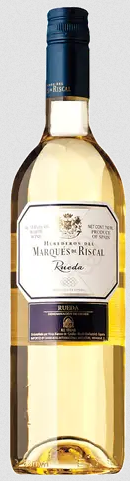
Welcome to part three of the WC’s supermarket wine search, where we find cheap wine that tastes like it came from a winery and not from the marketing department. This time – Spain’s Marques de Riscal Verdejo 2019 ($10, purchased, 13%).
One of the difficulties with finding this kind of wine among the plonk on the Supermarket Great Wall of Wine is that many grocers don’t bother to group wine by country any more. Hence, all of the sauvignon blancs are crammed together, as are the red blends, the chardonnay, and so on and so forth.
Which leaves wine made with less common grapes, like the Riscal, stuffed in a corner and difficult to find. But many supermarket verdejos are well worth kneeling to find on the bottom shelf. It’s a white grape that isn’t too tart and can be quite herbal; not bad for $10, yes?
And, in this case, the Riscal is exactly what a cheap wine should be — well made (clean and crisp); varietally correct (just enough lemon fruit); and simple but not stupid. It’s not a life-changing wine; rather it’s the kind of wine to drink on Tuesday night with a big salad when it’s 100 degrees out. That it’s Spanish and not Californian speaks to how screwed up the wine business is. California used to excel in just this kind of wine.