


Tag Archives: sangiovese

Wine and food pairings 16: Couscous mushroom sort of risotto

mushroom risotto
This is what mushroom risotto looks like with arborio rice. Churro, the blog’s associate editor, forgot to take the picture for the post.

The Wine Curmudgeon pairs wine with some of his favorite recipes in this occasional feature. This edition: three wines with a mushroom risotto, but made with pearl couscous

The Wine Curmudgeon loves couscous. It’s cheap, it’s easy to make, it’s versatile, and it tastes good. I like it so much, in fact, that a friend who comes to dinner once asked: “What’s wrong? We’re not having couscous?”

I don’t do as much with the larger, pearl or Israeli-style couscous. For one thing, it’s not always easy to find in Dallas. For another, it’s not as versatile. But I did notice that, after it’s cooked, the larger couscous resembles short-grain and arborio rice. So why not try something risotto-like? (And not actual risotto, since that can only be made with arborio rice).

Hence, this recipe. I used button mushrooms, but adding dried mushrooms (and their soaking liquid) would work, too. It takes about one-quarter of the time of traditional risotto, and there isn’t any stock spooning or continual stirring. It’s not as creamy as the real thing, but it’s creamy in its own way.

Click here to download or print a copy of the recipe. What wines to pair? Pasta-friendly reds, of course, since the mushrooms make this almost beefy:

Frescobaldi Rèmole Toscana 2019 ($10, purchased, 12.5%): Classic cheap Italian Chianti-style wine — lots of sour cherry fruit, tannins pushed to the back, and an almost interesting finish. Needs food like the couscous. Imported by Shaw-Ross International

CVNE Cune Crianza 2017 ($12, purchased, 14.5%): This Spanish tempranillo isn’t as well rounded as some others, but still professional, varietally correct, and a fine value. It’s a little oaky and the cherry fruit is more ripe, but neither is a problem. Imported by Arano LLC

Banfi Col di Sasso 2019 ($10, purchased, 13.5%): Softer and fruitier (red berries and cherries), with more relaxed tannins than Banfi’s Centine, but still a fine value and still very Italian. Imported by Banfi Vintners

Blog associate editor Churro contributed to this post.

More about wine and food pairings:
Wine and food pairings 15: Southwestern-style stew with guacamole and pico de gallo
Wine and food pairings 14: Mom’s chicken parmigiana
Wine and food pairings 13: Crawfish etouffee

Slider photo: “Rome Elite Event: wine, food and nice people” by Yelp.com is licensed under CC BY-NC-ND 2.0

Wine of the week: Di Majo Norante Sangiovese 2018

Di Majo Norante sangioveseThe Di Majo Norante sangiovese is not Chianti – but it’s not supposed to be, and it’s enjoyable in its own right

Chianti is Chianti is Chianti – until it isn’t. Which is what brings us to the Di Majo Norante Sangiovese.

It’s an Italian red made with the same grape as Chianti, one of Italy’s great wines, but it doesn’t come from the same region. Hence, some significant – and intriguing – differences.

Foremost, though, tthe Di Majo Norante Sangiovese ($10, purchased, 13.5%) is well worth drinking, and especially at this price. Just don’t expect expect it to taste like Chianti. It’s rounder and fuller, without the sharp edges common to many $10 Chiantis. But it still has sangiovese’s characteristic cherry fruit, as well as its Italian freshness.

In this, it sits somewhere between the Falesco Vitiano red, which blends sangiovese with cabernet sauvignon and merlot, and more traditional $10 Chiantis like the Straccali. This is neither good nor bad, no matter what some score-driven reviews might say. It’s a function of the grapes and the region (south central Italy) and what the winemaker wants to do; in this case, the winemaker has made an enjoyable $10 wine.

Drink this with the usual sort of red sauce dinners, and it would also hold up to spring barbecues as the weather warms up. Bratwurst, anyone?

Imported by Winebow

Wine to drink when the electricity goes out – yet again

electricityIt’s two red wines for the 2019 version of Dallas’ almost annual major power failure

I lost power for five hours on Tuesday, which was two days after the storm that came through Dallas on Sunday. That’s the storm that caused almost 300,000 outages, damaged thousands of homes, and led to one person’s death. I was lucky, even with the two-day thing; many in my neighborhood and the nearby Lake Highlands area were still without electricity almost a week later.

As such, this post started as a screed aimed at the Texas Legislature and the state’s utility regulators, whose boobery and incompetence have made our almost annual major electricity failures possible. But I threw that one away. You don’t need to read that, and especially on a wine blog.

So know that I drank a couple of bottles of red wine on Tuesday night, and I recommend them if your power goes out and there isn’t any ice to chill the whites. In addition, you can check out the other wine and power failure post — Wine to drink when the power goes out, 2014 edition — if you need more suggestions. Which, hopefully, you won’t.

And, if nothing else, all the power outages have helped me figure out a way to bake bread on top of the stove. I had a loaf rising when we lost power. Rather than dump the dough, I rigged a contraption using a cast iron skillet, a baking rack, and wok. It mostly worked, too.

The Tuesday night reds:

Renzo Masi Erta e China 2017 ($15, sample, 13.5%): This Italian red blend (half sangiovese and half cabernet sauvingon) was surprisingly balanced and Italian-like. Maybe it was my mood sitting in the dark, but I expected something soft and annoying. It had that wonderful tart cherry Italian fruit, a touch of minearalty, and some backbone from the cabernet. It needs food, but is well worth drinking even when the lights are on. Imported by HB Wine Merchants

Angulo Innocenti Malbec Nonni 2016 ($8, purchased, 13.3%): This Argentine red is “thumb and forefingers touched together” close from being a $10 Hall of Fame wine. It’s a significant step up from the usual $10 malbec, which means it tastes like wine and not vodka mixed with grape juice. The black fruit is more balanced, some tannins and acidity peek out, and the wine is enjoyable in a way most of the others aren’t. And this comes from someone who doesn’t much care for New World malbec. Imported by Vineyard Brands

Wine of the week: Tenuta Caparzo Sangiovese 2015

Tenuta Caparzo sangioveseThe Tenuta Caparzo sangiovese fills in the boxes on the cheap wine checklist
Let’s pull out the cheap wine checklist for the Tenuta Caparzo sangiovese:

• Made in southern France, Italy, or Spain? Check.

• Not made with cabernet sauvignon, merlot, or chardonnay? Check.

• An importer who specializes in quality and value? Check.

In other words, the Italian Tenuta Caparzo sangiovese ($12, purchased, 13.5%) is exactly what a weeknight wine should be — well-priced and professionally made, and it tastes like the grape that it’s made from and the region where the grape is grown.

Sigh. Why do we need a checklist to find wines like this?

This red from Tuscany in northern Italy is softer than a Chianti, though it’s made with the same grape. That’s a style choice (something to do with Italy’s zany appellation laws?), but it doesn’t make the wine too flabby. Look for red fruit, mostly ripe cherry, a burst of Tuscan acidity, and a little earth and spice.

Is this the best wine ever made? Or even the best cheap wine? No, but it’s not supposed to be. It’s enough to be fairly priced and enjoyable to drink on a cold Tuesday night when you’re home late and dinner is takeout pizza.

Imported by Vineyard Brands

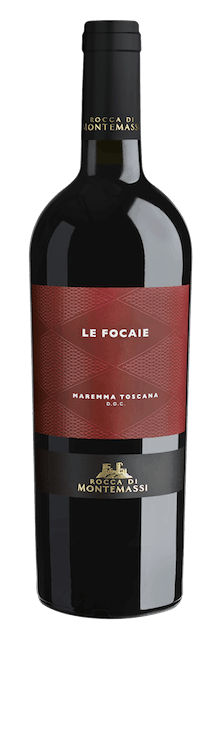
Wine of the week: Rocca di Montemassi Le Focaie 2016

The Rocca di Montemassi Le Focaie is $10 Italian red wine you can buy and enjoy without a touch of worry

Why is it that I can pick a bottle of an Italian Tuscan red blend off the shelf blind and know there is a good chance it will be worth drinking? Because it has happened time and time again, as it happened again with the Montemassi Le Focaie.

There are probably a couple of reasons. First, wines like the Montemassi Le Focaie ($10, purchased, 13%) aren’t made to get scores. They’re part of Italy’s wine drinking culture, where people expect to find quality cheap wine to have with dinner. So someone makes it. Sadly, we’re still not at that point in the U.S. – from either the consumer or producer’s point of view.

Second, I buy many of these wines at an independent retailer, where the idea is to carry something that’s not going to be on the grocery store Great Wall of Wine. Hence, more of an emphasis on quality, like the Montemassi Le Focaie.

This wine, made with sangoviese, is a little rounder than many cheap Chiantis – it’s not quite as tart, and the cherry fruit, both aroma and flavor) is softer and more ripe.  But it still tastes like sangiovese, and it tastes like it comes from Italy. It is, truly, the kind of wine to open for dinner without a touch of worry.

Imported by Zonin USA

Wine of the week: Coltibuono Chianti Cetamura 2015

Coltibuono ChiantiThe Coltibuono Chianti is one more Italian red that combines quality and value for $10
One of the most surprising things about cheap wine in the second decade of the 21st century is how much quality Chianti exists for $10 or less. Maybe it’s because Chianti is passé among the wine geeks, given the popularity of pricey Super Tuscans. Maybe there’s so much of it that supply keeps prices down. And maybe it’s because so many Chianti producers are happy to make great $10 wine.

Regardless, the Coltibuono Chianti ($10, purchased, 13%) is one more terrific value. This Italian red wine, made with the sangiovese grape from the Chianti region of Tuscany, is more old fashioned than some of the others. That means it’s a little more rustic and earthy. Which, of course, isn’t a problem, but part of Chianti’s terroir. So no, it’s not like this.

Look for Chianti’s traditional tart, slightly cherry taste, a clean finish, and those wonderful red fruit aromas that make me think of sausage and garlic. There’s even a little baking spice somewhere in the mix.

Bring on the red sauce, especially as winter hangs around in much of the country.

Imported by Coltibuono USA

Wine of the week: Yalumba Y Series Rose 2016

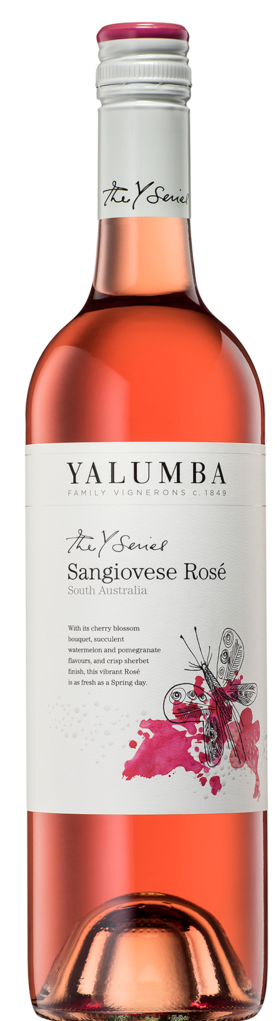
Yalumba Y series roseThe Yalumba Y series rose is a top-notch $10 wine that is just what Thanksgiving requires

Of all the best things about the rose boom, perhaps the best of the best is that roses that were difficult to find before aren’t anymore. I haven’t seen the Yalumba rose, a long-time favorite, in years. But there it was on the store shelf, just in time for Thanksgiving.

The Yalumba Y series rose ($10, purchased, 12%) has almost always been as well made as it has been difficult to find. I asked a Yalumba official about this a couple of years ago, and she said its availability in the U.S. was limited because of importer problems. But given rose’s surge in popularity, even that has apparently been surmounted.

The Australian-made Yalumba, composed of sangiovese, can be one of the world’s great roses when all comes together. The 2016, a previous vintage since it comes from the southern hemisphere, is close to that – still bracingly fresh, with unripe cherry fruit, a wonderful mouth feel, minerality on the back, and all in balance.

Highly recommended, and almost sure to join the 2018 $10 Hall of Fame. In a time when cheap wine quality seems to be a memory, Yalumba understands that $10 and quality are not contradictions.

Imported by Negociants USA