



Category:Spanish wine

Wine of the week: Carro Tinto 2019

carro tinto
Carro Tinto 2019/$10-$17

The Spanish red, with its unlikely combination of monastrell, merlot, and syrah, is just the thing for a cold winter’s night

What do you call a Spanish red wine made with the unlikely combination of monastrell, syrah, and merlot? A wine of the week, of course.

The Carro Tinto 2019 ($12, purchased, 14.5%) comes from the top-notch importer Ole & Obrigado, whose passion for quality and affordable wines matches my own. As such, Patrick Mata and company know exactly where to look for value, and this wine shows how the process works. Monastrell is a particularly Spanish grape; syrah and merlot are not, so the combination offers something that might not interest others.

In this, the whole is greater than the sum of the parts. You can taste the merlot — lots of blueberry fruit – but this is not a fruit bomb or a a Parkerized wine made to get a score. Instead, it has a hint of spice and smoke, some length in the finish, as well as some of monastrell’s herbal quality.

And though the alcohol is high, it doesn’t get in the way. Call it Spanish oomph – something I don’t exactly know how to explain, but that fits here.

This is food wine – stick a piece of beef in the slow cooker, let it make the house smell terrific, and drink it with the wine.

Imported by Ole & Obrigado
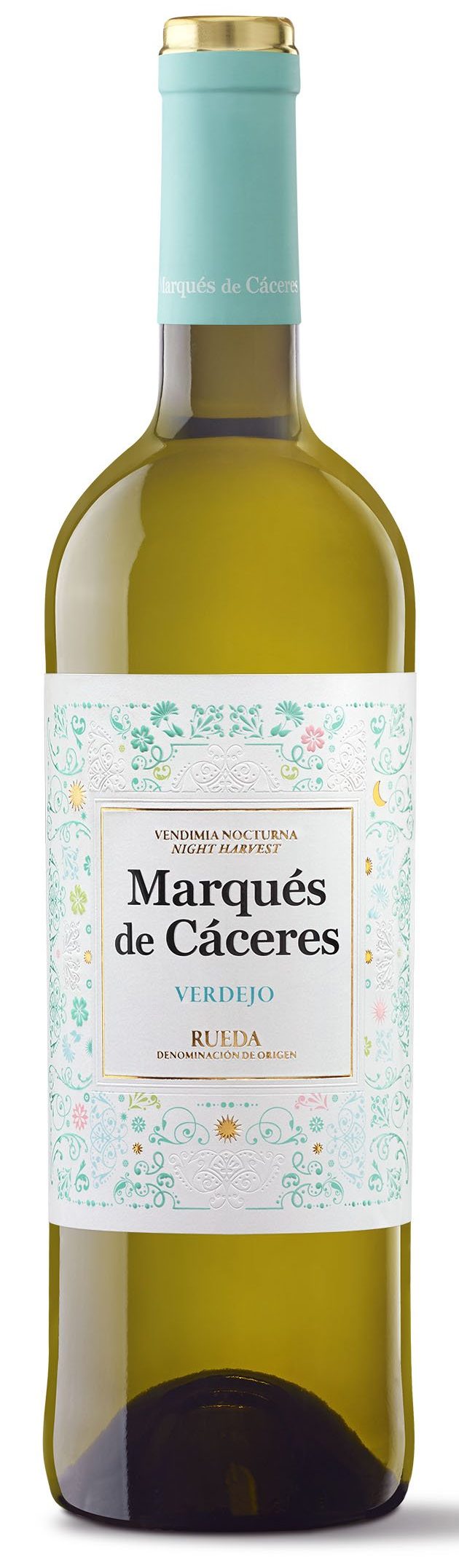
Wine of the week: Marques de Caceres Verdejo 2020

Marqués de Cáceres Verdejo
Marques de Caceres Verdejo 2020/$7-$13

This Spanish white offers value and availability for just $8

In the WC’s eternal quest for widely available wines that don’t taste fakely sweet or designed to be focus-group “smoooth,” supermarket Spanish wines often turn up.

In this case, the Marques de Caceres Verdejo 2020 ($8, purchased, 13.5%).

The Caceres is made by a large Spanish producer that sells its wines in 120 countries, so it won’t be confused with a boutique producer. But this white, made with the verdejo grape (a long-time Wine Curmudgeon favorite), is remarkably consistent – something that multi-national producers should excel at but don’t always manage to do.

The 2019 vintage was exceptional, and if the 2020 isn’t quite as amazing, it’s still a fine wine – and especially for $8. This is not a delicate wine, full of finesse; instead, look for fresh, tart lemon fruit, a touch of softness in the middle to balance the lemon, and a not quite stony finish.

In other words, the kind of wine to buy – a couple of bottles, perhaps – the next time you’re at the supermarket to keep on hand when you feel like a glass of white wine.

Imported by Vineyard Brands

Inflation? What inflation? 10 bottles of wine for $114

wine dinner
“I think the WC is right. I haven’t noticed wine prices going up that much.”

Inflation, shortages, and supply chain woes may be showing up in the rest of the economy, but they don’t seem to have hurt cheap wine yet

Gas prices may be close to $4 a gallon in parts of the country, and the cyber-ether is full of hand-wringing about the U.S. economy and the ravages of inflation, the supply chain kerfuffle, socio-political unrest, and all of the the rest of the specters haunting our post-(hopefully) pandemic world.

But wine prices going up? So far, I haven’t seen it.

Yes, there are still shortages and empty shelves. My local Aldi has moved on from the cheap imported wine that made me a regular customer, and is instead stocking not so cheap (and very ordinary) California wine. Which, no doubt, is because of all those supply chain problems. And it’s still difficult finding certain wines, be they Italian and Spanish reds or the $10 roses I drink year round. My kingdom for a Zestos rose!

But there is still plenty of value. The wine business, for whatever reason (and no, I have no idea what they may be) is holding the line on prices. During a recent shopping expedition, I bought 10 bottles for $114, or about what I usually pay. The wines included:

• South Africa’s Ken Forrester petit chenin blanc, one of my all-time favorite wines and difficult to find even in the pre-pandemic world.

• A couple of Spanish viuras including the 1-liter Spanish Azul y Garanza. The Azul, which is always a value, has been in short supply for the past 18 months.

• An $11 cremant from the Loire, a sparkling wine from Cote Mas. The Mas wines can be uneven, but this was a steal (and more on it later).

• A $15 Australian riesling, the Pewsey Vale. Aussie riesling is another great value around $15, and again has been difficult to find in Dallas for years.

• A $10 red Bordeaux, the Chateau La Freynelle. The white has always been fine $10 wine; have not seen the red for a very long time, as well.

Photo: cottonbro from Pexels

More about buying cheap wine:
• Suck on this, premiumization: 14 bottles of wine for $148
• Premiumization be damned: $139.36 for 14 ½ bottles of cheap wine
• Panic wine buying

Wine to drink when you’re waiting for an ice storm

ice storm
If Dallas still had street cars, this is probably what today would look like.

Because that’s what we do in Dallas every February

Feb. 4 update: So far, so good. We got through Thursday with a surprisingly few number of power outages reported in the Dallas area. If we can make it through today, the forecast is favorable for the weekend and early next week.

The Wine Curmudgeon is writing this on Monday, since I don’t expect to have electricity on Thursday and Friday. That’s because we’re expecting our annual February ice storm.

If nothing else, the company that distributes power told us not to worry. And we know what comes after that, don’t we, Gov. Abbott?

So the WC has filled the car up with gas, charged all the battery packs, phones, and laptops, baked bread, and laid in the requite supplies. That means lots of batteries; an extra hoodie for Churro, the blog’s associate editor; a couple of battery-powered lanterns; and, of course, cheap wine. Hopefully, I won’t regret not buying a generator.

Interestingly, I’m not the only one who has pondered cheap wine during an ice storm and blackout. Lauren Daniels, the food editor at the Dallas Observer (for whom I write an occasional wine piece) emailed me yesterday asking for a suggestion to run on the weekly’s website.

So here are three wines I stocked up on that I didn’t tell Lauren about:

• Umani Ronchi Podere 2020 ($11, purchased, 13%): This Italian red, from the Montepulciano d’Abruzzo region, is a long-time WC favorite. This vintage is a touch more tart than usual, but still has what it should – cherry fruit, some earth, and spice on the finish. Needs food, but that’s not a problem during a power failure. Imported by Vineyard Brands

• Domaine de Pajot Les Quatre Cépages 2020 ($12, purchased, 11.5%): What would a crisis at WC World Headquarters be without a Gascon white wine to fall back on? This one uses all four gapes – sauvignon blanc, ugni blanc, colombard, and gros manseng – in the blend. There’s lots of citrus fruit, though not as much white grapiness as I like, and it’s fresh through and through. So simple but not stupid. Imported by Polaner Selections

• Marqués de Cáceres Rosado 2020 ($9, purchased, 13.5%): This supermarket Spanish rose is almost always a fine value. It’s a little softer and more fruity than I would have thought, with what almost seems like a dollop of strawberry in the middle. But that’s hardly a problem – crisp, fresh and ready to drink. And yes, rose in in the middle of an ice storm – I won’t have to chill it ahead of time, will I? Imported by Vineyard Brands

Photo: “Abandoned streetcars after ice storm in December, 1942.” by Ross Dunn

More wine for bad weather:
• Wine to drink during rolling power blackouts
• Wine to drink when the power goes out, 2014 edition
• Jerry Jones, wine, and bad weather


Mini-reviews 153: Tannat, Rioja, and two sauvignon blancs

wine demandReviews of wines that don’t need their own post, but are worth noting for one reason or another. This month, cleaning out the wine closet to start the new year.

• Marichal Tannat Reserve Collection 2018 ($20, sample, 13%): Well made tannat from Uruguay — softer, which with tannat is a good thing; more dark fruit and less tannic. Price is problematical. Imported by Global Vineyard Importers

• Bilbao Rioja Crianza 2017 ($20, sample, 14.5%): There’s nothing really wrong with this Spanish tempranillo, though it’s a bit less subtle than classic Rioja. There’s nothing to make it stand out, either – and $20? Imported by Zamora Company

• The Goose Sauvignon Blanc 2017 ($12, purchased, 13%): This is a stunning South African sauvignon blanc that has just enough French style — almost flinty — to go with New World citrus fruit. How it aged this well is beyond me – highly recommended. So what’s the catch? It will be almost impossible to find, which seems to be how the wine world works, isn’t it? Imported by IM Premium Imports

• Castle Rock Sauvignon Blanc 2020 ($10, sample, 13%): Supermarket sauvignon blanc, made to hit the $10 price and not necessarily because it tastes like California sauvignon blanc. Almost bitter, some lemongrass, some minerality.

Wine of the week: Protocolo Blanco 2019

Protocolo Blanco
Protocolo Blanco 2019/$6-$15

This Spanish white blend is cheap wine the way it should be – professionally made, varietally correct, and enjoyable

The Wine Curmudgeon is not the only one bemoaning the disappearance of quality and affordable wine. Emailed a fellow critic: “It wasn’t that long ago that I lamented the disappearance of the $10 bottle, which was replaced by $12 bottles. Based on recent anecdotal evidence, the $12 bottle is now gone, too. Outside of grocery stores where all the wine taste the same, it seems $15 is now the ground floor at independent wine shops.”

To which I answer: the Eguren Protocolo Blanco 2019 ($8, purchased, 12%).

This is the kind of wine that my friend used to see all the time – professionally made, without flaws, more or less varietal, and enjoyable. Which, sadly, has disappeared in favor of the dreaded focus group wine: Smoooth, almost sweet, and bereft of almost all character. In fact, the back label for the Protocolo even leans in that direction: “silky… banana, peach, and apple aromas.”

But it’s nothing like that. For one thing, it’s a Spanish white blend, and that ain’t silky. The grapes – 60 percent viura and 40 percent airen – lend themselves to the exact opposite, which means some tart lemon and green apple fruit. The wine is clean and fresh, with maybe some minerality in the back. Or not, as the case may be.

The point here is that the Protocolo does what it’s supposed to do – offer value and quality for wine with dinner or a glass after work. And, as my friend noted, that’s not easy to find these days.

Imported by Fine Estates from Spain

Wine of the week: Balnea Verdejo 2019

Balnea Verdejo
Balnea Verdejo 2019/$10-$13

This Spanish white takes the Trump tariff in stride and yet again delivers value

We’ve written a lot on the blog about how some French and Spanish wines boosted their alcohol levels to get around the Trump wine tariff – and how many of them suffered for it.

The Balnea Verdejo 2019 ($12, purchased, 14.5%), on the other hand, has a high enough alcohol level so it would have been exempt from the tariff. But it still tastes like it’s supposed to taste, and it doesn’t taste like it’s 14.5 percent. There are a couple of subtle differences between this vintage and the 2018, which was just 12.5 percent. But it’s still a fine value and a Hall of Fame wine.

The 2019 isn’t quite as zippy and lemonish as the 2018. Instead, it’s more full in the mouth and feels a bit heavier, with an almost glycerin finish. But heavier is relative – this isn’t a big red wine. Rather, it’s just not quite as light as it was the year before.

What impressed me most, given how poorly made so many of the other wines with boosted alcohol seemed, was that the Balnea was still a professional, competent wine. I can’t imagine it’s easy to add two full points to the alcohol level on a crisp, light white wine so that it still tastes like a crisp, light white wine.

But in this case, it does.

Imported by The Artisan Collection