



Tag Archives: monastrell

Wine of the week: Luzon Verde 2021

Luzon Verde bottle
Luzon Verde 2021/$8-$15

The name might be confusing, but this Spanish red is more than enjoyable

Finding red wines to feature as wine of the week has become progressively more difficult over the past several years; even before the pandemic, in fact. Yes, price increases and premiumization have complicated things, but I’m also finding fewer red wines that are interesting and varietally correct.

There are still plenty of cheap red wines, but why would I want to write about yet another smoooth one?

So I tried the Luzon Verde 2021 ($12, purchased, 14%). In the old days, I probably wouldn’t have bothered. The alcohol for this Spanish red, made with the monastrell grape, is a bit higher than I like and its name confused me. Verde, in Spanish, means green, which seemed odd for a red wine – and no, I’m not going to recommend a wine just because it’s organic (which, apparently, accounts for the “verde”).

Which is why the first rule of wine criticism is to taste the wine before you judge it. The Luzon Verde is Spanish wine at its everyday best — fruity (dark berries), but not too heavy, hot, or tannic. and quite approachable. It does need food, but Thanksgiving is coming up yes?

So enjoyable, professional, and much more than competent, as well as an encouraging sign for future red wines of the week.

Imported by Aviva Vino
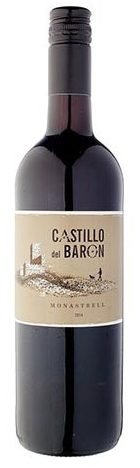
Wine of the week: Castillo del Baron Yecla 2020

Castillo del Baron monastrell
Castillo del Barón Yecla 2020/$9-$12

Once again, this Spanish red shows how cheap wine should be done

The Castillo del Baron, from Spain’s Yecla region and made with the monastrell grape, has only been featured three times on the blog. But that has absolutely nothing to do with its quality; this is one of the world’s great cheap wines, and especially for those who prefer their red to have a little more oomph.

Rather, it has everything to do with – all together now – availability.

The current vintage is the 2020, and I have also reviewed the 2019 and the 2017. But the 2018 and the 2016 never made it to Dallas. Go figure.

Which is a shame, because, as I wrote in my notes for the 2020 ($10, purchased, 14.2%), “Another spot-on effort — a little more rustic, as it has been for the past couple of vintages, and a tad hot. But it’s balanced, almost earthy, and the cherry fruit shows just enough. All it needs is a little red meat or sausage for dinner drinking.”

And, frankly, given some of the plonk I’ve had to spit my way through recently (most recently, a $15 Oregon pinot noir that tasted like Welch’s that had gone off), I’ll take this wine every time.

Highly recommended, and – assuming it’s available, of course – a candidate for the 2024 Hall of Fame.

Imported by Europvin

Wine of the week: Carro Tinto 2019

carro tinto
Carro Tinto 2019/$10-$17

The Spanish red, with its unlikely combination of monastrell, merlot, and syrah, is just the thing for a cold winter’s night

What do you call a Spanish red wine made with the unlikely combination of monastrell, syrah, and merlot? A wine of the week, of course.

The Carro Tinto 2019 ($12, purchased, 14.5%) comes from the top-notch importer Ole & Obrigado, whose passion for quality and affordable wines matches my own. As such, Patrick Mata and company know exactly where to look for value, and this wine shows how the process works. Monastrell is a particularly Spanish grape; syrah and merlot are not, so the combination offers something that might not interest others.

In this, the whole is greater than the sum of the parts. You can taste the merlot — lots of blueberry fruit – but this is not a fruit bomb or a a Parkerized wine made to get a score. Instead, it has a hint of spice and smoke, some length in the finish, as well as some of monastrell’s herbal quality.

And though the alcohol is high, it doesn’t get in the way. Call it Spanish oomph – something I don’t exactly know how to explain, but that fits here.

This is food wine – stick a piece of beef in the slow cooker, let it make the house smell terrific, and drink it with the wine.

Imported by Ole & Obrigado

Wine of the week: Volver Tarima 2018

Volver TarimaThe Volver Tarima is not traditional Spanish red wine, but it is a value
Spanish wine producers, save for some notable exceptions like the reds from Ribero del Duero, have resisted the impulse to Parkerize their wines. Most are still lower in alcohol, restrained in fruit, and taste like Spanish wine has traditionally tasted.

The Volver Tarima 2018 ($11, purchased, 14.5%), a red wine made with monastrell, inhabits the mid-ground between the too ripe, cocktail-like Parker wines and a 12.5 percent Rioja. In this, it’s a pleasant surprise for those of us who want something different, but not something so different that it doesn’t taste like wine.

Yes, the wine is a bit hot, so that the alcohol shows on the back. Having said that, it’s very well-made and surprisingly balanced. There is lots of black fruit (blackberry, black cherry?), but it isn’t too ripe. There’s a little spice, and the tannins are under control – not always easy to do with monastrell. It’s mostly used as a blending grape (known in France as mourvedre).

This is a food wine – braises and stews as the weather gets colder.

Imported by Winebow

Wine of the week: Castillo del Baron Monastrell 2017

Castillo del Baron monastrellThe $10 Castillo del Baron Monastrell is so well made and so enjoyable that the WC went back to the store and bought a case

The Wine Curmudgeon goes wine shopping once or twice a week, usually hitting two or three stores in the Dallas area. I’ll look for stuff I haven’t seen before, and buy lots of single bottles. That way, even with the losers (because there are always losers), I usually have something to use as the wine of the week. Which is how I discovered the Castillo del Baron monastrell.

Why did I buy it, having never tasted it? First, it’s a Spanish red, so quality should be good because we can trust Spanish reds. Second, it’s from the Yecla region in Murcia on the country’s southeastern coast, and that you haven’t heard of either means the price should be more than fair. Third, it’s made with monastrell, the Spanish version of mourvedre, and red wines made with grapes that aren’t cabernet sauvignon usually offer value.

And my analysis was spot on. The Castillo del Barnn monastrell ($10, purchased, 14%) was so impressive that I went back a week later and bought a case. It’s an interesting and intriguing wine that shows off the region and the grape – a funky, herbal aroma; big but not heavy; just enough bright black fruit (black cherry?); and a pleasing acidity. Plus, the tannins don’t overwhelm the wine, which can happen with poorly made monastrell.

Highly recommended, and a candidate for the 2020 $10 Hall of Fame and Cheap Wine of the Year. It’s red meat wine (Spanish-style roasted lamb, perhaps?), but also something like chicken with paprika.

Imported by Europvin

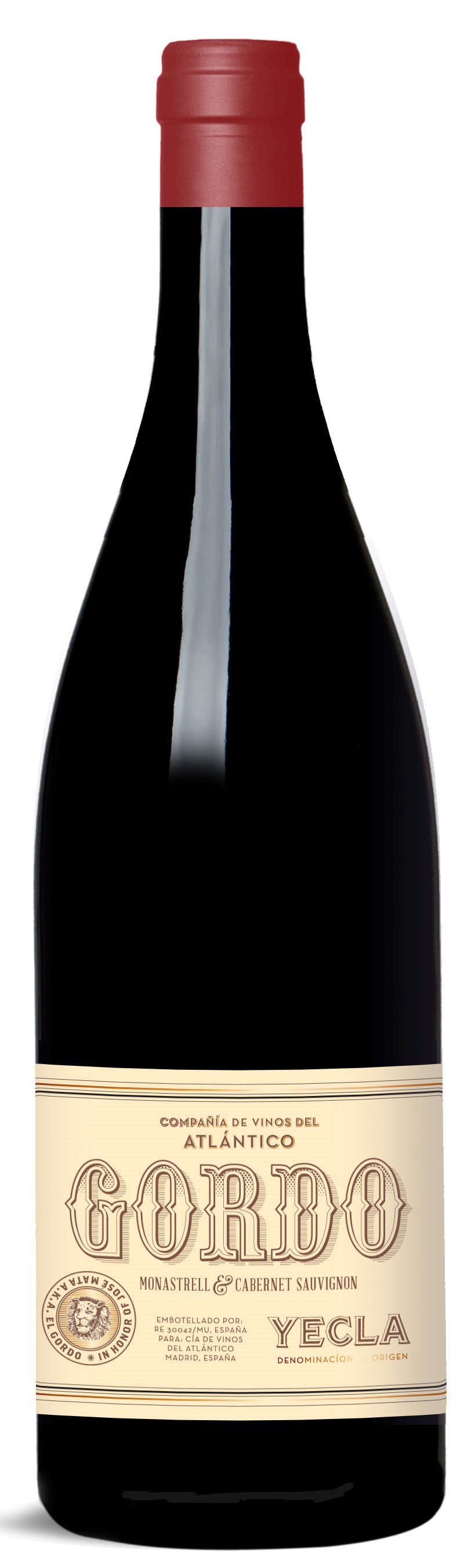
Wine of the week: Gordo 2014

gordoGordo, a Spanish red blend, is complicated, sophisticated, and more than enjoyable

I reviewed the 2012 version of Gordo, a Spanish red, 18 months ago, and marveled at how well made it was. The 2014 version of the Gordo may be more enjoyable.

The Gordo ($13, sample, 14%) doesn’t seem to be the kind of wine I’d be this enthusiastic about. It’s made with about one-third cabernet sauvignon, and regular visitors here know how I feel about Spanish cabernet. But this vintage, like the last, uses the grape to its best advantage, blending it with the native Spanish monastrell (mourvedre in France) to produce a wine where the whole is greater than the sum of its parts.

Look for an earthy yet fresh wine, with almost herbal aromas and dark berry fruit that isn’t all that fruity. And, even though there’s so much cabernet in the wine, the acidity and tannins are muted, providing structure but not really being noticeable. In all, this is a difficult wine to describe because so many contradictory things seem to be going on – which, I suppose, is one reason why it’s so enjoyable.

Highly recommended, though pricing may be an issue – this wine is as little as $12 in some parts of the country and as much as $16 in others. This is a food wine, and about as versatile as red wine gets. Pair it with almost anything you can imagine, save fish or chicken in cream sauce. Having said that, I wouldn’t be surprised to see it shine with turkey pot pie.

Imported by Ole Imports


Wine of the week: Comoloco 2014

comolocoThe Comoloco, a red wine from Spain, is a worthy candidate for the 2017 $10 Hall of Fame

How much of a value is the Comoloco, a Spanish red wine? A retailer, in his comments on CellarTracker (the blog’s unofficial wine tracking software), practically apologizes for selling it. Because, of course, nothing this cheap can be this enjoyable.

When will they learn? The Comoloco ($10, purchased, 14%) is made with monastrell and is from the Spanish region of Jumilla near the southeastern Mediterranean coast. Hence, a grape and a region that would rarely get 90-plus points from the Winestream Media. But that’s no reason to apologize for the Comoloco (and its producer, Juan Gil, does similar value worthy wines under other labels).

This is a clean, well-made, post-modern wine, but without the annoying qualities of so similar wines. The sweet red fruit is fresher and not as cloying, you can taste a little welcome acidity, and the wine isn’t hot. Yes, the oak is a bit much, but it fades after the bottle is open for a while.

Highly recommended, and a candidate for the 2017 $10 Hall of Fame. Drink this with winter stews and roasts, and don’t be afraid to buy a second bottle.