Category:Wine news

Update: Wine prices 2022

pile of grocery store receiptsAre wine prices going do something rational, given continuing decreased demand and increasing supply?

In January, I wrote that wine prices were caught in a confusing economic muddle – continued premiumization, inflation, and supply chain pressures on the one hand, but slumping demand, continued high production, and increasing inventories on the other.

Hence, it was almost impossible to figure out what prices would do this year. But I think, just maybe, that a trend is developing – and it could mean lower wine prices.

So what has changed in the past seven months?

• The collapse of the euro (partly because of the Ukraine war, which has added its own complications). The euro is at parity with the dollar for the first time in 20 years; the dollar has also strengthened against the currency of a variety of other wine exporting countries, including Argentina and Australia. All of which should make imports from Europe and elsewhere less expensive.

• The beginning of the end of the supply chain crisis. Things are not going to return to normal soon – buy holiday wine now! — but the situation should improve next year. So lower shipping prices.

• Really, really bad news for wine consumption. One wine analytics company predicts total sales volume in the U.S. will fall in 2022 for the second year in a row, which is almost unprecedented since the 1980s. In addition, SipSource, which tracks sales from wholesalers to restaurants and retailers (called depletions), says wine depletions were down 8.2 percent in the first five months of the year. So, say what you will about whether premiumization has any staying power (and the first report says it does), an 8.2 percent decrease in five months is serious.

Now, none of this certain. For one thing, despite the drop in the price of oil — and which should hint at slowing inflation — no one has any idea what prices are going to do. Second, premiumization has become so baked in to pricing that it’s probably going to take a hard jolt, not unlike what happened during the 2008 recession, before producers cut prices. Third, if economists can’t get this stuff right (and they haven’t), what chance does a cranky ex-newspaperman have?

Still, I wouldn’t be surprised if, by this time next year, we’re seeing the first signs of falling wine prices.

Winebits 761: The “It’s all about liquor laws” edition

dry january sign
The sign says it all, yes?

This week’s wine news: Jason Wilson deconstructs the neo-Prohibitionists, plus carding underage drinkers and Brexit may be worse than three-tier

• No booze for you: Jason Wilson, writing in the Washington Post, offers a long and detailed look at neo-Prohibitionism, Dry January, and all the rest. A couple of caveats (as well as a shameless plug): The WC shows up in the story (though I didn’t know that until it was published), and Wilson subscribes to the blog. His point, though, is all his own: We spend so much time arguing about whether drinking is good or bad that we know almost nothing about what Wilson calls “drinking literacy;” that is, serving sizes and alcohol by volume. In other words, how much actual booze is in what we drink, so we can better figure out how much to drink.

• Card those kids! Lifehacker, the blog’s unofficial Mainstream Media site that sometimes writes about wine, tells us everything we need to know about how services like Drizly and Instacart avoid selling to the underage. Know two things here: First, this is not a new trend – I was writing trade stories about this a decade ago. Second, it’s going to be a very important story as delivery becomes more important over the next several years. Some services use electronic verification, while some are still in the “Let me see your driver’s license” stage. For what it’s worth, I am occasionally carded when I use these services, and I stopped looking underage a long time ago. The piece also notes that, failing delivery service access, “your kid may turn to the old-fashioned alcohol procurement method of hanging around outside a liquor store and asking skeezy looking reprobates to buy for them.”

• All that paperwork: British wine wholesaler Daniel Lambert is moving to France, where it will be easier for him to do business in Britain thanks to Brexit. Reports the Guardian newspaper: “His Twitter posts about the Brexit regulations have a brisk following among fellow businesses, as he was one of the earliest to come to terms with the 200 pages of paperwork per consignment.” So those of us who are unhappy with U.S. laws – three-tier! — now have someone else to feel sorry for.

Photo: “Sod dry January” by Matt From London is licensed under CC BY 2.0

Update: Ingredient labels and nutrition facts for wine

beer ingredient labels
If light beer, why not wine?

The federal government may be ready to require calories, ingredients, and all the rest

Are we closer than ever to seeing nutrition facts and ingredient labels for wine? That may well be the case.

The TTB, the federal agency that oversees alcohol regulation, is considering proposals to require producers to include ingredients, calories, and the like to wine packaging. In other words, the same information that’s on canned chicken soup, vegan sausage, and soft drinks.

Technically, the process is just starting — it’s called Advanced Notice of Proposed Rulemaking, the “pre-rule” phase. That means the agency will ask for comments and consider what has been said. If there are enough comments supporting the proposal, the agency could move to a Notice of Rulemaking. This requires another comment period before a final decision.  So we’re not anywhere close to a resolution.

Also, if the TTB moves in this direction, there’s no indication what ingredient listings would include. Would it be enough use the word “grapes” generically? Or would it require naming specific grapes, including grape juice products like Mega Purple? And would oak barrel alternatives, like chips and dust, have to be listed?

I’ve been writing about this since 2003, and there has been little change in the federal government’s position. Yes, it allowed voluntary ingredient labels in 2013, but that has been almost universally ignored by wine; in fact, some of us saw it as a sop to Big Spirits and Big Beer, and not as an actual attempt to add the information.

So what has changed since then?

• A growing awareness that younger consumers want the labels. Several wine industry officials, who had opposed adding the information, have told me that the time has come for ingredients, especially and because of wine’s generation gap. Said one: “Today, with consumers asking for more about their food, I think it’s an imperative.”

• Improved technology, which will make it easier for small producers to add the labels. This has always been a key obstacle, since more than 80 percent of U.S. wineries make fewer than 5,000 cases a year.

• The Biden Administration’s renewed focus on the alcohol business, which the three previous administrations mostly ignored (save for the Trump tariff, of course).

• The growth in so-called “healthy wines,” which claim to be better for you but seem to be mostly like every other wine. The TBB has warned producers to stop making these kinds of health claims, and ingredient labels and nutrition facts would make sure they don’t.

Having said all of this, there is still tremendous resistance to adding the information among powerful groups within the wine business. This means, even if the TTB wants to require labels, there’s no guarantee that it will be able to do so. Wine has successfully fought against them for almost 20 years, and there’s no reason to think it wouldn’t prevail again.

Winebits 760: Wine production, wineburgers, Diana Kennedy

crushed wine grapes
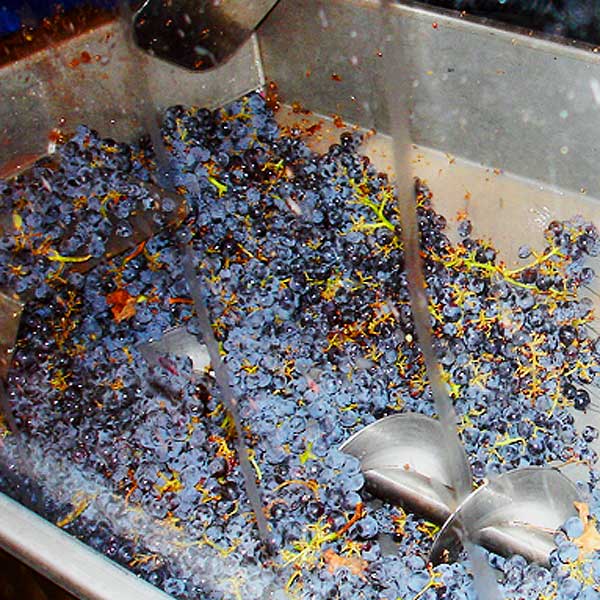
No. Bordeaux won’t crush fewer grapes.

This week’s wine news: Bordeaux boss won’t pull vines, plus wineburgers and Diana Kennedy dies

• No vine pulling: The French have been arguing about pulling grapevines to cut production in the face of decreased demand for what seems like decades. The theory is that if producers have less grapes to make wine with, supply and demand will even out and producers will make more money. But the new head of a powerful Bordeaux trade group says no more vine pulling – otherwise, how will the the region be able to make affordable wines? The issue is quite complex, but the story from Wine-Searcher does a fine job of detailing the nuances, as well as the incredibly goofy economics of the post-modern wine business.

• What’s a wineburger? That’s the question that Robert Pela asks in the Phoenix New Times. “Hamburgers cooked in red wine turn up from time to time on restaurant menus here and abroad, but a lot less often than one would expect. … Phoenix, on the other hand, has two wineburger joints. … But how they got here in the first place, and where they got the recipe for their namesake sandwich, is cloaked in mystery.” Which makes sense — beef in red wine is the legendary Boeuf Bourguignon, but in ground beef? Pela tells the story, tastes the food, and answers some, if not all, of the questions.

• Diana Kennedy, 1923-2022: Diana Kennedy wasn’t known for wine, but someone who was as important to food as she was deserves a mention here. Plus, Kennedy was one of the great interviews of my career – I had to phone a post office in rural Mexico at a certain time to talk to her. Kennedy, who died over the weekend, showed the world there was more to Mexican cuisine than fast food tacos – she ”unfurled an ornate culinary tapestry, exploring the distinctly regional nature of Mexican cooking, defined, like the cuisines of Italy and China, by local geography, climate and ingredients.” (I have been pickling jalapenos using her technique for years). Kennedy, in our talk for a story for a U.S. restaurant magazine, was blunt, pleasant, and to the point. And she was more than candid about the abysmal state of Mexican cooking in the U.S. and the restaurants that served it – no one was spared.

Winebits 759: Local Wine Events, glass bottles, smoke taint

Woman reading a computer tablet
“Let me see — where is the Local Wine Events site for my city?”

This week’s wine news: Local Wine Events celebrates its 22nd birthday, plus glass bottle recycling and progress on smoke taint

• Happy birthday: In 2000, Eric Orange was looking for wine events in Denver. Twenty-two years later this month, Local Wine Events has some 300,000 subscribers and posts wine, beer, and spirits events in 63 countries. Which, frankly, may be one of the best things to happen to wine this century. Eric is a long-time pal of the blog and offered some much appreciated support during our Drink Local Wine days. That her has made it this long speaks to the service he provides – and that the site has been to leverage the Internet to make money.

• Glass recycling: Refresh Glass wants to recycle 10 million glass wine bottles – and it’s apparently off to a good start. The company, founded by Ray DelMuro, has turned more than 1.6 million bottles into drinking glasses, carafes, planters, votive holders, and more. DelMuro says glass recyclers must find a way to increase the amount that is used again – only about one-third of glass bottles are recycled – and so works with with local restaurants to collect their empty bottles. Says DelMuro: “People are sick and tired of being greenwashed into thinking something’s been recycled when it’s not.”

• Smoke taint research: Oregon State researchers may have found the compounds that contribute to smoke taint in wine and grapes. Previously, compounds known as volatile phenols seemed to indicate smoke taint. But some wines with high levels often didn’t taste of smoke taint while wines with low levels did. So Elizabeth Tomasino, an associate professor of enology, and her colleagues looked for other compounds, and may have found one in a new class of sulfur-containing compounds called thiophenols. It seemed to cause smoke taint when combined with volatile phenols. This, of course, is a major discovery if it’s true given the rash of wildfires and the possibility of smoke taint in the last couple of years on the west coast.

Winebits 758: Hot weather, alcohol-free wine, AI wine writing

Drinky the Robot
Drinky loves wine, though he does have trouble tasting it

This week’s wine news: Hot weather is cooking wine shipments, plus questions about alcohol-free wine and AI wine writing

• Hot, hot, hot: The temperature in Dallas has been above 100 for nine days in a row, including 106 on Friday and 105 on Saturday. I mention this not to elicit sympathy (it still beats shoveling snow), but to remind everyone to be careful when shipping wine at temperatures like this. A sample arrived last week broken and leaking; as near as I could tell, the bottle just sort of exploded because of the heat. This is not common, but not uncommon, either, as I wrote in a freelance piece for Pix.wine. Excessive heat can pop the cork and cause leakage, and it can even cook the wine, making it taste like bad fortified wine.

• Calling out alcohol-fre: Huon Hooke, writing in Australia’s Brisbane Times, wants to know” “Is alcohol-free wine even wine?” Writes Hooke: “Is a sausage without meat still a sausage? Is a tarte tatin without apples still a tarte tatin?” The piece is well worth reading, delving into the metaphysical questions involved here. How can wine, which is made with alcohol, still be wine without it? In this, he writes, “There’s a place for these drinks. It’s just not my place.” I can’t say I disagree; if I don’t want alcohol, I’ll drink iced tea.

• Figuring out AI? David Beck, writing in Food & Beverage Analytics, asks: Why are wine critics afraid of artificial intelligence and wine writing? I was going to write a terrific, standalone rant on the blog answering this question, especially since the article criticized some of my — dare I say — top-notch writing about wine and artificial intelligence. But Beck’s piece didn’t make much sense. It was poorly written, jumbled, and disjointed, and even his criticism of me missed the point. AI wine writing isn’t here to make human life easier, but to make more money for surveillance capitalism. So let’s mention it here, and then we can forget about it. Right, Drinky?

Convenience store wine 2021

store cigarette display
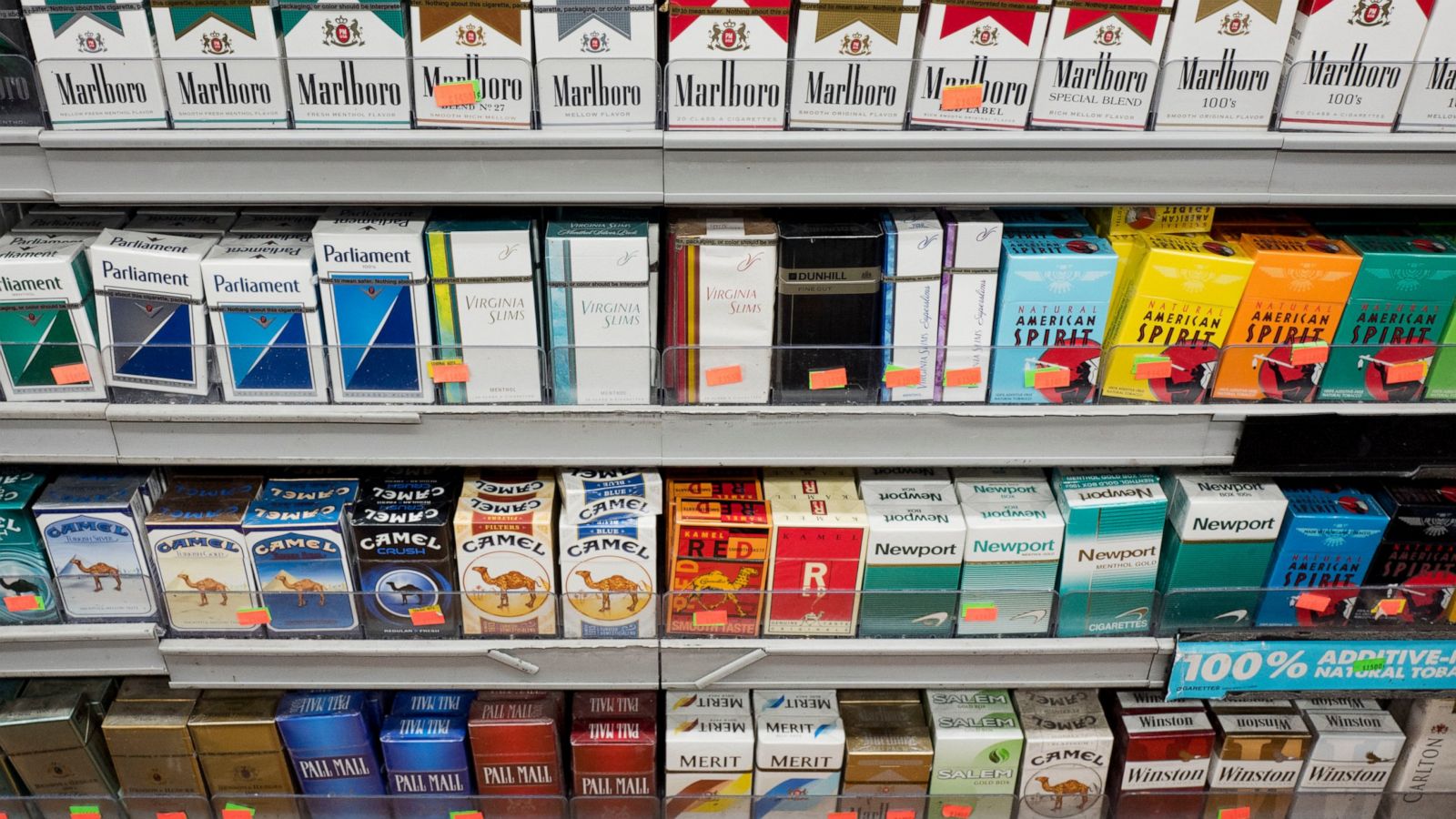
“Who needs wine? We have cigarettes.”

Convenience store wine sales, one of the few bright spots over the past couple of years, weren’t in 2021

This is the second of two parts looking at trends for wine sold in supermarkets and convenience stores. Because not all wine is sold at Costco, Total Wine, and your local retailer. Today, part II: Convenience store wine sales. Thursday, part I: Supermarket private label wine.

Convenience stores – yes, convenience stores – have been one of the few bright spots for wine over the past couple of years. Wine sales at convenience stores surged in 2020, the fourth consecutive year of increases at 7-Eleven, QuikTrip, and the like.

But it was, apparently, too much to last.

The 2021 numbers, released in June, showed that wine sales declined 7 1/2 percent. In addition, sales as percentage of all the store sold fell by one-half of one percent. Sales of beer and cigarettes, meanwhile, increased – 1.2 percent for the former and 2.6 for the latter. I don’t know about you, but when wine drops and cigarettes don’t, it’s really time to worry about the future of the wine business.

The only good news? More convenience stores than ever are selling wine, more than two-thirds — up from 58 percent in 2020. That’s especially impressive, given how many states, including New York and Pennsylvania, limit wine sales in convenience stores.

Still, Jeff Lenard, vice president, strategic industry initiatives, for the National Association of Convenience Stores trade group, says not to panic. The end of the pandemic, he says, probably inflated the 2020 numbers: “It’s not so much that the year 2021 was a decline continuing a trend, but a decline from an unusual year in 2020.”

Also worth noting – despite the 21.1 percent sales increase from 2019-2020, the number of stores selling wine barely rose at all. In the long term, it’s probably quite significant that that number is now more than two-thirds.

So we’ll focus on the good news – since there is so much bad news in wine otherwise.

More about convenience store wine:
• Convenience store wine 2020
• Convenience store wine during the pandemic
• Convenience store wine 2019