Tag Archives: ingredient labels

Federal government moves one step closer to ingredient labels for wine

wine ingredent label
A version of this coming by 2026?

First part of process could happen in next couple of weeks

We may be one step closer to ingredient labels on wine. I’ve been told that the Treasury’s Tax and Trade Bureau, which regulates alcohol, could publish an ”Advanced Notice of Proposed Rulemaking” for the labels in the next couple of weeks. That would be the first step in a three-year or so process that would require alcohol producers to include ingredient labels.

The advanced notice is the “pre-rule” phase for ingredients, in which the TTB will ask for comments and consider what’s said before it moves to a “Notice of Rulemaking” for ingredients and asks for comments for that. My sources tell me that the TTB will almost certainly publish a notice of rulemaking and ask for comments, probably sometime in the second half of next year.

The notice of rulemaking is the final stage before ingredient labeling. If and when it happens, it would probably be another 18 to 24 months before the actual rule is published – so we likely won’t see ingredient labels before 2026.

That’s about a year later than the first estimates; chalk it up to the excitement that has kept the Treasury Department and White House busy over the last six months.

It’s still little more than an educated guess abut what ingredient labels will look like or will have to include. One possibility: Only ingredients that are in the finished product and not those that disappear during the winemaking process. For example, we don’t know if individual grape names will be required or if “grape juice concentrate” will be sufficient for products like Mega Purple.

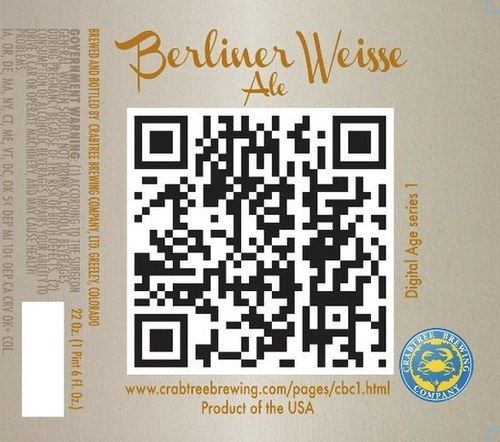
There does seem to be momentum for allowing producers to use QR codes that link to a winery website. That way, producers won’t have to change the ingredient label each vintage; rather, they can change it on the website, which is cheaper and more efficient.

I wrote an overview of the entire process for this trade site (allowing for the change in timeline).
Study: Wine drinkers want to know what’s in their wine

qr code for ingredients
Coming soon to a wine bottle? Only if you’re young.

But they aren’t sure they want ingredient and nutrition labels

No, the headlines don’t make much sense. But we’re talking about ingredient and nutritional labels, aren’t we?

That was my impression from Thursday’s Wine Market Council webinar, “What Consumers Think About Ingredient and Nutrition Labels on Wine.” So yes – deadline reporting, yet another reason to subscribe to the WC.

In this, the study and the speakers seemed to make the case that the labels are coming and that the wine business had better figure out how to deal with that eventuality. If nothing else, the European Union will require all wine sold in its market — including U.S. imports – to have labels by December 2023.

And, frankly, I expected the survey to hem and haw around the subject. And while the results were often contradictory, there was little hemming and hawing.

I wrote a longer freelance story about the study; these are the highlights:

• About half of those surveyed didn’t realize wine didn’t carry any kind of label, and only one-third of that group said wine should have them. Meanwhile, only about one-third said ingredient labels were extremely or very influential in purchasing decisions, and just one-quarter said nutrition labels were influential.

• Nevertheless, many consumers wanted to know the alcoholic content of wine, whether wine had added sugars and other common ingredient and nutritional content. And many wine drinkers had less than favorable opinions about common wine additives, including sulfur, tartaric acid, and tannins when they saw them on an ingredient list.

• QR codes, which could be used to substitute for bottle labels, are for young people. Almost half of those ages 21-39 said the codes were extremely or very satisfactory, while almost two-thirds of those 60 and older said the codes were slightly or not at all satisfactory.

• Wine drinkers, though they were aware that wine typically had fewer ingredients than hard seltzers and canned cocktails, did seem to worry that wine was higher in sugar than it actually is. About one-half thought wine had more sugar than beer and hard seltzer; not surprisingly, almost two-thirds felt positively about seeing sugar levels on a nutrition label.

studio microphone

Winecast 73: Randall Grahm and ingredient labels for wine

Randall Grahm
Randall Grahm: Labels will force winemakers to do a better job of making wine.

“The consumer has a right to know what’s in their wine”

Few people have worked harder or longer for ingredient labels on wine than Randall Grahm, who was using them on his Boony Doon wines at least a decade ago. So who better to talk to about the latest developments in adding ingredients and nutrition fact boxes?

We recorded this podcast a week ago Sunday, a couple of days before the federal government announced it would start the rulemaking process to add the labels to wine, beer, and spirits. Not surprisingly, Randall — whom I’ve known for longer than both of us would care to admit — predicted we’d get the labels sooner rather than later.

Know, too, that Randall was on his best behavior — so no name calling or punny insults. Rather, just solid, sensible reasons and analysis about ingredient and nutrition labels and how to make them work:

• One of the reasons that labels have become more accepted- — the rise of the natural wine movement, which makes a point to talk about what’s not in the wines.

• Why so much resistance still? Additives are a crutch to make wine easier to make, he said — “artificial fixes. … If you had to put everything on the label that you put in the wine, you’d have to be a much more fastidious winemaker.”

• Wine remains confusing to most consumers; labels will help make it less confusing.

• There is room for discussion about what needs to be included.  Randall suggests ingredients that remain in the wine should be listed, so yes to sulfites and grape juice additives like MegaPurple.

• Most of the objections the wine business makes to labels aren’t necessarily obstacles. It’s possible to add the information to back labels without a crisis, he said, and this comes from someone whose labels were artistic. Most big producers can afford to add the labels; perhaps there can be an exemption for smaller producers.

Click here to download or stream the podcast, which is about 15 minutes long and takes up 10 1/2 megabytes. Quality is good to excellent.

More wine podcasts:
Winecast 72: Denise Clarke and the progress — and challenges — for Drink Local
Winecast 71: Paul Tincknell and solving all of wine’s problems
Winecast 70: Ray DelMuro of Refresh Glass and recycling wine bottles

We’re one step closer to ingredient labels

Gazela nutrition facts label
Coming soon to a wine bottle near you?

Federal government will begin rulemaking process to add ingredients, nutrition facts to wine

The other shoe has finally dropped in the decades-old fight over ingredient labels and nutrition fact boxes for wine. The Treasury’s Tax and Trade Bureau, or TTB, which oversees alcohol regulation, has announced it will begin the process to add each to wine, beer, and spirits.

The agency has released a copy of the letter it sent last week to the three consumer groups that sued it in October. The groups’ goal was to force the TTB to add ingredient and nutriton information.

Which seems to be what has happened.

Answered the agency: “TTB is hereby granting the 2003 petition to the extent that TTB will engage in a new rulemaking on the issues of nutrient content labeling, expanded alcohol content labeling, major food allergen labeling, and ingredient labeling.”

In other words, the same information that is on ketchup, cream of mushroom soup, and almost everything else on the supermarket shelf. There might be some compromises along the way, since it really doesn’t matter how much protein wine has, and there are legitimate questions about what constitutes an ingredient. Sulfites, certainly, but oak chips?

This looks to be a victory for those of us who have been pushing for the labels since the beginning of the century. In fact, my hunch is that TTB — which I’ve been told has wanted to add the labels despite intense industry opposition — is using the lawsuit as cover to do just that. Now, when the wine industry objects, it can point to the lawsuit and say, “Hey, we’ve been forced into a corner here.”

Which doesn’t mean that the wine industry won’t fight this to the last period on the last page of the new rules. Expect immense gnashing of teeth, rending of garments, and wringing of hands as wine claims financial hardship, the difficulty of including the information on a back label, and that wine is art and doesn’t need that sort of thing.

Also expect a lawsuit, though I wonder: If wine can’t afford to add the labels, how can it afford a lawsuit?

Winebits 966: Calorie labeling, lawsuits, wine retail

wine ingredent label
Is a version of this label coming soon to wine in Australia?

This week’s wine news: Australia likely to mandate calorie counts, one more wine lawsuit, and where to open wine shops

On the label: Australian wine will soon list calories, part of a push by the country’s food minister to “increase labeling on alcoholic drinks to inform consumers of their hidden and often high calorific content, in an effort to reduce obesity rates.” The story is a little vague, since it’s a reprint of something behind a paywall, but it looks like the plan will go into effect toward the end of next year. If it happens, this would leave the U.S. as the biggest holdout from listing calories, ingredients, and or nutritional information for wine.

Lawsuit time: Regular readers know that the WC gets a kick out of wine lawsuits, and there’s another fine one on the horizon. E&J Gallo, whose La Marca brand controls about one-quarter of the Prosecco market, is suing the company and importer of Bollacini Prosecco, contending that the latter has copied the La Marca bottle design. There’s a picture of the two bottles at the link, and they don’t look especially similar. But what do I know? I didn’t think anyone would confuse Cristal, the celebrity Champagne, with Cristalino, the cheap Cava, in a similar lawsuit. And Cristal won that lawsuit easily.

Where are the stores? Majestic, a British wine retailer, wants to let its customers pick its new store sites. The chain, with 201 shops across the United Kingdom, says shoppers could win a year’s supply of wine if they help it find the perfect location. The WC can’t decide how serious Majestic is; as noted here many times, every wine drinker (me included) thinks the perfect retail location is across the street, with ample parking, an unlimited selection, and cheap prices. How Majestic can reconcile that with its needs is going to be past difficult.

Update: Ingredient labels and nutrition facts for wine

beer ingredient labels
If light beer, why not wine?

The federal government may be ready to require calories, ingredients, and all the rest

Are we closer than ever to seeing nutrition facts and ingredient labels for wine? That may well be the case.

The TTB, the federal agency that oversees alcohol regulation, is considering proposals to require producers to include ingredients, calories, and the like to wine packaging. In other words, the same information that’s on canned chicken soup, vegan sausage, and soft drinks.

Technically, the process is just starting — it’s called Advanced Notice of Proposed Rulemaking, the “pre-rule” phase. That means the agency will ask for comments and consider what has been said. If there are enough comments supporting the proposal, the agency could move to a Notice of Rulemaking. This requires another comment period before a final decision.  So we’re not anywhere close to a resolution.

Also, if the TTB moves in this direction, there’s no indication what ingredient listings would include. Would it be enough use the word “grapes” generically? Or would it require naming specific grapes, including grape juice products like Mega Purple? And would oak barrel alternatives, like chips and dust, have to be listed?

I’ve been writing about this since 2003, and there has been little change in the federal government’s position. Yes, it allowed voluntary ingredient labels in 2013, but that has been almost universally ignored by wine; in fact, some of us saw it as a sop to Big Spirits and Big Beer, and not as an actual attempt to add the information.

So what has changed since then?

• A growing awareness that younger consumers want the labels. Several wine industry officials, who had opposed adding the information, have told me that the time has come for ingredients, especially and because of wine’s generation gap. Said one: “Today, with consumers asking for more about their food, I think it’s an imperative.”

Improved technology, which will make it easier for small producers to add the labels. This has always been a key obstacle, since more than 80 percent of U.S. wineries make fewer than 5,000 cases a year.

• The Biden Administration’s renewed focus on the alcohol business, which the three previous administrations mostly ignored (save for the Trump tariff, of course).

• The growth in so-called “healthy wines,” which claim to be better for you but seem to be mostly like every other wine. The TBB has warned producers to stop making these kinds of health claims, and ingredient labels and nutrition facts would make sure they don’t.

Having said all of this, there is still tremendous resistance to adding the information among powerful groups within the wine business. This means, even if the TTB wants to require labels, there’s no guarantee that it will be able to do so. Wine has successfully fought against them for almost 20 years, and there’s no reason to think it wouldn’t prevail again.

Winebits 723: Ingredient labels, Kevin Zraly, wine theft

u-label
Europe’s U-Label project has been delayed until Dec. 1.

This week’s wine news: Europe’s wine ingredient label debut has been delayed a month; plus, Kevin Zraly talks wine and another restaurant suffers a huge wine theft

U-Label delay: The European U-Label project — ingredient and nutrition information for wine — has been delayed until Dec. 1. The project, which was supposed to launch last week, ran into the well-known “technical difficulties,” reports thedrinksbusiness.  As noted on the blog, this is a landmark moment for the wine business, since it will allow producers big and small to offer ingredient information using QR codes. The delay, though, isn’t surprising, given that no one has really done this before.

Kevin Zraly: The New York Times’ Eric Asimov calls Kevin Zraly one of the main reasons we drink so much wine in the U.S. and no wonder: His “Windows on the World” is probably the best introductory wine book on the market. Writes Asimov: “For 50 years now, Mr. Zraly, 70, has helped Americans make sense of wine. … Though wine is often considered a forbidding, staid subject, Mr. Zraly made his classes fun, injecting them with humor and energy. He turned them into entertainment.” What more could we ask for? And how far have we fallen from that approach?

A $300,000 theft: Thieves stole more than $300,000 of wine from a Spanish restaurant, including an 1806 Château d’Yquem and at least six other 19th-century bottles from the exclusive Romanée-Conti winemaker in France’s Burgundy region. “They were professionals, they knew exactly what they were doing,” said one of the restaurant’s co-owners,  whose hotel and restaurant, Atrio, has a 40,000 bottle wine cellar.