

Tag Archives: ingredient labels

Ingredient labels are coming to wine in Europe

u-label
European wine drinkers will be able to scan a QSR code to find that a glass of wine has 125 calories. Which, apparently, is some sort of closely guarded wine industry secret in the U.S.

So what’s the excuse for U.S. producers now?

Wine drinkers in Europe are getting a chance to see what ingredients go into their wine. Which, of course, is something that U.S. producers have fought long and hard against, claiming it would be too confusing, too costly, and take up too much room on the bottle.

The project, called U-Label, will use QR codes on wine and spirits bottles – scan the code, and you’ll be taken to a website that lists ingredient and nutrition information for the product. The European Union plans to make ingredient labels on wine and spirits mandatory over the next several years. This voluntary program is the European wine and spirits business’ effort to get ahead of the EU and offer a template for the regulation.

Currently, federal law allows for voluntary labeling in the U.S., but only a handful of producers use it. Some wine labels, which make calorie or nutrition claims, are required to use nutrition labels.

My freelance piece for the Pix.wine site has the details. Among the highlights:

• Currently, there are no plans to require the U-Label on wine exported to the United States. But producers who want to include the label on wines sent to the U.S. can, and U.S. consumers who bring wine back from Europe will also have access to the QR code website.

• The U-Label will include calorie and other nutritional information, responsible drinking guidelines, a health warning with pictogram, and details on sustainability. Most EU countries have strict laws regulating what goes into their wine, but there are few ways for consumers who aren’t wine geeks to figure that out. The U-Label will solve that.

• The cost to participate is €250 (about US$290), making it affordable for almost any producer, regardless of size. Cost has been a key argument against labels in the U.S., on the theory that small producers would be harmed more than large ones.

More about wine ingredient labels:
Beer drinkers — and Big Beer – love nutrition facts labels
Leading wine experts call for ingredient and nutrition labels
Clean wine: Has the Winestream Media finally figured out why we need nutrition and ingredient labels?
Beer drinkers — and Big Beer – love nutrition facts labels

nutriton labels
If beer, why not wine?

So why is the wine still business still opposed to telling us what we’re drinking?

An independent survey found that more than 70 percent of the beer products sold in 2020 included a nutrition facts statement that listed the alcohol, the number of calories, carbohydrates, protein, and fat on products either on the packaging or on a website.

Best yet, said a companion survey, beer drinkers welcomed the information – 60 percent were more likely to purchase beer, wine, or spirits that included the information and almost three-quarters said labels encouraged responsible alcohol consumption.

Not that the wine business cares much. It remains as obstinate about nutrition and ingredient labels as it has for more than a decade. Every once in a while, it will commission a survey that says real wine drinkers don’t care about junk like ingredient labels and keep pretending that it’s still the 1990s and all is well.

But when Big Beer – hardly the most enlightened business in the world – recognizes the need for labels, then something important is happening.

“I don’t know why beer decided to do this, but I can tell you for sure that and without exception that they were very smart to do it,” says Nancy Glick, the director of food and nutrition policy for the National Consumers League. Her organization has supported nutrition and ingredient labels for alcohol even longer than I have.

“The beer industry is showing that it’s more committed to its consumers,” she says, “and the data is showing them that consumers appreciate that.”

The labels were part of the Brewers’ Voluntary Disclosure Initiative, a Beer Institute program started in 2016. The goal was to show that brewers and importers could put a nutrition label on bottles and cans of beer despite the cost and the small size of the containers.

Which, apparently, they were able to do. Yes, the participating companies included Anheuser-Busch, Molson Coors, Constellation, Heineken, and FIFCO, whose brands include Labatt and Gennessee – all of whom are some of the largest beer producers in the world. So the cost and technology to add labels wouldn’t be as onerous as it would be for a craft beer producer.

Still, says Glick, that’s almost not the point. What matters, she says, is that these companies added the labels despite years of objections that it wasn’t possible.

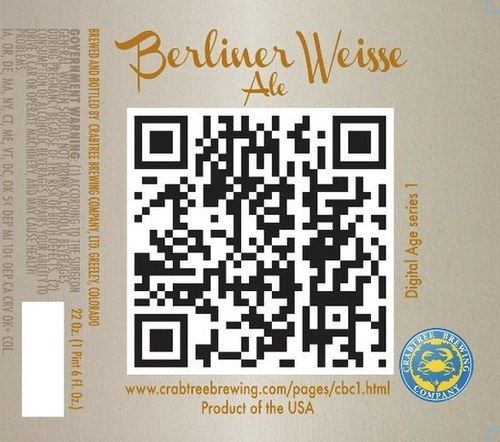
n addition, using a QR code – the boxy thing you scan with a cellphone – instead of actual ingredient labels solves most of the cost problems. The can or bottle code doesn’t have to change when ingredients do; rather, the QR code sends people to a website where changing the ingredients and nutrition information is as simple as a couple of keystrokes and mouse clicks.

Beer drinkers responded enthusiastically. Three-quarters in the above linked survey said alcohol beverages should have nutrition labels, while 77 percent would support wine and liquor companies providing this information to consumers.

Is anyone in wine listening?

And, because the Wine Curmudgeon appreciates irony: Even though Constellation Brands’ beer unit (a host of Mexican brands) added labels, its wine unit – including Robert Mondavi– doesn’t use them.

More about ingredient and nutrition labels:
Leading wine experts call for ingredient and nutrition labels
Clean wine: Has the Winestream Media finally figured out why we need nutrition and ingredient labels?
Bud Light debuts new and improved ingredient labels

Winebits 694: Wine packaging, convenience store wine, Pio Boffa

Shopper
“So why do crackers have ingredient labels, but wine doesn’t?”

This week’s wine news: Another of the Winestream Media calls for wine packaging changes, plus more good news for convenience store wine and Italy’s Pio Boffa dies

Welcome aboard: Sean Sullivan, the founder of the Washington Wine Report who also writes for the Wine Enthusiast, says what blog readers have known for years: U.S. wine is a mess, and his solutions include ingredient labels, accurate alcohol levels, lighter bottles, and using more screwcaps. And yes, I had a Fred Sanford moment when I read this. That someone as respected as Sullivan would write this speaks directly to the problems facing the wine business these days, and that he would suggest steps that someone generally seen as a crank has advocated for years speaks even more directly to the problem. Wine is fun. Why can’t we make it more accessible?

C-stores, baby: Forgive the cliché, but every time the Wine Curmudgeon sees a study touting convenience store wine sales – or C-stores, as they’re known in the trade – I get much too excited. The latest report comes from market research firm IRI. Its numbers: Dollar sales of table wine were up 7.9 percent while case sales for wine increased 5.5 percent in 2020. One of the big sellers, says the story in the link, was and will be rose – which tends to suggest that younger consumers are doing much of the wine buying at convenience stores. Baby Boomers still tend to think of them as places to buy diapers in the middle of the night and bad coffee at 7 in the morning on the way to work.

Pio Boffa: One of my favorite wine experiences was in 2012, when I had lunch with Pio Boffa of Pio Cesare, one of Italy’s top producers. The highlight was the 2007 Cesare Barbaresco, one of the two or three greatest wines I’ve ever tasted. Sadly, and you don’t need to know Italian to read this, Boffa died last week at the age of 66: “Il Covid si è portato via un altro grande del mondo del vino.” Grand old man, indeed. As The Italian Wine Guy noted: “And what a wonderfully complicated and all too brief life it was. … And he was among a handful of men and women in Italy who moved the needle and gained Italian wine its due and acceptance on the world’s stage.”

Photo: “Shopper” by Thad Zajdowicz is licensed under CC BY 2.0

Leading wine experts call for ingredient and nutrition labels

nutrition labels
Remember when Bonny Doon took the lead in adding ingredient labels to wine? And we thought labels had a chance to spread?

Has the time finally come for ingredient and nutrition labels — given that people with initials after the name agree with the WC?

The past couple of weeks have been filled with demonic news stories about pandemic drinking and the imminent alcoholism of anyone who has ever had a glass of wine with dinner.

How about: “Soaring Pandemic Alcohol Sales Cause Concern For Doctors”!

Or, “America’s all or nothing attitude toward alcohol: Binge or be sober

And, “As pandemic drinking surges. …”

So what’s the wine industry to do? Obviously, it hasn’t done much of a job reminding people that the U.S. is not anywhere near a collective drunken stupor. As noted here way too many times, there is little evidence we’re drinking more during the pandemic.

Dare the Wine Curmudgeon suggest – once again – ingredient and nutrition labels? And, this time, I’m not the only one who thinks so.

No less than the Institute of Masters of Wine recently held a webinar on the subject – and many people with initials after their name said ingredient and nutrition labels were a good idea.

And imagine my joy when Ines Salpico, writing in a British trade magazine, spared no punches: “Wine has been able keep itself at the margins of a basic consumer right: knowing the full list of ingredients and allergens present in a product. … [G]reater transparency needs to be seen as a key opportunity rather than a threat.”

Her argument makes perfect sense to everyone but the wine business:

• “Transparency will engage a generation of consumers that is data-driven, data-hungry and very skeptic about products without full traceability.” In other words, all those young people who don’t drink wine.

• Labels will make wine seem more like a food product and less like tobacco, a tactic that the neo-Prohibitionists have been using to great success.

• The lack of labels gives the impression that producers “might have something to hide,” and makes it possible for foolishness like clean wine and healthy wine.

So, once more, please: Can’t we offer ingredient and nutrition labels on wine?

This California winemaker is impressed with nutrition fact boxes

nutrition fact boxes
Just 100 calories — take that, light beer.

Not everyone in the wine business thinks nutrition fact boxes are the spawn of the devil

Anthony Riboli didn’t necessarily want a nutrition facts box on his peach flavored fizzy wine. But U.S. and Italian wine regulations required it – and you know what? The facts box isn’t so bad.

“I wish I could say I had a choice in the matter, but now there are obvious benefits,” says Riboili, the fourth-generation winemaker for his family’s San Antonio Winery and its four brands. “Are wine connoisseurs going to care? Probably not. But it will it open us up to drinkers who may not identify themselves as wine drinkers? I can see that.”

The wine in question is the Stella Rosa Golden Honey Peach, a fizzy Italian moscato flavored with peach that has 100 calories, no added fruit juice and no sodium. How do I know this? It’s on the back label. (Click on the label to make the picture bigger.)

The wine snobs reading this probably stopped after the last sentence. It’s bad enough he’s writing about nutrition facts again, they’re thinking, but a peach-flavored moscato? That’s not even real wine. Cancel my subscription!

Which is their loss. As has been argued here for years, the future of the wine business has a nutrition facts box in it, even if no one in the wine business wants to admit it. If Smoothie King wants ingredient transparency, why not wine?

Yes, there will be short-term difficulties, particularly for smaller producers. But the long-term benefits will be more than worth it. Consider just one: A light beer has about 100 calories, while a normal glass of wine has 125. In other words, not all that much difference, and wine tastes better. But how is anyone going to know unless they can check a nutrition facts box?

In fact, Riboli told me that the peach wine nutrition facts box has worked so well that he’d consider adding one to San Antonio’s traditional wines, assuming any potential legal issues could be resolved about how the information could be used.

One other note: The wine was damned good – well-made, peachy, not too sweet, and fresh and sparkly. I’ve tasted much worse from serious winemakers chasing 92 points, but who don’t want to use a nutrition facts box.

More about nutrition and ingredient labels:

Clean wine: Has the Winestream Media finally figured out why we need nutrition and ingredient labels?
Nutrition labels for booze
Bud Light debuts new and improved ingredient labels

Wine, strawberry fruit spread, and nutrition labels

nutrition labels
No thanks: Three tablespoons of this aren’t as appealing as a glass of wine.

The power of nutrition labels: A glass of wine has the same number of calories as three servings of strawberry fruit spread

The biggest surprise during last month’s Silicon Valley Bank State of the Wine Industry report was not the sad state of wine in the U.S. Rather, it was that Rob McMillan, the report’s author, said it was time for wine to acknowledge the need for ingredient and nutrition labels on its bottles.

This was revolutionary. Previously, only a couple of consumer groups, a handful of progressive wineries, and cranks like the Wine Curmudgeon wanted to see the labels. To the rest of wine, the labels were a waste of time – confusing, costly, and bottle clutter. Wine drinkers don’t need to be bothered with what was in their wine, and that was was that. And stop bothering us.

But McMillan’s argument turned that reasoning on its head. Wine, he said, is the most natural of products – grapes and yeast. Why, when younger consumers care more than ever about what’s in their food, should the wine business hide that?

“We can’t be more plant-based than wine – you put it in a tub and squish it and it turns into something else,” he said. “Yet we’ve got to this point where spiked seltzers are seen as a more healthful choice because of the clarity and transparency of the ingredients.”

Which, of course, is what some of us have been arguing for years. I was reminded of the good sense of this approach when I looked at the fact label on a bottle of Smucker’s Natural Strawberry Fruit Spread, where the front label puts the emphasis on “natural” and adds “No High Fructose Corn Syrup.”

A serving is one tablespoon, and there are 40 calories per serving of this “natural” product. In other words, I can drink a glass of wine, which has about 120 calories, or I can have three tablespoons of something called natural strawberry fruit spread. What do you think most consumers would choose?

And how has the wine business missed this connection all these years?

More about wine nutrition labels:
Nutrition labels: What wine can learn from two packages of frozen onion rings
The final “nutrition and ingredient labels for wine are a good thing” post
Wine falls further behind in nutrition and ingredient labels

Winebits 622: Supermarket wine, ingredient labels, Kroger wine

supermarket WineThis week’s wine news: Sommeliers pick supermarket wine, plus another shout out for wine ingredient labels and Kroger expands its on-line wine business

Interesting choices: Vinepair asked sommeliers to pick quality supermarket wine, and what struck me as how un-supermarket so many of the wines were. How many of us go to the grocers to spend $60 for a bottle of Jordan cabernent sauvignon? And you can tell many of the sommeleirs had not bought wine at a grocery store lately, given the number of hard to find European wines they selected. Still, it was good to see Dallas’ Barbara Werley select Chateau Ste. Michelle and Houston’s Jay Pyle pick the Matua sauvignon blanc, a top $10 wine.

Thank you: Mike Veseth, The Wine Economist, says “I believe that wine, beer, and spirits will eventually be required to list their ingredients and nutritional data. I wonder what would happen if wine were to take a voluntary step and be more transparent now as a way to shape the narrative?” Which is good news for those of us who have fought long and hard for ingredient and nutritional labels and to convince to join the 21st century. Veseth’s reasoning is well taken: “We might think wine is special — and it is in many ways — but we shouldn’t assume that it is immune to the forces that are making transparency, accountability, and technology more important every day.”

Good luck: Kroger has expanded its on-line wine store to 19 states and Washington, D.C, offering – get this – some four dozen wines “selected by winemakers and sommeliers for their quality, value and flavor profiles.” I wonder: Is it a coincidence that one of the wines is the Matua sauvignon blanc? You can check out the store at this link – just click on one of the states listed in the menu. Selection is limited, and most of the wines aren’t well known. But it is intriguing that Kroger is trying something that mighty Amazon gave up on long ago.