Convenience store wine sales, one of the few bright spots over the past couple of years, weren’t in 2021
This is the second of two parts looking at trends for wine sold in supermarkets and convenience stores. Because not all wine is sold at Costco, Total Wine, and your local retailer. Today, part II: Convenience store wine sales. Thursday, part I: Supermarket private label wine.
Convenience stores – yes, convenience stores – have been one of the few bright spots for wine over the past couple of years. Wine sales at convenience stores surged in 2020, the fourth consecutive year of increases at 7-Eleven, QuikTrip, and the like.
But it was, apparently, too much to last.
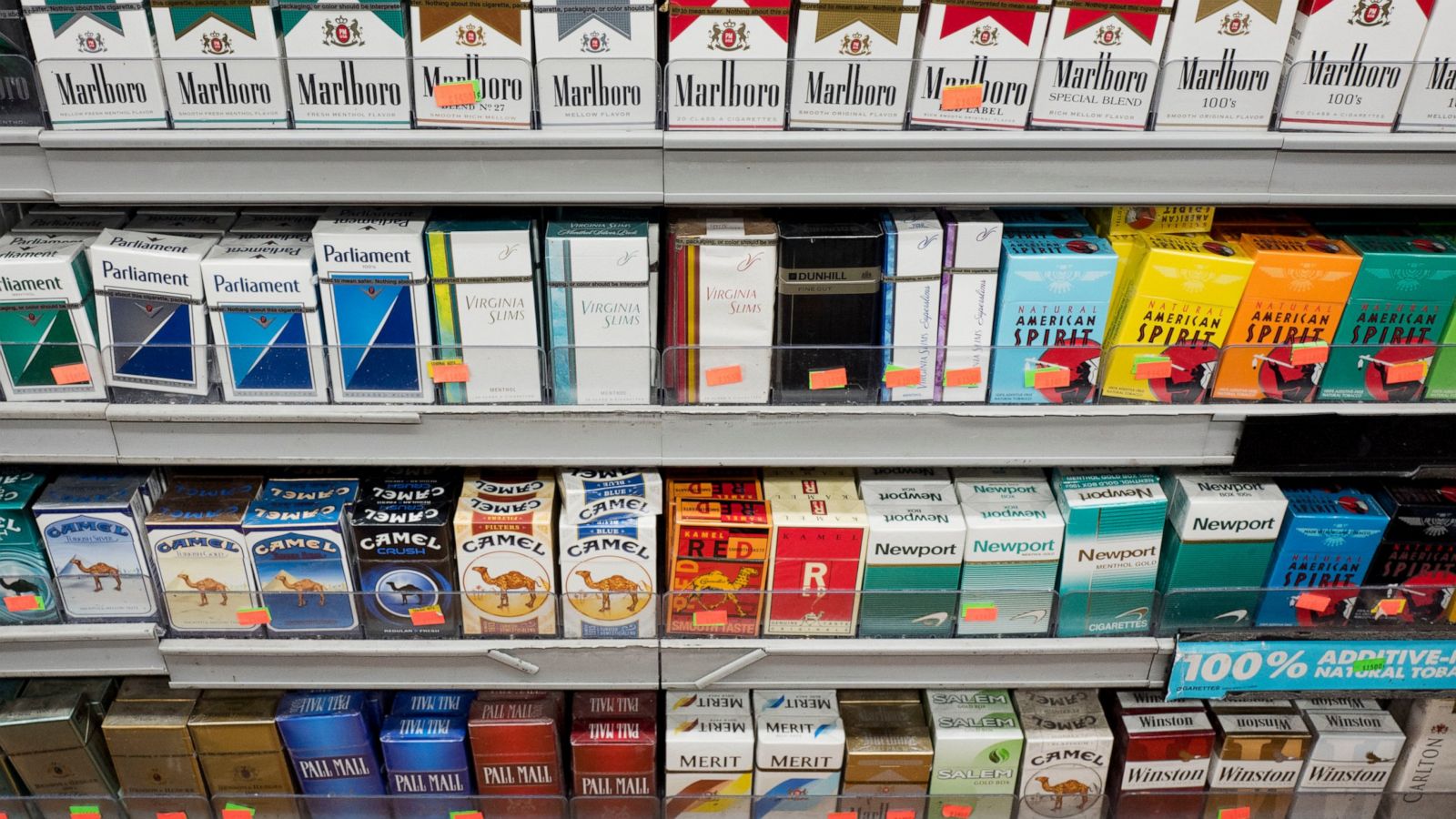
The 2021 numbers, released in June, showed that wine sales declined 7 1/2 percent. In addition, sales as percentage of all the store sold fell by one-half of one percent. Sales of beer and cigarettes, meanwhile, increased – 1.2 percent for the former and 2.6 for the latter. I don’t know about you, but when wine drops and cigarettes don’t, it’s really time to worry about the future of the wine business.
The only good news? More convenience stores than ever are selling wine, more than two-thirds — up from 58 percent in 2020. That’s especially impressive, given how many states, including New York and Pennsylvania, limit wine sales in convenience stores.
Still, Jeff Lenard, vice president, strategic industry initiatives, for the National Association of Convenience Stores trade group, says not to panic. The end of the pandemic, he says, probably inflated the 2020 numbers: “It’s not so much that the year 2021 was a decline continuing a trend, but a decline from an unusual year in 2020.”
Also worth noting – despite the 21.1 percent sales increase from 2019-2020, the number of stores selling wine barely rose at all. In the long term, it’s probably quite significant that that number is now more than two-thirds.
So we’ll focus on the good news – since there is so much bad news in wine otherwise.
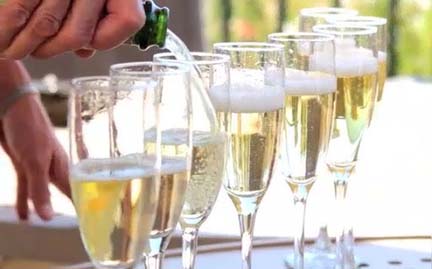
“Let’s pop down to the corner for Champagne to drink while we cook dinner tonight.”
One study suggests that the independents and neighborhood retailers saw wine sales grow more than 40 percent
The biggest news in wine sales during the pandemic has been the tremendous rise in Internet, delivery, and direct-to-consumer – that is, more consumers buying wine from non-traditional retailers. But lost among that surge was another significant change: The growth in wine sales at convenience stores and neighborhood retailers.
Regular readers already know that convenience stores have been one of the few bright spots in wine sales over the past several years. But a study by a company that sells point of sale software to independent convenience stores; mom and pop grocers; and small liquor shops has further reinforced that good news. Same store wine sales for retailers using the National Retail Solutions system increased 44.5 percent between 2019 and 2020, about double the growth for all convenience stores.
Even more intriguing is that its data may show a relationship between younger consumers and wine – not because it’s wine, but because of where these shoppers buy their wine, says the company’s Suzy Silliman, senior vice president of data strategy and sales.
The company’s sales data hints that younger, more affluent, more urban consumers who are less likely to be white are buying wine at small, local retailers. This behavior seems to be pandemic driven; instead of going out for dinner and drinks, they’re walking down to the corner to buy wine to have with dinner at home.
In one respect, this behavior isn’t surprising, since local has been the marketing mantra for anyone trying to reach younger consumers since the Millennials came of age. But I don’t know that there have been any good numbers to prove the point.
Completely different behavior
And this behavior is completely different behavior from their parents and grandparents, who have powered the growth in companies like Total Wine and have helped Kroger become one of the biggest wine retailers in the world. As such, the wine business has made less effort to sell its product to those smaller retailers. What’s the point if Kroger buys everything you make?
So what’s the catch? The numbers, as Silliman points out, are far from definitive. The software doesn’t track demographics, so the assumption that these are younger, more urban consumers is based on where the stores are located and not actual shopping data. In addition, the pandemic may have skewed the statistics in a way no one has ever seen before. If we return to some semblance of normal, will these consumers still buy wine at the shop down the street?
Maybe. Silliman told me that “a lot of behavior becomes habit.“ She says she misses going out to dinner, but that she didn’t realize just how much she enjoyed staying at home, without the idea she had to go out and do something.
“This may have been a forced experiment, with people having to stay at home,” says National Retail Solutions’ COO Elie Katz. “But I’ve talked to a lot of Fortune 500 companies, and there’s no guarantee that everyone is going back to the office.”
And the numbers that do exist are stunning:
• The 1,221 stores that use the software, mostly on each coast, in Texas, and in the Chicago area, added 800 wine labels to their inventory in 2020. That’s so big a number as to be practically unprecedented. It’s even more amazing when you consider that grocers can’t sell wine in New York state.
• There seems to be evidence suggesting that shoppers asked their local stores to add specific brands, which accounts for all those new wines on shelves. This behavior is markedly different from what happens at a large retailer, which rarely adds wine based on customer requests.
• Sales of high-end Champagnes, including Moet and Chandon, more than doubled. That these stores even carry $50 Champagne speaks to what’s gong on here. The Moet, in fact, was the fifth best-selling wine in dollar terms over the 12-month period.
• The best selling wine was Stella Rosa, a sweet red – but its sales tripled in the process.
• Luc Bellaire, another high-end French sparkling wine, was the third best-selling wine, and its sales tripled as well The wine can cost as much as $15 for a 187-ml bottle.
• And less we think that luxury items wack these numbers out of proportion, the $9 1.5-liter bottle of Barefoot was the third best-selling wine.
More than half of the country’s convenience stores, like QuikTrip, now sell wine.
Convenience store wine sales in 2019 were flat, but that’s not necessarily bad news for the wine business
Table wine sales in U.S. convenience stores were flat in 2019, which seems like more bad news for the wine business. That’s because sales had increased 20 percent in dollar terms in 2018, the second year in a row that c-store sales outperformed the overall U.S. market.
In this, convenience stores have been one of the bright spots in the wine business over the past couple of years. Younger wine drinkers aren’t as put off by buying wine in a 7-Eleven as their elders are, and it’s more convenient for them, too — Pampers and wine on the way home from work. It also helps that stores have better selection than years past, and not just wine coolers and big boxes of sweet wine.
So Jeff Lenard, the spokesman for the National Association of Convenience Stores, says not to worry.
“I think the percentage of stores selling wine is the more important stat,” he emailed me this week during our annual discussion about the group’s wine survey numbers. “As we have seen with fresh items in stores, it takes time to grow the offer and raise awareness so that customers can expect to find quality wine in a store. And in many cases, it’s a wine offer that is more curated, so that’s even more difficult for stores to add.”
And Lenard may have a point:
• The number of convenience store selling wine increased some six percent in 2019 to more than 52 percent — a number that may be an all-time high. That’s an amazing statistic, given that wine sales in 7-Eleven, RaceTrac, QuikTrip, Speedway, and the like are illegal in many states, including New York and Pennsylvania.
• Wine sales decreased by one-half of one percent per store, which is a letdown from 2018’s robust growth. But it’s in line with overall wine sales in the U.S., so it shouldn’t be too surprising. In addition, says Lenard, it’s not unusual to see per store sales decrease when more stores offer a product.
• The number of stores selling beer and spirits barely grew, by about one percent each. So wine’s store growth is that much more impressive.
• Given how one parses the c-store numbers, as well as the unreliability of U.S. wine sales numbers in general, it’s possible that convenience store wine once again accounted for as much as 2 percent of all the wine sold in the U.S.
Meanwhile, early reports indicate that c-store sales will increase substantially in 2020 because of the pandemic, as stores picked up sales when restaurants and bars were closed.
Convenience store wine: Table wine sales increased 20 percent in 2018
Table wine sales in U.S. convenience stores increased 20 percent in dollar terms in 2018, the second year in a row that c-store sales outperformed the overall U.S. market. That 20 percent figure could be as much as five times the growth in the overall U.S, wine market.
And no, I don’t understand why, either.
But those are the statistics in the 2018 state of the c-store industry report, published by the National Association of Convenience Stores. Convenience store wine sales in 2018, which include sparkling wine, fortified wine, and wine coolers, totaled $1.66 billion. That’s an amazing number. Take out the wine coolers, which the wine industry numbers may not include, and it’s possible that almost 2 percent of the wine sold in the U.S. last year came from a 7-Eleven, RaceTrac, QuikTrip, Speedway, and the like.
Association spokesman Jeff Lenard says there may be several things going on to account for all of that wine:
• About one percent more convenience stores sold wine in 2018. That total is almost half of the 153,000 U.S. locations.
• “More than anything else,” he says, “the increase in wine sales pairs (pardon the pun) with the increase in food service and more upscale foods that more convenience stores are selling.” In other words, fresh sandwiches and salads, which have become a c-store staple over the past couple of years, lend themselves more to wine sales than Big Gulps and those rubbery, orange-ish hot dogs spinning away in a corner.
• Younger consumers (18-34) are the predominant age group for convenience stores. And those of legal drinking age tend to be less fussy about where they buy wine than Baby Boomers, says Lenard. “Younger consumers are the ones who are least likely to think about a specific channel to purchase wine. They think wine or liquor store. Or dollar store. Or online wine club. Or gas station.”
• Women, who buy most of the wine in the U.S., are slightly more likely to buy gas in the evening, he says. “So can they also pick up wine for dinner then? Absolutely.”
Photo courtesy of Monica E using a Creative Commons license
Who knew 7-Eleven and its competitors had become wine destinations?
Convenience store wine sales increased five percent last year, more than the overall wine market
Convenience stores are selling more wine than ever – and no, no one quite knows why.
Wine sales in convenience stores increased five percent in dollar terms in 2017, according to the National Association of Convenience Stores. That’s an amazing figure, given that overall wine sales in the U.S. have been mostly flat for the past couple of years.
“If anything, it’s a 10-year overnight success story,” says Jeff Lenard of the convenience store association. “It has taken a sustained effort by retailers to believe in the category to the point where consumers largely expect to be able to find wine – and the kind they want – at convenience stores.”
In this, convenience stores are likely taking wine sales away from supermarkets, but given the convoluted way wine statistics work, no one is quite sure. It’s also worth noting that wine sales grew almost five times as much as bottled water, a convenience store staple (albeit from a small base).
So what’s going on? Why are more of us buying wine at 7-Eleven, QuikTrip, Circle K, and the like:
• Younger consumers don’t see convenience stores the same way the Baby Boomers do. We associate convenience stores with Thunderbird and 4-liter boxes of sweet wine, which was about all you could buy there 30 years ago. They grew up with more and better choices.
• One-stop shopping. Says Leonard: “If consumers can go to one place to get gas, food and wine at one stop, that is more attractive than three stops.”









 Convenience store wine: Table wine sales increased 20 percent in 2018