Category:Wine news

Wine history lesson 6: Was this California fortified wine one of the state’s first post-Prohibition efforts?

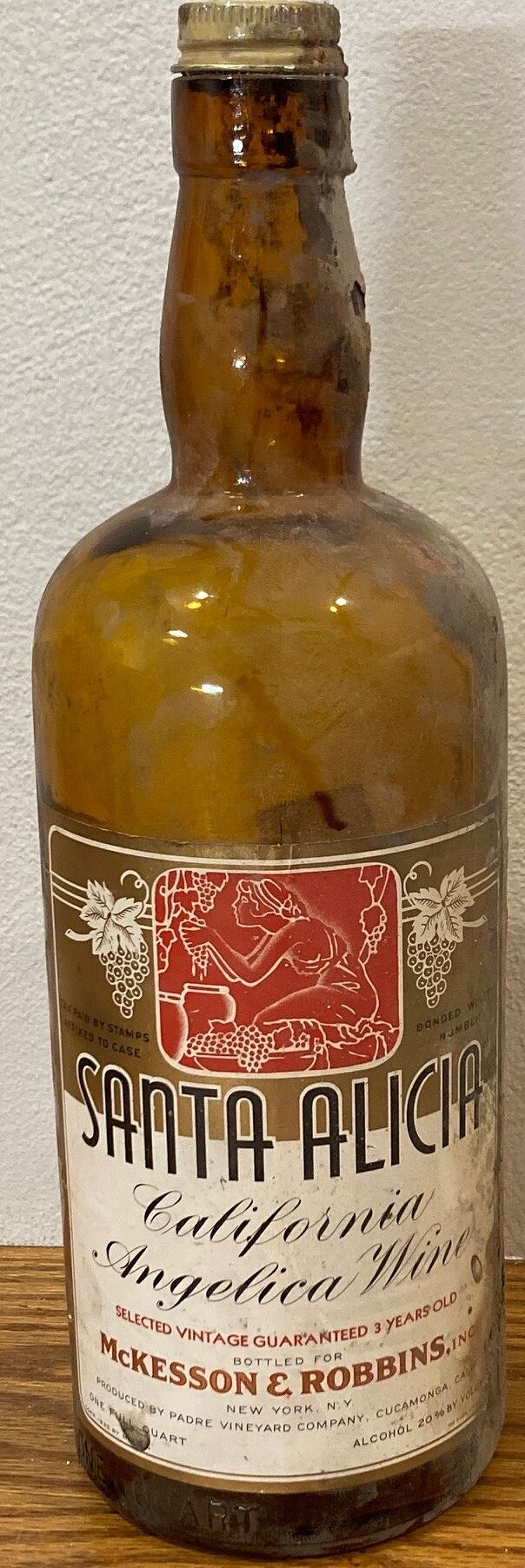
Padre Vineyard Angelica bottleThis Angelica bottle, made in the mid-1930s, is a “historical find”

Angelica, a fortified wine made with with the mission grape, is all the rage these days. I wrote a freelance piece about it, and Angelica shows up on the websites and social media that the cool kids use. Ask California winemakers about vintage Angelica, and they practically salivate.

But we can do them one better, thanks to blog reader Phil Buckles.

He found this bottle in a crawl space in a Denver home. The bottle, thanks to sleuthing from noted wine writer Mike Dunne and legendary Sacramento retailer Darrell Corti, is an Angelica sold around 1938 (there’s a 6-cent state liquor tax stamp on the back of the bottle). This means, says Corti, that “if it was three years old when bottled, as it says on the label, then it probably would have been one of the first vintages after the repeal of Prohibition.”

Further confirmation: Buckels found the bottle wrapped in newspapers, one of which was from February 1928 (touting the stock market, ironically enough, just 19 months or so before the crash that started the Great Depression).

Says Corti, whose family sold this producer’s wines in the 1950s: “This is a real historical find. It is the first time I am seeing something like this.”

A little background: Padre Vineyard was in Cucamonga (today, Rancho Cucamonga, more or less a Los Angeles suburb). It was owned by the Vai family, who made wine under the Vai Brothers and Padre labels. The winery was built in 1870 and renovated by the Vais in 1909 and likely closed in the 1960s, when suburban sprawl uprooted most of the surprising number of wineries in the Los Angeles area.

The distributor, McKesson & Robbins, was the forerunner of today’s McKesson pharmaceutical giant. It wasn’t unusual for drug companies to sell alcohol before Prohibition, and many were able to stay in business during Prohibition because they did sell medicine.

The mission grape was brought to California and the U.S. southwest by colonizing Spanish priests in the 17th century, who used it to make communion wine. There are still a handful of centuries-old mission vineyards throughout the state, some of which were planted to make Angelica for miners during the California gold rush. Angelica has enjoyed a resurgence over the past decade or so, with younger winemakers looking for something more interesting to make than another bottle of cabernet sauvignon.

More wine history lessons:
• Wine history lesson 5: Big Wine’s forebear — the infamous California Wine Association
• Wine history lesson 4: Those damned high prices
• Maynard Amerine on quality, price, and value

Winebits 769: Two-buck Chuck, Coke, hybrid grapes

two white wine glassesThis week’s wine news: The New York Times’ Eric Asimov dissects the legacy of Two-buck Chuck, plus Coca-Cola wants to sell us booze and accolades for hybrid grapes


• “A cost to the wine business”: The New York Times’ Eric Asimov is not kind to the late Fred Franzia, his legacy and Two-buck Chuck. “His message not only promoted his own company’s products, it also destroyed the notion that any wine could be better,” Asimov wrote, adding that he did not like the wine or the man. “Mr. Franzia liked to say that Two-Buck Chuck was the People’s Wine, but in his hand it was a crowbar, used to divide wine drinkers.” It’s a surprisingly harsh judgment from someone who is probably the best wine writer in the country, and I would have expected more perspective. I’m not sure that a wine, no matter how popular, can do what Asimov said it did, and especially when it can be difficult to buy (as Asimov acknowledges). The other intriguing bit? That wine is full of snobbery, something I don’t often see in Asimov’s work — “its history of pretentiousness, and its absurd rituals and vocabulary that convey the message that one must be a connoisseur before one can enjoy wine.” Maybe he can write more about that.

• Coke and booze? Are canned cocktails the future for Coke? That’s the opinion in this story, citing a stagnant market for soft drinks and the huge growth in canned cocktails. Coke is experimenting a variety of ready to drink booze concoctions, including some made with Topo Chico and Fresca. The key will be to find a combination that works for the younger consumers who gravitate to that sort of thing (and who aren’t as enamored of soft drinks as their parents and grandparents).

• Hybrid grapes: One of the great joys of doing Drink Local Wine was tasting wine made with grapes that weren’t the usual. Many of these were hybrids – species crossed with vinifera (chardonnay and the like) for a specific reason, such as pest resistance and cold hardiness. Now, given the climate challenges facing many of the world’s grape growers, hybrids may have a new role. The idea is to breed grapes that can better deal with rising temperatures, increased risk from bugs and disease, and more humidity. It’s a fine piece, and the writer, Sarah Kuta, knows what of she talks about and her reporting is top-notch.

Winebits 768: Wine consumption, back labels, Pix.wine

Man shopping at wine store
Remember, only 1.3 bottles a month.

This week’s wine news: U.S. wine consumption compared to the world, plus the language of wine back labels, and Pix.wine folds

• About one bottle a month: David Morrison, writing on the Wine Gourd blog, details how little American care about wine – or, as he puts it, “For most Americans, wine is not a big deal.” The post looks at per capita consumption, where the U.S. ranks 18th, between Canada and South Africa, at 12 liters a year. That works out to 16 bottles annually, or about 1.3 bottles a month – more or less the average over the past 20 years despite the total increase in U.S. wine consumption. In other words, the increase in consumption has not been bigger than the population increase. Or, writes Morrison: “No-one should conclude that wine is in any way a staple product in the lives of US citizens.” His analysis, in the wake of the past two Gallup alcohol use surveys, is well worth contemplating.

• What’s on the back label? The South African wine writer who uses the non de plume Cape of Good Wine takes a look at wine back labels, a subject we’ve gone into quite a bit on the blog. His take: There is more to back labels than bad winespeak (and he goes into detail on that, too), and especially in his native country. He is particularly impressed with the way some producers do the right thing on the back, listing sustainability and fair trade efforts. Maybe, he writes, producers should use the back label as their main selling point: “And I hope there’ll come a day where we will all rotate each bottle in eager anticipation of seeing how the winery is more environmentally and socially responsible.”

• Pix.wine: I wasn’t going to write about the wine site Pix.wine closing this month; call it more bad news for those of us who write about wine, and leave it at that. But 1 Wine Dude Joe Roberts, a long-time pal of the blog, points out that Pix’s demise is just one more sign of wine’s problems. Its failure, writes Joe, is another sign that the wine business has no idea how to adjust to the digital age. A few caveats here: I wrote for Pix and my editor, Felicity Carter, is one of the best I’ve worked with, wine or otherwise. Plus, Pix impresario Paul Mabray has done a hell of lot for wine and wine writing. So I may not be especially impartial when I say Joe makes some fine points (though in language we don’t use on the blog) about the wine business’ woes. Would that someone besides Joe and I – and a handful of others – cared.

Fred Franzia, 1943-2022

Fred Franzia
Fred Franzia: 1 billion bottles of Two-buck Chuck

Two-buck Chuck creator was as innovative as he was controversial

Perhaps the best way to understand Fred Franzia’s place in the history of California wine is to know that the wine that carries his family’s name hasn’t been in his family for almost 50 years.

So yes, Franzia – who died on Tuesday – was contradictory and confusing, and he was even disliked by many. A federal fraud conviction and lawsuits against fellow wine producers will do that.

But Franzia’s role in the U.S. wine business and its growth during the 20th century wine boom was as important as those of Robert Mondavi and Jess Jackson. If Mondavi helped make California wine more than an oxymoron and Jackson’s Kendall Jackson white made chardonnay the national varietal, then Franzia’s Two-buck Chuck turned wine pricing on its head.

That’s because Two-buck Chuck — $1.99 at first and $3.50 to $4 today — was the first cheap wine that didn’t come in a jug with a screw cap or an awkward box. Instead, it came in a 750ml bottle with a cork-style closure, just like real wine. It also came from a real retailer, and not some dingy store with dusty shelves, poor lighting, and employees who seemed more comfortable selling Thunderbird. Quality, though notoriously inconsistent, was usually a notch above the jug and boxed wines of the era.

And that, apparently, also made the wine business crazy.

Read Franzia’s obituaries in the Winestream Media, and they’re mostly polite and little more. There are few of the accolades — and none of the love – that characterized Mondavi’s obituaries, or even the grudging respect in the Jackson death notices. The Wine Spectator gave him six paragraphs, noted Two-buck Chuck, and said Franzia was known “for his outspoken opinions of the wine industry.”

Which doesn’t seem like much for a man whose leading brand has sold more than 1 billion bottles and whose company, Bronco Wine, is the seventh biggest in the country. But chalk it up it to the Franzia legacy.

Winebits 767: Sixty Vines, sommelier cheating scandal, UPS strike?

wine drinkers toasting This week’s wine news: A wine bar gets accolades, plus a lawsuit is filed in the sommelier cheating scandal and labor unrest at UPS may lead to a strike next year

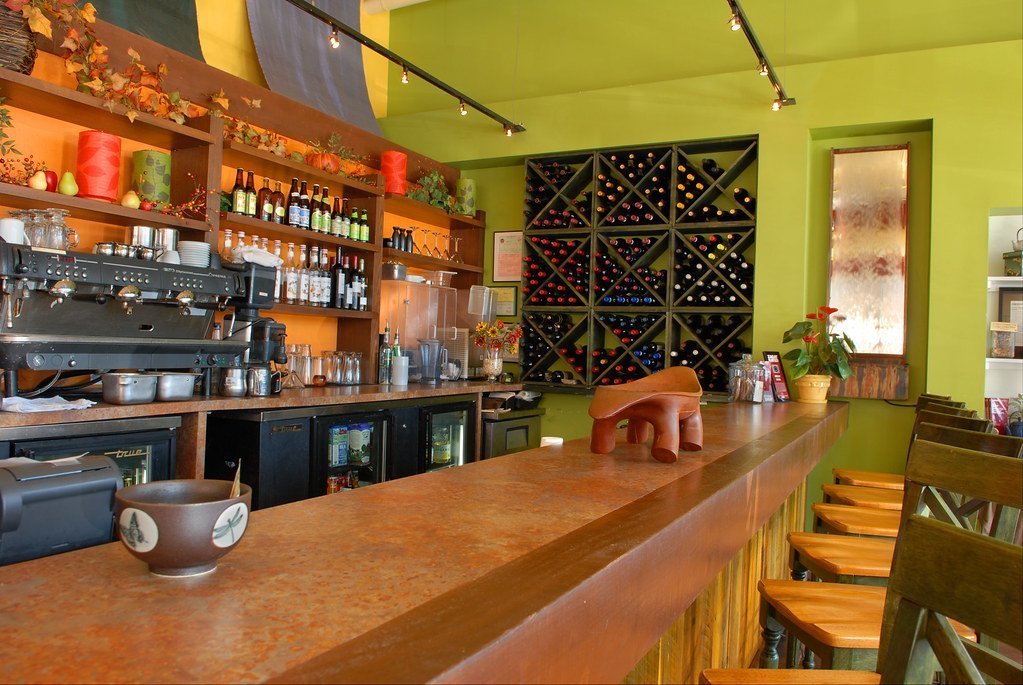
• Hot concept: Wine might be having its problems — and especially in restaurants – but that didn’t stop the Nations’ Restaurant News trade magazine from naming winebar/restaurant Sixty Vines as a 2022 Hot Concept. The small chain, with six locations around the country, features 60 wines on taps and focuses on sustainability. I’ve eaten at the original location in suburban Dallas, and it didn’t do much for me. But these days, given wine’s travails, if Nation’s Restaurant News says this will help sell wine, I’m all for it.

• Lawsuit time: A lawsuit has been filed in the 2018 sommelier cheating scandal. Three men who passed the exam, but were stripped of their accreditation, have sued the organization that certifies sommeliers. Their suit calls what happened a “sham investigation and a sham hearing for the single purpose of stripping the plaintiffs and the successful candidates of their Master Sommelier titles in order to hide other misdeeds.” The lawsuit seeks unspecified damages. Background is here, for those who don’t remember it. And it’s worth noting that the cheating was just part of larger problems at the group, which included sexual misconduct.

• Poor wine drinkers: Regular visitors here know that the WC is not alone in bemoaning the poor service and inefficiencies that dog UPS and Fed Ex, which dominate wine home delivery. Now, things could get worse. A news report says UPS workers, furious at the company, seem to be headed for a strike when their contract expires next year. Reports CNN: “Already, before the talks have even started, labor experts are predicting that the drivers and package handlers will go on strike. ‘The question is how long it will be,” said Todd Vachon, professor of Labor Relations at Rutgers. “The union’s president ran and won on taking a more militant approach. Even if they’re very close [to a deal], the rank and file will be hungry to take on the company.” I asked a friend of mine who works for UPS about this, and he said that he doesn’t want to strike, but that it was time for the company to start treating them fairly.

Winebits 966: Calorie labeling, lawsuits, wine retail

wine ingredent label
Is a version of this label coming soon to wine in Australia?

This week’s wine news: Australia likely to mandate calorie counts, one more wine lawsuit, and where to open wine shops

• On the label: Australian wine will soon list calories, part of a push by the country’s food minister to “increase labeling on alcoholic drinks to inform consumers of their hidden and often high calorific content, in an effort to reduce obesity rates.” The story is a little vague, since it’s a reprint of something behind a paywall, but it looks like the plan will go into effect toward the end of next year. If it happens, this would leave the U.S. as the biggest holdout from listing calories, ingredients, and or nutritional information for wine.

• Lawsuit time: Regular readers know that the WC gets a kick out of wine lawsuits, and there’s another fine one on the horizon. E&J Gallo, whose La Marca brand controls about one-quarter of the Prosecco market, is suing the company and importer of Bollacini Prosecco, contending that the latter has copied the La Marca bottle design. There’s a picture of the two bottles at the link, and they don’t look especially similar. But what do I know? I didn’t think anyone would confuse Cristal, the celebrity Champagne, with Cristalino, the cheap Cava, in a similar lawsuit. And Cristal won that lawsuit easily.

• Where are the stores? Majestic, a British wine retailer, wants to let its customers pick its new store sites. The chain, with 201 shops across the United Kingdom, says shoppers could win a year’s supply of wine if they help it find the perfect location. The WC can’t decide how serious Majestic is; as noted here many times, every wine drinker (me included) thinks the perfect retail location is across the street, with ample parking, an unlimited selection, and cheap prices. How Majestic can reconcile that with its needs is going to be past difficult.

Winebits 765: $10 wine, wine and sports, doppelgangers

wine bar
Can you imagine two of the WC sitting at the same wine bar?

This week’s wine news: The mainstream media pushes a $10 wine. Plus Rolling Stone – yes, Rolling Stone – looks at wine and sports, and does the WC have a doppelganger?

• Shock and surprise: The MarketWatch website, which mostly covers business news, will sometimes run a wine review. So imagine my surprise when I saw this: “Here’s a great $10 bottle.” The review was an ode to a wine sometimes seen here, the Argentine Trapiche malbec. The Trapiche is a little softer than I like, but it’s widely available (supermarkets, even) and it tastes like Argentine malbec. So why did it appear, given how almost everyone, winestream or mainstream, consigns $10 wine to websites and blog like mine? Could it be that others are fed up with this premiumization thing? I can only hope.

• “No matter how hard I try. …” I can’t get away from sports, even though I haven’t covered it since Bill Clinton was president. Hence, this long and almost too detailed piece in Rolling Stone, looking at the relationship between wine and sports — “fine wine is surprisingly significant in the world of sports.“ In one respect (and has been noted here), this is not surprising. Athletes make as much as tech moguls, so why not? And (as also noted here) — sports have discovered premiumization, too. How about $200 for a ticket to a Boston Red Sox baseball game? The biggest surprise to me is why this story appeared in Rolling Stone, which still focuses on music.

• WC doppelganger? The New York Times reports that a leading researcher says that “ ‘there are so many people in the world that the system is repeating itself.’ It’s not unreasonable to assume that you, too, might have a look-alike out there.” In other words, a doppelganger. For which the WC apologizes ahead of time to whoever might be stuck with me. The story notes that the reason for facial similarities is partly genetic and also partly a mystery, but that the similarities seem to extend only to the way we look and not the way we act. For which the WC is most grateful; does the world does not need another cranky wine writer?