



Category:White wine

Wine of the week: Chateau de la Ragotiere Muscadet 2019

Chateau de la Ragotiere MuscadetThe Chateau de la Ragotiere Muscadet is a French white that offers more than simple pleasure at a more than fair price

The Wine Curmudgeon appreciates Muscadet, the white wine made with the goofily-named melon de bourgogne grape, and would drink it often if it was more readily available. So those of you who figure the wine world ends with chardonnay, save for a brief visit to sauvignon blanc every once in a while, can skip this and wait for tomorrow’s post.

Why my affection for Muscadet? Because it’s cheap, usually well made, and offers a glimpse of all of the amazing wines in the world – if we’re willing open our minds.

Case in point is the Chateau de la Ragotiere ($13, purchased, 12.5%), which is a fair value even at this price. Imagine it at $10 in a tariff-less world.

Melon de bourgogne wines are not necessarily complex, but even the simple ones are usually worth drinking. The Chateau de la Ragotiere is not simple by any means – surprisingly rich and full for a Muscadet, thanks to extended aging in the winery (another bonus for the price). Look for some lemon and soft apple fruit mingling with more minerality than I expected.

Highly recommended. Drink this on its own as the weather warms up, and it’s also a wine to pair with seafood that is a little more complex than grilled shrimp – something with a pan sauce, for instance, using the wine.

Imported by Vineyard Brands


Mini-reviews 142: Dueling Pistols, Grgich, Frenzy, Louis Jadot

dueling pistolsReviews of wines that don’t need their own post, but are worth noting for one reason or another. Look for it on the fourth Friday of each month.

• Dueling Pistols Red Blend 2016 ($50, sample, 14%): Surprisingly restrained red blend from California’s Paso Robles, with more juiciness than sweet fruit. Look for cherry fruit, a long, almost stony finish, and and fine, almost earthy tannins. Very nicely done.

• Grgich Hills Cabernet Sauvignom 2014 ($72, sample, 14.5%): This red from one of California’s most respected long-time producers is everything it should be – fruity (dark berries?), rich, complex, and age worthy.

• Frenzy Sauvignon Blanc 2019 ($12 purchased, 12.5%): Typical “meh” supermarket New Zealand sauvignon blanc – lots of grapefruit and not much else. Imported by Wilson Daniels

• Louis Jadot Beaujolais-Villages 2019 ($12, purchased, 13%): This French red might taste better when and if you try it; I found it fruity (cherries?), but so tart as to be unpleasant. This producer’s quality control has become notoriously inconsistent. Imported by Kobrand

Wine to drink during rolling power blackouts

power blackouts
The idea is to have cheap wine in the house so you don’t have to drive in this mess to buy cheap wine to drink during rolling power blackouts.

Three wines to drink during Texas’ rolling power blackouts — because that’s when you really need quality cheap wine

The weather in Dallas for the past 10 days has been exceptional – record, almost sub-zero cold and more snow in a couple of days than we usually get in a couple of years. As such, we’ve had rolling power blackouts thanks to the unprecedented electrical demand. Here at Wine Curmudgeon World Headquarters in Dallas, the power went off eight times between Sunday and Wednesday — and I was luckier than most, who didn’t have any power at all. And a friend in suburban Arlington lost water, and had to use snow to flush the toilet.

Fortunately, I have lots of sweaters, as well as flashlights positioned around the house. Churro, the blog’s associate editor, showed grace under pressure — he barely objected when I wiped his feet off after a trip outside.

The situation raises two questions: First, how did the state’s grid operator get in this mess, which isn’t really in the purview of the blog (though I have had long experience with Texas’ electricity ineptness). Second, what wine to drink during rolling power blackouts?

Fortunately, the WC has the second one covered:

• Grunhaus Maximin Riesling 2017 ($15, purchased, 11%): One more very pleasant German riesling surprise – sort of sweet, lemony, almost sparkly. It’s not complicated, but it is German in style. Highly recommended. Imported by Loosen Bros. USA

• Fantini Montepulciano d’Abruzzo 2018 ($10, purchased, 13.5%): This vintage of an always dependable Italian red blend is a touch more interesting – a little earthier, more intriguing cherry fruit, and a little more complex. Just the thing for my mom’s spaghetti and meatballs, and especially when it’s snowing outside. Imported by Empson USA

• Marquis de la Tour Brut NV ($10, purchased, 11%): This French bubbly from the Loire, made in the charmat style, is soft, a little sweet (honey?), with tight bubbles and lemon and apple fruit. Very nicely done, and especially for the price. Imported by Palm Bay International

More about wine and weather:
• Porch wine for the long, hot summer
• Wine to drink when the electricity goes out – yet again
• Wine to drink when the air conditioner is replaced

Photo courtesy of Dallas Morning News

Wine of the week: Herdade do Esporao Monte Velho Branco 2019

Monte Velho BrancoThe Monte Velho Branco is another Portuguese white blend that does $10 wine proud
Portuguese wine has been one of the great cheap wine surprises of the past several years. Quality – and availability – has continued to improve, but prices have remained around $10. Maybe the Portuguese know something the rest of the world doesn’t?

Consider the Herdade do Esporao Monte Velho Branco 2019 ($10, purchased, 14%). Like the Alandra Branco, a white from the same producer and a long-time blog favorite, the Monte Velho is modern in style but Portuguese in temperament. That means traditional grapes (no chardonnay!) that most of us have never heard of, including antao vaz, perrum, and roupeiro. The first is common in the Alentejo region, and gives the wine its distinctive stone fruit flavors.

Look for almost floral aromas and a little spice and brightness to offset the stone fruits. This is not a complicated wine, but it’s hardly simple, either. Pair it with it grilled vegetables or chickpea and sausage stew. Highly recommended, and a candidate for the 2022 $10 Hall of Fame.

Imported by Now Imports

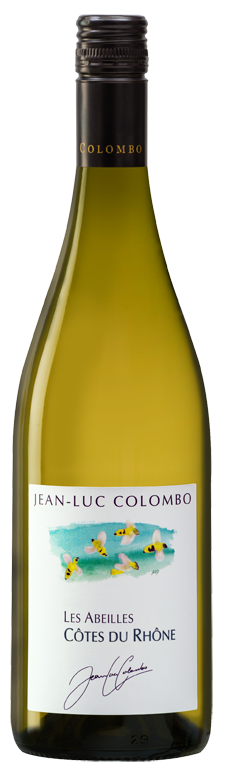
Wine of the week: Jean-Luc Colombo Les Abeilles Blanc 2016

Colombo Les Abeilles BlancForget about “smooooth:” the Colombo Les Abeilles Blanc is a well-made, terroir-driven French white

Wine Curmudgeon alert: The Colombo Les Abeillles Blanc is not for all tastes – it’s not “smooooth,” it’s made with weird grapes, and it’s most decidedly a product of its terroir. So when you see people saying nasty things about it (some very nasty, in fact), you’ll know why.

And also why the Colombo Les Abeillles Blanc 2016 ($12, purchased, 13%) is the wine of the week. It’s a French white blend from the Rhone made with roussanne, which is sort of known, and clairette, which is barely known at all. As such, it doesn’t taste like chardonnay and it doesn’t taste like the high-score, trophy white Rhone wines that cost $50.

But it does taste like the kind of wine to have for dinner with chicken braised with chickpeas. The wine, despite its age, is still quite fresh. Look for a little petrol aroma, as well as that wonderfully off-center lime-ish roussanne fruit and some peach from the clairette.

The 2017 is the current vintage, which I have not tasted. But if it is as well made as the 2016, all should be well.

Imported by Palm Bay International

Expensive wine 140: WillaKenzie Estate Chardonnay 2018

Willakenzie Estate ChardonnayWillakenzie’s Estate Chardonnay is a top-notch, New World-style Oregon white

Oregon is best known for pinot noir; chardonnay has traditionally been an afterthought. In fact, pinot gris has been the state’s main white wine for years.

That approach, though, has been changing. One reason, according to a long-term Oregon winemaker: High-end chardonnay has a bigger market than high-end pinot gris – depending, of course, on quality.

Which is where WillaKenzie’s Estate Chardonnay ($72, sample, 13%) comes in, even with the hefty price tag. This Oregon white is an impressive New World-style chardonnay that shows that Oregon producers can do for chardonnay what they’ve done with pinot noir.

In this, the Willakenzie estate chardonnay isn’t too ripe or too oaky, as might be expected from a similar California product. Look for green apple fruit and some lemon zest, more minerality than I expected in a New World charrdonnay, and even some brioche and yeastiness for those of you who want noticeable oak. The wine should become rounder and more full as it ages; it’s ready now, but will likely be that much better with a couple of more years in the bottle.

Mini-reviews 141: Be Human, Carmel Road, Brancott, Mulderbosch

Be HumanReviews of wines that don’t need their own post, but are worth noting for one reason or another. Look for it on the fourth Friday of each month. This month, bring on the residual sugar!

• Be Human Merlot 2018 ($17, sample, 14.5%): Slightly sweet Washington red, with lots of fake chocolate and fake cherry. Somehow, one review described this as a dry, cheap wine. Sigh.

• Carmel Road Chardonnay 2019 ($15, sample, 13.%): A California white that is about as typical a $15 supermarket wine as you’ll find: Pleasant and a touch sweet, the kind of wine that will leave you wondering what you saw in it after you finish the bottle.

• Brancott Flight Song Pinot Grigio 2019 ($12, purchased, 9%): This New Zealand white gives new meaning to the term post-modern. It’s a riesling-style pinot grigio, so it’s sweet – and its selling point is that it’s lower in calories than “regular” pinot grigio. Not so much gross as just annoying. Imported by Pernod Ricard USA

• Mulderbosch Cabernet Franc 2017 ($39, sample, 13%): South Africa’s Mulderbosch has found a way to add sweetness to a pricey red wine. Who knew? Otherwise, it’s a sort of New World cabernet franc, which means less graphite and more red fruit, and not much else. Imported by Third Leaf Wines

Photo: “A couple drinking wine” by freestocks.org is marked with CC0 1.0