Tag Archives: Beaujolais

Expensive wine 164: Albert Bichot Fleurie La Madone 2019

Abert Bichot Fleurie La Madone 2019 bottle
Abert Bichot Fleurie La Madone 2019/$25-$40

Beaujolais offers nuance and subtlety in an age of fruity and alcohol-ixh red wines

There has been a lot of Beaujolais on the blog in the past couple of years, but not just those costing $15 and less. They have been cheap wine staples since the WC’s on-line adventure started.

Rather, there has been more high-end Beaujolais – what the wine geeks call cru Beaujolais. So what’s with their more or less sudden appearance? Because these are among the last French red wines that can still offer value at $25 and more.

Like the Bichot Fleurie La Madone 2019 ($26. purchased, 13.5%). Bichot is a quality Burgundy house, so when I saw this on a store shelf before the holidays, I snapped it up. (And yes, Beaujolais is kind of, sort of, a part of Burgundy). The wine did not disappoint.

This is a delightful, layered, and top-notch red made with gamay from Fleurie in Beaujolais. Fleurie wines tend to be lighter and more delicate, and the La Madone is exactly that. I was even a little surprised at how well made it was; not so much because it didn’t taste like ripe banana $10 Beaujolais, but because it wasn’t simple. Dare I use the descriptor “perfumed,” which typically ends up in snotty-sounding tasting notes?

There is balance, certainly (amazing tannins) and structure to go with the perfectly nuanced red berry fruit. Highly recommended. Pair this with almost any red wine dish that doesn’t seem to lend itself to a pairing. I drank it with roasted pork shoulder, and it was spot on.

Imported by Albert Bichot USA

Wine of the week: Domaine de Bel-Air Beaujolais-Villages Les Granits Bleus 2020

Jean-Marc Lafont Beaujolais-Villages Les Granits Bleus Domaine de Bel-Air 2020
Wine of the week: Domaine de Bel-Air  Beaujolais-Villages Les Granits Bleus 2020/$13-$15

This French red is about as traditional as Beaujolais still gets

Those of us of a certain age, who started drinking wine long before sweet red blends (and even before California zinfandel), drank Beaujolais when we wanted a cheap, well-made red wine.

Those wines are much more difficult to find now, victims of consolidation, premiumization, and the various economic tumults over the past decade or so. Even something that should be dependable, like the Louis Jadot, isn’t.

So it was with particular satisfaction that I drank the Jean-Marc Lafont Beaujolais-Villages Les Granits Bleus Domaine de Bel-Air 2020 ($13, purchased, 13.5%). It’s not an earth-shattering wine or anything that’s going to get 98 points or be featured on a hipster wine list. Rather, it’s a red wine for dinner — and what more do we really need?

In this, it’s very traditional; not soft, with the banana foolishness that passes for winemaking too often these days. Instead, it’s very fruity (raspberries and then even more berries) and with just enough structure to remind you that it’s quality Beaujolais. In other words, the gamay grape made into wine the way it should be.

But why not? The producer, Jean-Marc Lafont, is well-regarded, and his wines include a variety of top-notch Cru Beaujolais. So putting effort into a quality entry-level wine remains important.

It’s also worth noting that I’m seeing lots and lots of Beaujolais-Village on store shelves, much more than usual. My guess is that the wines suffered badly during the Trump tariff and are only now starting to show up in the U.S. again.

Imported by Skurnick Wines

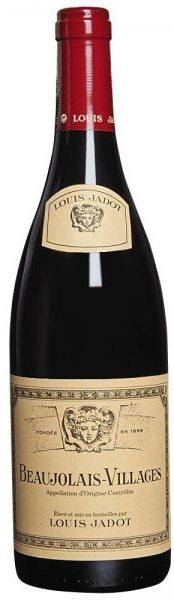
Wine of the week: Louis Jadot Beaujolais-Villages 2020

Louis Jadot Beaujolais-Villages
Louis Jadot Beaujolais-Villages 2020/$8-$13

Grab it while you can — this vintage of the Jadot tastes like a $10 Beaujolais should

Cellar Tracker, the blog’s unofficial wine inventory app, allows users to click and quickly sort through tasting notes for previous vintages. So, after I entered the notes for this wine, I clicked through the previous four. Two vintages were were worth drinking; two weren’t.

So how can a simple wine from one of the biggest brands in the world, which has been making this wine for more than 40 years, be so inconsistent?

Your guess is as good as mine. What I do know is that the 2020 Jadot ($11, purchased, 13.5%) tastes exactly like a $10 Beaujolais should taste. That means fruity and fresh (berries, not too grapey) and with minimal tannins and acidity. So yes, simple, but not stupid — and just the thing to keep around the house when you feel like a glass of wine or can’t be bothered to deconstruct a wine pairing for dinner.

This is in marked contrast to two of the previous vintages I checked. One was dirty and unripe, while the other tasted like a roasted banana.

Go figure.

Imported by Kobrand


Mini-reviews 142: Dueling Pistols, Grgich, Frenzy, Louis Jadot

dueling pistolsReviews of wines that don’t need their own post, but are worth noting for one reason or another. Look for it on the fourth Friday of each month.

• Dueling Pistols Red Blend 2016 ($50, sample, 14%): Surprisingly restrained red blend from California’s Paso Robles, with more juiciness than sweet fruit. Look for cherry fruit, a long, almost stony finish, and and fine, almost earthy tannins. Very nicely done.

• Grgich Hills Cabernet Sauvignom 2014 ($72, sample, 14.5%): This red from one of California’s most respected long-time producers is everything it should be – fruity (dark berries?), rich, complex, and age worthy.

• Frenzy Sauvignon Blanc 2019 ($12 purchased, 12.5%): Typical “meh” supermarket New Zealand sauvignon blanc – lots of grapefruit and not much else. Imported by Wilson Daniels

• Louis Jadot Beaujolais-Villages 2019 ($12, purchased, 13%): This French red might taste better when and if you try it; I found it fruity (cherries?), but so tart as to be unpleasant. This producer’s quality control has become notoriously inconsistent. Imported by Kobrand

Mini-reviews 129: Beaujolais, El Circo, El Terrano, gewurtztraminer

BeaujolaisReviews of wines that don’t need their own post, but are worth noting for one reason or another. Look for it on the fourth Friday of each month.

• Domaine Pierre Labet Beaujolais-Villages 2017 ($11, purchased, 12.5%): French red made with gamay that mostly tastes like it should, though I’m surprised it’s not fruitier. It’s not the best example of a Village, but it’s not the worst, either.

• El Circo Volatinero 2018 ($10, purchased, 13.5%): Spanish red made with tempranillo that doesn’t taste especially Spanish or much like tempranillo. It’s bland and boring – dare I say, “Smooth?” Imported by Seaview Imports

• El Terrano Verdejo 2017 ($8, purchased, 13.5%): Another cheap white wine from Whole Foods that isn’t worth even the little it costs. Spanish, but thin and watery lemon fruit, and not much else. Imported by Pacific Highway Wines & Spirits

• Flora & Stone Gewürztraminer NV ($5, purchased, 12%): Aldi private label California white that tastes like gewurtzraminer, but also tastes like it has been sweetened to please a focus group. It mostly tastes like wine, but it could have been so much more enjoyable.

Photo: “Empty wine bottles” by WineCoMN is licensed under CC BY-NC 2.0 

Wine of the week: Domaine Dupeuble Beaujolais 2016

Domaine DupeubleThe Domaine Dupeuble Beaujolais reminds us wine doesn’t have to be pumped full of sugar or sieved through a focus group

A long time ago, in what seems like a galaxy far, far away, we drank Beaujolais. The French red was cheap, tasted like wine, and was usually well made at time when it was difficult to find well-made cheap wine. Today, Beaujolais is mostly forgotten, shunted aside in favor of cute labels, bundles of sugar, and focus groups. But after drinking the Domaine Dupeuble, I want my Beaujolais back.

The Domaine Dupeuble ($15, purchased, 13.5%) is everything a weeknight wine should be – clean, fresh, enjoyable, and food friendly. Look for soft berry fruit with a hint of spice and incredibly subtle tannins. But, somehow, it also has an earthiness and heft that requires food.

Yes, it’s a simple wine, but Beaujolais is supposed to be simple. Otherwise, it would be Grand Cru red Burgundy, made with pinot noir and not gamay, and cost hundreds of dollars. Or, to quote the wine’s importer, the legendary Kermit Lynch: “Multi-layered layers of sublime simplicity. …”

And yes, I would prefer to spend less than $15 for a weeknight wine. But given the junk that is out there these days – soon to be the subject of a long and detailed rant – spending $15 every once in a while keeps me from throwing my keyboard at the office window and screaming like Charlton Heston at the end of “Planet of the Apes.”

Highly recommended. Chill this a little as summer ends, and drink it on the porch by itself or with almost anything you can think of for dinner. Sip slowly, close your eyes, and enjoy.

Imported by Kermit Lynch

Mini-reviews 89: The Wine Curmudgeon has questions

Mini-reviews 89Reviews of wines that don’t need their own post, but are worth noting for one reason or another. Look for it on the final Friday of each month.

This month, I have questions that the wines can’t answer.

• Tasca D’Almerita Lamùri 2014 ($18, sample, 13.5%): This Italian red offers about $10 worth of Sicilian nero d’avola at twice the price, and it‘s about as Sicilian as a Paso Robles red blend. My question: Why did I get it as part of a Sicilian wine promotion when it isn’t very Sicilian?

• Kono Sauvignon Blanc 2015 ($14, purchased, 13%): This New Zealand white offers $10 worth of Zealand sauvignon blanc and its citrus flavors at one-third more the price. My question: How could this vintage be so much less enjoyable than the 2012?

• Les Portes de Bordeaux Rose 2015 ($10, purchased, 12.5%): This French pink wine is not exceptional, but tastes like it should (freshness, red fruit) and is yet another reason why rose is always a good value. My question: How can this be, in the history of the blog, the first Trader Joe’s wine I can recommend?

• Louis Jadot Beaujolais-Villages 2015 ($10, purchased, 13%): A French red that was too tart and not very Beaujolais-ish, without any of the round and fruity flavors that should be there. My question: How can anyone at Jadot, one of the most important producers in France, think this is what this wine should taste like?