Tag Archives: merlot

Wine of the week: Broadside Merlot 2019

Broadside Merlot bottle
Broadside Merlot 2019/$12-$19

We celebrate the New Year with an affordable and professional California red

Quality, affordable California wine – let alone quality, cheap California wine – has long been in short supply. The reasons vary; the results are too often sappy and soft wines that really don’t taste like wine.

So, in 2022, I made a conscious effort to look for California wine that met the blog’s criteria, but wasn’t from McManis. One of the results: two wines from Broadside, the cabernet sauvignon and, today, the merlot.

Broadside’s 2019 merlot ($14, purchased, 14.5%) is a well-executed California red that does something that doesn’t happen often anymore. It tastes like merlot; most of the varietal at this price are either sweet, made to taste like cabernet sauvignon, or both.

Instead, it has merlot’s characteristics, even at such a high alcohol level. That means it’s less rigid in structure – call it rounder instead of pointed, and noticeably less tannic. There is some black fruit and even a little spice. All in all, a nicely made bottle of wine, even if the company that turns out Broadside also pumps out shelves and shelves of supermarket plonk (as well as the surprisingly pleasant Stephen Vincent wines).

This is food wine, most notably red meat. But it would be amiss with a weeknight meatloaf, either.

“Will Gen Z save Merlot?”

grim reaper with scythe
“Merlot… oh merlot. …”

Once again, the grim reaper is chasing merlot

Merlot, as a varietal wine, has been in its death throes for what seems like decades. I even asked, in 2016: “why does it look like merlot may be on its way out as a varietal?”

And merlot’s predicament has only become worse since then. I wrote a freelance piece last year that looked at the reasons for the decline, focusing on producers who still treat the grape with respect. The consensus? Merlot’s heyday as a varietal wine is long gone for a variety of reasons, none of which have to do with a certain movie that is not mentioned on the blog.

Now, there’s more evidence, from the Wine Opinions consultancy in its September newsletter. It asked its panel of wine drinkers how often they bought certain wines, and merlot was the big loser. It posted a 12 percent decline in “net purchase frequency,” the biggest drop of any varietal in the survey. The only consumers who showed an uptick were those under 40, who bought 2 percent more merlot. Hence, the Gen Z headline, courtesy of Wine Opinions’ John Gillespie.

The decline came at the expense of cabernet sauvignon and red blends, and anyone looking for a reason for the demise of merlot as a varietal need look no further than red blends. Merlot was always the fruity, less difficult, and less expensive red wine option, and the blends – sweet even — have replaced it for people who don’t want to drink cabernet. It’s probably not a coincidence that pinot noir, which is now commonly made as a soft red and not as traditional pinot noir, was the other big winner among survey respondents after red blends.

The irony about all of this? That the amount of merlot harvested in California has remained remarkably consistent over the past decade or so, which doesn’t make sense given its declining popularity. But that’s because merlot is going into the red blends and pinot noir – being used a the blending grape it has always been used as in Europe. The more things change, right?

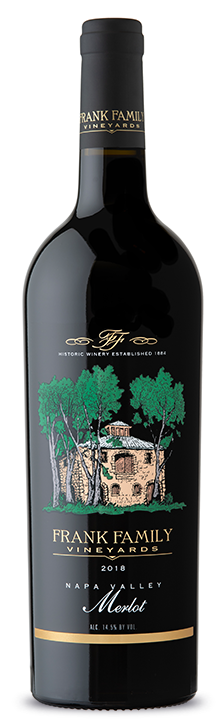
Expensive wine 154: Frank Family Merlot 2018

Frank Family Merlot 2018/$38-$55

This is classic Napa Valley merlot – big and powerful, but a wine that still tastes like merlot

The Wine Curmudgeon has long been baffled by California merlot. Too many are made to taste like caberent sauvignon, because that’s what producers think their customers want. And too many are turned into cheap and unsatisfying varietals and blends, often sugared up to mask how poorly made they are.

In fact, I was so curious about why this happens that I wrote a freelance story about it.

Given all of thit I didn’t expect much from the Frank Family Merlot 2018 ($45, sample, 14.5%), which showed up out of the blue a while back. It’s not the kind of sample that I typically get (or that I ask for), but it was in the wine closet and my job is to taste wine.

So I did, and was much pleased by what I tasted. This is classic Napa Valley merlot – big, powerful, and complex, but that still tastes like merlot and not cabernet. Trust me – that doesn’t happen often enough.

No, it’s not a red Bordeaux with earthiness and minerality, even though the wine has some cabernet sauvignon and cabernet franc in it. Rather, there is the unmistakable aroma of a Napa red, with all of the herbs and cedar. The fruit is concentrated (plums, maybe, with blackberries) and it finishes long and almost soft, with a bit of baking spice.

This is definitely a food wine, and especially with beef braised in red wine.

Poor, poor pitiful merlot?

movies
“Do people really think this is a good movie about wine?”

Or maybe not: Untangling the urban myths surrounding California’s most notorious grape

Merlot is the grape everyone loves to hate. That includes a certain character in a certain movie that even people who don’t know much about wine know about (and which the Wine Curmudgeon doesn’t acknowledge). The truth, though, is more complicated – and, possibly, more interesting.

Merlot was never quite as popular as everyone remembers, and it never fell quite as far as the legend has it. That’s the subject of a story I wrote for Pix.wine, in which I found:

• Merlot, even at its height, was never more popular than cabernet sauvignon and chardonnay, and it wasn’t any more common than zinfandel. And when’s the last time you read anything about the demise of zinfandel?

• One reason for its popularity? It was easier to pronounce than cabernet sauvignon, so it was huge in restaurants in the 1990s with anyone who wanted a glass of red wine.

• Today, though it’s not nearly as popular as a varietal as it once was, it’s a key element in red blends, sweet and otherwise. And red blends have been one of the fastest growing wine categories for several years.

• Merlot was also part of Coke’s unhappy time as a big wine company in the early 1980s, when it planted the grape up and down wine country in an attempt turn it into wine’s version of a soft drink. And it may even have played a small role in the collapse of the Seagram’s liquor empire in 2002.

Photo: Pavel Danilyuk from Pexels

barefoot wine

Barefoot wine review 2021: Merlot and Crisp White Spritzer

barefoot wine
The guy in the middle must have tasted the Crisp White Spritzer.

• Barefoot wine (again): Value or just cheap?
• Barefoot wine: Why it’s so popular

Barefoot wine review 2021: A merlot that mostly tastes like grape juice, and a spritzer that takes sugar water where it’s never been before

The blog’s 14th annual Barefoot review focuses on the traditional and the au courant — merlot, about as old-fashioned as it gets, and a Crisp White Spritzer, which (I assume) is supposed to compete with trendy hard seltzers. The former tastes like most Barefoot wine — soft, just enough sweet, and devoid of varietal character. The latter breaks new ground — a cross between a hard seltzer and the infamous wine coolers of the 1980s.

The non-vintage merlot ($6, purchased, 13.3%) has a California appellation, and I had high hopes for it. The merlot has often been the most wine-like of the Barefoots, and it almost made the $10 Hall of Fame in the blog’s early days. But no such luck. This was formula winemaking using poor quality grapes. Each component was exactly where it should be — the sweetness (not quite as sweet as the red Apothic or Menage a Trois); generic fruitiness (think grape juice that isn’t tart); a murky finish common in this kind of red wine; and no tannins or acidity. In other words, cheap, smooth wine for people who want that.

I also had hopes for the Crisp White Spritzer ($6, purchased, 5.5%). Maybe it would be something like a vinho verde? No such luck. This isn’t legally wine, so it has ingredient and nutritional labeling. Hence, everything you need to know about the product is on the label — made with carbonated water, something called “grape wine,” and cane sugar. Almost one-quarter of its calories come from “added sugars.” So sweet, sweet, sweet, and not crisp by any stretch of the imagination. It’s so sweet, in fact, that it’s almost impossible to drink on its own. Mix with vodka or cranberry juice (or both), and hope for the best.

Photo: Sylvane, using a Creative Commons license

Blog associate editor Churro contributed to this post

More Barefoot wine reviews:
• Barefoot wine review 2020
• Barefoot wine review 2019
• Barefoot wine review 2018

Mini-reviews 141: Be Human, Carmel Road, Brancott, Mulderbosch

Be HumanReviews of wines that don’t need their own post, but are worth noting for one reason or another. Look for it on the fourth Friday of each month. This month, bring on the residual sugar!

• Be Human Merlot 2018 ($17, sample, 14.5%): Slightly sweet Washington red, with lots of fake chocolate and fake cherry. Somehow, one review described this as a dry, cheap wine. Sigh.

• Carmel Road Chardonnay 2019 ($15, sample, 13.%): A California white that is about as typical a $15 supermarket wine as you’ll find: Pleasant and a touch sweet, the kind of wine that will leave you wondering what you saw in it after you finish the bottle.

• Brancott Flight Song Pinot Grigio 2019 ($12, purchased, 9%): This New Zealand white gives new meaning to the term post-modern. It’s a riesling-style pinot grigio, so it’s sweet – and its selling point is that it’s lower in calories than “regular” pinot grigio. Not so much gross as just annoying. Imported by Pernod Ricard USA

• Mulderbosch Cabernet Franc 2017 ($39, sample, 13%): South Africa’s Mulderbosch has found a way to add sweetness to a pricey red wine. Who knew? Otherwise, it’s a sort of New World cabernet franc, which means less graphite and more red fruit, and not much else. Imported by Third Leaf Wines

Photo: “A couple drinking wine” by freestocks.org is marked with CC0 1.0

Mini-reviews 140: Christmas Eve edition 2020

christmas eve 2020Reviews of wines that don’t need their own post, but are worth noting for one reason or another. This month, a special Christmas Eve 2020 edition.

• Mulderbosch Cabernet Sauvignon Rose 2020 ($15, sample, 12.5%): The South African Mulderbosch was once one of the world’s great cheap roses. This isn’t it — there has been a price hike and the wine is softer, without the edge the cabernet used to give it. Plus, there’s a touch of sweetness. Very disappointing. Imported by Third Leaf Wines

• Petra Zingari 2015 ($13, purchased, 14%): This red blend is made in the popular post-modern Italian style, so that the sangiovese is surrounded by three international grapes — merlot, syrah, and petite verdot. Notice I wrote surrounded, and not complemented. It is well made and professional, and spot on if you like this style. Imported by TMT USA

• Calcu Escarlata 2019 ($12, sample, 14%): This Chilean red blend is exactly the kind of supermarket wine that focus groups like — lots of dark fruit, no tannins, and very little acidity. It does what it does well enough, but there are hundreds of wines exactly like it. Imported by Global Vineyard Importers

• Chasing Rain Merlot 2018 ($24, sample, 14.5%): A very dark merlot from Washinton state that tastes like it has lots of winemaking going on. It’s more heavy and tannic, more like a caberent, with less soft merlot character.