Category:Wine trends

Will listing bottle weights in wine reviews help save the planet?

wie bottles
“Bottle weight.. we don’t need no stinkin’ bottle weight.”

Maybe not, but it’s much more effective than giving yet another 92 to yet another overpriced wine

Who knew wine bottle weights would be one of the next great battlegrounds in the fight against climate change? But that appears to be the case.

• In February, wine critic Jancis Robinson announced she would list bottle weights in her reviews, with the idea that great wine doesn’t need to be in a heavy bottle.

• In June, a variety of wine writers (myself included) got an email with an open letter from Italian producer Max de Zarobe, asking that we take a winery’s sustainability efforts into account when scoring their wine.

• Last week, Dave McIntyre wrote a piece in the Washington Post decrying heavy wine bottles for the environmental obscenity that they are – low recycling rates and carbon footprint among many faults. And which, frankly, made the most sense of almost all of the stuff I’ve read on the subject, and I’d say that even if Dave wasn’t my friend.

Heavy wine bottles once mattered – say, 200 years ago, when wine was shipped in horse carts over rutted European roads and the bottle needed to be robust enough to stand up to the punishment.

Today, the heavy bottle is nothing more than marketing – call it an enological phallic symbol for an industry dominated by men who sell big, expensive bottles of wine to other men. A woman executive, whose company uses the lightweight PET bottle (made of plastic), told me her harshest critics weren’t consumers, but older men in the wine business who were aghast that her company didn’t do what tradition demanded.

Which, of course, speaks volumes about how effective listing bottle weights in reviews would be. I’m not against it; in fact, I ranted about the subject seven years ago — yes, seven years ago. Two of the worst offenders then were Bonterra and its “organically-farmed wine” and a Downton Abbey wine. What better way to convince consumers you’re making “real wine” than with a heavy bottle?

In other words, the people who make decisions in the wine business could care less about bottle weights. If they did, they would have downsized years ago. Lighter bottles mean cheaper production and shipping costs and less wear and tear on equipment. If saving serious money didn’t convince them, then why would the bottle weight in a review?

And, frankly, I don’t think the wine drinkers who read Robinson and rest of the Winestream Media care much, either. What matters to them are points, not how heavy. If it’s 94 points and a heavy bottle, who cares?

Having said that, I’ll start listing bottle weights for the most egregious offenders, if only to follow Dave’s example. Most of the wines I review, given their price, long ago gave up any heavy bottle pretense. And though listing weights may not do much, it’s still more than most of the rest of the wine business is doing.

Photo: “Two boxes of green wine bottles” by wuestenigel is licensed under CC BY 2.0
Why aren’t we drinking more Portuguese wine?

Portugese wine
No, Portugal, Lancer’s is not your problem in the U.S.

They’re cheap, they’re well made, and they’re mostly available – so what’s the catch?

Portuguese wines are cheap, well-made and mostly available. So why aren’t we drinking more of them?

My pal Tim McNally and I have been discussing this quite a bit lately. Tim, the award-winning writer, wine judge, and New Orleans radio host, is baffled by Portugal’s lack of success in the U.S. One recent survey about popular imports included Australia, even though Australian wine hasn’t mattered much in the U.S. in years.

“Why the hell can’t Portugal crack the sales market?” he asked me. “Good wines, delightful qualities, and cheap. But Portugal is a perennial also-ran.”

I’ve noticed the same thing, and have done my best over the past 18 months to change that. Want a cheap, well-made white for parties or when friends come over? Portugal has vinho verde. Want some sturdy, affordable reds for dinner? Then there are only a couple of dozen to choose from. Want whites that do the same thing? Again, many to choose from.

So what’s the catch? Three things stand out:

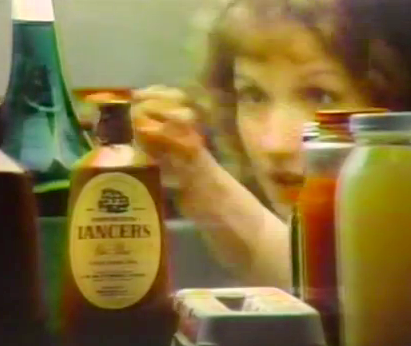
• Not quite understanding the U.S. market. One leading Portuguese wine type recently blamed his country’s lack of success on old-fashioned (and very plonk-y) wines like Lancer’s and Mateus. But neither have been popular for 30 years, and hardly anyone buying wine these days knows what they are.

• Targeting the wrong audience. If you’re worried about Lancer’s and Mateus, then you’re chasing the wrong audience. Focus on young people, Portugal, young people. I can buy a quality 1-liter bottle of vinho verde – apple-y, slightly sweet, and a little fizzy – for $8. Am I the only who thinks that’s more fun to drink than a can of hard seltzer?

• Supermarkets and their increasing importance in selling wine. More than half the wine sold in the U.S. is sold by grocers, but the biggest Big Wine companies dominate the business. That leaves little room for Portugal on the shelves among the all of the 19 Crimes, Apothic, and Barefoot. Still, I find it difficult to believe that a country with a centuries-old wine business can’t figure out a solution to that problem.

The Great Wine Supply Chain Kerfuffle of 2021

wine supply chain
Oh my God! What if we can’t buy Veuve Clicquot this holiday season?!!

Or, why the wine you want to buy this holiday season may not be on the store shelf

Who knew the term “supply chain” would become au courant this holiday season? But that’s the case, thanks to the pandemic, short-sighted management among the world’s biggest companies, and a variety of technical stuff that I never thought I would be writing about.

The upshot? Wine, like cars, toys, and computers, may be in short supply this holiday season. You can read two (yes, two) freelance stories I wrote about the situation here and here. And a shout out to my pal Dave McIntyre at the Washington Post, who predicted all of this five months ago.

The highlights of the Great Wine Supply Chain Kerfuffle of 2021:

• Short supply does not necessarily mean shortages and bare shelves. It means retailers will keep rotating products to occupy shelf space. So there will be cabernet sauvignon and Champagne, but not necessarily the cabernet sauvignon and Champagne you want to buy. That means brands and labels you may not have heard of before.

• Sales and discounts? Few, if any, and especially on the most popular items.

• This isn’t just about imports. Domestic wine has been affected, too. One California retailer told me he’s having trouble getting California wine; a California producer said he’s having trouble getting his wine to his wholesalers, who are having trouble getting it to retailers. Apparently, there’s a trucking shortage that pre-dates the pandemic, and which has just gotten worse over the past 18 months.

• There’s no rhyme or reason to any of this. Supply may be fine in some parts of the country; there may be significant bare spots in other parts.

Finally, my favorite part of all of this: The Chicago freight company that broke into a warehouse at O’Hare airport to “steal” its own goods.

Do younger wine drinkers prefer imported wine?

imported wineOne study says they do – which means the California wine business could be ever more dependent on aging Baby Boomers

Do younger wine drinkers prefer imported wine to that made in California? That’s a tantalizing thought – and one that may be true, given a recent Wine Opinions study.

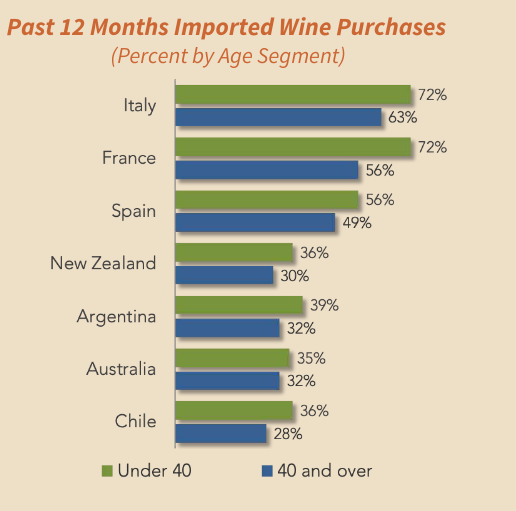
The survey queried more than 1,500 people who are part of the organization’s wine panel, looking for age and gender differences in who buys imported wine. And there may be significant differences based on how old they were. Respondents younger than 40 were more frequent purchasers of imported wine than those 40 and older – and that held true for each of the seven countries in the survey.

Most interestingly:

• France: Almost three-quarters of those under 40 had made “several” or “frequent” purchases in the past year, compared to 56 percent of those older than 40.

• Italy: 72 percent vs. 63 percent.

• Spain: 56 percent to 49 percent.

The point, says Wine Opinions’ John Gillespie, is not that older wine drinkers don’t buy imported wine. Of course they do.

But if younger wine drinkers – who drink less wine overall than their elders – buy more imported wine, then they’re probably buying less California wine. And that’s not a good sign for the future of California wine, if it means its future depends on an aging, Baby Boomer customer base.

“The age differences are more important, in my opinion, than the gender differences we also found, which really weren’t significant,” says Gillespie, who added that Millennials have consistently bought more imported wine, especially from France, over the past several years.

“I think the love affair with California wines among Boomers goes all the way back to their early days of wine drinking, with wines like Hearty Burgundy, Almaden Mountain Red, etc.,” he said in an e-mail. “As the California wine industry grew in the ‘70s and ‘80s, the Boomers were there, trying every new thing that came along, and they are still very loyal.”

The other thing that I find intriguing? It’s easier to buy California wine – the labels are in English and the grapes used in the wine are on the label. This usually isn’t the case for European wines; unless you know what you’re doing, buying a Rioja or a red Rhone can be a crap shoot. Yet younger wine drinkers are doing it anyway. Is there a lesson California is missing there?

Ingredient labels are coming to wine in Europe

u-label
European wine drinkers will be able to scan a QSR code to find that a glass of wine has 125 calories. Which, apparently, is some sort of closely guarded wine industry secret in the U.S.

So what’s the excuse for U.S. producers now?

Wine drinkers in Europe are getting a chance to see what ingredients go into their wine. Which, of course, is something that U.S. producers have fought long and hard against, claiming it would be too confusing, too costly, and take up too much room on the bottle.

The project, called U-Label, will use QR codes on wine and spirits bottles – scan the code, and you’ll be taken to a website that lists ingredient and nutrition information for the product. The European Union plans to make ingredient labels on wine and spirits mandatory over the next several years. This voluntary program is the European wine and spirits business’ effort to get ahead of the EU and offer a template for the regulation.

Currently, federal law allows for voluntary labeling in the U.S., but only a handful of producers use it. Some wine labels, which make calorie or nutrition claims, are required to use nutrition labels.

My freelance piece for the Pix.wine site has the details. Among the highlights:

• Currently, there are no plans to require the U-Label on wine exported to the United States. But producers who want to include the label on wines sent to the U.S. can, and U.S. consumers who bring wine back from Europe will also have access to the QR code website.

• The U-Label will include calorie and other nutritional information, responsible drinking guidelines, a health warning with pictogram, and details on sustainability. Most EU countries have strict laws regulating what goes into their wine, but there are few ways for consumers who aren’t wine geeks to figure that out. The U-Label will solve that.

• The cost to participate is €250 (about US$290), making it affordable for almost any producer, regardless of size. Cost has been a key argument against labels in the U.S., on the theory that small producers would be harmed more than large ones.

More about wine ingredient labels:
• Beer drinkers — and Big Beer – love nutrition facts labels
• Leading wine experts call for ingredient and nutrition labels
• Clean wine: Has the Winestream Media finally figured out why we need nutrition and ingredient labels?

Is there good news for wine delivery on the horizon?

wine deliveries
How many of us have had to resort to this to get wine deliver?.

Apparently, wine drinkers aren’t the only ones fed up with Fed Ex and UPS

Imagine my surprise when I saw this headline: “A wave of e-commerce logistics startups is threatening to break the UPS and FedEx duopoly”

Apparently, wine drinkers aren’t the only ones who are fed up with the way Fed Ex and UPS control the delivery market. The story reports that “a slew of new players, juiced by millions in venture capital funding, is entering the package logistics fight to see if they can’t can’t change a decades-old power dynamic.”

Look past the fancy writing, and you’ll discover that UPS and Fed Ex have lost market share, that their on-time and delivery performances are declining, and that they’re even telling unprofitable customers to look for another company to deliver their packages.

Which is no surprise to the blog’s readers. We’ve been talking about this since before the pandemic, when I ran a couple of posts listing wine delivery horror stories. I followed that up last month for the Pix.wine site, which also elicited a fair amount of traffic and comment.

That’s the good news. The bad news? For one, the story doesn’t specifically mention wine or alcohol delivery – and especially its particular and infuriating delivery requirements. For another, all the fancy writing (yes, the story even mentions unicorns) details more hopes and dreams than actual, concrete solutions. After all, just because someone throws venture capital money at a problem doesn’t mean the problem will be solved.

Still, this is the best news wine drinkers have had in a very long time. As, as I joked with the editor of the Pix piece, any news is better than chasing the delivery truck down the street.

Hard seltzer’s popularity may be waning; can the wine business finally relax?

hard seltzer
When’s the last time you saw this many young people drinking wine?

Hopefully not, since hard seltzer was just one of wine’s many problems. But don’t bet on it.

The news traveled through the cyber-ether last week so quickly that it was past viral: “Is the hard seltzer craze turning sour?” “Has the hard seltzer bubble popped?” “America’s Taste for Hard Seltzer is Suddenly Starting to Wane”

One trade editor even emailed me: Did you see this? Is there a story here?

So huge massive news, since hard seltzer’s growth over the past couple of years has often been cited as the reason younger consumers aren’t drinking wine. And, if true, raises another question: If hard seltzer has fizzed out, can the wine business relax? Does this mean younger consumers, bored with Truly and White Claw and all the rest, will reach for a bottle of wine?

The answer? No.

NO.

NONONONONO!!!!!!!!!

Hard seltzer, as noted here and elsewhere, was just one example of wine’s problems with younger consumers. It was everything that they think wine isn’t – cheap, low in calories, low in sugar, low in alcohol, low in carbs, and convenient. Pop a top, get just a little buzz, and smile. Anyone who thinks hard seltzer’s troubles mean they will move to a product that comes with an indecipherable label, requires a special tool to open, comes in mostly big bottles, and doesn’t disclose calories or ingredients is kidding themselves.

In other words, way too much of the wine business. Or as Wine Business Monthly columnist Jake Lorenzo put it recently, “A class system is developing, and the wine business is not only welcoming it, but we are driving it. In Wine Country things are not getting back to normal, they are wallowing in abnormal.”

Think of hard seltzer as a kind of fast fashion, cheap and interesting and then forgotten. So if it does wane (and the second link at the top isn’t quite so sure about that), younger consumers who see wine as bougie and old-fashioned will just find something else that isn’t wine.

Because that’s what has happened over the past decade. Yes, this month’s controversial Gallup poll may have had its flaws, but it didn’t miss the point. I talked to a leading European wine analyst for a trade story about something completely different; so, of course, we ended up talking about wine and younger consumers.

As we were looking at her numbers, I said, “These can’t be right. Your surveys show that wine has lost the two youngest generations in the U.S. and Britain.” And she nodded (it was a Zoom call), and said, “Yes, it has.”

And hard seltzer is far from the only reason.