



Tag Archives: wine supply chain

Winebits 749: Wine marketing, supply chain woes, 500-year-old wine book

wine marketingThis week’s wine news: The blog’s official wine marketer sounds off on the failures of wine marketing, plus supply chain price gouging and the oldest wine book written in French

Failure all around: Paul Tincknell has a more than a few words of wisdom for the wine business in its hunt for younger consumers – and they aren’t compliments. Tincknell, the blog’s official wine marketer, calls out producers, the Winestream Media, restaurants, wholesalers, and consolidation on his company’s blog. The result, he says, has given us too high prices – and even price gouging – and this “excessive pricing … raises the risk of purchase for many to unacceptably high” levels. So they drink beer instead. The piece is a bit long, but well worth reading for a thorough analysis of what’s wrong and how to fix it.

Speaking of price gouging: The New York Times, dissecting the supply chain woes we’ve come to know all too well in wine, writes that shippers are gouging small companies for no other reason than they want to. “Carriers are exploiting the supply chain chaos to breach contracts and jack up rates,” says the story, also noting that a variety of experts predicted that this would happen when the federal government deregulated the shipping industry. Says one small businessman: “Contracts are not worth the paper they are written on these days. They just don’t honor them.”

Oldest wine book: The University of California-Davis, world-famous for its viticulture and enology programs, has acquired the first wine book written in French. The school’s library bought the only known copy of “Le débat du vin et de leaue,” printed about 1515. The price was not disclosed. The book is a debate between water and wine, used to offer advice about how to live a virtuous life, a common topic during the Renaissance.

The Great Wine Supply Chain Kerfuffle of 2021

wine supply chain
Oh my God! What if we can’t buy Veuve Clicquot this holiday season?!!

Or, why the wine you want to buy this holiday season may not be on the store shelf

Who knew the term “supply chain” would become au courant this holiday season? But that’s the case, thanks to the pandemic, short-sighted management among the world’s biggest companies, and a variety of technical stuff that I never thought I would be writing about.

The upshot? Wine, like cars, toys, and computers, may be in short supply this holiday season. You can read two (yes, two) freelance stories I wrote about the situation here and here. And a shout out to my pal Dave McIntyre at the Washington Post, who predicted all of this five months ago.

The highlights of the Great Wine Supply Chain Kerfuffle of 2021:

• Short supply does not necessarily mean shortages and bare shelves. It means retailers will keep rotating products to occupy shelf space. So there will be cabernet sauvignon and Champagne, but not necessarily the cabernet sauvignon and Champagne you want to buy. That means brands and labels you may not have heard of before.

• Sales and discounts? Few, if any, and especially on the most popular items.

• This isn’t just about imports. Domestic wine has been affected, too. One California retailer told me he’s having trouble getting California wine; a California producer said he’s having trouble getting his wine to his wholesalers, who are having trouble getting it to retailers. Apparently, there’s a trucking shortage that pre-dates the pandemic, and which has just gotten worse over the past 18 months.

• There’s no rhyme or reason to any of this. Supply may be fine in some parts of the country; there may be significant bare spots in other parts.

Finally, my favorite part of all of this: The Chicago freight company that broke into a warehouse at O’Hare airport to “steal” its own goods.

Update: Yes, the wine supply chain is out of whack

shipping containers
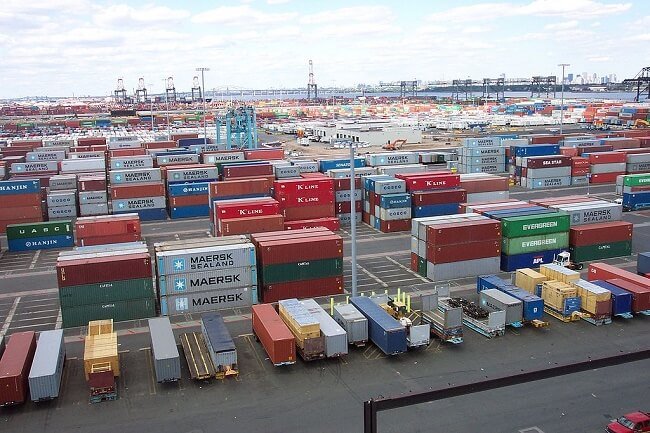
Not enough shipping containers means not enough wine on store shelves

Can’t find your favorite wines on store shelves? Blame the pandemic (but at least we have enough lorry drivers)

In June, Dave McIntyre of the Washington Post wrote that we’d be seeing higher wine prices and widespread shortages through the rest of the year. Turns out he was spot on.

We talked about higher prices in June; today, it’s the supply chain discombobulation that has persisted for the first nine months of the year. The good news? At least we don’t have the problem the British have, where Brexit chased foreign lorry drivers (or truck drivers, as we call them) out of the country. So there aren’t enough people to drive trucks to deliver wine. Says one restaurateur: “We’ve had days without any red wine at all.”

How obvious are the shortages in the U.S.? A Google search will find all sorts of examples; closer to home, one leading Dallas retailer held a rose sale a couple of weeks ago, but didn’t have any Charles & Charles, Bieler Pere et Fils, Zestos, or Jolie Folie – all wines that it normally has in huge amounts and that I buy a lot of.

The wine supply chain snafu revolves around a combination of things. Perhaps the most important is a shortage of containers, says a Portuguese wine importer. The containers are the huge steel boxes loaded with merchandise that ships carry between ports; they’re unloaded directly onto train flat cars. If there aren’t enough containers, then wine sits in warehouses waiting to be shipped.

Second, long delays unloading ships at U.S. ports. The reasons for this are a bit vague, since it seems counter intuitive that there would be delays if there aren’t as many containers. But, as the story in the above link notes, there is “record-low container ship schedule reliability and port and inland congestion in the US and elsewhere keeping cargo in transit longer than usual.”

When will this end? The Post article guessed at the holiday season, but the Portuguese importer told me he wasn’t as optimistic. Some importers are already predicting Champagne shortages this year, though it’s not clear if that’s just a British problem.

Until then, we’ll just have to buy what we can when we can. Though I do miss the Zestos.

Why do you read about wine you can’t buy?

wine you can't buyHow frustrating is it to read about a wine you can’t buy? After all, how often do you read a review of a movie you can’t see?

Some of it, of course, is snobbery —  and yes, Winestream Media, I’m talking about you. Some of it can’t be helped, thanks to the foolishness that is the three-tier system. In the last month, I’ve tasted a $10 Gascon white and had friends tell me about a $15 red Bordeaux and a $10 Sicilian red that would be perfect for the blog. But the first is only available in southern California, and the other two are only found in the northeast. Which means the wines don’t have distributors in any other part of the country, and don’t meet the generally available criteria I use for the blog.

But there are other, less obvious reasons why you read about wine you can’t buy:

• To create demand for the wine. I get a lot of emails from publicity people offering me samples of wine from regions unfamiliar to U.S. wine drinkers and that have limited, if any, distribution in this country. They do so in the hope that I’ll write about the wine, even if no one can buy it, so that my review will convince an importer or a distributor that there is demand for it. Yes, it’s a little backwards, but it’s one way to get around the restrictions of the three-tier system.

• Because it’s the next big thing. Wine recommendations are often driven by peer pressure, and if one hotshot sommelier or writer praises something, then everyone else has to do so as well. We’ve seen this for years with gruner veltliner from Austria, which is difficult to buy outside of the East Coast. The most recent next big thing is Greek wine, which can be well done and offer value but is even more difficult to find outside of the East Coast than gruner. In fact, during our recent podcast, that’s what Wisconsin retailer Nick Vorpagel lamented about Greek wine.

• Available wine is boring. I’m paraphrasing here, but I’ve heard and read this countless times: “Why should I write about a wine that anyone can buy in the grocery store?” This isn’t quite the snobbery practiced by reviewers who purposely write about wine no one can buy, but it’s almost as bad. Again, do reviewers not do movies because they’re in 5,000 theaters nationwide?