Category:Wine trends

Bring on the non-fungible tokens, baby!

nft
“I like this WC post — how many Ethereum should we bid?”

Is turning a WC post into an NFT the next step in making lots of money with the blog?

First, subscriptions. Next, an NFT?

Why not? The New York Times says it’s possible. So does the Robb Report and an Australian wine magazine. A PR person was flogging the idea the other day, too, emailing me that blockchains and NFTs are the next big thing in wine collecting.

Don’t worry if this sounds confusing. I’m confused, too, and I’m writing about it. A non-fungible token, or NFT, is an on-line work that is certified with a cryptographic signature, so the buyer knows it’s one of a kind (and may include extras, the way the dealer throws in floor mats with a new car).

NFTs, blockchains (a digital public ledger that records transaction data), and cryptocurrency are part of what the experts are calling the world’s transition to the Metaverse, in which everything will exist virtually. How do I know this? I get news releases about it almost every day.

Yes, this sounds more than similar to a certain 17th century Dutch flower boondoggle. And well-known financial gurus like Michael Che also have their doubts. But who is the WC to pass up a hip and with-it way to monetize the blog?

Imagine even a modestly successful cyber-auction for one of the blog’s best posts — this one, perhaps, or this one. Or even this one. I’d be able to buy enough Domaine Tariquet, Bieler rose, and Falesco Vitiano to outlast almost any financial bubble. And I wouldn’t have to take any more calls about selling my house.

Still, there are problems if I decide to do this. First, I’d have to figure out how to blockchain the post, the idea of which makes my head hurt. That’s a long way from the typewriters and carbon paper of my youth. More importantly, what if no one bids? What if no one thinks a blog NFT is a worthwhile addition to the Metaverse?

Which, on second thought, probably wouldn’t be much different from the way the actual wine world treats the blog. Cheap wine? Pass the premiumization, please.

Photo: Mimi Thian on Unsplash

Break out the Adams extract!

ancient wine
“Honey, where did you say you put the vanilla? You know my boss won’t drink our wine any other way.”

Evidence suggests ancient wine drinkers enjoyed vanilla-flavored wine

The Wine Curmudgeon has long wondered why so many wine drinkers want their chardonnay – or even more astounding, their pinot noir – to taste like vanilla.

Now we may have one reason why: Wine drinkers have, apparently, always liked vanilla in their wine.

Researchers excavating a 2,500-year-old site in a Jerusalem neighborhood found organic residues of vanilla, then an exotic spice, on wine jars. The Jerusalem Post reports that the archaeologists were surprised to find the residue, given how rare and expensive vanilla was at the time.

Does this mean they found the Old Testament version of this wine?

The story emphasizes that the wines were not vanilla-flavored from oak aging, which is mostly what imparts the flavor these days. Rather, the residue shows that the spice was actually added to the wine. In addition, the researchers think the wines were aimed at an upscale market; not only was vanilla expensive, but it likely came from as far away as India, making it far less common than it is today,

So why vanilla? The story doesn’t say, though we can assume several things:

• Ancient wines were likely unpalatable, at least to 21st century tastes. Fermentation depended on wild yeast, so there was probably little consistency in flavor or quality.

• The wines were what one source I found called “robust” – so big and tannic? No one had yet figured out how to control those qualities — or to even think that they needed to be controlled.

• Adding seawater or sweetener (honey or grape juice must) to ancient wine was common, as was adding spices. The reasons are many, though I assume the most common was to make the wine taste better.

The other thing that I find fascinating about this? Given that vanilla was so rare and so expensive, was its use an ancient form of premiumization?

The history of wine advertising and reaching younger consumers

Portugese wine
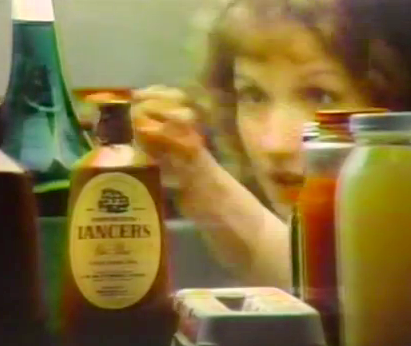
Marketing wine to younger consumers needs more than another Lancers commercial — which, of course, is what we usually get.

Younger consumers don’t want corny and Aldo Cello, but what have they been getting?

Wine Opinions’ John Gillespie, who has been analyzing the wine business for even longer than I’ve been ranting about it, offers some needed perspective about the state of wine advertising:

“If the question on everyone’s mind today is how to gain the favor of young adult beverage alcohol consumers, the first thing to understand is that the wine industry has literally been there, and done that. Of course, the playbook of the winning brands half a century ago must be updated — the wines that broke though in the ’70s and ’80s are not likely to stage a reunion tour anytime soon.”

Gillespie offers a look at the wines and advertising that played key roles in the 1970s and ‘80s boom, including E&J Gallo’s Hearty Burgundy; the German white, Blue Nun; all of those corny Riunite ads; and even Aldo Cella, who sold lots and lots of bottles of Cello Lambrusco.

Gillespie makes the telling point that as successful as those brands and campaigns were, they can’t — and shouldn’t – be repeated today. Those were Baby Boomer moments, and despite what he identifies as some similarities between the Boomers and their children and grandchildren, the demographics aren’t the same.

This is something we’ve noted on the blog many times, most recently for Gallo’s new Black Box campaign. It has more in common with those 1970s and ‘80s efforts than with anything post-modern.

What the wine business should be doing instead of what it did 50 years ago, says Gillespie, is to focus its marketing on two ” ‘features and benefits’ that resonate especially well with consumers under 40. Wines made from organically grown grapes or by wineries with sustainability certifications significantly over-index among those in their 20s and 30s.”

Which, as you may have noticed, may never have been in any important wine ad ever in the history of wine ads.

Is it any wonder I worry about the future of the wine business?

Can an eight-pack of tiny bottles save the wine business from itself?

wine packaging
Imagine an eight-pack — and watch the young people buy with joy.

Will younger consumers appreciate eight bottles of single-serve wine?

Imagine this: a 20-something, arriving for a dinner party, puts an eight-pack of wine on the table, each a single serve bottle.

Are we on the way to solving wine’s generation gap?

Maybe, says analyst Jon Moramarco, speaking at an industry webinar earlier this month. Moramarco is one of the most respected analysts in the wine business, the editor of the Gomberg Fredrikson Report, which tracks wine sales, and managing partner of the market research firm bw166.

His suggestion: The eight-pack of 125 ml bottles, which would include red, white, rose, and sweet blends. The wines would be lower in alcohol and the pack would cost around $15. In addition, he said, the product should be marketed toward younger women, with packaging designed to reach that demographic.

Pretty spiffy, yes?

The concept, of course, is not new, as the picture at the top of the post shows. Wineries have been selling multi-packs in smaller bottles for years. What’s different about Moramarco’s proposal is the size – 125 ml is smaller than the traditional 187 ml multi-pack bottle — and the contents, four different wines instead of just the one.

Which makes his idea about as revolutionary as these things get these days.

So what’s wrong with it (since I am the WC, and must point that out)?

• How do we guarantee wine quality? Typically, single-serve bottles are made to hit price points and not to taste like wine (as anyone who has ever suffered through an airline bottle knows).

• Manufacturing. A 125 ml bottle is not a standard size, which raises all sorts of supply chain and bottling questions. Plus, I can just hear the moaning from winery executives: “We can’t put different wines in the same pack – we’ve never done that before!”

• Retailers. As noted here many times, most wine is sold in 750 ml bottles; hence, most stores aren’t set up to sell something that isn’t in a 750 ml bottle. Any retailer willing to take this project on would have to be willing to rearrange shelving and adjust displays – not an easy task.

Still, don’t let it be said that the WC is standing in the way of progress. This is the first idea that I’ve heard in years that doesn’t make me worry about the future of the wine business. So let me do my part: how about calling it, “I’ll bring the wine”?

Apparently, wine scores aren’t the only rating system that stinks

wine scoresKnow those magazine college rankings? They may be screwed up, too

Does this sound familiar?

[Scores] are “inaccurate, dubious or highly misleading. … ” and may not be “valuable or even accurate.”

No, it’s not the WC writing about wine scores again. It’s a highly respected Columbia University math professor ripping those magazine college rankings – by pointing out how silly his school’s No. 2 rating is.

Full disclosure: When I started freelancing, I wrote several ranking stories (for Forbes’ website and for the American Way in-flight magazine). So I’m guilty of participating in a system that seemed flawed even then. How could anyone compare Northwestern, a small private school, with Illinois, a large state school? And why would anyone want to? It’s the  same misguided approach that claims a $10 wine can never be as enjoyable as a $50 wine — which is patently untrue.

The good thing about my writing? It gave me a chance to see how the system works to reinforce its biases — something that is not only the case with the college rankings, but with wine scores.

Because, as Columbia’s Michael Thaddeus wrote, it’s all about the data that goes into the rankings. And if the data is flawed, then so are the rankings (as well as the scores).

At first glance, the data used in the college rankings would seem to be more objective than that used for scores – class size, highly qualified instructors, teaching budgets, and the like vs. one critic’s opinion. But, as Thaddeus pointed out, the universities surveyed may well have tweaked the data they submitted to get a higher rating.

So much for objectivity.

In addition, as one expert interviewed for the story said: “I think the majority of institutions would be happy if the rankings went away. But as long as the rankings are taken seriously by applicants, they’re going to be taken seriously by educators.”

Substitute producers for institutions and consumers for applicants, and we’re talking about wine scores, aren’t we?

More about wine scores:
• Wine scores not only refuse to die, but seem to be increasing like the spawn of the devil
• Wine scores rant: Top-notch cava gets 86 points, about the same as a crummy supermarket wine
• Chateau Bonnet Blanc and why scores are useless

The ZIPZ failure and why it matters to wine drinkers

fetzer zipzNo, single-serve plastic glasses of wine did not “disrupt” wine

Remember ZIPZ? It was the next big thing in wine, an oversized plastic glass with one serving that was endorsed by the masters of the universe at Shark Tank about a decade ago.

Don’t remember it? Not to worry. Almost no one else does, either.

Mashed recounts ZIPZ’s sad, not unsurprising history, and it’s well worth reading for those of us who wonder – and lament – that wine has had such difficulty adapting to the 21st century. The ZIPZ glass, for all of its many failings, was a unique way to package wine – call it “disruptive,” if you must.

Yet it never had a chance, and that it didn’t speaks to how the wine business resists change, even when change is exactly what is needed.

Why not a chance?

• First, the wine was lousy. That it would be difficult to find quality wine to put in a plastic, single-serve glass apparently surprised ZIPZ’s creator, who probably had never seen anything quite like the bulk wine market.

• Second, the three-tier system. You just can’t make ZIPZ wine and sell it to Costco, which seemed to be the plan. Rather, it has to go through a wholesaler, and why would a wholesaler want to waste its time on something as funky as lousy single-serve wine in a plastic glass? And where the margins would be so tiny?

•Third, retailers. Most wine in the U.S. is sold in 750 ml bottles, which means store shelves are set up to stock 750 ml bottles. So where do you stack cases of single-serve plastic glasses? This nugget somehow escaped the moneyed geniuses at Shark Tank; call it a lesson in the supply chain they would eventually have to learn.

The irony of all this? That canned wine does all the things that ZIPZ was supposed to do, and does it more efficiently. And that canned wine, for all of its many failings, is the next big thing in wine. Wonder why none of the geniuses saw that?

Is the world ready for Churro wine?

Churro desk
“Do I have to write all the rants around here from now on?”

Is it paws-ible to successfully market wine by selling it to pet owners?

Churro, the blog’s associate editor, saw the news release first. “What kind of marketing foolery is this?” he asked. “I count four horrible puns in the first couple of graphs, including that wretched ‘paws-ible’ – and I’m a dog and I can’t read or count.”

The subject of Churro’s ire was an email from a marketing company that was pushing a winery called Bar Dog, which is offering custom labels featuring – you guessed it – your “cute and cuddly canine kids” just in time for National Puppy Day later this month.

“Now, Churro,” I said, “let’s not get too worked up about this. You know what happens then – you run around WC World Headquarters yipping and yapping and scratching up the rug in the front room. And at least they didn’t spell canine with a k.”

“I can’t believe you’re sticking up for this,” Churro said. “This is usually the kind of thing that sends you into a 350-word rant.”

“Now, I didn’t exactly say I was sticking up for it,” I said. “You’re right — it is entirely too cute. And the world certainly doesn’t need any more pet pictures on Instagram, which the marketers seem to be urging everyone to do. Plus, the two-bottle minimum does seem like a stretch — $30 worth of wine plus shipping for something no one will likely drink. But a rant?”

Churro snorted. “Do I have to do everything around here? If my picture is going to go on a wine label, I want it to be on damned good wine – not something that is described as ‘handcrafted’ and ‘affordable.’ Which, as you have pointed out many times on the blog, are often marketing-speak for plonky wine.”

So no, there probably won’t be a Churro wine, despite the offer in the release to do one for the blog. My associate editor won’t sit for it.