Maybe sex is the answer to wine’s demographic problem
Regular readers here know the abysmal state of wine advertising, which has been documented on the blog many times. Having said that, the Wine Curmudgeon wonders if this almost 40-year-old ad wouldn’t solve many of wine’s marketing problems.
In a word, sex.
This ad, for a long-gone French white of middling quality called Valbon, isn’t subtle. Which, if nothing else, is a relief given the rest of the wine ads we’ve looked at over the years. Drink this, says the woman, and your sex life will improve tremendously: “Now, I play grown-up games.”
How’s that for a message for the viewer to take away?
Also note the woman’s age – the demographic that isn’t much interested in wine any more. Seriously – change her hairstyle, make the dress a littler more current, and do we have something here to work with?
This Spanish Cava ad tries to poke fun at itself, but doesn’t quite pull it off.
There’s a delicious irony about this commercial, which otherwise seems to be just another of the “Oh, it’s a TV wine ad for the WC to criticize” variety. I’m told I missed a chance to meet Pierce Brosnan at the commercial’s media event in Florida.
Who knew?
The ad, which ran on Spanish and European television, was part of a Christmas tradition for the old Freixenet, the Spanish producer of what used to be top-notch inexpensive Cava (but which has since been consolidated and no longer makes top-notch inexpensive Cava). Dallas’ Janet Kafka, one of wine’s legendary marketers, worked with Freixenet back then. When I asked her for details about the ads, she emailed me: “But we used to do a launch party here, even though the ads weren’t shown in the U.S. And yes, Pierce Brosnan starred in one and we had a big party! I think you were there, no?”
No, but that’s OK. I probably would have let slip that I wasn’t overwhelmed by Brosnan’s James Bond, embarrassing both Janet and myself.
To the ad: More of the same. To its credit, it tries to inject humor into advertising that usually doesn’t have any, and even pokes fun at itself – both for wine and Bond. But it’s just not funny.
This 1970s brand foreshadowed wine coolers and hard seltzers – complete with crummy advertising
One of the things about the wine business that makes me crazy is that there is nothing new – just the same stuff repackaged in a prettier label.
Case in point: This 1974 radio ad for a brand called Annie Green Springs, which was apparently a cross between Boone’s Farm and Thunderbird — aimed at both college students and urban audiences, neither of whom wanted to drink “real” wine. So fizzy, slightly sweet, and marketing-style fruity. How do Apricot Splash, Berry Frost, and Plum Hollow sound?
In other words, hard seltzer.
The ad, save for a few pictures that offer a sort of nostalgic pleasure for anyone who remembers those times (“Groovy!”), is terrible – corny and very dated, and the jingle is so awkward that Churro, the blog’s associate editor, could probably have written a better one.
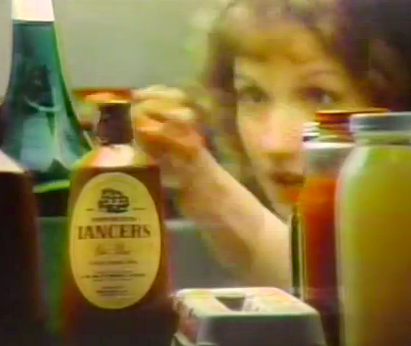
Marketing wine to younger consumers needs more than another Lancers commercial — which, of course, is what we usually get.
Younger consumers don’t want corny and Aldo Cello, but what have they been getting?
Wine Opinions’ John Gillespie, who has been analyzing the wine business for even longer than I’ve been ranting about it, offers some needed perspective about the state of wine advertising:
“If the question on everyone’s mind today is how to gain the favor of young adult beverage alcohol consumers, the first thing to understand is that the wine industry has literally been there, and done that. Of course, the playbook of the winning brands half a century ago must be updated — the wines that broke though in the ’70s and ’80s are not likely to stage a reunion tour anytime soon.”
Gillespie offers a look at the wines and advertising that played key roles in the 1970s and ‘80s boom, including E&J Gallo’s Hearty Burgundy; the German white, Blue Nun; all of those corny Riunite ads; and even Aldo Cella, who sold lots and lots of bottles of Cello Lambrusco.
Gillespie makes the telling point that as successful as those brands and campaigns were, they can’t — and shouldn’t – be repeated today. Those were Baby Boomer moments, and despite what he identifies as some similarities between the Boomers and their children and grandchildren, the demographics aren’t the same.
This is something we’ve noted on the blog many times, most recently for Gallo’s new Black Box campaign. It has more in common with those 1970s and ‘80s efforts than with anything post-modern.
What the wine business should be doing instead of what it did 50 years ago, says Gillespie, is to focus its marketing on two ” ‘features and benefits’ that resonate especially well with consumers under 40. Wines made from organically grown grapes or by wineries with sustainability certifications significantly over-index among those in their 20s and 30s.”
Which, as you may have noticed, may never have been in any important wine ad ever in the history of wine ads.
Is it any wonder I worry about the future of the wine business?
“You don’t need Lancers to catch that cute guy — cook him some vegan eggs.”
These three ads are templates for how to alienate the people you want to attract
Dear Wine Business:
I’ve seen a variety of TV ads recently that struck me as both awful and exactly the kind of thing you’d think was oh so hip and just what wine needed to reach younger people. So, because one of my reasons for being as the Wine Curmudgeon is to try to save the wine business from itself, I’m writing you this note:
• Kelly’s vegan eggs: The irony here (other than the idea of vegan eggs) is that the series of ads for a product called Just Egg got a glowing review in Adweek. Now, the review did use words like tropes, hunky, and multi-tasking, so I may not be cool enough to understand it. Still, any ad that says a woman can get that hunky guy by cooking vegan eggs for him, as the Kelly ad does, is pathetic and sexist – aren’t we past the “My wife, I think I’ll keep her” stage?
• The Geneisis SUV: Some woman jumping off a cliff. Fashion models. Sex. More fashion models. More sex. I thought car ads were supposed to feature the car, but I guess not. This is exactly the kind of image ad that wine has traditionally loved, and which has given wine a reputation as aloof, bougie, and snotty.
• UNTUCKit: This commercial solves the greatest problem facing the republic today – “I couldn’t find a shirt that looked good un-tucked.” How do we know it’s the greatest problem facing the republic today? Because the ad tells us so. Again, the sort of arrogance that the wine industry loves to promote, and about as silly as it gets. Does this guy actually think men worry about what their shirt looks like un-tucked?
I hope this advice helps. As always, let me know what else I can do.
The idea, apparently, is to push the product to younger consumers who normally drink cocktails. The website is even more focused on that, featuring some of the best looking men and women I’ve ever seen in wine marketing. It’s all beaches and bikinis and hanging out, about as far from traditional wine as possible. In fact, these are the kinds of models that appear in fashion magazines, not on websites plugging flavored wine.
And this begs the question of why the product is called Friends Fun Wine, since it goes out of its way to be everything that “real” wine isn’t – younger, very informal, and featuring flavors like coconut chardonnay. My guess? That as beleaguered as the wine category is these days, there is still a certain cachet to it. And the company behind Friends Fun Wine wants to take advantage of that cachet: “Look, here is fun wine you can drink that tastes good but isn’t that old fashioned stuff that your parents like.”
The point here is not that people shouldn’t drink coconut chardonnay wine. The only rule in wine is to drink what you want, but to be willing to try something else. Rather, why isn’t the traditional wine business marketing wine to younger consumers, using the same – but coconut chardonnay-less – approach? That wine can be fun, and that it isn’t necessarily old fashioned.
Video courtesy of Advantis via YouTube, using a Creative Commons license
This week’s wine news: An airline investigates wine thefts, plus the growth of direct to consumer wine shipping and a plea for more truthful wine advertising
• Missing airline wine: Employees of Cathay Pacific airlines are being investigated for stealing sparkling wine, as well as ice cream and cutlery. The story is vague about what was actually stolen, and this may be more about a labor dispute than theft, but the point is well taken. As we’ve seen on the blog many times, if you’re going to commit a crime with wine, steal the good stuff. What’s the point of swiping the wretched plonk that those of us in economy have to drink?
• Direct to consumers: Tom Mullen, writing on Forbes.com, gives a level-headed account of the history of direct-to-consumer wine sales in the U.S. – how it became possible for most of us to buy wine directly from a winery, bypassing retailers and distributors. The piece is a bit long, but any mainstream article that calls U.S. wine laws “sometimes archaic” and spends time discussing the history of Missouri wine is well worth reading.
• More truth, less artisan: “I see far too many industrial brands calling themselves ‘artisanal,’ ‘family-owned’ or claiming their wines are ‘hand-crafted’ when they are anything but.” No, that’s not the WC ranting, but Dwight Furrow in Edible Arts. His argument is passionate but logical: The “issue isn’t whether there is an exact cut off point for what counts as artisanal. What is obvious is that wineries with annual case production levels over 50,000—enough to supply large retail stores—are unlikely to use artisanal methods. To claim they do is just false advertising.” His point matters more than ever as younger people, who are more sophisticated about advertising than their parents and grandparents, may be turning away from wine because they see those claims as hooey.










 This week’s wine news: An airline investigates wine thefts, plus the growth of direct to consumer wine shipping and a plea for more truthful wine advertising