Category:Wine trends

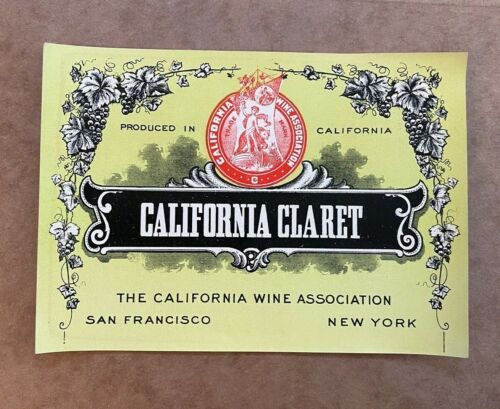
Wine history lesson 5: Big Wine’s forebear — the infamous California Wine Association

California wine association label
California Claret? Why not, when you have a wine production monopoly?

The 19th century wine cartel controlled more than 80 percent of the state’s wine business

Those of us who worry about the future of the wine business wring our hands and cast our eyes upwards every February, when the new top 50 wineries list is released. Each year, it seems that wine gets more and more top heavy, with just a handful of companies controlling 90 percent of U.S. production.

But imagine how much hand wringing we would have done at the end of the 19th century, when a cartel called the California Wine Association controlled 84 percent of the California wine business.

I touched briefly on the CWA in the cheap wine book, noting the wine boom in California that saw production increase five-fold in the 30 years or so before Prohibition. The boom, though, came at a heavy cost to everyone but the cartel, which controlled prices up and down the wine supply chain. It low-balled growers, who had no market for their grapes if they didn’t sell to the CWA, and it gouged retailers across the country, who didn’t have any wine to sell if they didn’t pay the CWA’s prices.

Best yet, as the noted wine writer Paul Lukacs wrote, the CWA didn’t particularly care about wine. It just cared about profit. Its organizer, wrote Lukacs, was an Englishman named Percy Morgan, who “did not much care who drank the wines, or what kind of wines they drank. His goal above all else was profit, and he clearly realized it.”

Frankly, the parallels to today’s 21st century wine business are more than a bit spooky:

• The seven wine companies that formed the CWA knew what they were doing was probably illegal; the Sherman Anti-Trust Law has just been passed. But they did it anyway. According to one historian, the wine business was in such a mess after the economic turmoil caused by the Panic of 1893 that it seemed the only way to save it.

• The cartel apparently stabilized California’s wine business and led to the previously mentioned wine boom, But it wasn’t much of a boom. In 1910, the average American drank 10 times more beer than wine, and most of the wine they did drink was imported from Europe.

• Prohibition, not surprisingly, destroyed the CWA. In 1920, there were 2,500 commercial wineries in the U.S.; less than 100 made it through Prohibition. The CWA understood what Prohibition would do, and made some attempt to market non-alcoholic wine – but with little success. Cue the Twilight Zone music.

More wine history lessons:
• Wine history lesson 4: Those damned high prices
• Maynard Amerine on quality, price, and value
• Wine history lesson 3: Bring on the French wine!

Mega Purple: The natural wine ingredient that no one wants to talk about

Bottle of Mega Purple concentrate
Yes, grape juice concentrates like Mega Purple really do exist.

It’s concentrated grape juice that may be in your $15 supermarket red. But don’t tell anyone I told you so

I’ve written about corruption, underhanded dealings, and various other shenanigans during my career. But I’ve never been stonewalled quite the way I was when I wrote a freelance piece for Pix.wine about the history of MegaPurple.

MegaPurple is concentrated grape juice, similar to the frozen stuff at the supermarket (though made with a hybrid grape called rubired). It shows up in red wine all the time – mostly in blends, sweet and otherwise, costing $15 or less, and it’s so potent that only a drop is needed.

But it may also, maybe, possibly be in red wines costing two and three times that much – if someone was willing to talk about that.

In fact, I contacted some 15 people for the story, and only four talked to me. Almost everyone said, yes, it’s a great idea for a story, but I can’t help you.

So why all the mystery? Because – and pun fully intended – Mega Purple and its competitors (one of which is called UltraVin 8000, and another of which is organic) are the deep dark secrets of the California wine business. They’re used to make inexpensive red wine darker and a touch sweeter, on the theory that most wine drinkers equate quality with darker wine and that most of us prefer a touch of sugar.

And it makes wine critics crazy. Do a Google search, and you’ll see a decade or so of stories taking Mega Purple to task; in this, it’s even more heinous than scores, premiumization, and the neo-Prohibitionists. The consensus is that it’s unnatural, even though it’s made from grape juice and is completely legal under most state and federal regulations.

This is not a defense of Mega Purple; blog readers know me better than that. Rather, it’s to note two ironies: First, that it is natural, and not a whole lot different than adding grapes like alicante bouschet or petite sirah to make red blends darker. Which happens all the time, and especially in pinot noir costing $25 or more. Or so I’m told – but not, of course, on the record.

Second, that ingredient labels would spotlight Mega Purple and the rest, and we’d all know that it was in our wine. But how many people in wine really want to do that?

Wine’s sustainability problem

man with head in hold
“I know sustainability is down here somewhere.”

There’s more to being green than growing grapes, but the wine business still hasn’t figured that out

Sustainable wine – that is, wine made to be eco-friendly – has been dominating wine business discussions lately. And why not? Climate change is already kicking wine in the head, and it’s only going to get worse, say the experts.

Hence this very impressive green conference last month, which genuinely seemed to try to make a difference. And many producers, whether in New Zealand or California, like Tablas Creek and Spotswoode, have made impressive strides.

But those seem to be the exceptions. Wine too often misses the point about sustainability, and that doesn’t even take into account that no one quite knows how to define the term. Rather, that’s because wine sustainability is mostly concerned with farming and not the rest of what makes wine wine – packaging, quality, and price. (And no, this isn’t going to be another rant about glass bottles, so you can take your fingers off the cancel button.)

Note four recent sustainability moments that, for better or worse, show how far wine still has to go:

• Benjamin Neyman, the production and procurement manager for California producer Shannon Family, offered impressive insights during a recent Zoom sustainability seminar. He said the winery can do everything possible to make grape growing more green, and it has. But “how do we overcome getting glass from China or diesel trucks that get 4 mpg delivering our wine?” And, added Neyman, there is still a sense among consumers that glass bottles are the only packaging that matters.

• Pricing came up frequently during the sustainability seminar, with the idea that $20 was the cost of an entry level wine. In this, I kept getting the sense that the wine business wants to use sustainability to raise prices and accelerate premiumization. Which, of course, won’t do much for the planet.

• A couple of samples arrived recently from California wineries that pride themselves on their green credentials; one of them is famous for it. So how were the samples packed? One used foam peanuts and the other used polystyrene foam. And the famous winery’s bottle weighed 18 ounces, almost four times the weight of a plastic bottle. That’s hardly acting green, is it?

• Finally, quality, which various winemakers have told me continues to lag for green packaging like cans. I can attest to this: One recent can sample, a rose, smelled like rotten eggs and sulfur; the red was bitter and thin. Neither tasted like the wines the company ships in bottles, which are pretty damned good. That won’t get consumers to switch packaging, will it?

What’s next for restaurant wine?

restaurant wine list
“Where’s that $750 bottle? Let’s get a couple.”

No, it’s not lower prices – how about more famous brands and fewer interesting wines?

One of the biggest wine questions, as we come out of the pandemic: “What’s next for restaurant wine?” One international study says to expect more of the same – which means higher prices, less selection, and more famous brands.

“It became clear that there’s been a deep shift in restaurants.” including sommeliers pruning lists, buyers being much more selective, and restaurants focusing on the most well-known wines, says Pauline Vicard, the CEO of ARENI Global, a consultancy that studied wine lists in key cities around the world. And, if you’re a small or lesser known winery, it has become that much more difficult to get on lists.

A couple of caveats: First, the study looked at just a handful of international cities, and New York and San Francisco were the only ones in North America. So what’s true in those two places might not be true in Atlanta or Houston or Los Angeles. Second, the study only looked at high-end restaurants serving “fine wine,” so what it found might not apply to the Italian place on the corner.

Having said that, a couple of trends probably apply, regardless. First, restaurant wine, despite its problems over the past 10 or 15 years, remains hugely important. The study estimates that restaurants account for 30 percent of total European “fine wine” sales. So producers, despite sagging restaurant sales, are still desperate to get their wines on lists.

Second, pricing remains counter-intuitive. Want to lure diners back? Then shouldn’t wine cost less? But that wasn’t the case in New York or San Francisco. In each city, restaurants took more “entry-level wines” – those costing less than $100 – off lists than at any other price. In 2022, only out of six wines on New York lists cost less than $100; it was about one in five in San Francisco. But one in four wines, more or loss, costs more than $750 in each city.

Can someone explain how that will bring me back — let alone younger consumers?

Winecast 68: Clara Klein and restaurant wine after the pandemic

Clara Klein
Clara Klein, Sunday Vinyl: We have challenges, but we’re dealing with them.

Clara Klein: “The restaurant wine business is good.”

Know all that bad news we’ve heard about restaurant wine prices? Clara Klein, the lead sommelier at Sunday Vinyl in Denver, says it’s not necessarily so.

Klein, the blog’s official restaurant wine expert, returned to discuss what she is seeing as the restaurant wine business works its way out of the pandemic. She is seeing some significant changes in restaurant wine, including better pricing and more choices. “It’s important not to dumb it down — we’re having too much fun,” says Klein.

Among the subjects we discussed:

• Rose season should proceed on schedule, with prices more or less the same and decent selection. Which, of course, is good news for the blog’s 15h annual rose extravaganza next week.

• She is working diligently to keep pricing fair and selection high. How about a quality bottle of restaurant wine for $35? Sunday Vinyl also has expanded its wine by the glass offerings and has added tasting flights for some of the most expensive bottles on its list. That way, says Klein, customers can get a chance to taste rare wines they would not otherwise be able to afford.

• Working conditions have improved as well — health insurance and 401K plans included. In this, she says, the restaurant has been able to attract more and better qualified employees.

Finally, you’ll notice what is perhaps the first discussion of Greek wine on the blog. Which, as I note, is almost surely the last discussion, given how difficult it is to find Greek wine in most of the country.

Click here to download or stream the podcast, which is about 19 minutes long and takes up 13 megabytes. The sound quality is very good to excellent.

Photo courtesy of 5280, using a Creative Commons license

“You don’t love our wine? That’s not possible. … we had a meeting about it”

woman writing on notebook
“How can I work the the marketer’s notes about affordable and smooth into this review for a $25 too tannic red wine?”

In the world of post-modern wine marketing, we’re all partners and we’re all part of the team – even if we’re not supposed to be

Some wine marketers, after sending a wine sample, will follow up with an email asking if I liked it. Or, as one email recently asked, “Would love to know your thoughts about the wine. …”

Yeah, right.

In fact, they didn’t actually want to know what I thought about the wine. They already knew, because it was decided in a meeting at the start of the marketing campaign. In the world of post-modern wine marketing, there’s no such thing as objectivity. Everyone, whether marketer, influencer, or cranky ex-newspaperman who reviews wine, is part of the team partnering with the client.

Yeah, right.

That this is a contradiction in terms doesn’t seem to bother anyone; in fact, it doesn’t even seem to occur to anyone. Which is bad enough. But why would the marketers assume that I’ll play along? Aren’t wine writers supposed to be objective? Oh, wait a minute. We’re not, are we?

In this case, I did share my thoughts about the wine – politely, but also honestly, explaining that it wasn’t anywhere near what the producer claimed it was. No doubt I’ll get a note thanking me for my objectivity.

Yeah, right.

Having said that, many of the PR people I deal with are top-notch. They know what I’m looking for, and will be honest with me about the wine they’re flogging. Some even know not to offer me something, because it’s too expensive or too focused group or too whatever. Needless to say, I cherish those marketers, which is the reason no names are being mentioned. The last thing I want to do is get them in trouble with the client for being really good at their job.

And I turn down a lot of samples, too, probably more than anyone in the wine writing business. What am I going to do with a $30 Italian sauvignon blanc, other than to sigh and write something about the sad future of the wine business?

I wonder: Did that possibility come up in the meeting? I doubt it.

Photo: Photo by J. Kelly Brito on Unsplash

It’s official: Cheap wine is irrelevant, part III

rose wine
“Is there anything better than $100 rose?”

If you thought the first two cheap wine is irrelevant posts showed how screwed up wine is, wait until you read this one

Just in time for the blog’s 15th annual rose extravaganza next week – 12 “must have” roses for this summer, from a group of leading “restaurant professionals.” And not one of them costs less than $46 on a restaurant wine list, and two cost $100 or more.

For rose? Rose??? Rose?????

Yet there it is, from one of the wine business’ most important trade websites: These are roses “that sommeliers and beverage directors across the U.S. clamor for. … what they’re stocking up on as rosé season kicks off once again.”

Obviously, retail pricing wouldn’t be nearly as ridiculous; those that list for about $50 would cost about $35 at your local wine shop. But it’s not like $35 isn’t ridiculous, either. How many of us are going to pay $35 for a bottle of rose?

In this, one more piece of evidence – after this and this — that the wine business doesn’t much care about those of us who aren’t the one percent. Consider: I can get a bottle of actual Champagne from a good producer at one of Dallas’ leading high-end restaurants for $90. I love rose, but if I’m going to spend that much money, I’ll buy the bubbly. Who wouldn’t?

So what’s going on here? Two things, I think:

First, restaurants are restaurants, and if the pandemic didn’t change restaurant wine pricing, nothing will. I’m supposed to talk to someone who did a study about the pandemic’s effect on restaurant wine this week, and I’ll be sure to ask about these prices. They seem counter-intuitive if you’re trying to lure diners back.

Second, snobbery. It pains me to write this, after all the years I’ve spent trying to de-snobify wine. But that seems to be where we are in the second decade of the 21st century. It’s hip and cool or whatever to put a $100 rose on a wine list, and those of who don’t understand that it’s hip and cool or whatever don’t matter.

Photo: “Boyfriend and girlfriend drinking wine closeup. Pink colors for Valentine day” by shixart1985 is licensed under CC BY 2.0.