Category:Wine trends

No, Vogue, boxed wine hasn’t finally become cool

Once again, the WC must help the Mainstream Media figure out this wine thing

Vogue magazine cover
Somehow, I can’t see this woman opening a Bota Box rose.

Dear Vogue:

Let’s get this out of the way first – the Wine Curmudgeon is not a Vogue kind of person. I’m not rich enough, I’m not young or pretty enough, and I don’t dress well enough (hats notwithstanding). Still, I do know about wine, so I thought I would point out that you could have done a better job with your recent boxed wine piece.

Because, no, boxed wine is not becoming cool.

I don’t write this to be snarky or cranky, but to fulfill my role as an advocate for quality journalism, and especially about wine. And the reporting in this story could be much, much better.

You write: Boxed wine “has a bad reputation. Perhaps that’s due to its prevalence on college campuses, or a lack of prevalence beyond: American adults, so many of us are conditioned to think, drink wine from bottles, not boxes.”

That’s not true. The box demographic is Baby Boomer – and the more expensive the box, the older the consumer is. The difference is that we leave the bag in the box when we drink it.

How bougie is that of us?

Second, the story has almost no statistics. Yes, I’m quite happy to see an upscale sommelier at a hip Manhattan bar and retailer say we shouldn’t be so snotty about boxed wine, but it would be nice if the story pointed out that boxed wine sales have been steadily increasing for years – and why they haven’t become more popular (because much of the wine is wretched, actually).

Third, one discussion of a box wine – and one that is almost impossible to buy – and two more wines thrown in at the end do not a story make.

And trust me, no one wants to read about the glass bottle’s heinous carbon footprint more than I do. But you sort of stuck it in because an editor said to, and not because you thought it was important.

So constructive criticism. Because the day we can wave goodbye to the glass bottle and cork – as your sommelier notes – can’t come too soon.

Your pal in better journalism,
The Wine Curmudgeon


Annie Green Springs and why nothing is ever new in the wine business

This 1970s brand foreshadowed wine coolers and hard seltzers – complete with crummy advertising

One of the things about the wine business that makes me crazy is that there is nothing new – just the same stuff repackaged in a prettier label.

Case in point: This 1974 radio ad for a brand called Annie Green Springs, which was apparently a cross between Boone’s Farm and Thunderbird — aimed at both college students and urban audiences, neither of whom wanted to drink “real” wine. So fizzy, slightly sweet, and marketing-style fruity. How do Apricot Splash, Berry Frost, and Plum Hollow sound?

In other words, hard seltzer.

The ad, save for a few pictures that offer a sort of nostalgic pleasure for anyone who remembers those times (“Groovy!”), is terrible – corny and very dated, and the jingle is so awkward that Churro, the blog’s associate editor, could probably have written a better one.

Annie Green Springs, despite an attempt to revive the brand a couple of years ago, apparently no longer exists. Small favors, anyway.

Video: What’s the Story via YouTube

More about wine advertising:
• TV wine ads: Black Box targets younger consumers – but still doesn’t get it right
• The history of wine advertising and reaching younger consumers
• Radio wine ad: Stiller & Meara for Blue Nun

Winecast 69: Nick Vorpagel and the dilemma of the independent wine retailer

Nick Vorpagel headshot
Nick Vorpagel: $15 may well be the new $10 wine.

Nick Vorpagel: “We don’t carry Mark West pinor noir. I suppose there’s a place for that, but it’s not us.”

The pandemic’s supply chain problems don’t seem to be going away, and especially for small retailers. Throw in inflation and higher prices, and it’s not easy out there.

That’s the assessment of Nick Vorpagel of Wisconsin’s Lake Geneva Country Meats, the blog’s unofficial independent wine retailer. He says shipping woes have continued and it’s still difficult getting imported wine. Sometimes, European wine is in short supply and sometimes it’s Australia and New Zealand. Nick calls those rolling supply chain outages — “something is going to be short for a while, and you just don’t know what it is.”

Among the subjects we discussed:

• There seems to be little hope that wine prices moderate any time soon. This is from a combination of supply bottlenecks and large retailers gobbling up the wine that is available so that they don’t run out, further cutting supply.

• In addition, producers and retailers seem to be taking price hikes whether they’re warranted or not, just to be on the safe side. And discounts and wine on sale? Not anytime soon.

• All of which means it’s time to start worrying about what to drink during the holidays, says Nick. He says he has been told to order for Christmas this summer, a couple of months earlier than usual.

• Some values do remain, including South Africa, Spain, and Portugal (vinho verde!). South America? Not so much. And be wary if you see a fancy bottle selling for $15 with a 2020 Napa Valley label; it could well be smoke-damaged wine being sold under a different label. And we shed a few tears for the once-great Seguras Viudas cava.

Click here to download or stream the podcast, which is almost 25 minutes long and takes up about 17 megabytes. The sound quality is very good to excellent, though there is way too much giggling on my part.

Convenience store wine 2021

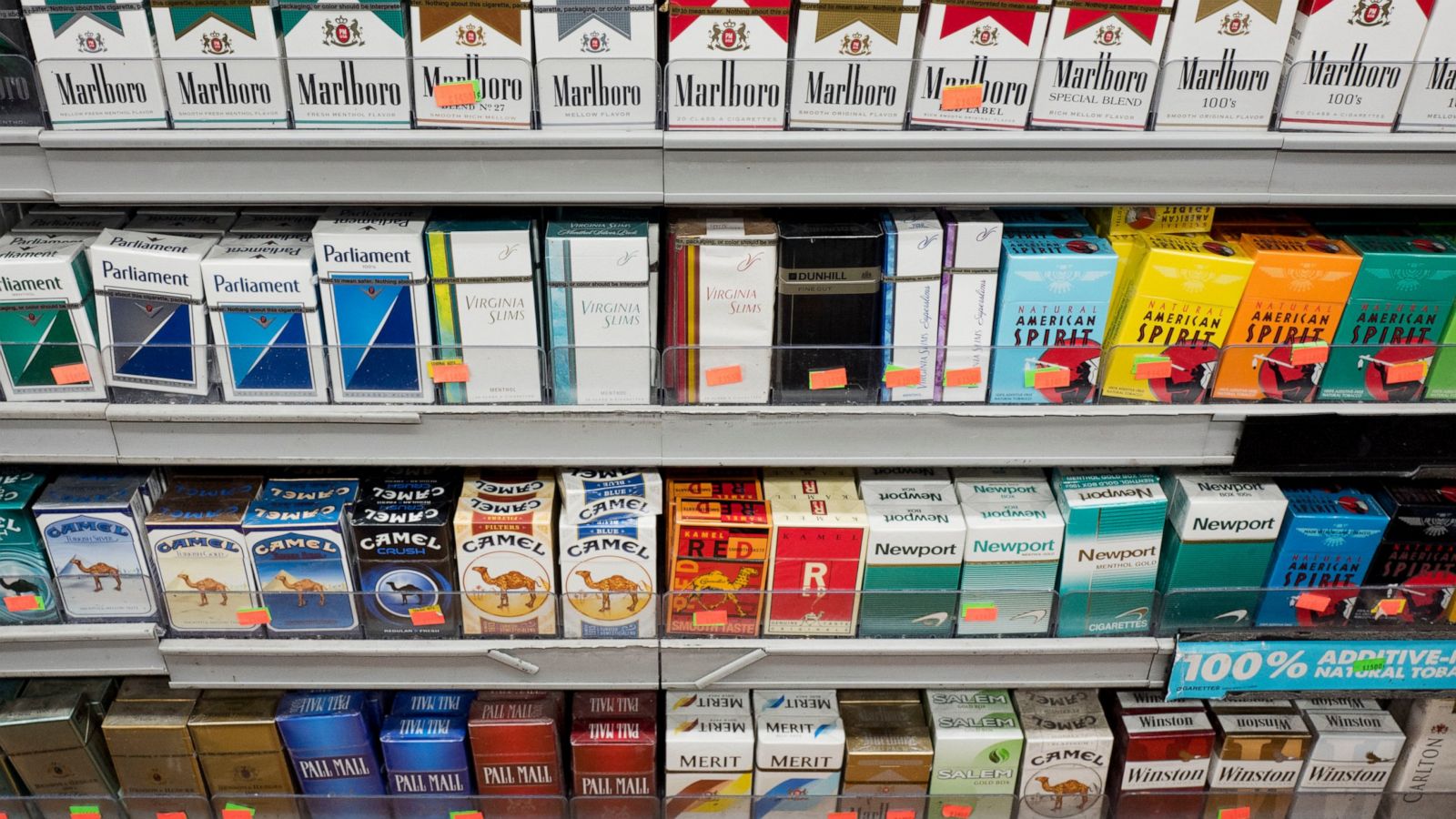
store cigarette display
“Who needs wine? We have cigarettes.”

Convenience store wine sales, one of the few bright spots over the past couple of years, weren’t in 2021

This is the second of two parts looking at trends for wine sold in supermarkets and convenience stores. Because not all wine is sold at Costco, Total Wine, and your local retailer. Today, part II: Convenience store wine sales. Thursday, part I: Supermarket private label wine.

Convenience stores – yes, convenience stores – have been one of the few bright spots for wine over the past couple of years. Wine sales at convenience stores surged in 2020, the fourth consecutive year of increases at 7-Eleven, QuikTrip, and the like.

But it was, apparently, too much to last.

The 2021 numbers, released in June, showed that wine sales declined 7 1/2 percent. In addition, sales as percentage of all the store sold fell by one-half of one percent. Sales of beer and cigarettes, meanwhile, increased – 1.2 percent for the former and 2.6 for the latter. I don’t know about you, but when wine drops and cigarettes don’t, it’s really time to worry about the future of the wine business.

The only good news? More convenience stores than ever are selling wine, more than two-thirds — up from 58 percent in 2020. That’s especially impressive, given how many states, including New York and Pennsylvania, limit wine sales in convenience stores.

Still, Jeff Lenard, vice president, strategic industry initiatives, for the National Association of Convenience Stores trade group, says not to panic. The end of the pandemic, he says, probably inflated the 2020 numbers: “It’s not so much that the year 2021 was a decline continuing a trend, but a decline from an unusual year in 2020.”

Also worth noting – despite the 21.1 percent sales increase from 2019-2020, the number of stores selling wine barely rose at all. In the long term, it’s probably quite significant that that number is now more than two-thirds.

So we’ll focus on the good news – since there is so much bad news in wine otherwise.

More about convenience store wine:
• Convenience store wine 2020
• Convenience store wine during the pandemic
• Convenience store wine 2019

Wine drinkers to supermarkets: We want better, more affordable wine

Wione bottles on store shelf
“What? No Winking Owl?”

New study shows we’re not happy with supermarket private label wine

This is the first of two parts looking at trends for wine sold in supermarkets and convenience stores, since not all wine is sold at Costco, Total Wine, and your local retailer. Today, part I: Supermarket private label wine. Friday, part II: Convenience store wine sales.

A friend emailed me recently, with a link to all the wonderful cheap wines Aldi sells in some of its European stores. “Have you seen any of these wines in your local Aldi?,” he wrote, and most unhappily.

Nope, I told him, and we commiserated about the poor choices for supermarket private label wine in the U.S. (Winking Owl!).

But, it turns out, we’re not alone in our disappointment with supermarket private labels — the wines that can only be bought at specific retailers, like Kirkland at Costco and Two-buck Chuck at Trader Joe’s.

A recent study looking at private label supermarket products found that shoppers were mostly satisfied with the quality and prices of store-brand toilet paper, ketchup, and the like. One of the few things that didn’t do well?

Private label wine and alcohol.

In the Food Marketing Institute report, almost half of frequent private brand shoppers preferred to buy national brand alcohol; in fact, they were more likely to buy store pet food and vitamins than they were store brand wine. And why was that? Because, as one shopper said, “Stock up on alcoholic beverages.” In other words, a couple of cases of Winking Owl (or its equivalent) stacked at the end of the aisle is not enough.

This was not supposed to happen. A couple of years before the pandemic, the Private Label Manufacturer’s Association launched a campaign to improve the quality and pricing of those wines (in which I played a tiny, tiny part). But the pandemic and the death of the PLMA president Brian Sharoff put an end to that.

So what are we stuck with? Something like this $4 wine from Aldi, which really isn’t even worth $4.

Photo:”lotta wine” by rick is licensed under CC BY 2.0.


No, wine business, expensive wine is not better just because it’s expensive

George C. Scott, Michael Sarrazin playing cards
“You can watch the cards all you want. But I’m still going to get your money.”

Premiumization’s battle cry is nothing more than another wine flim flam

The headlines show up every time the depressing numbers are released. Wine consumption in the U.S. continues to decline (and around the world, for that matter), but that’s OK:

“BECAUSE WE’RE DRINKING BETTER!”

How do we know we’re drinking better? Because we’re buying more expensive wine – and, as we hear every day from the Winestream Media, expensive wine is always better. Regardless.

Cue Wine Curmudgeon sighing.

Call this wine’s newest flim flam, so that it can pretend that everything is OK even though it’ not. As Paul Tincknell, the blog’s official wine marketer, explains: “The industry can welcome a massive contraction as consumption decreases due to the ‘drink better, not more often’ ethos.”

Which is bad enough. What’s worse is the idea that expensive is better just because it’s expensive.

Frankly, I thought I had taken care this in the blog’s early days, and especially when The Other Wine Guy and I did our wine talks at the State Fair of Texas a decade ago. If a drunken crowd of beer drinkers (mostly from Oklahoma on certain weekends in October) can understand that expensive doesn’t equal better, then why is it so difficult for the wine business? I would ask the audience if a $100 wine was always 10 times better than a $10 wine, and their answer was always a resounding no.

Maybe, once, wine prices were an accurate guide to quality. And some still are – this wine is infinitely better than this wine. But those are the exceptions. Post-modern wine marketing and winemaking have turned that inside out. A quality $10 or $15 wine, like the ones I’ve been writing about for almost 30 years, is not going to be that much different from a $25 supermarket wine. The latter may have a fancier label, cuter name, and heavier bottle, but what’s inside is going to be about the same.

I see this all the time with too many of the samples that I get. Most recently, it happened with a $45 Italian white that had one of the most marketing-driven names and labels I’ve ever seen, as well as wax on top of the closure and a 27-ounce bottle. In all of this, it screamed quality.

Which was a good thing, since the wine – though well made – was dull and not especially interesting. It tasted like an Italian version of white Burgundy, chardonnay from France. This begs two questions: Why would an Italian want to knock off a French wine, and why would I pay $45 for an Italian version when I can get the real thing for the same price?

But, if you believe the flim flam, when we buy that wine, we’re drinking better.

The kicker to this story? The next wine I tasted was a $9 Italian red I bought at Jimmy’s, the blog’s official Italian wine retailer. It was about as ordinary as Italian reds get – tart, a little rustic, maybe not quite ripe enough, and not necessarily something I would buy again. But it was an honest wine that paired with what I was eating, and I enjoyed it much more than the $45 white.

So I guess I’m not drinking better. I’m just having more fun.

When’s the last time you heard someone say, “Let’s go buy wine in a can”?

Wine on store shelf
Nary a can to be seen. …

Cans didn’t save the wine business from itself – for just that reason

Cans were supposed to save the wine business from itself, offering younger consumers a less expensive and less stuffy alternative to bottles and corks.

So what happened? Why have cans become mostly a niche product?

Yes, pandemic supply chain woes made a difference, and so did canned wine quality, which has been inconsistent at best. But the main reason – and one that really smart analysts predicted – is that cans don’t match how we drink wine.

This was made clear to me recently during a tasting of several canned wine samples. Lynne Kleinpeter and I were laboring through some dreadful wines when she looked at me and said: “When’s the last time you heard someone say, ‘Let’s go buy wine in a can.’ “?

And the light bulb went off.

Wine is what the analysts call occasion driven. We buy wine for specific occasions, which is almost always dinner (and sometimes celebrations). So what’s the occasion for canned wine?

There really isn’t any. Canned wine was marketed for picnics, camping, the beach, and boats. But how many younger consumers buy wine specifically for camping, boating, and the like? And how many of wine’s increasingly aging demographic still go camping? (And no, Airbnbs don’t count.)

In other words, canned wine was aimed at a market segment that really didn’t exist. Yes, some producers are doing well, and some retailers have had great success with cans. My pal Roberta Backlund ran the wine and beer departments for a regional Florida chain several years ago and sold lots of canned wine. But talk to someone in the Midwest, which doesn’t have an ocean, and the experience will be quite different.

In other words, no one says, “Let’s go buy wine in a can.” They say: “What should we buy for our picnic?” And then they buy beer or hard seltzer or canned cocktails. But not wine, as this year’s Silicon Valley Bank report noted. And noted. And noted.

This doesn’t mean there isn’t a demand for canned wine. But, like box wine, it’s limited and will never be more than a certain proportion of the market.

Which also means the wine business is going to have to find another way to save itself.

Photo: brandy turner on Unsplash