Tag Archives: canned wine

Five nights drinking wine from something besides a bottle

man drinking from box wine
“Dinner? Who drinks boxed wine at dinner?”

The results were uneven, and helps explain why the glass bottle still dominates packaging

We’ve discussed alternative packaging on the blog for years, so what better way to see where wine is with something other than glass bottles than to drink wine packaged in something else?

That’s what the Wine Curmudgeon did last week – five nights drinking wine at dinner from a variety of “premium” 3-liter boxes (so no Franzia) and 250-ml cans. Why dinner? Because that remains the occasion where most wine is consumed.

Sadly, the results were uneven, and reminded me why the glass bottle – despite all its flaws – still dominates wine packaging.

My thoughts after five nights with something other than glass bottles:

• Convenience. Boxes and cans don’t do well at dinner. How do you keep track of how much wine you’ve had when it comes from a box? In addition, wrestling the spout into its holder remains a challenge, as does pouring the wine into a glass. And where do you put the box when you’re eating dinner? It needs to sit on a counter, to make pouring easier, so you have to get up every time you want another glass. And finding space in a normal-sized refrigerator for chilling the box? Good luck. Cans aren’t as awkward, but opening another can after the first is empty – and disposing of the empties – remains an inconvenience.

• Quality. Uneven, which was really depressing. Most of the canned wine tasted like it should, though some had a noxious, sour aroma when first opened (which I’m told isn’t unusual). The box quality, sadly, was all over the place. One rose was undrinkable, tannic and bitter. One red blend was OK, but nothing more. In this, boxed wine consistency hasn’t improved much over the years – decent one year, not so decent the next.

• Price. Again, uneven. The point of 3-liter boxes is price, and most figure out to $6 to $8 a bottle. Hence, the theory is we’ll put up with crappier wine since it costs less. But, as my experience with the rose proved, that’s not always the case. Just the opposite is true with cans – prices are higher because we’re paying for the convenience. For dinner, though, that means a $10 bottle of wine costs $15. And what’s the point of that?

When’s the last time you heard someone say, “Let’s go buy wine in a can”?

Wine on store shelf
Nary a can to be seen. …

Cans didn’t save the wine business from itself – for just that reason

Cans were supposed to save the wine business from itself, offering younger consumers a less expensive and less stuffy alternative to bottles and corks.

So what happened? Why have cans become mostly a niche product?

Yes, pandemic supply chain woes made a difference, and so did canned wine quality, which has been inconsistent at best. But the main reason – and one that really smart analysts predicted – is that cans don’t match how we drink wine.

This was made clear to me recently during a tasting of several canned wine samples. Lynne Kleinpeter and I were laboring through some dreadful wines when she looked at me and said: “When’s the last time you heard someone say, ‘Let’s go buy wine in a can.’ “?

And the light bulb went off.

Wine is what the analysts call occasion driven. We buy wine for specific occasions, which is almost always dinner (and sometimes celebrations). So what’s the occasion for canned wine?

There really isn’t any. Canned wine was marketed for picnics, camping, the beach, and boats. But how many younger consumers buy wine specifically for camping, boating, and the like? And how many of wine’s increasingly aging demographic still go camping? (And no, Airbnbs don’t count.)

In other words, canned wine was aimed at a market segment that really didn’t exist. Yes, some producers are doing well, and some retailers have had great success with cans. My pal Roberta Backlund ran the wine and beer departments for a regional Florida chain several years ago and sold lots of canned wine. But talk to someone in the Midwest, which doesn’t have an ocean, and the experience will be quite different.

In other words, no one says, “Let’s go buy wine in a can.” They say: “What should we buy for our picnic?” And then they buy beer or hard seltzer or canned cocktails. But not wine, as this year’s Silicon Valley Bank report noted. And noted. And noted.

This doesn’t mean there isn’t a demand for canned wine. But, like box wine, it’s limited and will never be more than a certain proportion of the market.

Which also means the wine business is going to have to find another way to save itself.

Photo: brandy turner on Unsplash

Do wine drinkers really care about the trends that the marketers say we care about?

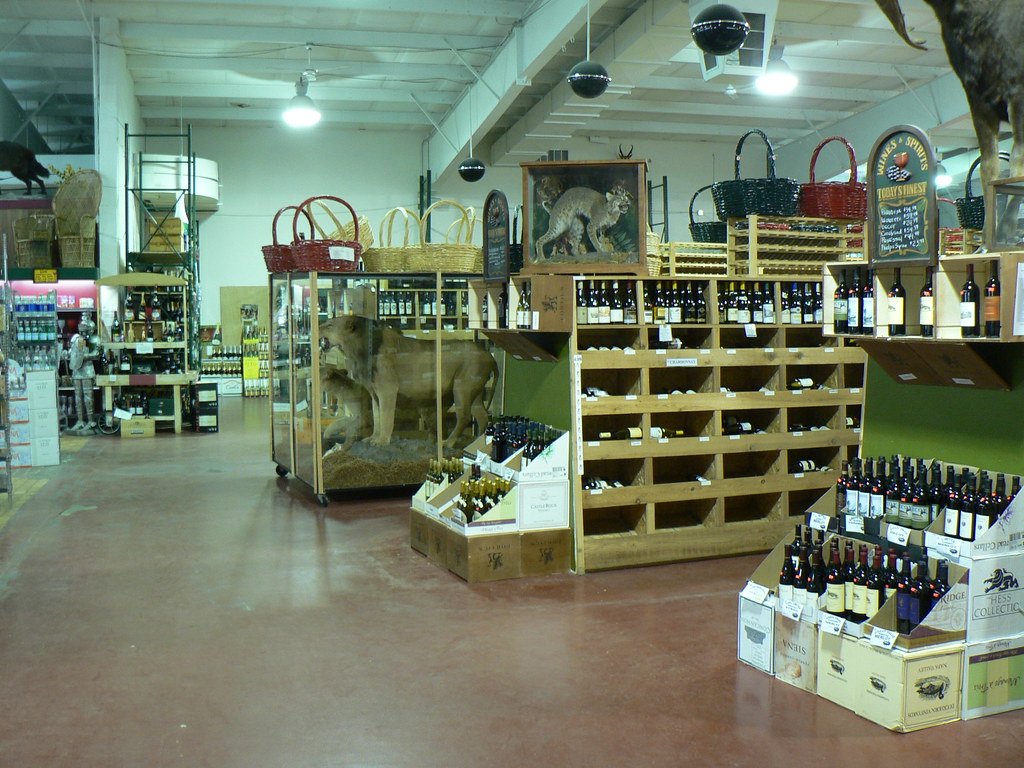
wine store
Organic wine? Not really, thank you.

Not really, says one survey, citing little interest in cans, “healthy wine,” and organic wine

One of the problems with deciphering the wine business is that there is almost no good data. If we don’t even know for sure how much wine is sold in the U.S. each year (and we don’t, apparently), then how can we know what’s going on with even more abstract concepts?

I mention this because I’ve spent much of the past couple of months writing about wine trends, both here and for several freelance pieces. Those trends included “healthy” wine, canned and box wine, and organic wine, and how each will be key parts of the wine business this year.

Turns out I may have been wasting my time.

That’s because the Wine Opinions consultancy recently asked its group of mostly high-frequency wine drinkers (those who drink wine at least once a week) about canned wine, wine that is “better for you,” and wine made with organic grapes. The results were stunning:

• Organic grapes: Just 9 percent said they would buy more wine made with organic grapes this year.

• “Better for you” wine did even more poorly – only 5 percent said they would buy more wine marketed as “healthy.”

• And cans and boxes? Hardly worth mentioning, with only 3 percent saying they would more wine in cans, while potential box purchases were more or less flat for 2022.

What’s going on here? How can these results be so different from what the experts have told us is going on?

The answer, I think, rests with the highly conservative nature of all those high-frequency wine drinkers. If it doesn’t come in a 750-ml bottle with a cork-style closure, then they’re not especially interested in it. And many of the wines in the survey are certainly not of the 750-ml glass bottle variety.

Age didn’t even particularly matter, save for the organic and healthy categories. Younger wine drinkers, who are supposed to be more open to cans, boxes, and all the rest, didn’t show that much more of a preference for alternative packaging.

And where age did matter, it didn’t seem to matter all that much. Yes, there were significant differences in the number of drinkers older than 40 and those younger than 40 in buying “healthy” and organic wine, but those younger than 40 didn’t embrace either with much enthusiasm. Just 17 percent of respondents under 40 said they would be more likely to buy “better for you” wines in 2022, and the number was only 21 percent for organic wine.

One out of five people from a demographic that doesn’t buy as much wine as their elders hardly seems like enough to build a trend around, does it?

Photo: “Wine store” by stu_spivack is licensed under Creative Commons

Winebits 650: Canned wine, wine advice, half bottles

canned wineThis week’s wine news: Will aluminum shortage slow canned wine’s growth? Plus, sensible advice in a new book and the popularity of half bottles

Canned wine: Two blog readers reported an absence of canned soft drinks during supermarket visits recently, which seemed odd. Who runs out of diet Coke? Turns out the pandemic has screwed up the aluminum supply chain, thanks to increasing demand for canned beer during the duration. Says one supplier for the wine business: “We have to ensure that we don’t get into a toilet paper situation.” In addition, some beer and wine producers have seen price gouging from can suppliers.

Keep it simple: A new wine book has given the WC reason for hope. “‘How to Drink Wine” (Clarkson Potter, $17), by Chris Stang and Grant Reynolds, wants to make wine as accessible as possible. Says Stang: “Wine can be intimidating for some people. Some might think they don’t have the time to ‘be into wine.” You can learn by just drinking wine with friends and talking about it.” Sound familiar? And lots more welcome than most of the “advice”” we get from the wine business?

Bring on the half bottles: The 375 ml bottle, not especially common before the pandemic, is enjoying a resurgence. Reports the Wine Enthusiast: “Easily shippable for virtual tastings and a sensible substitute for by-the-glass service, the small-format bottle is especially suited to pandemic life.” One East Coast retailer increased his half-bottle inventory by 60 percent, and several retailers have told me they can’t keep the smaller size in stock.

Memorial Day and rose 2020

memorial day and roseCheck out these six roses — cheap and delicious — for the blog’s 13th annual Memorial Day and rose celebration

There is lots and lots of quality rose out there at terrific prices as we continue the blog’s 13th annual Memorial Day and rose extravaganza with today’s post. But given the surreal way wine works these days, that’s both good news and bad.

Good because there is lots and lots of rose in the marketplace, keeping prices down. Case in point: I got a California rose sample this month that cost $2 less this year, and it was the exact same wine the producer sent me last year. Yes, a price cut in the wine business – as hard as it is to believe.

Bad because there is lots and lots of rose in the marketplace, much of it unsold from last year. That’s almost unprecedented for rose. But pink wine’s sales have slowed thanks to the general wine sales slowdown and the coronavirus pandemic hasn’t helped. In this, many producers have delayed release of the 2019 until they sell out. Bota Box, whose 3-liter rose is one of the best values in the world, isn’t releasing its 2019 until August. And I haven’t seen the 2019 Angels & Cowboys rose, always well-done, though there is lots of 2018 on store shelves.

Complicating matters is the 25 percent tariff on French and Spanish wine, which accounts for some of the best cheap rose in the world. It’s not so much that the tariff bumped up prices; in fact, I’m surprised so many producers didn’t increase prices more. Rather, importers cut their orders because they were unsure what they could sell given the general slowdown in wine. So there is still lots of great cheap Spanish and French rose, but there isn’t necessarily a lot from each producer.

Not to fear, though: The Wine Curmudgeon has found cheap, delicious, and honest roses (not sweet, not high in alcohol and not tannic). And don’t overlook the blog’s rose primer and the rose category (from the dropdown menu on the lower right), which lists 13 years of rose reviews.

Today, six standout roses – each highly recommended. Tomorrow, six more roses worth writing about:

Bielet Pere et Fils Sabine Rose 2019 ($12, sample, 13%): This French pink is one of the world’s best roses every year, regardless of price. In this vintage, the cabernet sauvignon in the blend gives the wine a little more structure, depth, and body, plus a little darker flavor (blackberry instead of strawberry?). As it ages, the cabernet should go to the back and more red fruit will come to the front. Imported by Bieler et Fils

Santa Julia Organica Rose 2019 ($6/375 ml can, sample, 13%): This is the same high-quality Zuccardi family rose that shows up under a variety of labels – this time, in a half-bottle sized can. Look for some not too ripe berry fruit, a bit of structure, and a fresh finish. Let it open up, and it’s even better in a glass. Imported by Winesellers Ltd.

MontGras Rose 2019 ($15, sample, 12.5%): This Chilean pink made with zinfandel is quite fruity, with lots and lots of red berries. But it’s not sweet. Quite interesting, in fact, and perfect for anyone tired of the taut, crisp, Provencal style. Imported by Guarachi Wine Partners

Banfi Centine Rose 2018 ($10, purchased, 13%): Banfi’s Italian Centine line offers some of the best cheap wine in the world today, and the rose is no exception. It tastes Italian, with a well-done crispness and soft cherry fruit. A touch short on the finish, but that’s not a problem. Imported by Banfi Vintners

Mont Gravet Rose 2019 ($10, sample, 12%): This French label is all a $10 rose should be — a little bit of not quite ripe berry fruit, crisp, clean and fresh. It’s not fancy or flashy; rather, it’s wine for people who care more about what’s in the bottle than the marketing campaign. (And the 2018 is still yummy, too – I’ve got six bottles in the wine closet). Imported by Winesellers, Ltd.

Charles & Charles Rose 2019 ($12, sample, 11.4%): Winemakers Charles Bieler and Charles Smith combine on this Washington state rose, which shows up on this list every year. The 2019 is stunning – low alcohol, bone dry, with pleasingly crisp and tart strawberry fruit.

More about Memorial Day and rose:
• Memorial Day and rose 2019
• Memorial Day and rose 2018
• Memorial Day and rose 2017
• Will the 2020 rose season survive the coronavirus pandemic?
• Wine of the week: La Vieille Ferme Rose 2019

Photo: “Rose tasting 2012” by WineCoMN is licensed under CC BY-NC 2.0

Wine of the week: Tiamo Pinot Grigio NV

tiamo pinot grigioYes, the Tiamo pinot grigio comes in a can – but it’s still top-notch cheap wine

Canned wine, for all its success in the U.S., has been held back by two things: canned formats are confusing, and the price too often reflects convenience and not quality. That’s where the Tiamo pinot grigio comes in.

The Tiamo pinot grigio ($5/375 ml can, sample, 12%) does what most other canned wines don’t: It tastes like the grape it’s made from, the quality matches the price, and it’s wine and not a sugared up canned beverage for the beach. In this, it could be the best canned wine I’ve tasted save for the Tiamo grillo, which is no longer available.

And it’s one of the best pinot grigios I’ve tasted in a while, canned or otherwise. This Italian white wine is crisp and clean, but it’s missing the tonic water finish that passes for varietal character in other cheap pinot grigios. Best yet, it has actual fruit flavors — some not quite ripe stone fruit that isn’t cloying or overdone. And at $5 for the equivalent of a half bottle, it offers plenty of value.

Highly recommended, and a candidate for the 2021 $10 Hall of Fame. This is back porch wine for Mother’s Day in the age of social distancing, and it wouldn’t be bad for an indoor campout, either.

Imported by Winesellers Ltd.

Putting canned wine in perspective

canned wine
Somebody bring the rose. The socca is ready.

No, canned wine is not the end of the universe. So why do we keep hearing that it is?

A recent trade magazine story asked the question, “How seriously should we be taking the rise of wines in a can?” To which my answer was, “Who cares?’

The story was mostly the same winebiz-speak we’ve been seeing for the past couple of years as cans have become more popular. To wit: The wine business is shocked to discover that consumers will drink wine out of something other than a 750-ml bottle with a cork-style closure, so it’s obvious that cans are going to take over the wine business. So we need to do something!!!!!

Is it any wonder I worry about the future of the wine business?

We read the same stuff when Tetrapaks were au courant and boxed wine was supposed to be the next big thing. And nothing changed – 75 percent of the world’s wine still comes in a 750-ml bottle with a cork-style closure.

So why the panic now? Yes, the quality of much canned wine is suspect. But why should that bother an industry that turns out vast quantities of plonk in bottles?

Because the wine business, and especially the wine business in the U.S., has so much time and money invested in keeping wine exactly the same way it has been since the end of World War II. So anything that threatens the ancien regime is to be feared. And it’s to be especially feared given the current wine climate of flat sales and increased sobriety. Even if, in the end, canned wine won’t make that much of a difference to flat sales and increased sobriety.

So why can’t we just drink wine – canned or otherwise – and enjoy it instead of rending garments and gnashing teeth about the future of the wine business? I recommend this blog post from food writer David Lebovitz. He is discussing socca, the chickpea flour pancake and or crepe thing famous in southern France, and his point is most welcome (as is his socca, one of my favorite Saturday night appetizers):

And for any wine snobs out there that think it’s folly to serve wine in cups instead of glasses haven’t had the pleasure of standing near a wood-burning oven, eating a blistering-hot wedge of socca with a non-recyclable tumbler of wine. Preferably served over ice, Marseille-style.

Photo: “FR’Nice 11’0925 – 13” by karendelucas is licensed under CC BY-NC 2.0