
Tag Archives: wine scores

The final scores rant

wine scores album cover
How could I not use a picture that combined scores with the Sex Pistols’ classic debut album?

Scores were useless when the blog started, and they’re even more useless now

The Wine Curmudgeon drank a couple of $20-plus wines recently that I’m going to use on the blog in the next couple of weeks. These are terrific wines and well worth the cost. But you couldn’t tell that by their scores on CellarTracker, the blog’s unofficial wine inventory app.

Each scored 87, which is about the same score that a crummy supermarket $15 pinot noir gets. Not surprisingly, neither were red wines.

And, to add insult to injury, a forthcoming wine of the week — an enjoyable but hardly spectacular French red — also scored 87 points on CellarTracker. In other words, a wine made for everyday drinking was rated as highly as a special occasion wine that was presumably made with higher quality grapes, better winemaking techniques, and more care and attention.

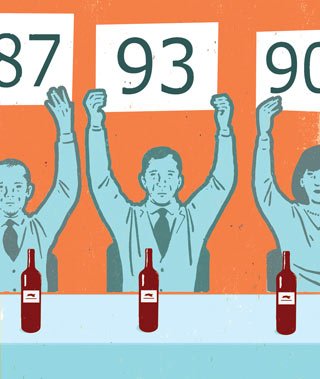
Which should tell you everything you need to know about how useless scores are, the disservice they do to to wine and wine drinkers, and why I have never, ever used them in more than 20 years of wine writing. Describe the wine, and let the reader decide if they want to drink it — just like a movie or book review.

I wrote my first scores rant in November 2007, shortly after the blog started, and very little has changed since. They’re still a crutch for lazy retailers, they still favor red wines from Napa, Bordeaux, and Burgundy, and they’re still dependent on the reviewer’s palate. So if the critic likes high alcohol wines, those will get 95 points and the stuff the rest of us enjoy drinking won’t.

But the worst thing about scores? They don’t let wine drinkers figure out what they like; instead they drink to scores, as I wrote in that 2007 post. And if you drink to scores and instead of what you enjoy, what’s the point of drinking wine?

Artwork: BlogYourWine.com
 

One more reason why wine scores are useless, 2022 explanation

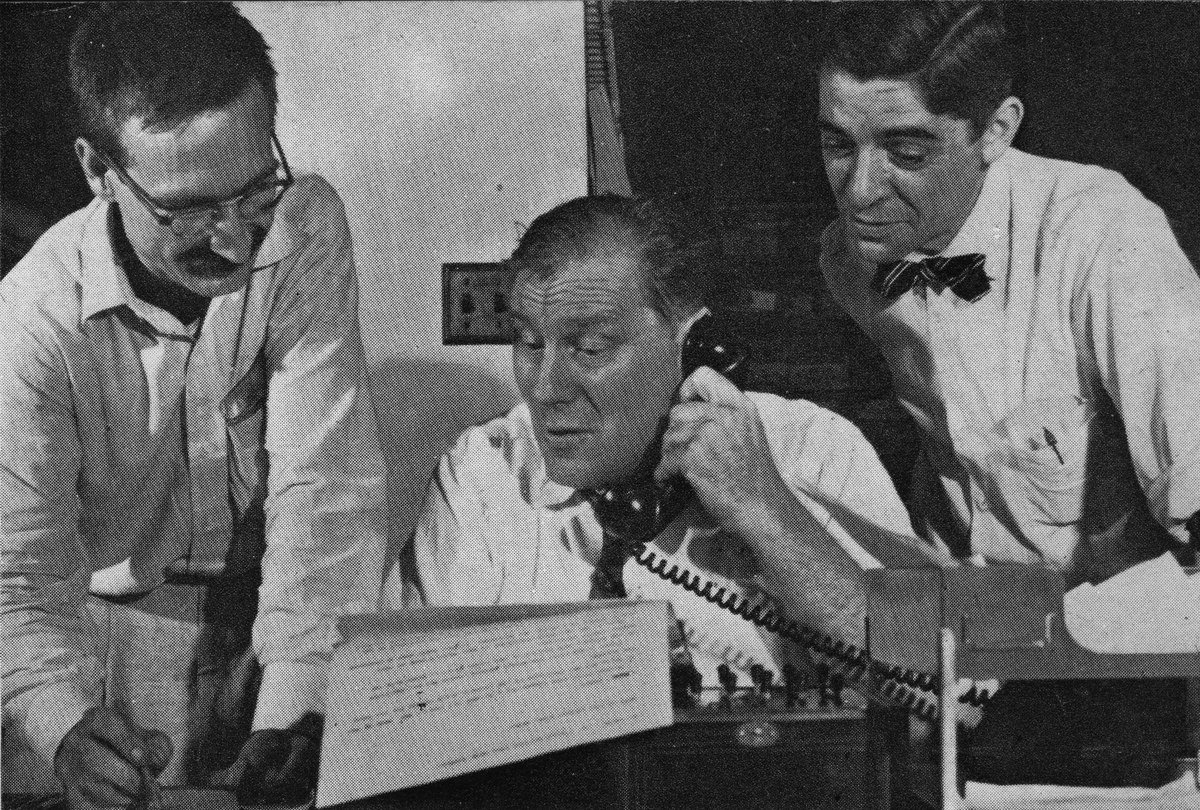
Three reporters at typewriter
“I don’t care if the wine did taste sweet — don’t call it sweet. Or else.”

Sweet cabernet sauvignon? Give it 90 points!

How does this wine sound?

“Moderate tannins and a touch of crisp acidity add to its appeal. … 90 points.”

“Gentle tannins meld with spiced plum and powdery mocha in this easy drinking, uncomplicated red. … 89 points.”

In other words, value and quality – and especially for $15, which we haven’t seen much of in the past couple of years.

I wish.

The only thing those two blurbs shows is that wine scores remain useless — utterly and completely without merit.

This red is a California cabernet sauvignon and it’s sweet. It’s not white Zinfandel sweet, but closer to red blend sweet, so noticeable but not overwhelming. In fact, taste this wine, as I did a couple of weeks ago, and you’ll get that cotton candy feeling in the back of your mouth that shows residual sugar is lurking in the shadows.

So how does the wine get such good scores without anyone noting that it’s sweet and not especially cabernet-like? A wine that gets 90 points is supposed to be “Outstanding: a wine of superior character and style.” This wine? It’s about as ordinary as these things get, regardless of its sweetness and un-cabernet-ness.

Call it the Winestream Media’s wink and a nod that sweet exists and that sweet sells a lot of wine. There are a couple of keys here, though, for those of us who are paying attention. The phrases “adds to its appeal” in the first score and “easy drinking, uncomplicated” in the second. Call each winespeak for sweet when the reviewer doesn’t want to use the word “smooth.” Because this wine goes out of its way to be smooth – front, middle, and back.

Know, too, that this is not a rant against against sweet wines — red, white, pink, or otherwise. Everyone should be able to drink whatever they want, and my job is to point them in various directions so they can find what they like.

But the scores don’t do that. Let’s say I’m looking for a $15 cabernet that tastes like cabernet (which pains me to write, but I do recognize how the wine business works these days). I see 90 points and figure, “Wow, I’ve got a winner here.” So I buy it, get it home, take a sip, maybe wash it around my mouth. “Ooo.. what’s that?” and then I spit it out and get a beer. (Which is more less what happened.)

So wine notes, yes, as long as they contain a bit of directness. But wine scores? Never, and this is just one more reason why.

More about wine scores:
Wine scores not only refuse to die, but seem to be increasing like the spawn of the devil
Wine scores rant: Top-notch cava gets 86 points, about the same as a crummy supermarket wine
Chateau Bonnet Blanc and why scores are useless


Apparently, wine scores aren’t the only rating system that stinks

wine scoresKnow those magazine college rankings? They may be screwed up, too

Does this sound familiar?

[Scores] are “inaccurate, dubious or highly misleading. … ” and may not be “valuable or even accurate.”

No, it’s not the WC writing about wine scores again. It’s a highly respected Columbia University math professor ripping those magazine college rankings – by pointing out how silly his school’s No. 2 rating is.

Full disclosure: When I started freelancing, I wrote several ranking stories (for Forbes’ website and for the American Way in-flight magazine). So I’m guilty of participating in a system that seemed flawed even then. How could anyone compare Northwestern, a small private school, with Illinois, a large state school? And why would anyone want to? It’s the  same misguided approach that claims a $10 wine can never be as enjoyable as a $50 wine — which is patently untrue.

The good thing about my writing? It gave me a chance to see how the system works to reinforce its biases — something that is not only the case with the college rankings, but with wine scores.

Because, as Columbia’s Michael Thaddeus wrote, it’s all about the data that goes into the rankings. And if the data is flawed, then so are the rankings (as well as the scores).

At first glance, the data used in the college rankings would seem to be more objective than that used for scores – class size, highly qualified instructors, teaching budgets, and the like vs. one critic’s opinion. But, as Thaddeus pointed out, the universities surveyed may well have tweaked the data they submitted to get a higher rating.

So much for objectivity.

In addition, as one expert interviewed for the story said: “I think the majority of institutions would be happy if the rankings went away. But as long as the rankings are taken seriously by applicants, they’re going to be taken seriously by educators.”

Substitute producers for institutions and consumers for applicants, and we’re talking about wine scores, aren’t we?

More about wine scores:
Wine scores not only refuse to die, but seem to be increasing like the spawn of the devil
Wine scores rant: Top-notch cava gets 86 points, about the same as a crummy supermarket wine
Chateau Bonnet Blanc and why scores are useless

Winebits 727: Restaurant wine, wine scores, wine trends

restaurant wine This week’s wine news: More bad news for restaurant wine, plus the new editor at the Wine Advocate says scores are staying and who knew organic wine is the next big thing
Restaurant wine: Not good news, according to a study from a consultancy called Vintage Economics. The report is full of jargon and tries to sugar coat the results, but the news is there: Wine “has been struggling in the on-premise for some time,” with on-premise the trade name for restaurants. The study found that wine’s restaurant “penetration” fell by about five percent during the 2010s, and things only got worse during the pandemic. This is not good news for wine; a restaurant recovery is crucial to wine’s return to popularity. But the same thing hurting wine overall has hurt it in restaurants: lack of interest among younger diners and those who aren’t white. Do you think charging $35 for a $12 bottle of supermarket wine could be one of the causes?

100 points forever! The new editor of the Wine Advocate, Robert Parker’s legendary wine magazine, has said scores are here to stay. Joe Czerwinski told Esther Mobley of the San Francisco Chronicle that: “We’re quite old fashioned, I suppose. We see ourselves as being the independent consumer’s guide to buying wine. This is why we exist. That central mission hasn’t changed at all.” Interestingly, the headline on the article calls the 100-point system “notorious.” Which, of course, we know here. Sadly.

Bring on organic? I’ve been writing about wine for more than 20 years, so I wasn’t surprised to see this in a trends story for 2022: Organic wine is the next big thing. Because, of course, it’s always the next big thing, seemingly popping up every couple of years. That it has never become the next big thing (organic wine sales in the U.S. may be in the mid-single digits) speaks to the way the business works – which was neatly summarized on the blog here. So, no, I wouldn’t bet on organic wine taking off in 2022.

Wine scores not only refuse to die, but seem to be increasing like the spawn of the devil

wine scores
Does the world truly need 16 different wine scoring systems?

One retailer lists 16 ratings systems – and that doesn’t include a couple of the most popular

The blog, in its own small way, has accomplished great things over the years – helping to launch Drink Local and popularizing rose, to name just two.

But I haven’t – despite repeated and furious efforts – been able to put a stake in wine scores. Or, even, sort of sharpen a stake.

This failure came into focus with an email from Wine.com – differentiating between the 16 different wine scoring systems it uses on its site.

16? 16??? 16???

Yes, 16. And this didn’t include Britain’s Jancis Robinson and her 20-point system or Natalie MacLean’s 100-point ratings that are used throughout Canada.

How did we get to the point – given how useless scores are for the vast majority of wine drinkers – that at least 16 are used widely?

Because they truly are useless for most wine drinkers: They discriminate against white wine. They discriminate against less expensive wines. They discriminate against wines that aren’t from the proper region or made with the proper grapes. And, perhaps most importantly, they reflect the critic’s perceptions and prejudices, which are almost certainly not those of most wine drinkers.

Yet we’re stuck with them, despite the best efforts of many, including me.

The reasons why we’re stuck with them have also been well documented: First, as a crutch for retailers and especially the big chains and supermarkets that increasingly dominate wine sales. Second, help for smaller producers without marketing budgets; a 92 from one of the 16 might attract buyers who would not otherwise notice the wine (though whether they’ll like the wine is a different story). Third, the reviewers are so damned powerful because of reasons one and two.

So what can we do? About the same thing we’ve been doing, and try not to lose sight of our purpose – help wine drinkers find wine they will like, and not wine others tell them they should like. Because even Wine.com has a blurb next to those rankings: “While ratings may influence your decision, the ultimate judgment is your palate.”

Couldn’t have said it better myself.

Ask the WC 25: Three-tier reform, wine prices, wine scores

three-tierThis edition of Ask the WC:  Is the Supreme Court going to take a three-tier system case? Plus, what’s happening with wine prices and why does the WC dislike scores?

Because the customers always have questions, and the Wine Curmudgeon has answers in this irregular feature. You can Ask the Wine Curmudgeon a wine-related question by clicking here.

Hi, Wine Curmudgeon:
I really liked your post about buying wine illegally. Is there any chance we can get rid of all these stupid laws and buy wine like normal people?
On-line wine buyer

Dear On-line:
A variety of cases are wending their way through the legal system that could make it possible for us to buy wine from out-of-state retailers and on-line. They include my favorite, Walmart’s attempt to overturn a Texas law that says publicly-held companies can’t get a state retail liquor license. Talk about foolish. However, another case is attracting more legal attention — Lebamoff v. Michigan. Lebamoff, an Indiana retailer, sued to be allowed to sell wine in Michigan. In this, it directly addresses out-of-state retailer sales. Tom Wark, who follows these things in his role as executive director of the National Association of Wine Retailers, told me he thinks there’s a good chance the Supreme Court accepts Lebamoff. If so, it should decide once and for all whether Internet and out-of-state retail sales are constitutional. Having said that, there’s no guarantee the court rules in favor of direct retail shipping if it takes the case.

Dear Wine Curmudgeon:
What’s going to happen with wine prices? I thought they were supposed to go down, but all I see is $15 wine in the grocery store.
Cheap wine buyer

Dear Cheap:
Your guess is as good as mine. The grape glut is real, here and in Europe, and I’m working on a post about that for next week. But I agree — prices don’t seem to have responded to an excess of wine on store shelves. The tariff, of course, is one reason. I also wonder if supply chain problems caused by the pandemic are limiting the supply. A limited supply means prices won’t fall, even if demand has decreased during the pandemic. So we will just have to wait and see.

Greetings, Charmingly Grumpy:
I’m new to the blog.. How come you don’t use wine scores like everyone else?
Inquiring mind

Dear Inquiring:
Scores are one of the three or four worst things about the wine business (the others being corks instead of screwcaps, premiumization, and three-tier). They’re biased in favor of expensive wines, regardless of quality; they don’t give enough credit to “lesser” grape varieties or to white wine; and they reflect the critic’s taste and not necessarily whether the wine is any good. In this, they are a crutch for retailers, who can post 88 points and figure that’s customer service. I explain what the wine tastes like so you can make up your own mind.

Photo: “Dallas Food Truck Truck Festival – August 2011” by BetterBizIdeas is licensed under CC BY-SA 2.0

Wine scores rant: Top-notch cava gets 86 points, about the same as a crummy supermarket wine

wine scores
“I said 86 points — so give it 86 points or I’ll put my fingers in your eyes.”

Wine scores show their failings once again in Cellar Tracker’s 86 point rating for spectacular Juvé y Camps cava

The Juvé y Camps Brut Nature Reserva de la Familia Gran Reserva is a top-notch cava, a delicious, elegant, and value-driven $15 Spanish sparkling wine. So why does it only average 86 points on CellarTracker?

Because wine scores are less than useless. They reflect the critic’s biases, and not the quality of the wine. We’ve shown this many times on the blog; sadly, this is just one more example. If the Juvé y Camps is only worth the same number of points as supermarket plonk, then I’m going to start buying $50, 15 percent Napa Valley chardonnay and write poetic odes to it all day long.

This is not a rant about any of the CellarTracker users who scored the wine so poorly. They’re entitled to their opinion. Rather, it’s about the failings of wine scores and the system that has grown up around them – a system that intimidates too many wine drinkers into drinking wine they don’t like. “Oh, it got 90 points, so it must be good,” they think, and then buy it and discover the truth and give up wine in favor of hard seltzer.

There are many reasons why the Juvé y Camps could have gotten such a low score, reasons that have nothing to do with the quality of the wine. Two are common.

First, does the reviewer like cava? One of the most difficult things I have to do as a critic is to review wines and wine styles that I don’t like, such as California merlot or Argentine malbec. That’s why so few show up as wines of the week. But at least I know my shortcomings, and try to allow for them.

Second, does the reviewer expect a Spanish sparkling wine to taste like Champagne, even though it’s not supposed to? This happens all the time, and even with the most professional critics. I was talking about cava with a sharp, smart wine writer who I like and respect at a competition several years ago. “Don’t much care for cava,” he told me. “It doesn’t taste like Champagne.”

So no scores on the blog – not now, not in the future, not ever. If scores turn an amazing wine like the Juvé y Camps into something that is barely ordinary, what’s the point? And yes, that pun is fully intended.

More about wine scores:
Scores, value, and the Wine Spectator top 100
Chateau Bonnet Blanc and why scores are useless
Wine business slow? Then boost the scores