Category:Wine trends

The Wine Curmudgeon’s favorite posts of 2022

woman typing at laptop
“Wow. I need to find that ‘Planet of the Apes’ parody. How cool.”

These eight posts weren’t necessarily the most popular, but they were among my favorite posts of 2022

Welcome to the Wine Curmudgeon’s eighth annual year-end top 10 list, which is not about the most read posts. Or necessarily has 10 items. Neither of which is surprising, yes?

Instead, these are the posts that I enjoyed writing, thought were important to write, or both. Why not a best read list? That’s because, on the old blog, Google determined that, and the various Barefoot posts were always the most read. And, apparently, still are.

Here, then, in no particular order, are my favorite posts of 2022:

• Solving the mystery of a 90-year-old California wine bottle. A reader found an empty wine bottle in a Denver attic. Was it one of the first wines made in California after Prohibition?

• Cutting prices boosts sales and profits – unless you’re the wine business. The pandemic, combined with high ticket prices and crummyy products, pounded the movie business. So what did savvy theater operators do? Cut prices, of course.

• Why are wine sales numbers so different – and often disagree? One survey says business is booming. Another says business is terrible. And a third says something else. The WC explains all,

• Fred Franzia’s legacy. I was surprised at the indifference – and sometimes outright hostility – to the news of Fred Franzia’s death this year. But this is the wine business, and he will never be forgiven for Two-buck Chuck.

• The deep, dark secret behind Mega Purple. What’s the additive made of grape juice that no one wants to talk about? Mega Purple, a juice concentrate.

• Yes, Prohibition was a failure. Check the Internet, and the results are mind-boggling. Prohibition, one of the greatest failures in social policy in world history, worked. And people with credentials actually believe this.

• The “healthy” wine fraud. The WC dissects healthy wine, one of the biggest trends of the year.

• Planet of the Grapes. The various movie and TV parodies never do well; I hate to think it’s because wine drinkers don’t have a sense of humor. This was one of the best I’ve done – with acting and direction, even.

Photo: kristinhardwick via Morguefile

More of the WC’s favorite posts:
• Favorite posts of 2021
• Favorite posts of 2020
• Favorite posts of 2019


Wine history lesson 7: When drinking alcohol was a good thing

Billboard urging a vote for beer
This billboard pretty much says it all.

Yes, once upon a time, drinking was a good thing

This billboard, from El Paso in 1933, speaks to a time when the argument against Prohibition was more clear cut. The election it notes came as Texas counties voted whether to remain dry after the end of Prohibition.

Most states held similar wet-dry elections after the 21st Amendment repealed Prohibition, and the arguments then were much the same that they are today. The difference? Everyone who had just endured the previous 14 dry years knew what a failure Prohibition had been, despite its intent — and despite what its apologists claimed.

So the next time someone tells you that it’s a great idea to force the rest of us to stop drinking in moderation, show  them this.

A tip o’ the WC’s fedora to John Bratcher, who sent this along from the Texas Reader history newsletter.

More wine history lessons:
• Wine history lesson 6: Was this California fortified wine one of the state’s first post-Prohibition efforts?
• Wine history lesson 5: Big Wine’s forebear — the infamous California Wine Association
• Wine history lesson 4: Those damned high prices

Non-alcoholic booze – is it here to stay?

man sitting at table
No more wine for me — I’m going non-alcoholic.

New study says about one-quarter of us are opting for non-alcoholic options

A new study says about a quarter of us are replacing alcohol with non-alcoholic beverages, and that even more of us are trying to drink less, be it through something like Dry January or cutting down when we do drink.

The research comes from a company called Veylinx, which identifies itself as a “consumer insights platform.” In this, the methodology doesn’t seem to be something that most of the experts I know would endorse; it’s based on testing how much consumers are willing to pay for a product through a “real” bidding process. This is more than a little fuzzy compared to traditional methods. And, given that Veylinx conducts research for major consumer goods companies, this strikes me as the kind of thing devised to sell the products it studies.

Still, traditional studies have come up with similar results, and, as one expert told me, traditional polling or not, “the results are something the industry needs to see. Whether it matters to them is another matter.”

The results, published last week in Nation’s Restaurant News, found we want to improve our health and “mental well-being.” Hence, more than three-quarters of Americans say they’ve temporarily given up alcohol for at least a month. Almost half of us who drink are trying to reduce their alcohol consumption – and about half of those are replacing alcohol with non-alcoholic beverages.

Not surprisingly, younger consumers were the most likely to opt for non-alcoholic products. Demand among the the 21-35 age group is almost one-half higher than among those older then 35. Meanwhile, those who have participated in Dry January show 65 percent greater “purchase interest” than those who haven’t previously taken part.

The other caveat in all of those? The consumers most likely to go non-alcoholic aren’t drinking much wine anyway. If the study’s numbers add up, craft beer and hard seltzer producers should be especially worried.

The wine list that doesn’t include the names of the wines

man holing menu
“Not to worry — you don’t need to know the wine’s name.”

Stupid? Of course. But maybe not for the reasons most people think

How about a restaurant wine list, with descriptions of the wines, but without naming the wines? This is a bit much, even for the restaurant business, which treats wine with a greed that keeps on gouging.

But it happened recently in Britain — how about a “juicy Chilean merlot?” for £6.50 (about US$7) for 175 ml, two glasses or so?

Which, reported by thedrinksbusiness, led to a social media conflagration. The restaurant was either doing diners a great favor by not confusing them, or it was committing a great disservice by not identifying the wines. Tweeted one: “What happens when the unsuspecting consumer is met with an over-extracted Negroamaro. …. Words need to mean something and these appear to mean nothing.”

Ah, the wine business. Either wine drinkers are too stupid to care what they’re drinking, or we get strangled by jargon.

Yes, this is a crappy idea; we should know what we’re buying. But the experts missed the point. The restaurant almost certainly didn’t do this to make diners’ choices easier, but to manage its inventory more effectively. If it doesn’t put the name of the wine on the list, then it can sell any wine that more or less matches the description (to say nothing of saving the cost of reprinting the list if the wines change).

And what’s happening these days in post-pandemic and Brexit-staggered Britain? A supply chain crisis of major proportions, in which getting the same item consistently has been past difficult – and especially for restaurants. So not using names makes managing the wine list that much easier; just sub out the original if it’s not available, and who’s the wiser? In addition, if the restaurant can pick up a cheaper “juicy Chilean merlot,” it can sell it for the higher price – and more margin!

Finally, the WC would not be the WC if he didn’t mention one other thing that not using names does: Diners can’t check the wine’s retail price on their phone to see how much they’re being marked up.

Pretty clever, yes?

Birthday week essay 2022: There’s practical, and then there’s the wine business

Angry man shouting
“I don’t care if cheap wine is practical — get rid of it!”

$10 wine is practical; so why is there such a backlash against those of us who embrace it?

A really sharp guy once asked me if it bothered me that I probably knew more about cheap wine than almost anyone in the wine business — but that no one in the wine business cared.

Not especially, I told him. I don’t do this to impress anyone in the wine business. I do this because there’s a need for someone to write about the wine that almost all of of us can afford to buy. And the Winestream Media has the other stuff covered – and covered and covered and covered. Besides, if I like doing it, and I do, why should I care what anyone else thinks?

Which, if you look at wine writing and the wine business as we celebrate the blog’s 15th anniversary this week, is a unique approach. I say this not to pat myself on the back, but to point out that one of the reasons – one of the many reasons – that wine finds itself becoming irrelevant to so many people who aren’t old and white is that it lacks the sort of objective, robust criticism that cars, restaurants, movies, books, and even video games have. Video game reviews are so important, in fact, they game companies have actually recalled games with crummy reviews to fix the,

Instead, wine has scores and winespeak – the former of which means almost nothing, since almost every wine gets a fine score, and the latter of which means even less, since no one can figure out what the reviews mean. Who can possibly think anyone would know what the adjective “lovage,” used to describe an herbal quality, means in a wine review? I didn’t, and I have been doing this for a long time. So how could an ordinary consumer? Yet there it was, in a review I found earlier this year from one of the big wine magazines.

This is not to say that there aren’t top-notch critics in wine; of course there are. Eric Asimov of the New York Times, Dave McIntyre of the Washington Post, Joe Roberts of One Wine Dude, for those who want a short list. Rather, it’s to note that – as one prominent wine critic wrote a couple of years ago – that not enough of those who review wine are interested in objective criticism. And he included himself in that group.

I interviewed that critic, Richard Hemming, a master of wine, for a podcast for the blog, and he didn’t back down. “Why should consumers trust us? They shouldn’t necessarily,” he told me.

Can you imagine a prominent movie critic saying that? Of course not – film, in fact, has traditionally been just the opposite. Roger Ebert was close friends with the filmmaker Martin Scorsese, but that didn’t stop him from panning Scorsese’s “Color of Money” – the movie was boring, Ebert wrote, and well beneath a filmmaker as talented as Scorsese.

Not surprisingly, Hemming gave up wine criticism not long after writing all of that. What did he do? He became a consultant.

Not even my cynicism has extended that far. What’s the point of being a critic if you’re not going to be critical, in all meanings of the word – good, bad, and indifferent? Otherwise, everything is toasty and oaky and gets 92 points. And what’s the point of that, other than to soothe a winemaker’s ego?

And it’s just not wine writers who feel this way. I did a webcast in the blog’s early years with a group of wine marketers, who wanted to know why I didn’t like expensive wine. I thought the question was silly — why are cheap wine and expensive wine mutually exclusive? I drive a Honda, but that doesn’t mean I don’t appreciate a classic Thunderbird or that I wouldn’t want to own one. It’s not a preference; it’s a question of what’s practical. And practical is the Honda’s mileage and the nifty hatchback, where wine boxes fit perfectly.

And I would not be the Wine Curmudgeon if I didn’t point out that wine is about the least practical thing that is sold in supermarkets. It’s not like we see a lot of $100 laundry detergent or $75 ketchup.

Which us back to the beginning of this piece. No, I’m not bothered if those in wine see what I do as impractical and irrelevant. Why should it matter that I like a $10 bottle of wine with my dinner – or that I write about it? If the wine business doesn’t understand that it has bigger problems than a cranky ex-sportswriter who drinks Domaine Tariquet, then wine truly is doomed.

Photo: Andrea Piacquadio from Pexels

More Birthday Week perspective on the wine business:
• The WC’s plan to save the wine business from itself?
• Wine as expensive shiny baubles instead of something to savor and enjoy
• How do you write about quality cheap wine when the system is rigged against it?

Five more things the Wine Curmudgeon learned in moving the blog from free to paid

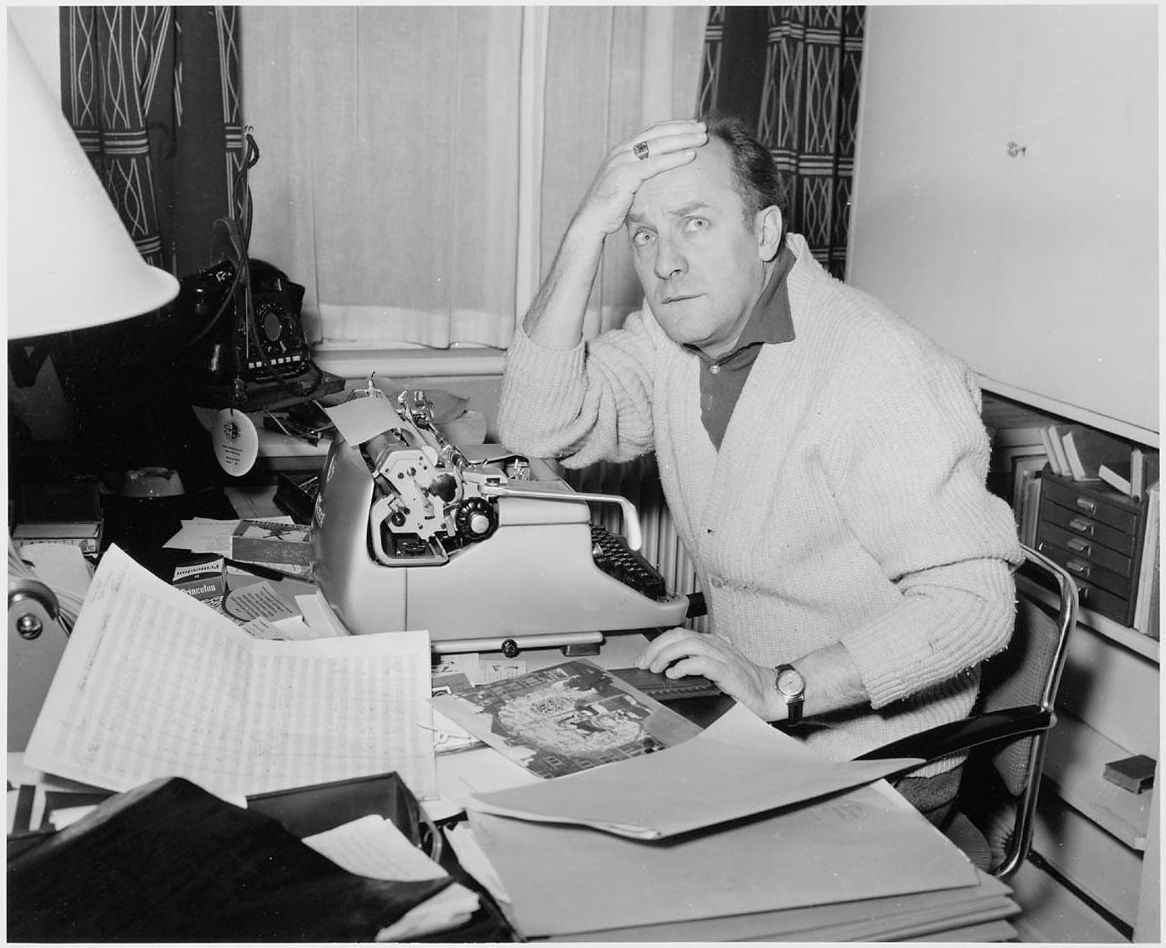
Man at typewriter
“These free subscription buttons are making me crazy!”

And, again this year, most of them are welcome

The blog’s 15th annual birthday week starts today. So, once again, five things I’ve learned about wine writing, the Internet, and Substack in the almost two years that the blog hasn’t been free:

• Thank you, subscribers. The renewal rate is through the roof – like 95 percent. This, when I changed to Substack, was my biggest concern. Would I be able to avoid what’s called “churn,” where subscribers never increase because the new ones just replace the ones who canceled. And, to be honest, most of the cancellations were welcome – usually subscribers to the old blog who didn’t like the changes and wanted to complain about them.

• The new Substack chat feature. Yes, finally, after 15 years, the WC should be able to hold on-line chats. I’m still not sure how it works (and so far, it’s only for Apple products), but once I figure it out, we can do something that everyone else has been doing for decades. Ain’t technology grand?

• Substack’s free subscriptions. This is a good thing, and I had planned to offer one free post a week when I switched in 2021. The catch is that Substack says the best way to convert free to paid is to insert annoying paywalls and subscribe buttons in the body of the free posts. Which, as hard as I try to feel otherwise, irritates me no end. I want people to read the blog; I have no desire to nag them like a cranky old man sitting on his front port, waving hands and sputtering gibberish. So those of you who get this for free: just sign up. Please. You’ll make my life so much easier.

• The increasing gulf between between the wine business’ idea of reality and actual reality. This is not just about premiumization and rest of the stuff I rant about; it’s that the wine business sees itself as somehow separate from what goes on in the rest of the world. As such. what goes on – pandemic, war in Ukraine, and all the rest – doesn’t matter when it comes to wine. I heard one executive say that people would pay more for wine, regardless of anything else, because they would.

• I’m getting more non-wine news releases, marketing pleas, and PR missives than ever. And no, I don’t know why. What makes it more difficult to figure out is that I pruned my email lists this summer and changed my email to a service that doesn’t sell my information to advertisers. One possible explanation: I think PR people are a lot less fussy these days about who they contact, and if I write about wine and they want to push plant-based sausage (and a lot do), that’s close enough.

Photo: “03-10-1960_17119 Wim Sonneveld” by IISG is licensed under CC BY-SA 2.0

Once more — with emphasis – we’re not all passed out drunk

man passed out on bench
That looks like drinking more than every 4 1/2 days to the WC.

Recent study finds Americans drink significantly less than the rest of the world

Once more, hard evidence that we’re not all passed out on the sofa every night, despite what the neo-Prohibitionists are shrieking at us.

David Morrison, writing on the Wine Gourd blog, parses the numbers from one of the leading surveys of worldwide alcohol consumption and finds that the typical American drinks wine, beer, or spirits once every 4 ½ days. According to the Global Drug Survey 2021 Key Findings Report, that puts us well below the global average of drinking every 3 ½ days or so.

In other words, it’s damned hard to be as drunk as often as the scare-mongers tell us.

None of this is surprising to anyone who has been paying attention and isn’t getting a large cash grant to show that wine with dinner is the equivalent of binge drinking. There have been any number of legitimate scientific studies, as well as the last couple of annual Gallup alcohol surveys, that say the exact same thing. We don’t drink all that much in the U.S., and the number of people who do drink is declining.

But wait, say the neo-Prohibitonists. We have another study that says you are wrong, wrong, wrong!!!! Drinking will kill you, and you had better stop now!!!!!

In fact, the above study probably comes closer to describing what’s actually going on with alcohol consumption in the U.S. than the anti-booze crowd realizes – or wants to admit. It’s a look of “drinking-related” deaths, including auto accidents, heart attacks, and the like. So, in one respect, it’s accurate – as long as we’re talking about people who drink and drive, drink so much it affects their heart, and so forth. Which, as any other number of studies show, is also declining (thank you, Mothers Against Drunk Driving).

That means that a small proportion of people who do drink to excess may be causing the numbers in the aforementioned study. The Wine Gourd post also notes the U.S. rates fourth worldwide in the number of people who get seriously drunk. So, given how few of us do drink, combined with the high drunk rating, there seems to be evidence that a minority is causing the “drinking-related” health reported in that study.

Which should also mean it’s OK to drink with dinner.

More about wine and health:
• Follow-up: Gallup alcohol survey 2022
• WC health alert: Beware the Pumpkin Spice Latte
• One more reason to be wary of alcohol health studies