Category:Wine trends

Winecast 60: Mike Dunne and quality, affordable California wine

mike dunne
Mike Dunne: Egos and the high cost of doing business make it difficult to find quality, affordable California wine.

Mike Dunne: It is difficult to find quality, affordable wine — but some do exist

Mike Dunne, the long-time wine and food editor at California’s Sacramento Bee newspaper, has often chided the Wine Curmudgeon for not including more California wine on the blog. Hence, this podcast: Mike and I talk about why there isn’t more quality, affordable California wine —  and how to find what there is.

The reasons for these wines’ scarcity? They start with California’s high cost of doing business and include– not surprisingly — winery ego. Interestingly, many quality, affordable wines never make it out of California because they sell out in the state.

Mike suggests looking for wines from less well-known parts of California, like Lake County and Monterey, and varieties that aren’t cabernet sauvignon and chardonnay — chenin blanc or petite sirah, anyone?

Among Mike’s wine suggestions:

• J. Lohr’s Wildflower, a red wine made with the quite rare valdiguie grape (about $10). Serve it chilled — a perfect porch wine.

• The Shenandoah Special Reserve Zinfandel (about $11). Mike raves about this red — brambly, fruity and delicious.

• Korbel’s Blanc de Noir (about $14) and one of the blog’s old pals, the Barefoot Bubbly (about $10). These California sparkling wines, says Mike, provide more value than you’d think. He also told a fine story about dust mops and the E&J Gallo sales staff; Gallo, of course, owns Barefoot.

Click here to download or stream the podcast, which is almost 17 minutes long and takes up about 12 megabytes. Quality is mostly excellent, save for a couple of static-y bits toward the end.
Is organic wine quality better just because it’s organic?

organic grapes
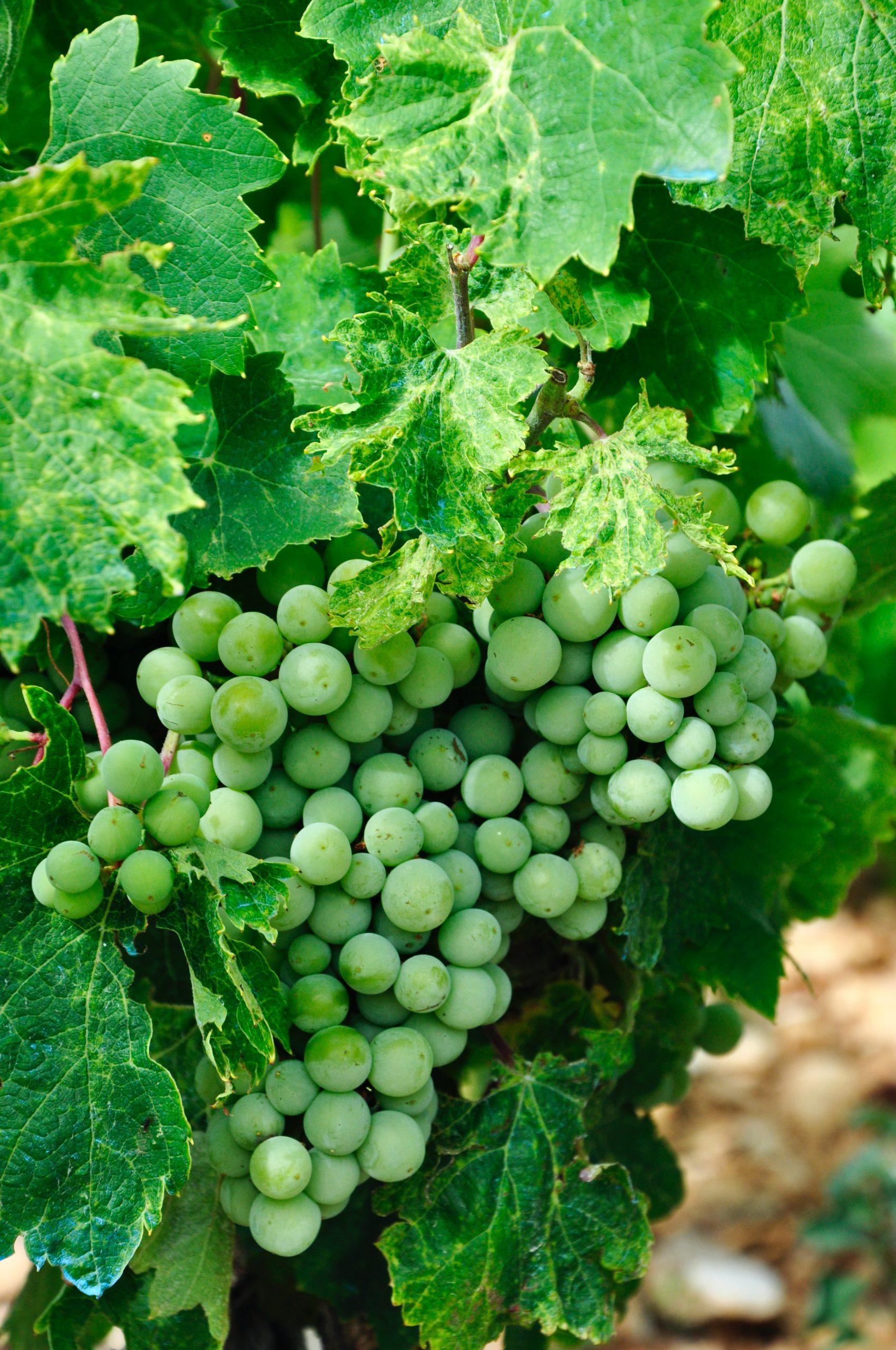
If these grapes are grown organically, will it lead to better quality wine?

New study says that’s likely, though a variety questions remain

A second study focusing on organic wine quality has concluded that French organic wines taste better than other, non-organic French wines of the same price. That’s follows the results of a 2016 study, which showed more or less the same thing for California wines.

So what’s the catch?

That’s the question I try to answer in a freelance story for the new pix.wine website. The two studies, carried out by researchers at UCLA and the KDGE Business School in Bordeaux, seemed to point to definite quality differences between organic wines and non-organic wines at the same price.

In one respect, this isn’t surprising, given that organic products like tomatoes and milk are often considered of higher quality. But organic wine definitions and certifications vary, and there are also eco-friendly, but less rigorous, designations like California’s sustainable wine and France’s ‘reasoned’ agriculture.

“After the the California study, it was always the question of whether this was true elsewhere,” says Magali Delmas, an environmental scientist at UCLA and the co-author of the two reports. “And the French study makes the case even more for distinguishing between biodynamic [a more strict definition of organic], organic, and other standards. It’s something that leads to quality through the use of the practice.”

Which leads to the sticking points. The studies used scores to rate wine quality, and we know I feel about that. And where does price fit in for wines that don’t cost the same amount? Doesn’t it make sense than a $30 wine is going to get better scores just because it costs $30, and not necessarily because it’s organic? And there is even the argument that conventional $10 wine is going to taste better than organic $10 wine, since it’s so difficult to make organic wine at that price.

Photo: Alex Block on Unsplash

Update: Wines prices 2021 – wine and the law of supply and demand

wine prices
Will pandemic-related shortages empty wine store shelves?

How long will wine prices continue to defy the most basic of all economic laws?

This is the second of two parts updating the wine prices 2021 post. Today, Part II: The pandemic, wine prices, and the law of supply and demand. Part I: The end of the Trump wine tariff and prices?

The only certain thing about wine prices, six months into the year, is that the situation is just as unsettled and just as contradictory as it was in January. That’s when I wrote: “How else to explain a wine world which continues to deny the existence of the law of supply and demand?”

On the one hand, there are what my friend Dave McIntyre at the Washington Post called pandemic-related shortages, where the “the crunch is probably coming in late summer and maybe — if all goes well — easing by the holidays.” Or, as some Wisconsin retailers are telling their customers, “Hoard! Hoard!” And we probably won’t see much relief from the end of the Trump wine tariff, and especially for the wines that most of us drink.

All of this, of course, should keep prices higher.

On the other hand, retail sales remain weak and unemployment is still too high (despite Texas’ attempt to force restaurant staff back to work so state officials can eat out more more easily). The economic surge that so many predicted, the post-pandemic boom, has not yet arrived.

In addition, there are worrisome problems in wine. Overall, demand remains flat, and restaurant traffic and wine sales have not picked up appreciably. And yet more studies have come out insisting that Americans won’t return to restaurants, opting for more meals at home.

Complicating matters firther, several leading wine analysts have said some grape prices are completely out of whack; read the story in the link closely enough, and there are hints that a pricing bubble could crop up – which would be disastrous for the wine business.

So when is the law of supply and demand going to kick in, bringing wine prices back into some sort of equilibrium? Your guess is as good as anyone else’s – after all, we’ve never seen an economic situation quite like this.

Me? I’m done guessing. We’re watching economic history being made, the kind of thing that’s written about in textbooks. And I’m not nearly smart enough to decipher that.

Update: Wine prices 2021 – the Trump wine tariff is finally dead

chianti producers
“A toast — no more Trump wine tariff!”

Will the end of the Trump tariff lead to lower wine prices?

This is the first of two parts updating my wine prices in 2021 post. Today, Part I: What does the end of the Trump wine tariff mean for prices? Part II: The pandemic, wine prices, and the law of supply and demand.

It took the Biden Administration just five months to undo four years of suicidal Trump economic policy, announcing this week that it would end tariffs on European wine, cheese, and spirits. The settlement means an end to decades of wrangling over illegal aircraft subsidies, the impetus for the tariffs.

All of this is terrific news. It would be even more terrific if it meant wine prices, forced higher by the 25 percent tariff on German, Spanish, and French wines, would retreat. My sense, after several days of reporting? We’ll see some prices come down, but we won’t see as many drop as we’d like.

There are a variety of reasons for this:

• Producers, and especially those making wine costing less than $15, tried not to raise prices (or did so minimally) because of the tariff. If they raised prices by the full amount, they were afraid they would lose market share. Hence, there’s not much to give back with the end of the tariff. So wines like the La Vieille Ferme rose, which stayed at $8 or so during the tariff, will still be $8.

• Much of the savings will come from more expensive wines, and especially the highest priced; Champagne, for example, was badly hurt by the tariff. They should drop by most of the 25 percent, and I’ve already seen some evidence of this. One national New York retailer is advertising “up to 25 percent cheaper” on six wines, all costing $20 or more because of the tariff.

• The pandemic’s supply chain tribulations will also slow price reductions. If the wines can’t get here, or cost that much more to ship, we won’t see savings until all is straightened out.

• Bad judgment and premiumization will play their role in keeping prices higher. When this mess started in October 2019, a very smart Italian wine importer told me the tariff was an opportunity for producers – and especially Italian producers, not subject to the tariff – to take market share away from the French and Spanish by holding the line on prices. Sadly, that hasn’t happened the way he thought. I got an email the other day for a $15 Italian chardonnay, which is hardly the way to gain market share during all of this.

Pandemic or no, e-commerce wine is here to stay

eric schwartzman
“It’s all about ease of use. Consumers want to use as few clicks as possible.”

Eric Schwartzman: “The rule book was written in the 1930s, and it’s all out of date”

There’s e-commerce, and then there’s e-commerce in the wine business, and sometimes it seems like the two are completely different propositions.

Until now, says Eric Schwartzman, a digital marketing consultant and the author of “The Digital Pivot: Secrets of Online Marketing.” His take: The pandemic put the final kibosh on the three-tier system and its century-old restrictions that make it difficult when it’s not illegal to buy wine on-line. And, says Schwartzman, it’s just a matter of time until the walls come tumbling down.

“The rule book was written in the 1930s, and it’s all out of date,” says Schwartzman, who has seen first-hand the difficulties in selling wine over the Internet while consulting for a California winery during the pandemic. “It’s amazing that it hasn’t kept up with technology – and even for alcohol. If you can do that, everything gets easier.”

That’s one of the things that retailers found out during the pandemic, he says. Despite the handicaps they faced, whether legal restrictions or websites that weren’t designed for much more than browsing and showing Google maps, retailers found that e-commerce was more than just a bonus.

“I know I talked to retailers in many categories who saw what happened,” he says, “and who wished they knew more about digital, that they been to digital quicker.”

And wine e-commerce could bring retailers business they didn’t know existed. Says Schwartzman: “It’s all about ease of use. Consumers want to use as few clicks as possible. They don’t want to be hassled by popups or diversions. They don’t want a site that looks like it came from the dinosaurs. They truly do judge a website by its cover.”

As such, there is momentum today – from both retailers and consumers – to reform three-tier that may not have existed before. We’ve noted this before on the blog – and that someone from outside of wine has noticed the same thing speaks volumes.

Winecast 59: Eric Orange of LocalWineEvents on wine drinking, wine tastings, and wine events post-pandemic

eric orange
Eric Orange: “There will be a surge.”

Eric Orange: It may be mid-summer or fall before we see a surge in wine events, but we will see a surge

What do you when your business is completely dependent on local wine events – and there aren’t any local wine events?

Not much but hope for the best, says Eric Orange, the founder and CEO of LocalWineEvents, which is a calendar, listing service, and perhaps the ultimate resource for finding wine events in 500 cities around the world.

“That’s when 5,000, 6000 postings a week just paused,” says Orange, who started LWE almost 21 years ago. “Everything just went off a cliff. … that was a tough week.”

Since then, Orange – who I’ve known since Drink Local Wine days, when he was a huge help publicizing our events – has been hoping for the best. The site adjusted, of course, running listings for virtual tastings, wine education, and the like. But there wasn’t much else to do with wineries, restaurants, and local events shut down because of the pandemic.

Hence, he is convinced wine drinkers are ready to end their isolation.

“Much of it will depend on the mask mandates,” says Orange. “But I think there is a lot of pent up demand, people who want to get out. There will be a big surge. I think it will return to a more normal existence in the fall.”

Among the other things we discussed:

• Virtual tastings were not a success for LWE, and he wonders about the future of those kinds of events. On the other hand, virtual wine education might continue after the pandemic.

• Wineries, many of which have already resumed outdoor tastings, may lead the wine event revival. They don’t have to worry about social distancing, for one thing.

• Restaurant events, including winemaker dinners, should come back in a big way, says Orange. His only concern? The extent of the damage to the restaurant business from the pandemic.

• Spirits tastings, including bourbon and Scotch, might do even better as we come out of the pandemic.

Click here to download or stream the podcast, which is about 17 minutes long and takes up almost 11 megabytes. Quality is good to excellent. Zoom cooperated once again, save for an odd voice telling me I was recording – and then stopping – our conversation. Which led to a bit of a giggle from the two of us.

Liquor law face-off 2: More state law silliness

voting
“Wow — it was so hard to choose between so many silly state liquor laws,”

Once again, it’s time to vote for the silliest liquor law in the U.S.

Despite the Wine Curmudgeon’s cynicism, the three-tier system continues to astound me with its foolishness. Just when I think I’ve seen it all, I obviously haven’t, as these six state laws demonstrate. Click on the law to vote for it. Voting runs through Sunday and I’ll post the results on Monday. And not to worry — even though I live in Texas, I won’t make you produce three kinds of identification to vote.

Or, sadly, as the laws in the blog’s first poll demonstrated. The winner was Indiana and its ban on selling cold beer. So, once again, a poll: Choose the silliest state  liquor law from among these six.

Once again, the choices are hardly complete. If I did miss one, leave it in the comments. It’s difficult to pick my favorite: How can I choose between Maryland’s Robert Parker law and South Carolina’s Frances Willard day? I find it past ironic that the state had to certify Parker as “an alcohol beverage writer” so he could get samples. And I know about Willard from my college days, when I lived down the street from Willard’s Women’s Christian Temperance Union headquarters in Evanston, Ill.

Photo: “Voting” by SarahPAC-USA is licensed under CC BY-ND 2.0