
Tag Archives: organic wine

Do wine drinkers really care about the trends that the marketers say we care about?

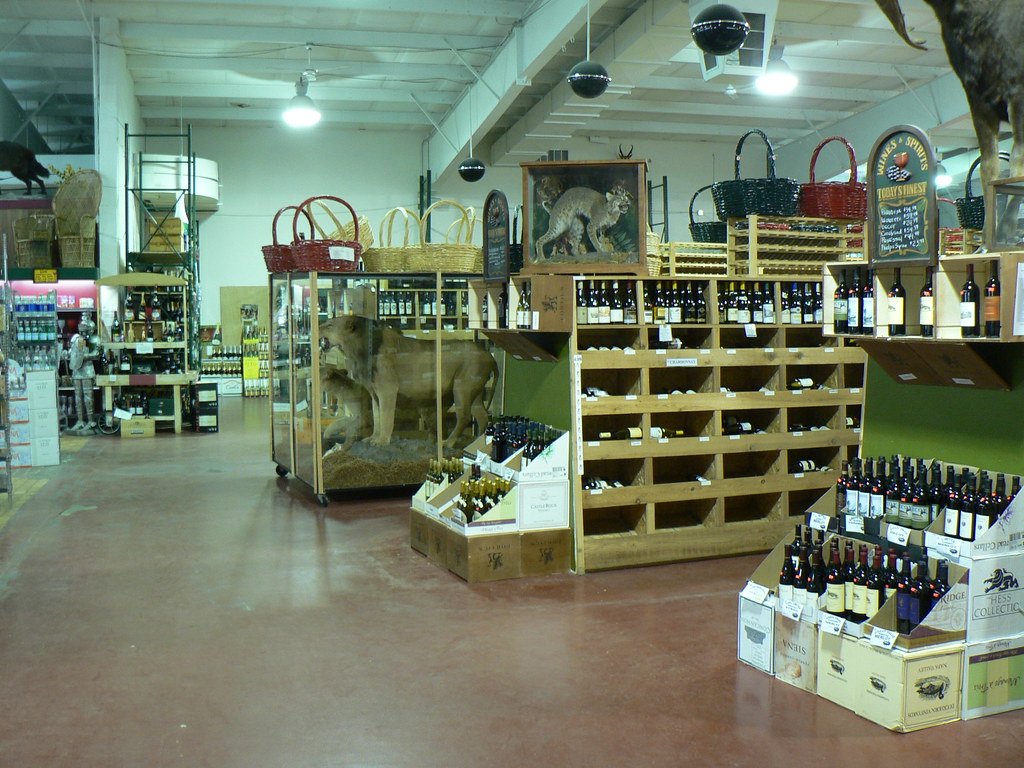
wine store
Organic wine? Not really, thank you.

Not really, says one survey, citing little interest in cans, “healthy wine,” and organic wine

One of the problems with deciphering the wine business is that there is almost no good data. If we don’t even know for sure how much wine is sold in the U.S. each year (and we don’t, apparently), then how can we know what’s going on with even more abstract concepts?

I mention this because I’ve spent much of the past couple of months writing about wine trends, both here and for several freelance pieces. Those trends included “healthy” wine, canned and box wine, and organic wine, and how each will be key parts of the wine business this year.

Turns out I may have been wasting my time.

That’s because the Wine Opinions consultancy recently asked its group of mostly high-frequency wine drinkers (those who drink wine at least once a week) about canned wine, wine that is “better for you,” and wine made with organic grapes. The results were stunning:

• Organic grapes: Just 9 percent said they would buy more wine made with organic grapes this year.

• “Better for you” wine did even more poorly – only 5 percent said they would buy more wine marketed as “healthy.”

• And cans and boxes? Hardly worth mentioning, with only 3 percent saying they would more wine in cans, while potential box purchases were more or less flat for 2022.

What’s going on here? How can these results be so different from what the experts have told us is going on?

The answer, I think, rests with the highly conservative nature of all those high-frequency wine drinkers. If it doesn’t come in a 750-ml bottle with a cork-style closure, then they’re not especially interested in it. And many of the wines in the survey are certainly not of the 750-ml glass bottle variety.

Age didn’t even particularly matter, save for the organic and healthy categories. Younger wine drinkers, who are supposed to be more open to cans, boxes, and all the rest, didn’t show that much more of a preference for alternative packaging.

And where age did matter, it didn’t seem to matter all that much. Yes, there were significant differences in the number of drinkers older than 40 and those younger than 40 in buying “healthy” and organic wine, but those younger than 40 didn’t embrace either with much enthusiasm. Just 17 percent of respondents under 40 said they would be more likely to buy “better for you” wines in 2022, and the number was only 21 percent for organic wine.

One out of five people from a demographic that doesn’t buy as much wine as their elders hardly seems like enough to build a trend around, does it?

Photo: “Wine store” by stu_spivack is licensed under Creative Commons

Winebits 727: Restaurant wine, wine scores, wine trends

restaurant wine This week’s wine news: More bad news for restaurant wine, plus the new editor at the Wine Advocate says scores are staying and who knew organic wine is the next big thing
Restaurant wine: Not good news, according to a study from a consultancy called Vintage Economics. The report is full of jargon and tries to sugar coat the results, but the news is there: Wine “has been struggling in the on-premise for some time,” with on-premise the trade name for restaurants. The study found that wine’s restaurant “penetration” fell by about five percent during the 2010s, and things only got worse during the pandemic. This is not good news for wine; a restaurant recovery is crucial to wine’s return to popularity. But the same thing hurting wine overall has hurt it in restaurants: lack of interest among younger diners and those who aren’t white. Do you think charging $35 for a $12 bottle of supermarket wine could be one of the causes?

100 points forever! The new editor of the Wine Advocate, Robert Parker’s legendary wine magazine, has said scores are here to stay. Joe Czerwinski told Esther Mobley of the San Francisco Chronicle that: “We’re quite old fashioned, I suppose. We see ourselves as being the independent consumer’s guide to buying wine. This is why we exist. That central mission hasn’t changed at all.” Interestingly, the headline on the article calls the 100-point system “notorious.” Which, of course, we know here. Sadly.

Bring on organic? I’ve been writing about wine for more than 20 years, so I wasn’t surprised to see this in a trends story for 2022: Organic wine is the next big thing. Because, of course, it’s always the next big thing, seemingly popping up every couple of years. That it has never become the next big thing (organic wine sales in the U.S. may be in the mid-single digits) speaks to the way the business works – which was neatly summarized on the blog here. So, no, I wouldn’t bet on organic wine taking off in 2022.

Is organic wine quality better just because it’s organic?

organic grapes
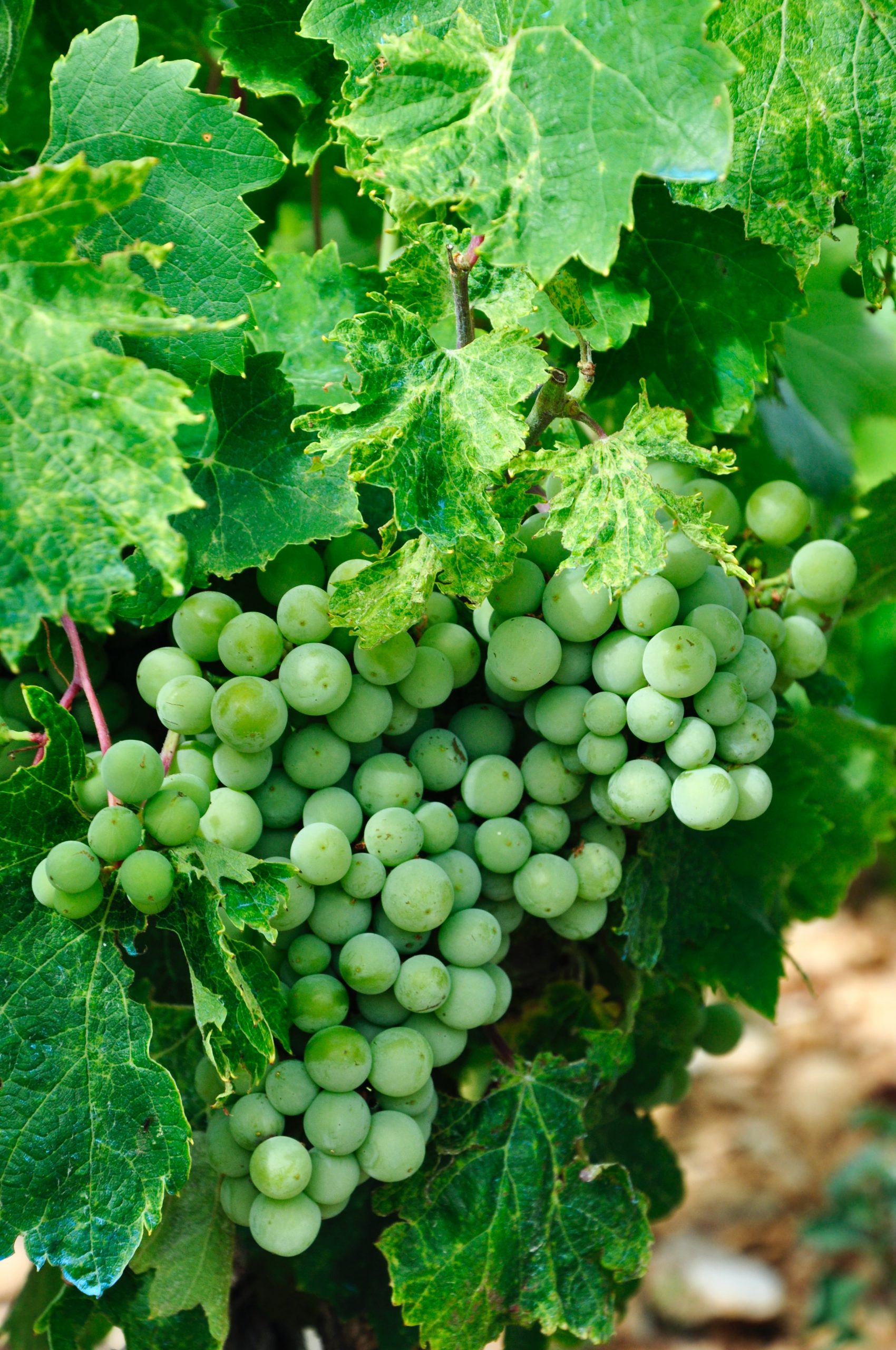
If these grapes are grown organically, will it lead to better quality wine?

New study says that’s likely, though a variety questions remain

A second study focusing on organic wine quality has concluded that French organic wines taste better than other, non-organic French wines of the same price. That’s follows the results of a 2016 study, which showed more or less the same thing for California wines.

So what’s the catch?

That’s the question I try to answer in a freelance story for the new pix.wine website. The two studies, carried out by researchers at UCLA and the KDGE Business School in Bordeaux, seemed to point to definite quality differences between organic wines and non-organic wines at the same price.

In one respect, this isn’t surprising, given that organic products like tomatoes and milk are often considered of higher quality. But organic wine definitions and certifications vary, and there are also eco-friendly, but less rigorous, designations like California’s sustainable wine and France’s ‘reasoned’ agriculture.

“After the the California study, it was always the question of whether this was true elsewhere,” says Magali Delmas, an environmental scientist at UCLA and the co-author of the two reports. “And the French study makes the case even more for distinguishing between biodynamic [a more strict definition of organic], organic, and other standards. It’s something that leads to quality through the use of the practice.”

Which leads to the sticking points. The studies used scores to rate wine quality, and we know I feel about that. And where does price fit in for wines that don’t cost the same amount? Doesn’t it make sense than a $30 wine is going to get better scores just because it costs $30, and not necessarily because it’s organic? And there is even the argument that conventional $10 wine is going to taste better than organic $10 wine, since it’s so difficult to make organic wine at that price.

Photo: Alex Block on Unsplash

Wine of the week: Santa Julia Malbec Organica 2019

Santa Julia MalbecThe Santa Julia Malbec Organica is Argentine malbec that delivers much more than expected

What does one do when government feuding makes French and Spanish wine, normally the best values in the world, too expensive for the blog? Look toward Argentina and the Santa Julia Malbec Organica.

The Santa Julia Malbec Organica ($10, sample, 13.5%) is almost everything most Argenine malbecs are not. That means it isn’t cloying, devoid of character, and amped up on sweet fruit at the expense of everything else. Which means a well-made, fruity (zippy berries?) wine, where the tannins are soft but serviceable. In all, a balanced, pleasant, and professional effort, and the kind we sorely need in these trying days.

But why not? Santa Julia is the organic label from Familia Zuccardi, a top Argentine producer that has appeared on the blog many times over the years. Its wines are almost always a solid choice when one is in a supermarket and confused about what to buy.

Serve this on its own if you want a glass of wine after work, or with everything from spaghetti and meatballs to takeout burgers.

Imported by Winesellers, Ltd.


Four 2020 wine trends that you don’t need to worry about

Pass the piquette, please.

These four 2020 wine trends are more click bait than anything else

The Wine Curmudgeon is constantly on the alert for wine foolishness and silliness, since those things usually mean someone is after your money. So when several experts posted their 2020 wine trends, my hooey meter went into overdrive.

Hence, four 2020 wine trends you don’t have to worry about:

Cannabis-infused wine. Yes, legal weed is still it its infancy and it may yet prove to be the next big thing. But so far, it has been a disaster. How big a disaster? Just ask Constellation Brands, which dumped more than two dozen wine brands this spring to focus on cannabis. Along the way, the company has invested at least US$4 billion in Canadian weed producer Canopy, and Canopy has yet to turn a profit.

Pop-up wine bars. Apparently, the experts didn’t consider liquor laws or the three-tier system, which would make this almost impossible in most of the U.S.

Piquette. Lots and lots of websites and experts ask sommeliers about the hippest trends, since they figure sommeliers are hipper than the rest of us. Thus, piquette. This isn’t exactly wine, but is fizzy and has low alcohol, which do seem to be legitimate trends. The catch? Piquette is made by just a handful of small producers on the East Coast, which means that no one will be able to buy it unless they visit a bar or restaurant which has a very hip sommelier.

Organic wine. This was going to be huge when I started writing about wine 20-some years ago, and it still shows up regularly on trends lists. But organic wine has never caught on in the U.S, and shows no signs of catching on now. Organic wine, organically-made wine, and biodynamic wine have a tiny part of the U.S. wine market, probably in the single digits.

Winebits 604: Three-tier lawsuit, organic wine, printer ink

three-tier lawsuitThis week’s wine news: Three-tier lawsuit over pricing reminds us that booze regulation isn’t gong away quickly. Plus, is organic the future of wine, and why does printer ink cost more than vintage Champagne?
No discounting: Total Wine, the national liquor store chain, can’t discount wine lower than the state of Massachusetts says it can, ruled the state’s highest court. The decision overturned a lower court judgment in favor of Total, which said the chain could charge lower prices, and that they didn’t violate state law. There’s almost no way to summarize the judgment for anyone who doesn’t have a law degree and is familiar with alcohol wholesalers; it’s enough to know that the ruling (the pricing laws are “not arbitrary and capricious or otherwise unreasonable”) reminds us that three-tier isn’t going away quickly, despite what many people think.

Organic wine: An Italian high-end producer says the future of quality wine is organic. “I think it’s important to go organic, because today, we need to be careful about what we eat and drink,” says Salvatore Ferragamo, whose family owns Tuscany’s Il Borro. Since the vines absorb what is found in the soil, and since that is transferred in varying amounts to the fruit and into the wine, organic makes the most sense.

Very pricey: Those of us who have always wondered why printer ink was so expensive will not be surprised to learn that it’s 10 times more expensive than vintage Champagne, widely regarded as some of the best wine in the word. A British consumer advocacy group says printer ink costs around £1,890 per litre (about US$2,400), compared to £1,417.50 per liter (about US$1,756) for vintage Champagne from luxury producer Dom Perignon. The consumer group also reported that printer was more expensive than crude oil.

Photo: “Antinori Wines at Berkmann Grand Cafe Wine Tasting” by Dominic Lockyer is licensed under CC BY 2.0 

Winebits 569: Organic wine, three-tier lawsuits, New York wine

organic wineThis week’s wine news: California betting on organic wine, plus three-tier lawsuits and an English critic signs off on New York wine

Make it organic: Organic wine has never been especially popular in the U.S., with a market share in the low single digits. But several producers see its growth as part of premiumization, as consumers pay more for better quality wine. “I think it’s going in the right direction. It’s just not happening as quickly as we like,” says one winemaker. “I think it’s inevitable.” Perhaps. But until consumers see a difference between organic wine and conventional wine – the way they do with tomatoes – inevitable doesn’t necessarily mean anything.

Join the lawsuits: Want to participate in the upcoming Tennessee three-tier case that will be heard by the Supreme Court? Then you can contribute to a Go Fund Me campaign to pay for an amicus brief asking the court to overturn the Tennessee law. The campaign, sponsored by a retailer trade group and WineFreedom.org, which works for three-tier reform, was near its $25,000 goal at the beginning of the week. Meanwhile, the trade group for the country’s distributors and wholesalers filed an amicus brief asking the court to uphold the law because three-tier is vital to the safety of the republic.

Drink Local: Andrew Jefford, writing in Decanter, has been to New York’s Finger Lakes and found it worth drinking: “We are as far from Red Cat” as possible, referring to the legendary cheap, sweet white wine that fueled New York’s wine business for decades. That Jefford, one of Britain’s leading wine writers, likes what he found in the Fingers Lakes speaks volumes about how far Drink Local has come.