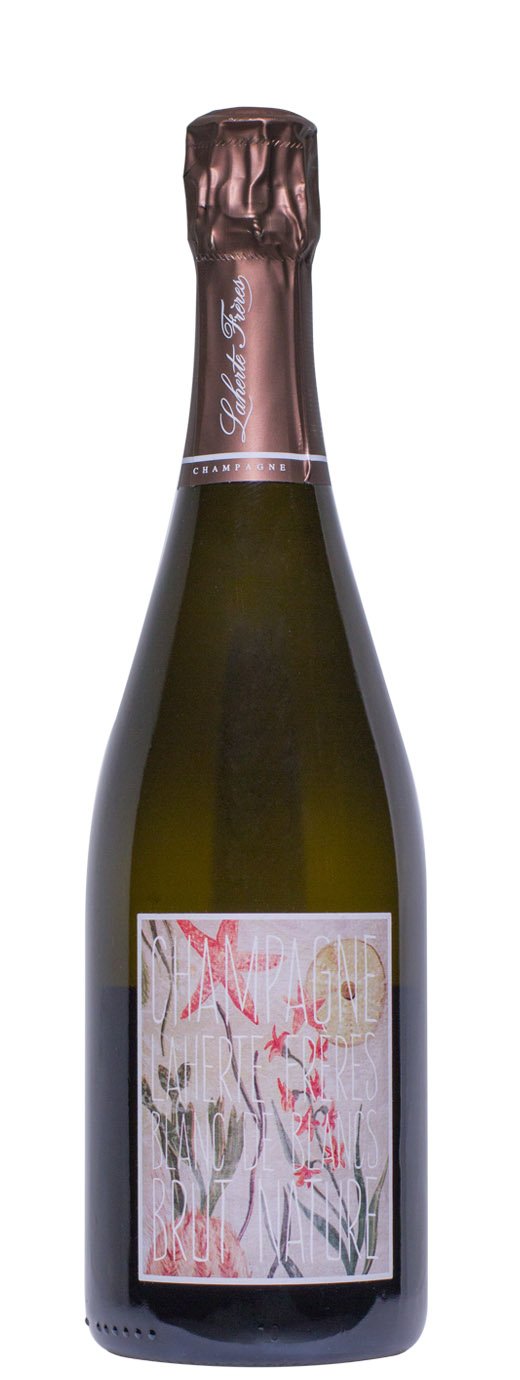
Laherte Frères Champagne Blanc de Blancs Brut Nature/$46-$60
The Laherte Freres offers tremendous value for Champagne
Several months ago, The Big Guy called and said, “We have many reasons to celebrate. I’ll bring the Champagne.”
Which turned out to be the Laherte Freres Champagne Blanc de Blancs Brut Nature ($50, purchased, 12.5%) – and which turned out to be a reason to celebrate all by itself. Given that even mediocre Champagne can cost this much, the Laherte Frères is an especial value,
It’s everything that Champagne – the sparkling wine from the Champagne region of France – should be, and especially for those of us who prefer a cleaner, more minerally style. One set of tasting notes calls the aroma “crushed chalk,” which seems to be a bit of stretch. Still, it makes the point about how mineral-driven the wine is.
The Lahere Freres is made entirely of chardonnay, so expect sort of lemon and green apple fruit, with the tight bubbles and almost creamy foam that’s the mark of quality sparkling wine. There isn’t much yeastiness, and it’s more dry than most sparkling wine (the Brut Nature vs. Brut designation). In this, the wine is incredibly complex and structured, and very young. One estimate gives it another 20 years in the bottle, and I wouldn’t argue with that at all.
Highly recommended, whether you’re celebrating an August birthday or want something for later in the year.
Let’s help the WC find quality cheap wine for Fourth of July
Fourth of July wine 2021: Four bottles to enjoy for Independence Day
The Wine Curmudgeon, several readers have noted, usually doesn’t choose U.S. wines for the annual Fourth of July post. Mostly, that’s because of price and availability. This year, though, I found one — as well as quality cheap wines from elsewhere in the world.
And, as always, keep our summer and porch wine guidelines in mind for this time of year. Consider these Fourth of July wine 2021 suggestions:
• Parducci Cabernet Sauvignon Small Lot 2018 ($13, purchased, 14.5%): Competent, professionally-made California cabernet sauvignon with all the requisite traits — lots of ripe, red fruit (sweet cherries?), soft-ish tannins, a hint of some kind of oak, not too hot, and just enough structure. This is firmly in the New World style, but also tastes like wine.
• Lubanzi Chenin Blanc 2019 ($15, purchased, 12.5%): This South African white isn’t quite as crisp as I like my chenin blanc, but still well done — apple and pear fruit, maybe a little lemon. It’s not soft — just not as crisp as something like the Ken Forester. Imported by Cape Venture
• Spinelli Terre Di Chieti Rosato 2019 ($8, purchased, 12.5%): This Italian pink costs as little as €3 in Italy. Berry fruit, almost savory in what seems to be an Italian style much preferred by Italians, as well as bone dry and a stony finish. Highly recommended. Imported by Enotec Imports
• Poema Cava Brut NV ($12, purchased, 11.5%): A touch softer than traditional cava, the Spanish sparkling wine. That means red apple instead of green and not as much lemon. But well done, and the bubbles belie the price. Imported by Kobrand
Yes, I know I’ve used this picture before. But it’s just so Father’s Day.
Father’s Day wine 2021: Four wines for Dad to enjoy
This year’s Father’s Day wine post finds wine not nearly as bad off as it was a year ago. So celebrate with the blog’s Father’s Day wine 2021. And don’t forget the blog’s wine gift-giving guidelines — don’t buy someone wine that you think they should like; buy them what they will like.
Father’s Day wine 2021 suggestions:
• Villa Gemma Cerasuolo d’Abruzzo Rose 2020 ($20, sample, 14%): This Italian pink intimidated me, what with its price and alcohol content. Fortunately, I tasted it with the Italian Wine Guy, who told me to just shut up and enjoy it. And he was correct: Almost savory, with strawberry and raspberry fruit — a very sophisticated rose. Highly recommended. Imported by Vintus
• Prophecy Sauvignon Blanc 2019 ($12, purchased, 12.5%): Spot-on supermarket sauvignon blanc from New Zealand (and E&J Gallo) that reminds me why these wines offer so much value. Simple, but well made and clean, with a bit of lemon to go with the not too tart grapefruit. Much better than I expected, given the blather on the back label: “aromas of cool sea air.” Imported by Prophecy Wines
• Citra Sangiovese 2019 ($12, sample, 13%): Not quite as well done as the 2017, but still a simple, enjoyable Italian red wine and just the thing for burgers on the grill. Look for cherry fruit, a little acidity, and some spice. Imported by Winebow
• Juvé y Camps Brut Rose NV ($17, purchased, 12%): This Spanish pink sparkler is known for including pinot noir instead of the more traditional trepat, so it’s always a little less tart than other cavas. But always well done — soft strawberry fruit and lots and lots of tight, tiny bubbles. Imported by Vintus
The Justin Isosceles is a pricey California red blend that delivers quality and consistency
One of the many perks of this job is tasting the Justin Isosceles, a red blend from Paso Robles. It’s an example of California wine at its best, an effort that speaks to terroir, a certain winemaking style, and the idea that all California wine at this price doesn’t have to taste alike.
Because the Justin Isosceles isn’t cheap. The 2016 ($80, sample, 14.5%) costs about $10 more than the 2015, so it gives me a reason to be even more critical. Fortunately, the wine is as it always is – polished and enjoyable, combining a powerful Paso Robles style with technique and skill so that it’s fresh and approachable. In this, though, it doesn’t taste exactly the same every vintage, and the 2016 isn’t quite as big as the 2015.
Look for lots (and lots) of ripe berry fruit mixed with some green herbs and an almost menthol sort of thing. There’s a full mouth feel and soft tannins, but this isn’t an overripe, stuff it in your face whether you like it or not kind of wine. It’s not subtle, certainly, but you can take a couple of swallows without fanning yourself.
Just the wine for a Father’s Day gift or Father’s Day cookout – red meat, certainly, and something to to be enjoyed and savored with the meal.
“Let’s see — which of these roses that the WC likes should I buy?”
The blog’s 14th annual Memorial Day and rose celebration reminds us how wonderful pink wine is — and how little it needs to cost
Yes, there’s lots of bad pink wine news as the blog celebrates its 14th annual Memorial Day rose extravaganza — too many so called dry roses that are actually sweet, too many $20 roses that aren’t appreciably better than $10 roses, and the lingering effects of the Trump wine tariff, which means higher prices and limited availability.
But who cares? Many of us can drink rose with our friends and family this weekend for the first time in more than a year, as the pandemic begins to loosen its grip. And the tariff, thanks to enlightened leadership in the U.S. and EU, looks like it will end sooner rather than later.
So nuts to the bad stuff, and let’s drink great, cheap, delicious — and honest — rose. And that means not sweet, not high in alcohol and not tannic. And don’t forget the blog’s rose primer and the rose category (from the dropdown menu on the lower right), which lists 14 years of rose reviews.
One note: I have not been to find the 2020 vintages of the Spanish Zestos and the French La Viellie Ferme and Mont Gravet roses, all of which are always worth buying. However, there is still lots of the 2019s, and they’re still top-notch.
Today, six standout roses – each highly recommended. Tomorrow, five more roses worth writing about:
• Bielet Pere et Fils Sabine Rose 2020 ($13, sample, 12.5%): Prices are all over the place for this French pink, which is one of the world’s best every year — as little as $10 or $11 to as much as $16 or $17. The 2020 is terrific again — pleasantly tart strawberry fruit and wonderfully fresh, if not quite what the 2019 was (maybe missing some garrigue?). Talk about setting a high bar. Imported by Bieler et Fils
• Pedroncelli Dry Rose of Zinfandel 2020 ($13, sample, 13.7%): Each year, Pedroncelli turns out a rose that shows off a more traditional California style. That means heavier, but not heavy, and darker, deeper fruit (red berries and cherry), but still long and clean. So different and interesting and well worth buying.
• Faisao Vinho Verde Rose NV ($10/1 liter, purchased, 10.5%): How can vinho verde — and pink vinho at that — be made so well and taste like wine? A little spritzy, something akin to lemon strawberry fruit, and not so sweet you’d notice it if you weren’t looking for it. Imported by Winesellers Ltd.
• LaValentina Cerasuolo d’Abruzzo Rose 2019 ($12, purchased, 13,5%): The Italian Wine Guy and I tasted a quite delicious $20 rose from the same region in Italy, which made me appreciate this one that much more. Fruity (cherries?) and almost savory. A fine example of a not too common style. Imported by Dallas Terra
• Apaltagua Carmenere Rose 2020 ($13, sample, 13.5%): This is a Chilean rose, made with a uniquely Chilean grape, but that resembles classic Spanish rose. That means almost orange-ish in color, barely ripe berry fruit, sort of savory, and very clean and crisp. Once again, an exampole that all roses aren’t alike. Imported by Global Vineyard Importers
• Charles & Charles Rose 2020 ($12, sample, 11.8%): Winemakers Charles Bieler and Charles Smith combine on this Washington state rose, which shows up on this list every year. This vintage displays its usual brilliance — very Provencal in the back, almost tart, and with terrific strawberry fruit from the syrah. This, too, is priced from $12 to $17.
“Remember — buy me what you think I’ll like, and not what you think I should drink.”
Four suggestions — white, sparkling, rose, and red — for Mother’s Day 2021
The blog’s 15th annual Mother’s Day wine post reminds me of a couple of things, but mostly that I always need to write about wines that my mom will enjoy (and won’t have too much trouble finding in a store near her).
So, as always, the emphasis is on valuer and quality, with the reminder that we should buy Mom something she will enjoy and not something we think she should drink. These Mother’s Day wine suggestions should get you started:
• Balletto Sauvignon Blanc 2020 ($20, sample, 13.1%): This is classic California sauvignon blanc, which isn’t easy to find any more. That means a wonderful aroma of grassiness with a hint of melon, lemon fruit but not particularly tart, and a long, minerally finish. Highly recommended (and even worth doing a Zoom tasting to sample).
• Ackerman Marquis de la Tour Brut NV ($10, purchased, 11%): Terrific cheap bubbly from France’s Loire that’s made with chardonnay, chenin blanc, and – believe it or not – ugni blanc. It’s soft, a little sweet (honey?), with lemon and apple fruit. But the bubbles are tight, even though it’s charmat. Very nicely done. Imported by Palm Bay International
• Bonny Doon Vin Gris de Cigare 2020 ($15, sample, 13.5%): This California pink, always one of my favorites, was a little less Doonish last vintage. But this is as it should be: Stony, almost austere, with a hint of barely ripe strawberry fruit to remind you it’s rose, as well as a very long and very clean finish. Highly recommended.
• Tinto Negro Malbec 2019 ($10, sample, 13.5%): I’ve probably tasted more Argentine malbecs during the pandemic than the past couple of years combined; the quality, as with this wine, has been much better than expected. It’s a bright, fresh and not too jammy red, with lots of blueberry fruit. But it’s not overdone and there is plenty of acidity and even a little spice to back it up. Very professional rendering of this style. Imported by Vineyard Brands
The L’Onesta Lambursco di Sorbara is a stunning dry Lambrusco that reminds us how amazing wine can be
How wonderful and amazing is wine? And how much do people miss when they dismiss wine because it’s alcohol or it’s old-fashioned or because wine drinkers can be snotty or because there’s too much emphasis on price?
The answer to all these questions is in a bottle of the L’Onesta Lambrusco Sorbara NV ($13, purchased, 11%). It’s a revelation, and I say this as someone who has been writing about wine for more than 20 years (and drinking it for much longer). It’s the exact opposite of what most of us assume Lambrusco to be – not a sweet and syrupy red wine, but a balanced and delicious and bubbly wine.
Yes, a stunning dry Lambrusco. There’s just enough sweetness so that you’ll notice it if you’re paying attention, but that’s just the beginning of what’s going on. There’s also sour cherry and raspberry fruit, as well as some of the best charmat fizz I’ve ever tasted. This is the kind of wine to open during a Texas summer – or for Mom on Sunday – and drink and talk and drink some more, and then, as you drink and talk, you realize there’s something to this wine business after all.
A note about the wine’s name: The L’Onesta Lambrusco di Sorbara is made by a producer called Famiglia Carofoli, according to the importer. But it’s also listed, for some reason, under a producer called Cantina di Sorbara, in case that shows up in a Google search. You should be able to find it by searching for L’Onesta Lambrusco di Sorbara.










 by Wine Curmudgeon Posted On