



Category:Wine news

Holiday shocker: Hundreds of FedEx packages were dumped in a ravine

fedex
Using this picture in no way implies that FedEx is a badly-run company that doesn’t care about its customers, and that drivers dumping packages is a common occurrence.

No one who has had wine delivered by FedEx should be surprised, but FedEx sure seemed to be

Blog regulars know this story all too well – a wine shipment never arrives at their home, and FedEx (or UPS) claims to know nothing about what happened.

So you can imagine my lack of surprised when I saw this on Thursday: A FedEx driver had dumped hundreds of packages into a ravine in Alabama. Local police, who are investigating, told the New York Times that the driver had done it at least six times, though they aren’t sure if the driver wanted to steal the items or if dumping them was easier than delivering them.

But not to worry: “The security of our customers’ shipments is a top priority and we are committed to treating our customers’ packages with the utmost care,” a FedEx spokesman told the Times.

Yeah, and I’m drinking $150, 98-point, 15.2% Napa cabernet sauvignon for dinner tonight.

The problem is not that FedEx or UPS packages go missing. Of course they do, as the Times story noted – a stunning number, almost 2 million a year by one estimate. And, of course, there was the obligatory reference to porch pirates.

The problem, as has been demonstrated on the blog as well as in the piece I wrote for Pix.wine, is that the delivery services don’t care. And each knows that there’s little any of us can do about their lack of interest, since the two companies control the private delivery business in the U.S.

The question to ask (and which, sadly, the Times reporter did not): How could the driver dump packages at least six times and not have FedEx notice? I’ve been told that delivery packages are scanned at least three times: When they arrive at the facility where they will be loaded on the truck, when they’re loaded on the truck, and when they’re delivered. And the truck is also scanned when it returns to the facility to make sure nothing is left on it by mistake.

One would think, with all that cyber-tracking, that FedEx would have noticed something was amiss after the second or third time the driver didn’t deliver the packages. But what’s the point? Then they’d have to do something about it.
Winebits 726: Alcohol regulation, wine barrels, wine bottles

wine barrels
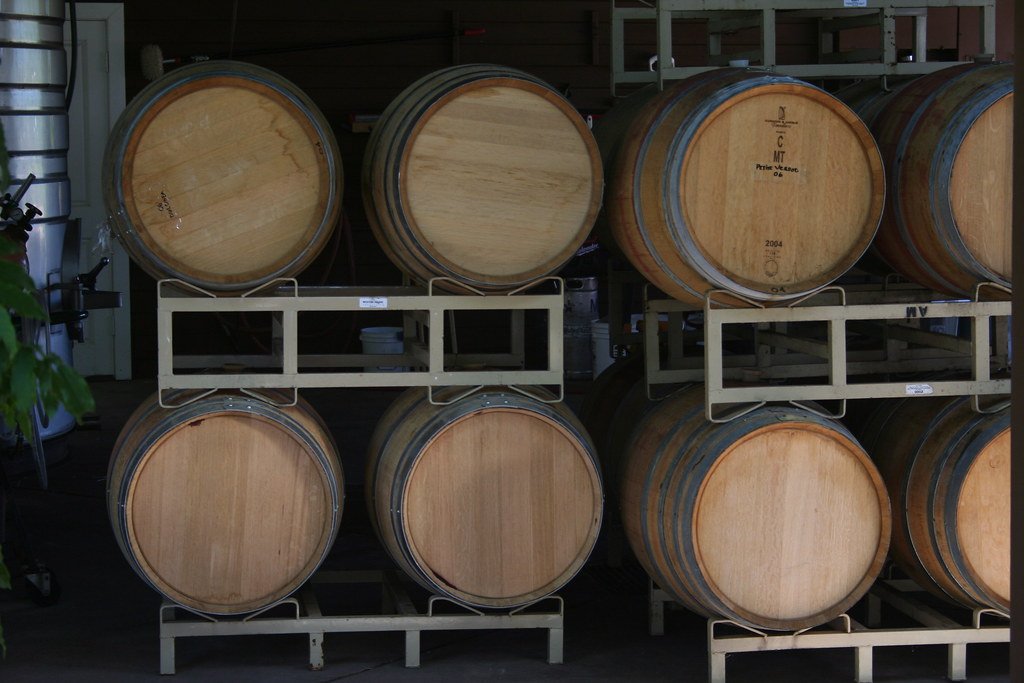
Wine barrels? We don’t need no stinkin’ wine barrels.

This week’s wine news: China clamps down on booze advertising, plus 21st century technology comes to wine barrels and wine bottles

• Just like in the U.S.: China and the United States might have all sorts of geo-political problems to solve, but we do seem to have one thing in common: alcohol regulation. Chinese authorities fined Big Drinks’ Pernod Richard some $25,000 for showing liquor consumption in an ad. thedrinksbusiness website reports that the ad, for a popular Cognac brand, announced a promotional video featuring a Cognac drinking scene on one of its social media accounts. Which is illegal: “alcohol-related products are not permitted to promote drinking, showcase the act of drinking, or show activities such as operating cars, boats or aircrafts. They are also banned from implying that alcohol relieves stress or anxiety.”

• Clay and wood: Winemakers in France have been experimenting with clay fermentation vessels, similar to the amphoras used by ancient Romans, reports connexionFrance.com. The hybrid barrels are made with both wood and clay, allowing the wine to age and gain the benefits of both materials. The new vessels are either made with the familiar red clay baked at relatively low temperatures and commonly used for roof or floor tiles, or with white clay baked at high temperatiures. The combination barrels almost twice the size of a traditional wood barrel, and cost about twice as much. However, the manufacturer says they should last much longer.

• Box and bottle? One more possible solution for the heavy and eco-unfriendly wine bottle – a wine container that is both box and bottle, called the Bio’teille. The boxtle – my bad punn – weighs just one-eighth the amount of a glass bottle and generates five times fewer CO2 emissions over its lifecycle than a glass bottle, says the Bio’teille manufacturer. Best yet – from the WC’s perspective – it’s aimed at wines costing around €10.

Winebits 725: Franzia holiday outfits, sommelier scandal, Big Wine

franzia christmas
$50, and the sweater is yours — and it lights up!

This week’s wine news: More Franzia holiday outfits, plus six sommeliers could be be expelled and Big Wine is shopping a property

• Bring on the Franzia outfits – again: The WC can’t help himself – the idea of adults dressing up like wine boxes appeals to something in me that I can’t explain. This time, it’s a Franzia Christmas sweater that lights up (yes, the one in the picture). The sweater, in case anyone is interested, costs $50. The other thing I like about these Franzia promotions? The marketers call people who drink the wine and buy this stuff “Franz” (like friends – get it?) That’s so horribly awful that I can only shake my head in admiration. Wish I could get paid for writing puns like that. The bravest among you can check out anther Franzia costume promotions here.

• Sommelier scandal: The Court of Master Sommeliers has moved to revoke the certifications of six members who were accused of sexual misconduct about a year ago, including one of the group’s co-founders. Hearings will be held within 30 days to decide whether to revoke the memberships. They include Fred Dame, one of its co-founders; Robert Bath, a professor of wine at St. Helena’s Culinary Institute of America; Matt Stamp of Compline Restaurant and Wine Shop in Napa; Fred Dexheimer; Drew Hendricks; and Joseph Linder. The sex scandal is the second major scandal facing the group; three years ago, it had to cancel the results of an exam after one of the members gave part of the test to someone taking it.

• Stag’s Leap sale? Sycamore Partners, the hedge fund that bought Ste. Michelle Wine Estates, as already looking to break up the company. Which, of course, is what hedge funds do. It may be asking as much as $1 billion for Stag’s Leap, a Napa winery that isn’t this producer. Bloomberg reports that “Stag’s Leap is expected to attract interest from high-net worth family offices and other private equity firms, the people said. No final decision has been made and Sycamore could elect to keep the business.” Welcome to the 21st century, wine business.

Winebits 724: Happy 14th birthday to the blog

local wineThis week’s wine news: Stuff that makes the WC shake his head, because some things never seem to change — even after 14 years

• Hooray for Texas wine: No less than the Wine Enthusiast — about as Winestream as it gets — sings the praises of Texas wine: “Over the last 30-plus years, Texas winemakers have honed their craft and the state’s wine has established regional and national esteem.” Wow. Who knew? (Yes, sarcasm.) What’s most annoying is not that Texas wine deserves recognition, but that every time an article like this appears in a major wine magazine, it seems like big news. Which, of course, to those of us who have been advocating for Drink Local, it isn’t. Right, gang?

• Love those chateau: Talk to winemakers and marketing types, and they still insist that putting a castle on a wine label is a smart thing to do. Now, a British study reinforces that approach, because premiumization: Consumers judge the quality of wine by how much it costs and what the label looks like. In blind taste tests, however, they couldn’t tell the difference between £6 (about US$8) and £36 (about US$48) bottles. As if that isn’t depressing enough: Corks and heavy bottles are thought to denote quality, and one-third of those surveyed ranked a £10 wine (about US$13) with an image of a French château on the label as more premium than one costing almost 10 times as much.

• Where is Romania? Here’s a long story blaming the woes facing the Romanian wine industry on the Cold War, when too much of its wine was cheaply and poorly made. The problem with that excuse, as we’ve seen before: Who buying wine today remembers that? Communism fell more than 30 years ago — two generations in wine drinking time.  The reasons aren’t complicated: Declining wine consumption, lots of wine from lots of other places, and the reluctance of importers, wholesalers, and retailers in the U.S. to handle something that no one has ever heard of.

Pat Brennan, 1942-2021

Pat brennan
Pat Brennan, 1942-2021

Pat was a Texas wine pioneer, but more importantly, he was a genuinely nice guy

Pat Brennan, who died last week after a long illness, made his mark in the Texas wine business in any number of ways. Perhaps most importantly, he helped make viognier the state’s signature white grape, and his Brennan viognier was not just one of Texas’ best, but one of the best in the U.S.

Pat did such a good job with viognier that the one time he made a chardonnay, it sat on the tasting room shelf. “We educated our customers so well about viognier that they didn’t want to buy the chardonnay,” he said with a laugh.

But there was much, much more to Pat than that:

• A tremendous sense of humor, even when the joke was on him. I first met Pat during one of those wonderfully 100-degree Texas summer days when he was pouring his wine at a steak cook-off in a town called Hico. It was the first vintage of the viognier, and the polite thing to write in an obituary is to note that it wasn’t Pat’s best effort. Which he knew, and always laughed about when I told the story over the years to people tasting his wine for the first time.

• A genuinely nice guy, who always went out of his way to help others understand and appreciate Texas wine. It didn’t matter if it was someone in his tasting room or wine writers – Pat would open the bottles and start talking about what he was trying to do in Texas. Dave McIntyre of the Washington Post and I once drove the two-plus hours to Comanche to taste Pat’s wines because it was so much fun to do.

• And then there was Comanche, which is not only in the middle of the nowhere but was dry when Pat opened the winery there in 2001. That meant he couldn’t sell his wine from the tasting room, cutting off a key source of revenue. Pat didn’t gripe about it much; he just worked with others to get the law changed, which happened several years later.

• The cleanest winery I’ve ever seen – operating room clean. Which was not surprising, since Pat was a physician. In those days, regional wineries that were that spic and span were few and far between.

So if wine is about memories, and I’m convinced that it is, I’ll always remember Pat Brennan.

Photo: Carole Topalian via Edible Austin

Winebits 723: Ingredient labels, Kevin Zraly, wine theft

u-label
Europe’s U-Label project has been delayed until Dec. 1.

This week’s wine news: Europe’s wine ingredient label debut has been delayed a month; plus, Kevin Zraly talks wine and another restaurant suffers a huge wine theft

• U-Label delay: The European U-Label project — ingredient and nutrition information for wine — has been delayed until Dec. 1. The project, which was supposed to launch last week, ran into the well-known “technical difficulties,” reports thedrinksbusiness.  As noted on the blog, this is a landmark moment for the wine business, since it will allow producers big and small to offer ingredient information using QR codes. The delay, though, isn’t surprising, given that no one has really done this before.

• Kevin Zraly: The New York Times’ Eric Asimov calls Kevin Zraly one of the main reasons we drink so much wine in the U.S. and no wonder: His “Windows on the World” is probably the best introductory wine book on the market. Writes Asimov: “For 50 years now, Mr. Zraly, 70, has helped Americans make sense of wine. … Though wine is often considered a forbidding, staid subject, Mr. Zraly made his classes fun, injecting them with humor and energy. He turned them into entertainment.” What more could we ask for? And how far have we fallen from that approach?

• A $300,000 theft: Thieves stole more than $300,000 of wine from a Spanish restaurant, including an 1806 Château d’Yquem and at least six other 19th-century bottles from the exclusive Romanée-Conti winemaker in France’s Burgundy region. “They were professionals, they knew exactly what they were doing,” said one of the restaurant’s co-owners,  whose hotel and restaurant, Atrio, has a 40,000 bottle wine cellar.

Will listing bottle weights in wine reviews help save the planet?

wie bottles
“Bottle weight.. we don’t need no stinkin’ bottle weight.”

Maybe not, but it’s much more effective than giving yet another 92 to yet another overpriced wine

Who knew wine bottle weights would be one of the next great battlegrounds in the fight against climate change? But that appears to be the case.

• In February, wine critic Jancis Robinson announced she would list bottle weights in her reviews, with the idea that great wine doesn’t need to be in a heavy bottle.

• In June, a variety of wine writers (myself included) got an email with an open letter from Italian producer Max de Zarobe, asking that we take a winery’s sustainability efforts into account when scoring their wine.

• Last week, Dave McIntyre wrote a piece in the Washington Post decrying heavy wine bottles for the environmental obscenity that they are – low recycling rates and carbon footprint among many faults. And which, frankly, made the most sense of almost all of the stuff I’ve read on the subject, and I’d say that even if Dave wasn’t my friend.

Heavy wine bottles once mattered – say, 200 years ago, when wine was shipped in horse carts over rutted European roads and the bottle needed to be robust enough to stand up to the punishment.

Today, the heavy bottle is nothing more than marketing – call it an enological phallic symbol for an industry dominated by men who sell big, expensive bottles of wine to other men. A woman executive, whose company uses the lightweight PET bottle (made of plastic), told me her harshest critics weren’t consumers, but older men in the wine business who were aghast that her company didn’t do what tradition demanded.

Which, of course, speaks volumes about how effective listing bottle weights in reviews would be. I’m not against it; in fact, I ranted about the subject seven years ago — yes, seven years ago. Two of the worst offenders then were Bonterra and its “organically-farmed wine” and a Downton Abbey wine. What better way to convince consumers you’re making “real wine” than with a heavy bottle?

In other words, the people who make decisions in the wine business could care less about bottle weights. If they did, they would have downsized years ago. Lighter bottles mean cheaper production and shipping costs and less wear and tear on equipment. If saving serious money didn’t convince them, then why would the bottle weight in a review?

And, frankly, I don’t think the wine drinkers who read Robinson and rest of the Winestream Media care much, either. What matters to them are points, not how heavy. If it’s 94 points and a heavy bottle, who cares?

Having said that, I’ll start listing bottle weights for the most egregious offenders, if only to follow Dave’s example. Most of the wines I review, given their price, long ago gave up any heavy bottle pretense. And though listing weights may not do much, it’s still more than most of the rest of the wine business is doing.

Photo: “Two boxes of green wine bottles” by wuestenigel is licensed under CC BY 2.0