Category:Texas wine

Remembering the State Fair of Texas wine garden

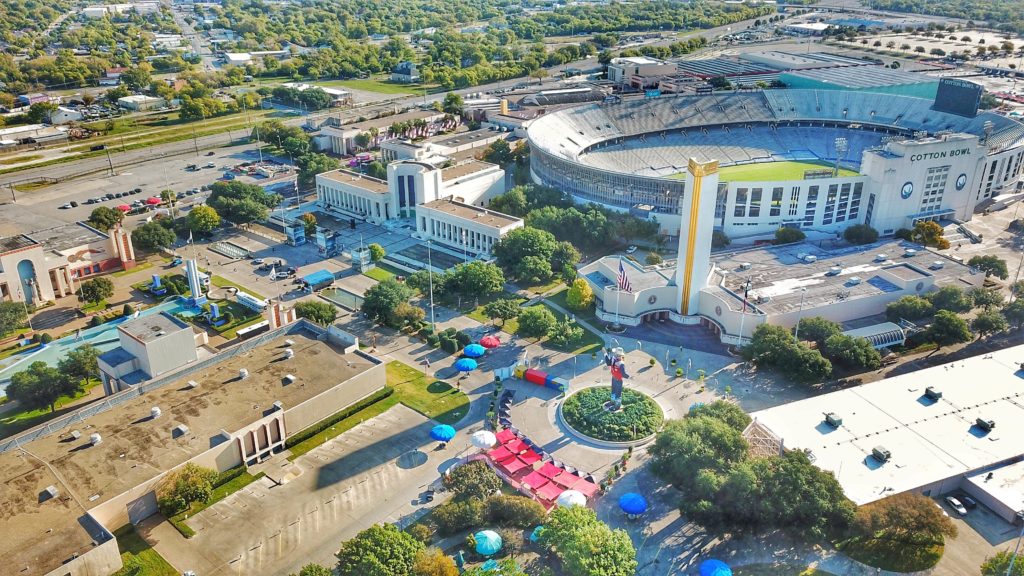
Cotton Bowl stadium at State Fair of Texas
The Texas wine garden was at the top of the picture, more or less.

A decade ago, we struck a blow for Drink Local

Shelly Wilfong, a well respected Dallas wine writer, sent me an email over the weekend: “Sounds like a neat gig you had doing the wine chats.”

Which brought back a bunch of memories that I had almost forgotten about — the five autumns that John Bratcher and I did wine talks at the State Fair of Texas wine garden. The first couple of years, we did Wine 101 (first, with the late Camille McBee, and then with Dan Peabody). The next three years, we did interviews with Texas winemakers, sommeliers, chefs, and assorted local wine personalities. I always compared it to a mini-talk show, minus the monologue but with a terrific theme song.

Shelly does a fine job recapping what happened, including the Texas Legislature’s foolishness that ended the wine talks (which, as dumb as it was, doesn’t hold a candle to its power grid shenanigans). She was also quite polite when I sent her a longish e-mail in return, with more information about the talks then she could have imagined.

We did good work, and people still ask me if John and I are going to do it again. So what do I remember the most?

• The enthusiasm of the audiences. Really. We actually had people come early, and especially when we did the interviews. They wanted to know about Texas wine, and this was one of the few places to get it then.

• The enthusiasm of the people we interviewed. We had some big names (including Dean Fearing, a leading celebrity chef, and TexSom impresario James Tidwell) and I didn’t have to do much to convince them to come. Which speaks volumes about how important they thought Texas wine was.

• The crowds during Texas-OU weekend, which came for the football game but ended up attending many of the talks. Our location had chairs, beer for sale, and was next to the Cotton Bowl, where the game was played. The result? I tell people I never had to deal with hecklers in the Catskills; John and I had drunks during Texas-OU weekend.

Pat Brennan, 1942-2021

Pat brennan
Pat Brennan, 1942-2021

Pat was a Texas wine pioneer, but more importantly, he was a genuinely nice guy

Pat Brennan, who died last week after a long illness, made his mark in the Texas wine business in any number of ways. Perhaps most importantly, he helped make viognier the state’s signature white grape, and his Brennan viognier was not just one of Texas’ best, but one of the best in the U.S.

Pat did such a good job with viognier that the one time he made a chardonnay, it sat on the tasting room shelf. “We educated our customers so well about viognier that they didn’t want to buy the chardonnay,” he said with a laugh.

But there was much, much more to Pat than that:

• A tremendous sense of humor, even when the joke was on him. I first met Pat during one of those wonderfully 100-degree Texas summer days when he was pouring his wine at a steak cook-off in a town called Hico. It was the first vintage of the viognier, and the polite thing to write in an obituary is to note that it wasn’t Pat’s best effort. Which he knew, and always laughed about when I told the story over the years to people tasting his wine for the first time.

• A genuinely nice guy, who always went out of his way to help others understand and appreciate Texas wine. It didn’t matter if it was someone in his tasting room or wine writers – Pat would open the bottles and start talking about what he was trying to do in Texas. Dave McIntyre of the Washington Post and I once drove the two-plus hours to Comanche to taste Pat’s wines because it was so much fun to do.

• And then there was Comanche, which is not only in the middle of the nowhere but was dry when Pat opened the winery there in 2001. That meant he couldn’t sell his wine from the tasting room, cutting off a key source of revenue. Pat didn’t gripe about it much; he just worked with others to get the law changed, which happened several years later.

• The cleanest winery I’ve ever seen – operating room clean. Which was not surprising, since Pat was a physician. In those days, regional wineries that were that spic and span were few and far between.

So if wine is about memories, and I’m convinced that it is, I’ll always remember Pat Brennan.

Photo: Carole Topalian via Edible Austin

Asimov on Texas wine: Not quite right

asimov texas wineAsimov gives N.Y. Times readers skewed picture of Texas wine

Eric Asimov of the New York Times is probably the best wine writer in the United States, offering what a friend of mine calls a “thoughtful, balanced but personal approach to wine drinking.” He shows his passion and his joy for wine, he writes clearly and directly, and he doesn’t talk down to his readers. Would that more of my colleagues did that.

That’s why I was so disappointed by Asimov’s recent article about Texas wine — or, more specifically, about a Long Island winemaking couple, Regan and Carey Meador, who moved their Southold winery to the Hill Country. In the process, the story implied, they were bringing civilization and much needed progress to Texas winemaking. The article, displayed prominently on the cover of the paper’s Dining section, was everything that has always been wrong with regional wine reporting – not just condescending, but reinforcing the stereotype that those of us in the provinces can’t succeed without help from our betters.

It was the last thing that I expected from Asimov, and I do not write this lightly. In fact, it took me almost two weeks to decide to write anything. Who wants to be called petty and provincial?

Besides, I respect Asimov immensely (though we have never met) and have written very nice things about him on the blog and in the cheap wine book. And he has been a tremendous supporter of regional wine, helping to give New York the due it deserves. So the last thing I want to do is to get into a cyber-spat with someone who does what Asimov does as well as he does it. And this is not about the Meadors; people who want to make quality wine are always welcome.

Rather, it’s Asimov’s characterization of Texas winemaking that deserves to be called out. It was what those of us who have done journalism call “parachute reporting” – you parachute into a place with little knowledge beyond general stereotypes, do a little reporting and get airlifted out, stereotypes intact, and knowing almost nothing more about the subject than you did beforehand.

So, given what I do here and the blog’s reason for being, as well as my work over the past decade with Drink Local Wine and the regional wine movement, know this about Asimov’s Texas wine story:

• Yes, as Asimov writes, Texas produces lots of middling, mass market supermarket wine (and I’ve criticized the industry for this and taken my lumps). But so do California, France, and almost every other wine region in the world, including New York. I’m sure Asimov has run across Red Cat a time or two.

• Asimov writes that Texas’ move toward varietals more suited to its terroir, as well as the presence of more open and free-thinking winemakers like the Meadors, is a new development. This is untrue; those movements were underway at least a decade ago. We showcased both at our first Drink Local Wine conference in 2009 in Dallas. I wrote about the same subject in 2016, “The Texas Wine Revolution,” for Texas Journey magazine. If I may quote myself: “What is a new, especially in the past 10 years, is the acceptance that Texas wine is not California wine or French wine or Italian wine. It is Texas wine.”

• Hence, it was especially annoying to read that a New York winemaker had to come here to save the Texas wine business from itself.

• The Hill Country, which Asimov visited, is not the most important place in the Texas wine world. It gets the most tourists (think Red Cat again), but the High Plains near Lubbock produces 80 percent of the grapes and most of the best grapes. Because, among other reasons, Pierce’s Disease in the Hill Country — the grapevine version of the Black Death. So judging Texas wine off a visit to Fredericksburg is hardly the entire picture. And by the way, it’s not Hill Country, as the story referred to it, but the Hill Country, in the same way it’s Queens, and not the Queens.

• And since the Hill Country is not the center of the Texas wine business, Asimov apparently didn’t taste Brennan Vineyards’ viognier, always among the best in the country; McPherson Cellars’ Tre Colore, a red Rhone blend that speaks to terroir; and Haak Cellars’ amazing Madeira-style wine made with blanc du bois. None have anything to do with Fredericksburg. And it also seems that he missed Perdernales Cellars outside of Fredericksburg, with its terrific tempranillos.

So that’s a more complete picture, and one I wish Asimov had seen. He could have called Russ Kane, who probably knows more about this stuff than anyone, or Texas Monthly’s Jessica Dupuy. Either could have recommended Texas wine producers who would have been able to offer more perspective.

The old saying that any publicity is good publicity still rings true, but accurate publicity is even better.

Five things I noticed about Texas wine during an Amarillo road trip

texas wineTexas wine is making inroads in the least likely places

• The shock of seeing a Hampton Inn – yes, a Hampton Inn – with a Texas wine on its Happy Hour list is almost indescribable. I’ve been in chain hotels in some of the biggest cities in the world that didn’t have any local wine. But a Hampton Inn in Amarillo? It’s hardly the garden spot of wine country. But the Bar Z winery is in the area, and someone, somewhere in the chain bureaucracy let the hotel do the right thing. This is just one more example of drink local’s move into the mainstream.

• Even more amazing: Much of this part of Texas has historically been dry, but has embraced the state’s wet trend. Since 2004, almost 80 percent of wet elections have been successful.

• I grew up in Chicago where you can buy any kind of booze at the drugstore; a fifth of Scotch at midnight, anyone? And I’ve spent lots of time in California, where you can buy a bottle of gin in the grocery store at 7 on a Sunday morning. But I will never understand the drive-thru liquor stores so common in so many small towns in rural Texas. I passed a couple of them between Dallas and Amarillo, and there were cars in line in each.

• One is never out of Texas wine country. It’s 350 miles or so between Dallas and Amarillo, and almost all of it is in the middle of nowhere. So what did I pass, about 40 minutes northwest of Denton? Brushy Creek Vineyard. Again, if someone had told me there would be a winery in this part of the state when I started writing about Texas wine, I would have laughed.

• The owners of the legendary Big Texan Steak Ranch want to do the Hampton Inn one better. Owners Bobby and Danny Lee want to expand the Texas wines on their list, since they see the tie-in between Texas wine and Texas food. That’s impressive enough. But they also want to price them so that customers can afford to buy them – $20 or $25 Texas restaurant red wine. Could they be on to something that the rest of the restaurant wine world hasn’t figured out?

More evidence that Drink Local is here to stay

drink localThe Winestream Media continues to say nice things about regional wine and Drink Local

The irony is not lost on those of us who endured the slings and arrows of the Winestream Media a decade ago when we said Drink Local and the idea of regional wine mattered. Today, mainstream wine publications, on- and off-line, are racing to see who can hype local the most.

So allow me a smile. And I promise not to say I told you so too loudly, or to say it too often. Right, Dave?

This summer, it seemed like everyone from the Guild of Sommeliers to a trade magazine run by the people who do the Wine Spectator have waxed poetic about local wine. Plus, I’ve been told that a major wine website, run by a big-name critic, is doing a huge blowout about regional wine this fall. Plus, these:

Vinepair’s screaming headline especially pleased my inner cranky newspaperman: “Your Guide to the Finger Lakes, the Most Exciting Wine Region on the East Coast of America.”

• SevenFiftyDaily, an on-line trade magazine, has discovered Texas wine: “Why Cotton Farms in West Texas are becoming vineyards.”

• The Guild of Sommeliers has run one piece and is doing another, both written by the very knowledgeable Jessica Dupuy (full disclosure: she interviewed me for the second story). They look at “emerging American wine regions.”

• The Los Angeles Times found out that Colorado had wine, which surprised the writer given the state’s reputation for craft beer.

Finally, my favorite regional wine story was in Market Watch, a trade magazine owned by the same company as the Spectator and notorious for its parochial, New York-centered view of the world (which I know because I used to write for it). The story looked at Texas wine; that it did speaks volumes about how far we’ve come in convincing people that Drink Local is a legitimate part of the wine business.

Drink Local Wine Week: Who knew it would outlast the organization?

drink localOnce more, evidence that local wine has become part of the wine mainstream — and a good thing, too

The last proper Drink Local Wine week was in October 2013; the organization went into hiatus the next spring. So what did my Drink Local cohort Dave McIntyre discover a couple of weeks ago?

“Someone just brought it to my attention that people still observe ‘Drink Local Wine Week,’ ” he wrote in an email. Google ‘drink local wine week 2017,’ and you’ll find a bunch of references. Go figure.”

So I did, and he was right – any number of listings on the first Google search page, an impressive performance for something that hasn’t been observed officially in four years. When Vinepair and Wine Folly mention your event, you’ve made the big time.

In this, regional wine has mostly become an accepted part of the wine landscape. In the dozen or so biggest regional wine states, the wines are on retail shelves – even grocery stores – and are represented by national distributors. In Texas, the Central Market supermarket chain is offering 20 percent off local wines for Texas wine month; yes, I bought a six-pack. This sort of thing was unheard of when we started Drink Local almost a decade ago. Most retailers and distributors treated local wine as if it was poisoned.

So, as Dave says, go figure: How did we do this?

• Publicity, publicity, and then publicity. The five Drink Local conferences, starting in 2009, made a tremendous difference in letting the world know local wine was a real thing that was worth learning about. Plus, they were a lot of fun.

• Tying local wine into the local food movement. This might have been our biggest accomplishment, since locavores don’t see wine as local in the way they see beer, spirits, and tomatoes. And too many, sadly, are horrible wine snobs who believe in points, Parker, and that all local wine is sweet and gross. But in Austin, for example, there is a local wine and food week featuring Devon Broglie, one of the country’s leading wine experts.

• Our friends at Google. We’ll take all the help we can get, even if it comes from the notorious Google search algorithm that figures hits are more important than whether something actually exists. And Drink Local has almost 10 years of hits on the Internet.

I found the announcement for the first Drink Local Wine Week in the blog’s archives – we’ve come a very long way in making local wine respectable since then, haven’t we?.

Eight years of Texas wine and the Kerrville Fall Folk Festival

Texas wine
Yes, that’s the Wine Curmudgeon in the hat on the left.

Talking about Texas wine to Texas wine consumers for almost a decade at the Kerrville Fall Folk Festival

In 2008, about nine months after I started the blog, I made my first appearance at the Kerrville Fall Folk Festival to talk about Texas wine. I didn’t do it this year; the event was canceled in the wake of Hurricane Harvey.

But in those eight years (I missed 2016 because of a conflict), I’ve seen two things: the growth and maturity of Texas wine, and the increasing enthusiasm for it from the audiences at the wine seminars.

I’ve been hard on Texas wine over the past couple of years, and deservedly so. But that shouldn’t obscure the improvements over the past decade, which have been on display at the wine seminar every Labor Day weekend. The wines are more professional and are made for wine drinkers, and there are fewer of the home-schooled wines made because the winemakers liked them that dominated the industry at the end of the 1990s and the beginning of the 2000s. That’s why there are so many Texas wines on store shelves, another change from 2008. Better quality means more retail outlets.

All of which has been terrific. But the audiences have been even more fun – smart, curious, and eager to embrace Texas wine. All they wanted was quality wine at an affordable price. This always reminded me that there was an audience for local wine, and that it was up to the winemakers to reach that audience. If you don’t make something people want, they don’t have to buy it, no matter what the Winestream Media implies.

We didn’t sell out every year, but we had large crowds most of the time. This included our regulars, people who came to the seminar every year. We had our hecklers, too, including one man who gave the panel moderator, John Bratcher, such a hard time you’d have thought we were discussing something important, like the survival of the republic.

And the best part came when the audience booed the one person every year – and there was always one person – who said Texas wine and local wine didn’t matter.

The other three things I’ll never forget about the festival? The legendary Rod Kennedy, who made the entire thing possible. The music, of course – Cook a chicken! And the traffic police, because you’re not supposed to drive faster than 5 mph, no matter how difficult that is to do.

Image courtesy of the Kerrville Folk Festival, using a Creative Commons license