Tag Archives: expensive wine

Expensive wine 153: J. Moreau & Fils Chablis 2019

J. Moreau
J. Moreau & Fils Chalbis 2019/$20-$30

The J. Moreau Chablis is yet another example why scores do more harm than good

The Wine Curmudgeon tries desperately not to let his disgust with scores bubble up too often. But the wine business makes that almost impossible.

The most recent example is the J. Moreau & Fils Chablis 2019 ($25, purchased, 13%), a delightful chardonnay from the Chablis region in Burgundy in France. So what score did it get on CellarTracker, the blog’s unofficial wine inventory app?

An 88.

Sigh. Is it any wonder I worry about the future of the wine business?

That’s because 88 points is about what a $12 buttery supermarket chardonnay gets — the kind that’s designed by focus groups and made to ensure that the wine has all the subtlety of a hot buttered popcorn-flavored Pop Tart.

Is this the world’s most stunning Chablis? Nope, but it’s still a fine Chablis at a more than fair price (and especially given the cost of white Burgundy these days). It’s varietally correct, with lemony apple fruit, the minerality that all Chablis should have, and a pleasing roundness in the mouth that is not richness (or buttery popcorn).

So yes, I’d buy this again – just the thing for my traditional Saturday night roast chicken, green noodles, and green salad.

Imported by Boisset America
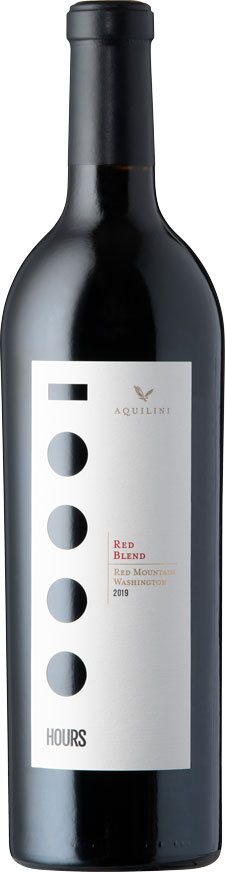
Expensive wine 152: 10000 Hours Red Blend 2018

10,000 Hours 2018 Red Blend
10000 Hours Red Blend 2018/$28-$32

This Washington state red blend shines on several levels, and especially when it comes to value

The Wine Curmudgeon drank this wine with someone who dislikes too big, over-hyped, over-made and over-done wines even more than I do. And her conclusion: “Put this on the blog!”

So the 10000 Hours Red Blend 2018 ($30, sample, 14.5%) is here, and not only because it’s well made and speaks to its Washington state terroir, but because it offers terrific value. How often do we find a $30 wine that will age for a decade?

Because the 10000 Hours, more cabernet sauvignon than anything else, will. It’s a big wine, but not so big that you need to take a nap after a couple of glasses. It holds its high alcohol quite well, and is much more balanced than I expected.

Having said that, it’s not especially subtle, but rich, direct and full. That means lots and lots of berry fruit (the winery’s tasting notes say preserves), a bit of spice and oak, enough tannins to remind you they’re there, and some nice green herbs on the finish. It’s a food wine, certainly – big red meat, as well as stews.

And, for those of you who keep track of these things, the exact blend: 56 percent cabernet, 32 percent merlot, 7 percent petit verdot, 3 percent malbec, and 2 percent cabernet franc.

Expensive wine 150: Balletto Vineyards Chardonnay 2017

Balletto Vineyards Chardonnay 2017
Balletto Vineyards Chardonnay 2017/$22-$30

Balleto’s chardonnay is a reminder that California can make make some of the best wine the world

Yes, the Wine Curmudgeon knows that $25 isn’t considered expensive in today’s premiumized, gold-played, crappy wine costs $18 world. But the Balletto chardonnay is worth every penny of that $25, and probably quite a bit more.

Perhaps more importantly: I would gladly buy a bottle to share with the Big Guy the next time he comes over to taste wine.

So what do you get with the Baletto Chardonnay 2017 ($25, sample, 13.6%)?

This is a stellar and precise California chardonnay, in which each part of the wine contributes to the whole, and where the idea of balance is all. So if you’re looking for a tub of Land o’ Lakes, look elsewhere.

Instead, the green apple and soft lime fruit aren’t overwhelmed by the oak, which sits in the background and does exactly what oak is supposed to do – support the wine and not be its reason for being. The 2017 has remained fresh and lively – something I expect from Chablis and unoaked chardonnay, but not necessarily from California oaked chardonnay at this price.

Highly recommended. The wine would complement a Thanksgiving turkey or almost any other holiday meal that isn’t red meat. And it would make a fine gift, as well.

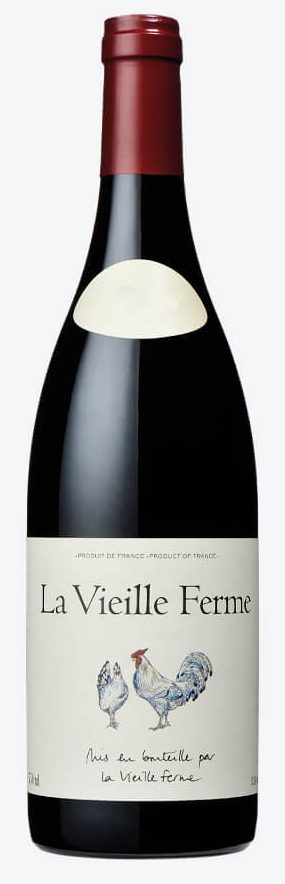
Wine of the week: La Vieille Ferme Rouge 2019

La Vieille Ferme Rouge 2019
La Vieille Ferme Rouge 2019/$6-$12

The 2019 version of the red version of France’s La Vieille Ferme is about more than nostalgia

Long before I started writing about wine, I bought wine. And Rich Liebman sold me a lot of that, at the old Greenville Avenue Goody Goody in Dallas. There was South Africa’s KWV (which, if nothing else, was cheap). There were the 1.5-liter bottles of Fetzer chardonnay and merlot, which passed for high-end drinking at my house.

And there was La Vieille Ferme.

In those days, La Vieille was rough, tart, and often unripe – in other words, what most of us thought French wine should taste like. Rich loved the red, which never did much for me, though I sometimes bought the white (and I don’t remember his store carrying the rose).

So this Birthday Week wine of the week is for Rich, a long-time supporter of the blog. That’s because the La Vieille Ferme Rouge 2019 ($10, purchased, 13%) is nothing like what it was in the old days. This vintage of the red blend is the best I’ve tasted in years. It’s still a little rough and tannic, but in a good way, so that you’ll know the minute you taste it that no one at the winery intended for it to be smoooth. Look for black fruit that is not especially tart or green, and a more than decent “this doesn’t taste like cheap wine” finish.

Will it end up in the Hall of Fame in January? Maybe. It’s that much improved. Regardless, though, I’ll always think of buying wine from Rich when I drink it. Which isn’t a bad legacy for a wine, either.

Imported by Vineyard Brands

Expensive wine 149: Vina Maquis Viola 2014

vina maquis viola
Vina Maquis Viola 2014/$49-$52

This Chilean carmenere blend is a stunning addition to the roster of the world’s great wines

One of these wines was impressive enough. Now, we have a second Chilean carmenere blend that left me, well, almost beyond words.

The Vina Maquis Viola 2014 ($50, sample, 13.5%) is a step up from the aformentioned Maquis Lien, which is impressive enough given how accomplished the Lien was. What’s even more impressive is that the Viola is a great wine, one that can stand with any of the world’s more famous and more pricey great wines. So yes, Napa cabernet sauvignon and red Bordeaux.

Or, as I wrote in my notes: “Damn.”

This is a layered and structured – almost subtle – carmenere blend, which isn’t easy to do. Carmenere’s story is here; it’s enough for our purposes to know that the grape makes rough, tannic, and bell pepper-ish wine without any trouble at all. So that this wine is this sophisticated speaks volumes about the quality of the grapes and the care taken with them.

Look for black berry fruit, spices and green herbs (and not bell pepper), and tremendously well-done tannins. The 15 percent cabernet franc in the blend adds structure and helps make the finish — well, finish longer and in a more interesting way.

Highly recommended; a holiday wine for anyone who wants to try a high-end red and doesn’t have preconceived notions about what those wines should taste like.

Imported by Global Vineyard Importers

Winebits 715: Lawsuit, expensive wine, direct shipping

lawsuitThis week’s wine news: Two of the world’s biggest booze companies are in yet another lawsuit. Plus, $128,000 might have bought you a bottle of wine and Nevada restricts direct shipping

• Bring on the attorneys: How do you know when a business isn’t growing enough? When the word’s biggest companies start suing each other. That’s the case with Anheuser-Busch InBev, the world’s biggest brewer, which has filed a second lawsuit against rival Constellation Brands over Modelo beer. The drinksbusiness website reports that Busch is suing Constellation – which we know here as the home of Mondavi wines – as part of its long-standing dispute over who actually owns the name and rights to the Corona and Modelo beer brands. I won’t even pretend I can explain what’s going on; it’s one of those disputes that will cost each side millions in an attempt to stop the other from taking away tiny percentages of market share. Ain’t consolidation grand?

• Yes, expensive: If you had HK$1,000,000 (about US$128,000), you might have been able to buy a 15-liter bottle of Chateau Mouton Rothschild 2000 at an auction in Hong Kong last week. It’s not enough that the 2000 was anointed the vintage of the century by Robert Parker and the Mouton is supposed to an exceptional wine. To quote: “The commemorative bottle alone is a collector’s item. … the glass was adorned with an ‘Augsburg Ram.’ paying tribute to a chased silver-gilt drinking vessel created around 1590 by Jakob Schenauer, a German master goldsmith.” Which, of course, means no one will ever drink it.

• Nevada says no: Nevada, once one of the most liberal states for direct shipping, has changed its mind. Breweries, distilleries, and retailers can no longer ship directly to consumers in Nevada. The change seems to be part of the growing backlash against more open shipping regulations brought on by the pandemic. The new law is so restrictive that it’s illegal for a retailer in one part of the state to ship to a customer in another (though local delivery is still legal).

Expensive wine 148: Marichal Tannat Grand Reserve “A” 2018

Marichal Tannat Grand Reserve "A" 2018
Marichal Tannat Grand Reserve “A” 2018/$53-$60

The Marichal Grand Reserve “A” takes tannat to a place where many of us thought it couldn’t go

Tannat is a red grape that causes almost as much controversy as pinotage – and we know how much controversy pinotage causes.

That’s because tannat can be difficult to work with, what with inky juice, thick skin, and very high tannins. I’ve had some that were so astringent that it was all I could do to taste them, let alone swallow. One Dallas wine bar used to sell this kind of tannat because it was so undrinkable – “try this and see how how much of a man you are!”

Having said that, some tannats from Uruguay are well-regarded. Which, mostly, is why I opened the Marichal Tannat Grand Reserve “A” 2018 ($53, sample, 14%). The grape has found a home in the South American country, far from its native France.

And I’m glad I did. The Marichal is a stunning wine. The tannins and intensity are under control, so that it’s much rounder and richer than I expected. In fact, the tannins are tucked firmly in the back, complementing the wine but not getting in the way. Yet the Marichal still shows the grape’s character – plum fruit, with maybe a smidge of dark berries; some smoke and earth, though not necessarily obvious; and a long, almost chalky finish.

In this, it tastes much like a fine red Bordeaux. Which given the grape’s pedigree, isn’t surprising. The only catch here? The wine’s price. Yes, it’s delicious, but that’s a lot of money to pay for something most of us haven’t heard of. Still, if you do, you’ll be more than pleased.

Imported by Global Wine Imports