Category:Wine trends

Why there’s so much old rose on store shelves

two bottles of rose wine on store shelf
Yes, 2017. How yummy will that be?

Even rose – once the darling of the wine business – is facing a glut

The picture accompanying this post pretty much says it all – even rose, the one wine that has kept selling throughout wine’s troubles over the past couple of years, isn’t any more.

That’s a high-end Provencal rose, $25 or so, that I saw at a Dallas retailer the other day. That it is the 2017 vintage is an embarrassment, because it should have been returned to the wholesaler or just dumped. Yes, it’s a high-end wine, but rose, even $25 ones, aren’t made to last that long.

More importantly, that there are bottles of a high-end French rose from 2017 for sale speaks to how much wine is still sitting in warehouses and wineries, unable to be sold. I’ve talked to a number of marketers and producers this summer, and they’ve all said the same thing: “We’ve still got lots of 2021 rose to sell, so we’re delaying the release of the 2022.”

Just how bad is it?

• Jimmy’s, Dallas’ leading Italian wine shop, still hasn’t gotten the 2022 Scaia rose. And Jimmy’s was selling 2020 rose from a major Italian producer that had been marked down to move. I won’t name the producer because it makes terrific cheap wine and has been on the blog many times. And, because of the glut, they’re selling old, faded rose.

• I got a sample of a top $12 Spanish pink, but didn’t notice the vintage until after I had tasted it. It wasn’t the 2022, but the 2021. That’s almost unheard of, sending a previous vintage sample for something like rose. But the producer had to, since the 2022 won’t be released in the U.S. until next month given how much 2021 remains.

• One top-notch U.S. rose producer told me they’re still selling the 2021 – and there is lots and lots of the 2021 for sale, especially in supermarkets. The 2022 was finally released, about three months later than usual.

How did this happen, even allowing for the slump in U.S. wine demand? Several reasons, starting with price. Most of these wines cost a couple of dollars more than they did before the pandemic. And, as the blog’s official wine numbers analyst told me not that long ago, that has hurt sales. People who buy $10 wine are more price sensitive than those who buy $25 wine, so they’re more likely to pass on a $10 wine that costs $12 or a $12 wine that costs $14.

Second, what rose is selling is French. One wine marketer told me the wine business has done such a good job of teaching people to buy only French rose that consumers are ignoring quality Spanish, Italian and U.S. pinks.

Finally, a word of wisdom to all those retailers who have raised prices because they could, and are trying to sell supermarket plonk for $14. Good luck.

Photo: Churro, the blog’s associate editor

TV wine ads: Taco Bell — yes, Taco Bell — succeeds where wine hasn’t

A mass market fast food ad makes me want tacos at 2 a.m.

When the Wine Curmudgeon was a young newspaper reporter, I ate entirely too much fast food at 2 a.m. — White Castle, since I lived in Chicago, and Taco Bell, for its 49-cent tacos.

I haven’t had either in years (or much else in the way of fast food, actually). So why did I want Taco Bell again after watching this commercial? Because it’s that effective.

Or, as the blog’s official wine marketer explained it to me: “That was expertly done, showing multiple generations together, having fun dining, and all to a song that resonates with the younger than 60 generations. Plus the hip use of ‘Polaroids’ in the images. No voice over – the images carried the message. Heavily processed images saturated with colors and filters. Short and sweet. If only the Big 5 wineries would analyze this and run with its concepts.”

Which, of course, they won’t. Instead, we get stuff like this.

Because, wine.

Video: Taco Bell via YouTube

More about TV wine ads:
• TV wine ads: Did Bolla get it right 41 years ago?
• TV wine ads: I’m Brosnan, Pierce Brosnan
• TV wine ads: Mateus rose — “it’s like a trip to Portugal”

Wine shipping, because it’s just that aggravating, part II

fedex truck
“Dream on if you think I’m delivering your wine because I’m supposed to.”

One man’s travails with FedEx, because don’t we all?

This is the second of two parts looking at wine shipping and how far we still have to go until we can legally buy what we want. Today, Part II: How a FedEx driver gummed up the system. Part I: Bring on the lawsuits

I got a phone call last month from a friend who subscribes to the blog. He said he had a story for me about yet another wine delivery screw up, a common topic on the blog. He also said I wouldn’t believe it.

And, despite all that I have written about this and all the foolishness I have seen, I didn’t.

My friend said I could use his name, but discretion being the better part of valor, let’s call him Rich from Dallas. He had legally ordered wine from an out-of-state retailer and had it shipped to a FedEx office near his home, which is what FedEx says it prefers. Rich has done this many times and never had any trouble; the driver leaves the wine, Rich drives to the office, signs for the wine, and drives home.

But not this time.

The driver refused to leave the wine unless someone of legal age at the office signed for it. Stop for a moment and consider this: A FedEx employee wouldn’t deliver a package to a FedEx facility, staffed by other FedEx employees.

What the driver did do was to report this as a missed delivery, and the wine stayed on the truck for another couple of days in 100-degree heat as the farce played out. Rich, confused as to what was going on, couldn’t figure out how he had missed a delivery at a FedEx office. Then, and perhaps even more astounding, the wine was returned to the retailer as undeliverable.

“I called the FedEx store and talked to the manager, and she said she had never had that happen before,” says Rich. “The driver is supposed to leave the package at the store, without a signature, if the package is direct from the original shipper. Which it was. It’s supposed to be company-wide policy.”

A FedEx spokesman told me yes, that’s the company policy, and that “I can tell you there have not been any changes to processes or procedures related to alcohol shipments.” So the driver should have left the package.

I also checked with the Texas Alcoholic Beverage Commission, on the off chance the agency had launched some kind of enforcement action and the driver had been told to get a signature at the office — or else. But that wasn’t the case, either, said a spokesman: “There are no new requirements.”

So what happened? My best guess is that the driver had his own reasons, which we’ve seen documented on the blog often enough. It was hot and he was cranky, or he had been reprimanded for not getting a signature on previous deliveries. Or maybe a mistaken delivery to a minor? Which is why the driver wanted to see the ID of the FexEx employee signing for the package.

In the end, the retailer refunded Rich’s wine and the FedEx manager told him she would sign if this happens again. But it does seem like a lot of trouble to go to buy a couple of bottles of wine – legally – over the Internet.

Wine shipping, because it’s just that aggravating, part I

Man delivering wine
“Not in my state, you don’t.”

You know all that wine that you thought you bought legally? Maybe you didn’t

This is the first of two parts looking at wine shipping and how far we still have to go until we can legally buy what we want. Today, Part I: Bring on the lawsuits. Part II: One man’s travails with FedEx

The Tennessee attorney general has a message for those of us who buy wine over the Internet in his state – don’t. You’re breaking the law.

Last month, the attorney general, Jonathan Skrmetti, sued six out-of-state retailers who were selling alcohol to Tennessee residents. The lawsuit claimed the retailers weren’t licensed in the state, didn’t pay state taxes, and had ignored cease and desist orders.

The point here is not whether Internet wine sales are good or bad (regular readers know how I feel about that) or that every retailer who does out-of-state sales is breaking the law. Rather, it’s that enough do, and that this is the third state attorney general in the past couple of years to sue retailers for illegally selling alcohol in their jurisdictions.

And there are likely to be more, as pressure builds from our friends in the wholesale business to clamp down on Internet sales. Because, of course, these kinds of Internet sales mostly skip the three-tier system and the wholesalers don’t get their constitutionally protected piece of the pie.

How can that be, you ask? Why would anyone sell wine illegally?

Because, of course, they can – until they’re caught.

The blog’s official booze lawyer explained this to me years ago. It’s called “the title scam.” Look on the site where you buy wine, and in the small print you’ll probably find something like this: “Title to all alcoholic beverages purchased on this Site pass to you in the State of California when the goods are picked up by the common carrier.”

This is a legal fiction, in which your purchase of the wine from an out-of-state retailer is supposedly no different from buying it at the corner shop. That’s the “passes to you” bit; you take ownership of the wine from the Internet retailer as if the retailer was down the street.

Which, as the blog’s attorney said with a loud laugh, is very fictitious.

In fact, it has no legal standing at all, which is also true for other bits in website fine print, like “the customer is solely responsible for the shipment of alcohol and must abide by their local and state laws.” That’s why retailers can be sued – as has happened in Tennessee as well as Michigan and Ohio.

So far, no one has gone after the customers, though that has happened. Several years ago, Texas cracked down on illegal interstate shipments, focusing on the purchasers. I had to wend my way through the state liquor cop bureaucracy to ensure that I wouldn’t be arrested for getting samples.

So who knows what comes next?

Photo: “Man delivering online alcohol delivery order” by The Bag N Box Man LTD is licensed under CC BY 2.0.

Wine history lesson 10: Prohibition — the law no one paid attention to

Prohibition agents dumping wine from barrels
This picture, from the Chicago Daily News in 1921, shows Prohibition agents dumping wine.

Yes, it was the law, but many – perhaps most – just ignored it

Consider this quote, from a leading Prohibitionist:

“I earnestly hoped with a host of advocates of temperance, that it would be generally supported by public opinion. … This has not been the result, but rather … that a vast army of lawbreakers has been recruited and financed on a colossal scale; that many of our best citizens, piqued at what they regarded as an infringement of their private rights, have openly and unabashedly disregarded the Eighteenth Amendment. …”

That was industrialist John D. Rockefeller, of the Rockefellers, writing in 1932 about the failure of the noble experiment. I ran across his quote while I was writing a freelance piece about Prohibition and the birth of the three-tier system (I’ll link to the story when it appears; probably next month).

One of the things that surprised me the most was just how many people ignored Prohibition. Yes, I had an idea that it was unpopular, but it was the law of the land. Certainly, most people outside of a couple of mob-dominated cities like Chicago and New York obeyed the law.

Apparently not.

It turns out that much of the country never wanted to stop drinking. So large portions of the U.S., and particularly urban areas, just ignored the law. The famous statistic is that there were as many as 100,000 speakeasies, or illegal bars, in New York City during Prohibition, but the number almost doesn’t matter. The point is that local police departments, whether in Chicago or New York – as well as in Los Angeles, San Francisco, New Orleans, Kansas City, Philadelphia, and Washington, D.C., to name just a few — didn’t enforce Prohibition and never really intended to.

Yes, they were paid off, as were the politicians who ran the cities and controlled the cops. But there’s a sense, looking at the literature and talking to the experts, that drinking would have happened anyway. In one of my other careers, I wrote extensively about American hard-boiled fiction, which had its roots in Prohibition. And, as Raymond Chandler wrote in “The Big Sleep:” “All through Prohibition Eddie Mars’ place was a night club and they had two uniformed [cops] in the lobby every night to see that the guests didn’t bring their own liquor instead of buying it from the house.”

So the next time the neo-Prohibtionists start to wax poetic about the old days, show them the Rockefeller quote. He was there; if he saw the need for repeal, then we needed repeal. And would need it again today.

Photo: Chicago History Museum

Why it’s so hard to figure out what wine prices are doing

blindfolded woman
“Let’s help the WC figure out where wine prices are going.”

That’s because there are prices, and then there are prices

A friend had asked me about the price of a wine he liked, so I started searching. It was the Riva Ranch chardonnay from Wente, a fine California producer, and one my friend has bought for years. But what I found surprised even me:

• $16.99 at my Kroger, marked down from $23.99.

• $19.99 at Wine.com, marked down from $22.

• $15.76 at Spec’s, the biggest independent retailer in Texas.

• $19.99 at Monticello, a small retailer near my house.

• $14.99 at Total Wine, but $13.49 if bought as part of Total’s Pick Six program.

In other words, four different prices at five retailers, as well as two sale prices and one store discount price. And, if that’s not confusing enough, a nearby Whole Foods charges $15.99 for Wente’s entry-level chardonnay, a step down from the Riva Ranch.

Is it any wonder it’s so difficult to figure out what wine prices are doing?

Traditionally, prices were based on the retailer’s cost and how much margin he or she wanted to take, as well as local liquor taxes and what the competition charged. That’s why bigger retailers usually offered better prices. But that Wine.com charges the same price as Monticello speaks to how pricing has changed.

These days, it’s as much about the retailer’s customer mix as anything. Wine.com knows its audience doesn’t mind paying more, so it charges more. I’ve seen this with many of its wines; the La Vieille Ferme rose costs $10.99 at Wine.com, compared to $6 to $8 elsewhere in Dallas.

All of which leaves me in a bind when I undertake one of my regular price parsing efforts. Given all this confusion, how can I tell which way prices are going?

With great difficulty. Hence, I shop at lots and lots of places, including supermarkets, and keep a database of my purchases, as well as extensive notes about prices at places where I didn’t buy the wine. That way, I can tell how much I paid for the same wine at different times, as well as what it cost at other retailers. So yes, I know that Domaine Tariquet cost me $10 at Central Market, a specialty grocer, in 2016.

The other thing to keep in mind? How many past vintages are being sold. Again, traditionally, a retailer sold off one vintage and moved on to the next. But given wine’s demand problems, there are a lot of past vintages on shelves and in warehouses. Again, using Wine.com, six of the first 10 roses listed under most popular for Texas are past vintages (and three are marked down). And that’s most popular. So imagine how much wine is stacking up somewhere that isn’t popular that needs to be sold.

All of which is why I’m cautiously optimistic that wine prices will head lower as the year progresses. The biggest retailers seem to be heading that way, and those past vintages show little sign of going away.

But, given how pricing works, that’s no guarantee.

Photo: “PAS4679” by the underlord is licensed under CC BY 2.0

Yes, “birthday sex” wine

The dog Churro on a blanket
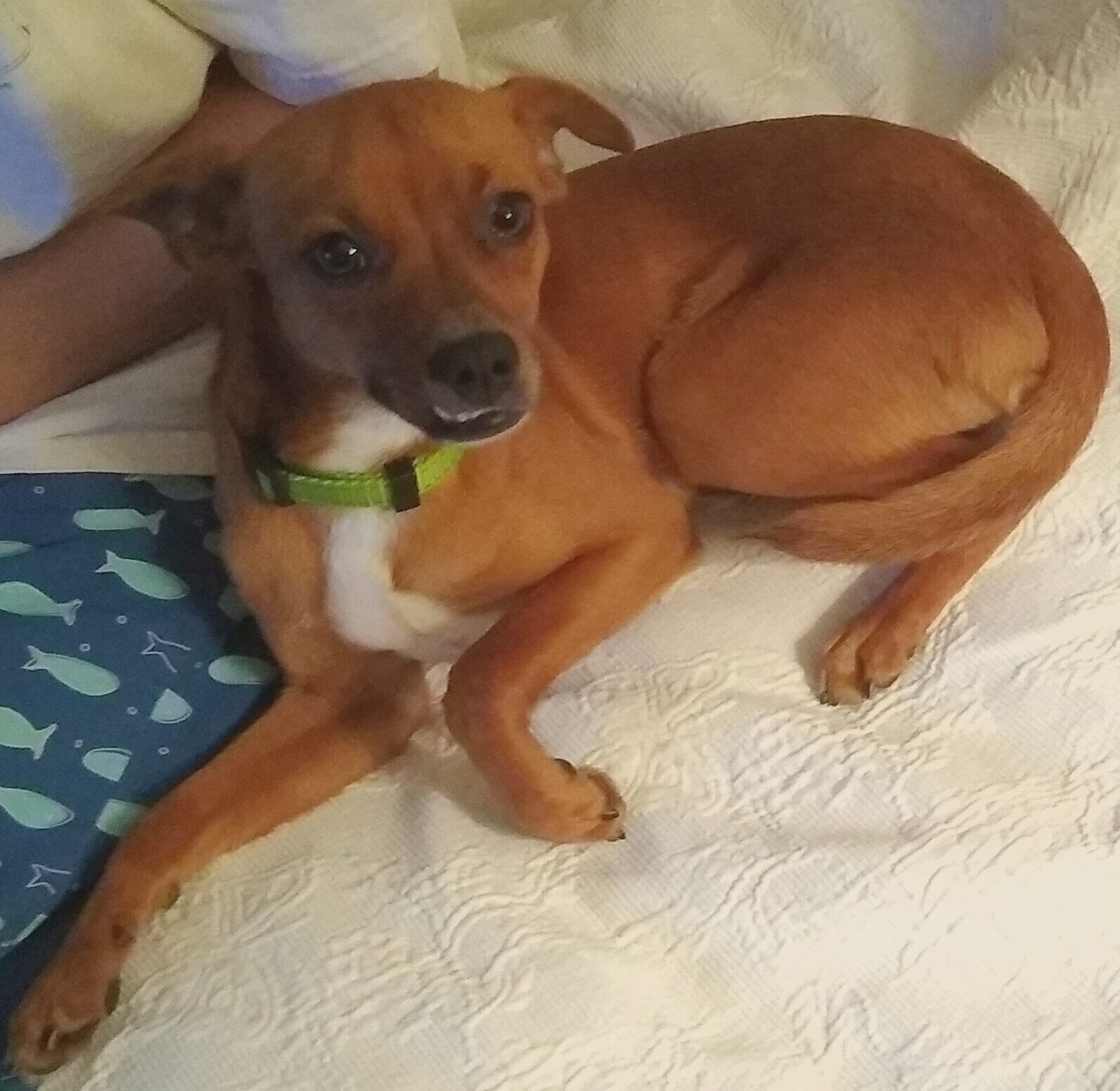
Churro, the blog’s associate editor, agrees about Birthday Sex wine. But he says I’m too hard on the “Barbie” movie.

Is it any wonder I continue to worry about the future of the wine business?

The Wine Curmudgeon is old enough to remember when the easiest way to “score with a chick” was to get her drunk. So you can imagine my consternation when an alert reader sent this story to me.

Sigh. What’s next, leisure suits and Nehru jackets?

To wit: “R&B artist Jeremih has teamed up with Napa Valley winemaker Russell Bevan and music company LiveOne to launch a Chardonnay brand named Birthday Sex.”

The wine, says the story, “is one of the new brands that LiveOne is launching under LiveOne Brands, a new division featuring celebrity-backed and branded products.” And to think that I stopped updating the dumbest celebrity and pop culture wines post because I thought the fad had passed.

Sigh.

It’s also worth noting that the album of the week on the LiveOne website is the “Barbie” soundtrack. Somewhere, Joey Ramone is spinning and spinning and spinning some more.

The WC has nothing against sex, birthdays, or any combination thereof. But doesn’t the wine business have enough problems without something like this? We may disagree whether the wine’s name and concept is offensive (though I think it’s offensive in oh so many ways), but one thing we can agree on: It’s dumb.

Birthday Sex wine and its tagline — “We believe that a little teasing can improve the experience” — sounds like something from a National Lampoon parody, circa 1973. Which means we’ve circled back to leisure suits and Nehru jackets. And who wants to go through that again?

Finally, perhaps the most annoying thing about all of this: Nowhere, not in the story in the link or on the Birthday Sex wine website, does it say how much the damned thing costs. That should tell us everything we need to know about the wine, yes?