Category:Wine of the week

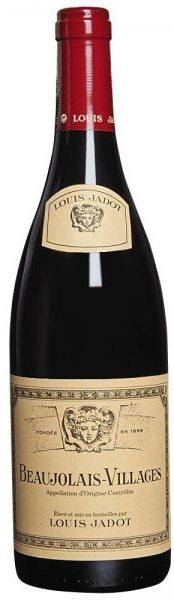
Wine of the week: Louis Jadot Beaujolais-Villages 2020

Louis Jadot Beaujolais-Villages
Louis Jadot Beaujolais-Villages 2020/$8-$13

Grab it while you can — this vintage of the Jadot tastes like a $10 Beaujolais should

Cellar Tracker, the blog’s unofficial wine inventory app, allows users to click and quickly sort through tasting notes for previous vintages. So, after I entered the notes for this wine, I clicked through the previous four. Two vintages were were worth drinking; two weren’t.

So how can a simple wine from one of the biggest brands in the world, which has been making this wine for more than 40 years, be so inconsistent?

Your guess is as good as mine. What I do know is that the 2020 Jadot ($11, purchased, 13.5%) tastes exactly like a $10 Beaujolais should taste. That means fruity and fresh (berries, not too grapey) and with minimal tannins and acidity. So yes, simple, but not stupid — and just the thing to keep around the house when you feel like a glass of wine or can’t be bothered to deconstruct a wine pairing for dinner.

This is in marked contrast to two of the previous vintages I checked. One was dirty and unripe, while the other tasted like a roasted banana.

Go figure.

Imported by Kobrand
 

Wine of the week: Marques de Riscal Verdejo 2019

Marqués de Riscal Verdejo
Marques de Riscal Verdejo 2019/$8-$12

This is quality Spanish white wine that can be found at many supermarkets

Welcome to part three of the WC’s supermarket wine search, where we find cheap wine that tastes like it came from a winery and not from the marketing department. This time – Spain’s Marques de Riscal Verdejo 2019 ($10, purchased, 13%).

One of the difficulties with finding this kind of wine among the plonk on the Supermarket Great Wall of Wine is that many grocers don’t bother to group wine by country any more. Hence, all of the sauvignon blancs are crammed together, as are the red blends, the chardonnay, and so on and so forth.

Which leaves wine made with less common grapes, like the Riscal, stuffed in a corner and difficult to find. But many supermarket verdejos are well worth kneeling to find on the bottom shelf. It’s a white grape that isn’t too tart and can be quite herbal; not bad for $10, yes?

And, in this case, the Riscal is exactly what a cheap wine should be — well made (clean and crisp); varietally correct (just enough lemon fruit); and simple but not stupid. It’s not a life-changing wine; rather it’s the kind of wine to drink on Tuesday night with a big salad when it’s 100 degrees out. That it’s Spanish and not Californian speaks to how screwed up the wine business is. California used to excel in just this kind of wine.

Imported by Shaw Ross


Wine of the week: Falesco Vitiano Rosso 2018

One of the world’s all-time great cheap wines returns, which means there’s dancing in the streets

Do you need to know anything else? Falesco Vitiano 2018 ($12, purchased, 14%). Imported by Trinchero Family Estates

GIF via Tenor

Wine of the week: Ken Forrester Chenin Blanc Petit 2019

Ken Forrester petit chenin blanc
Ken Forrester  Chenin Blanc Petit 2019/$9-$16

Nothing illustrates how screwed up availability is better than this South African white, one of the all-time great cheap wines

The Ken Forrester Chenin Blanc Petit is one of the world’s all-time great cheap wines – a white that’s consistent and varietally correct every vintage. Plus, it’s a long-time Wine Curmudgeon favorite, on a par with this wine and this one.

So why has it only been a wine of the week three times in 15 years?

Our old pal availability, of course.

I can only guess why this wine is so difficult to find; it’s chenin blanc, for one thing, and South African for another. Neither are the kind of wine stocked in the mega-stores that are coming to dominate wine retailing.

Which is a damned shame. The Forrester Petit Chenin Blanc ($12, purchased, 13%) is the quintessential everyday white wine – low in alcohol, fruity but not sweet, food friendly, and delicious. It’s the kind of wine, as I’ve noted on the blog before, that even people who don’t like wine should like. The 2019 is rich and full, with an almost chardonnay mouth feel. There is lemony chenin fruit, plus a bit of stoniness.

Highly recommended, and a candidate for the 2023 Hall of Fame.

One note: This is an older vintage, and there seems to be more of it available than the two more recent vintages. Because, of course, availability.

Imported by USA Wine Imports

Wine of the week: Carro Tinto 2019

carro tinto
Carro Tinto 2019/$10-$17

The Spanish red, with its unlikely combination of monastrell, merlot, and syrah, is just the thing for a cold winter’s night

What do you call a Spanish red wine made with the unlikely combination of monastrell, syrah, and merlot? A wine of the week, of course.

The Carro Tinto 2019 ($12, purchased, 14.5%) comes from the top-notch importer Ole & Obrigado, whose passion for quality and affordable wines matches my own. As such, Patrick Mata and company know exactly where to look for value, and this wine shows how the process works. Monastrell is a particularly Spanish grape; syrah and merlot are not, so the combination offers something that might not interest others.

In this, the whole is greater than the sum of the parts. You can taste the merlot — lots of blueberry fruit – but this is not a fruit bomb or a a Parkerized wine made to get a score. Instead, it has a hint of spice and smoke, some length in the finish, as well as some of monastrell’s herbal quality.

And though the alcohol is high, it doesn’t get in the way. Call it Spanish oomph – something I don’t exactly know how to explain, but that fits here.

This is food wine – stick a piece of beef in the slow cooker, let it make the house smell terrific, and drink it with the wine.

Imported by Ole & Obrigado

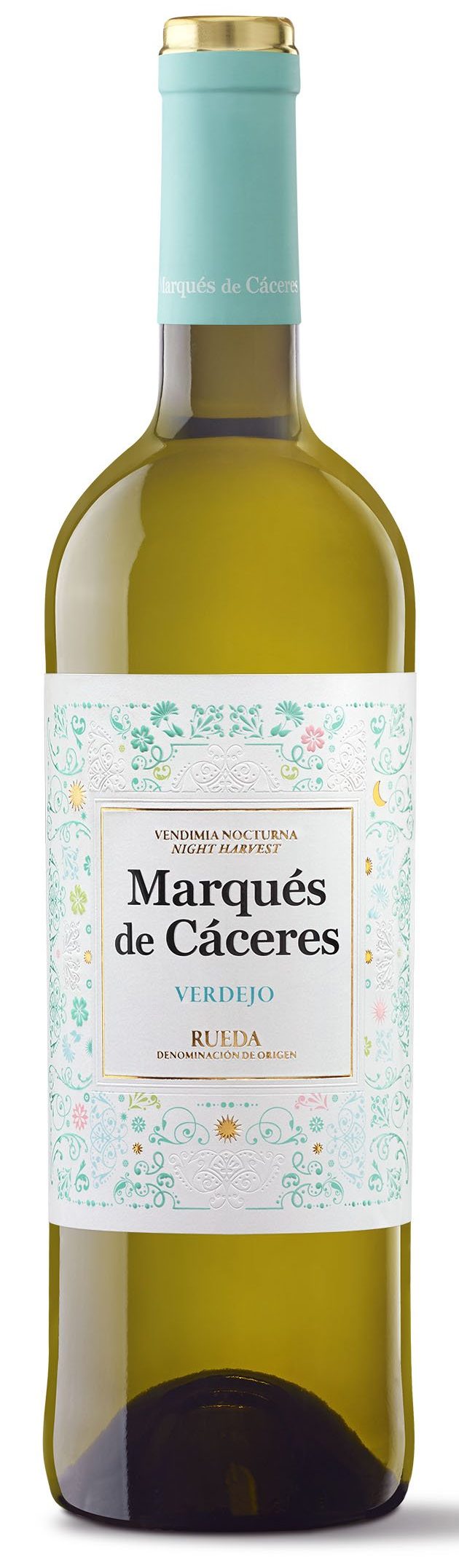
Wine of the week: Marques de Caceres Verdejo 2020

Marqués de Cáceres Verdejo
Marques de Caceres Verdejo 2020/$7-$13

This Spanish white offers value and availability for just $8

In the WC’s eternal quest for widely available wines that don’t taste fakely sweet or designed to be focus-group “smoooth,” supermarket Spanish wines often turn up.

In this case, the Marques de Caceres Verdejo 2020 ($8, purchased, 13.5%).

The Caceres is made by a large Spanish producer that sells its wines in 120 countries, so it won’t be confused with a boutique producer. But this white, made with the verdejo grape (a long-time Wine Curmudgeon favorite), is remarkably consistent – something that multi-national producers should excel at but don’t always manage to do.

The 2019 vintage was exceptional, and if the 2020 isn’t quite as amazing, it’s still a fine wine – and especially for $8. This is not a delicate wine, full of finesse; instead, look for fresh, tart lemon fruit, a touch of softness in the middle to balance the lemon, and a not quite stony finish.

In other words, the kind of wine to buy – a couple of bottles, perhaps – the next time you’re at the supermarket to keep on hand when you feel like a glass of white wine.

Imported by Vineyard Brands

Wine of the week: Farnese Fantini Montepulciano d’Abruzzo 2018

Farnese Fantini Montepulciano d'Abruzzo
Farnese Fantini Montepulciano d’Abruzzo 2018/$7-$19

This Italian red is an especially good example of the value and quality available from the Montepulciano d’Abruzzo region

Chianti and its sangiovese-based compadres get most of the attention, and the Wine Curmudgeon has noted how often these wines offer quality and value.

But the red wines from Montepulciano d’Abruzzo in central Italy are, in their own way, just as compelling for those of us who want quality cheap wine and are willing to look past reputation. The Farnese Fantini is just such a wine.

This vintage of the Fantini ($10, purchased, 13.5%) isn’t quite as refined as past ones, or as some others from d’Abruzzo. Call it little more rustic, which is wine geek for old-fashioned but in a good way. But there is quality cherry fruit (not thin, not too ripe), just like so many other fine, cheap Italian red wines, and it’s balanced by a tartness common again to so many of these wines.

This is an older vintage, but the Fantini is wonderfully consistent across vintages — newer ones may not be quite as rustic, but should still be enjoyable. Serve this with almost any braised meat as winter winds down.

Imported by Empson USA