



Category:Wine news

Winebits 783: Veritas, wine bottles, natural wine

Jeff Siegel talking
The WC’s semi-claim to fame: I was almost a talking head in a documentary about American wine, filmed at Veritas.

This week’s wine news: Veritas, perhaps Dallas’s best wine bar, is closing. Plus, re-using old wine bottles and how not to report a natural wine story

• So long, Veritas: One of the best chapters in Dallas’ wine history will end when the Veritas wine bar closes. The Wine Curmudgeon will miss Veritas; it almost always offered interesting wine at fair prices, and owners Brooks and Bradley Anderson have been great friends of the blog (as well as terrific traffic ticket attorneys). I’ve interviewed winemakers at Veritas, including a Mondavi; held cheap wine book signings and shot a TV news segment about cheap wine there; and once filmed some talking head bits for a documentary about American wine that never aired (the pandemic cut off the funding). And I even talked myself out of a high-paying consulting gig during a business meeting with a couple of tech types who wanted to start a wine website. It was at that meeting that Ellie Cohn, Veritas’ long-tenured and much admired manager, took me to task for fussing about an orange rose. “Open your mind, Jeff,” she said. Ellie was correct about that, but it didn’t change the fact that the rose was oxidized and not particularly rose-like.

• Old wine bottles: How to use old wine bottles for something other than candle holders? The Lifehacker website suggests using them for watering plants — “wine bottles and watering cans are incredibly similar.” The point is that wine bottles and watering cans each have long necks, which are ideal for plants. I must admit: I’ve used empty wine bottles for a variety of things over the years, but never thought of this. One more point: Screwcap wine bottles work best, which doesn’t surprise me at all.

• Statistics? The Winestream Media – and to a lesser extent, lifestyle writers – always go gaga over natural wines, and almost every story makes some claim that natural wine is immensely popular. In fact, natural wine isn’t popular; the best statistics show it has maybe a couple of points of sales in the U.S., and those are concentrated among the wine elite. Nevertheless, this piece from something called Civic Science boasts “Millennials Are Raising Their Glasses to Natural Wines” without actually offering any evidence. In fact, the few numbers in the story say just the opposite – how about that 53 percent of the those surveyed say they’ve never heard of natural wine? This is not to say that natural wine hasn’t been influential or that it hasn’t generated much discussion. Rather, it’s to point out, as I always do, that if you’re going to write something, do the reporting first.

2023 $10 Wine Hall of Fame

two people drinking rose
“Oh no. … a shortage of rose in the Hall of Fame?”

Nine wines entered the Hall of Fame this year, while only three dropped out

Three years of supply chain woes and all that meant for availability finally caught up with the Hall of Fame. The 2023 version welcomes nine wines, while only three dropped out — a surprisingly refreshing development. But I had to leave six more wines out of the hall because (and even though I bought all of them), they weren’t generally available.

In other words, the shipping shortage finally snafu-ed quality cheap wine. And, what’s worse, I’m afraid we may see that happen again next year despite the various improvements we’ve noted on the blog in the world’s supply chain. I guess a quality $12 rose isn’t as important as computer chips.

Also depressing: For the second year in a row, I didn’t have many wines to choose from – maybe 18, down from a couple of dozen last year. Typically, I get three or four dozen in a good year.

Still, there is plenty to celebrate in 2023 – and, for the second year in a row, more to celebrate than I thought there would be. The inductees include:

• Five whites: the Badenhorst Curator white blend from South Africa; three French whites – the Chesnaie Muscadet, the Reine Juliette Picpoul, and the Bernier chardonnay; and California’s Rickshaw sauvignon blanc, a wine I really like.

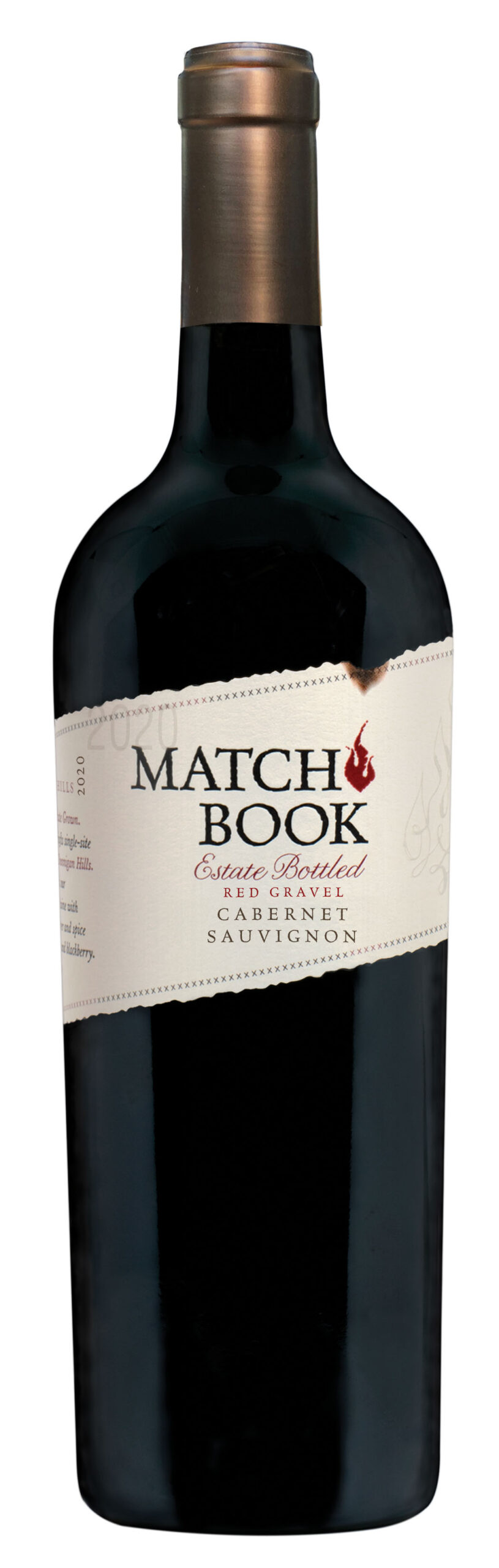
• Two reds: the blog’s Turner Cheap Wine of the Year, California’s Matchbook cabernet sauvignon, and the Argentine Santa Julia Mountain Red.

• Two roses: The French Le Petit Gueissard and the Chilean Tres Palacios. Rose was especially hard hit by availability. I tasted at least a dozen that were worthy of consideration, but most were sold in only a handful of stores.

The dropouts: Two whites – an Austrian gruner veltliner from Wachau Loess and a French blend, La Graviere Blanc, both of which vanished from store shelves, and Portugal’s Faisao rose vinho verde, whose quality was nowhere near what it had been.

The complete 2023 $10 Wine Hall of Fame is here – only paid subscribers have access. The Hall’s selection process and eligibility rules are here. Know that I considered wines that cost as much as $13 or $14 to take into account price creep and regional pricing differences.

Photo: “Boyfriend and girlfriend drinking wine. Pink colors for Valentine day” by shixart1985 is licensed under CC BY 2.0.

2023 Turner Cheap Wine of the Year: Matchbook Cabernet Sauvignon 2020

Matchbook Caberrnet saucignon bottle
Matchbook Cabernet Sauvignon 2020/$10-$18

California’s Matchbook Cabernet Sauvignon 2020 is the blog’s sixth annual Turner Cheap Wine of the Year

Cabernet sauvignon is supposed to be California’s glory, yet finding one that tastes like cabernet at an affordable price — or even almost affordable — is practically impossible. This wine, which used to be more than adequate, is now so sweet that I had to spit it out when I tasted it the other day. And the most popular California cabernet on Wine-Searcher costs $89.

So thank you, Matchbook. Thank you, thank you, and thank you, for showing that it’s still possible to make quality California cabernet that we can afford to buy. How well done is this wine? The Cajun Oenophile, who dislikes fakey California red wine even more than I do (and also misses the Big Guy) agrees with this choice. That speaks volumes.

What makes the Matchbook ($12, purchased, 13.9%) so terrific? It’s an honest wine, with dark berry fruit that opens up and becomes less brambly, but doesn’t approach smooth. Plus, the tannins are actually part of the wine, the oak doesn’t get in the way, and there’s maybe even a bit of cedar — just like the $100 cabernets. And availability is quite good, too.

Check out the award’s shortlist here, which also explains why the award has been named in honor of the late Mack Turner, the Big Guy. Selection criteria are here; I considered wines that cost as much as $15 to take into account price creep and regional pricing differences.

More Turner Cheap Wine of the Year:
• 2022 Turner Cheap Wine of the Year: Scaia Rosato 2020
• 2021 Turner Cheap Wine of the Year: MAN Chenin Blanc 2019
• 2020 Turner Cheap Wine of the Year: Le Coeur de la Reine Gamay 2017

Winebits 782: Restaurant wine prices, consumer sentiment, glass recycling

restaurant wine list
“Yes, the wine costs more than the rest of your dinner. It’s restaurant wine, isn’t it?”

This week’s wine news: Why restaurant wine is so expensive, plus consumers want lower prices and Spanish producer aims at recycling

• More sad news: How does $17 a glass for restaurant wine sound? No, I’m not making it up. Rather, Esther Mobley reports in the San Francisco Chronicle, that’s the normal price of a glass of wine at Bay Area restaurants. She lists the increases at several of the region’s “affordable” wine list spots, and some are even more than $17. The reasons are familiar (inflation, high business costs), but the results show once again that wine in restaurants is increasingly reserved for aging Baby Boomers, tech moguls, and the rest of the one percent. That’s hardly good news for wine, is it?

• Lower prices: Kroger says “saving money is top of mind for shoppers.” There are some caveats to the results of this survey; it was conducted by a Kroger subsidiary, for one thing. But tits finding are still worth nothing: 56 percent said saving money is their top financial resolution for 2023, while almost tow-thirds are scaling back on non-essentials and just short of one-half are purchasing fewer items. This is more bad news for wine, which is not an essential and which can be given up to save money by people want to save money.

• Bottle recycling: Spanish producer Familia Torres is trying to set up a European system for reusing wine bottles. Torres has long emphasized green policies, and it even has an executive with the title “director of climate change.” The story says the company wants to establish bottle standards to work across the European Union – size and glass ingredients, for example, so that a German bottle could be recycled in France, a Spanish bottle could be recycled in Italy, and so forth. Are you listening to this, Big Wine?

Winebits 781: The Happy New Year 2023 edition

glass wine bottle and cork
Is the glass bottle dripping its last?

This week’s wine news: The ultimate take on glass bottles, plus more wine and Brexit woes and a new cold-hardy wine grape

• Take that, glass bottles! Paul Tincknell, the blog’s official wine marketer, offers the final nails to the glass bottle’s coffin, complete with charts and graphs: “Glass loses out on almost every metric of climate change.” Paul and I have discussed this many times; this piece encapsulates everything we’ve talked about and then some. Yes, the piece is long and gets a bit technical, but the next time someone throws “romance of the bottle” at you, you’ll know enough from reading this to tell them to stop being so quaint. A 40-pound case of wine isn’t very romantic.

• Call it Brexit-tier: The Wine Curmudgeon, who would not wish the three-tier system on anyone, can only sigh when he reads of the continuing Brexit-induced woes for Britain’s wine business. The latest (via drinksbusiness.com), from a leading importer: “I have experienced first-hand just how terrible things have become post-Brexit. … Just from a bureaucracy point of view, the paperwork … I’ve imported and exported wine for 30 years for leading wine companies. We just see delays, we see paperwork problems, everything has become so much more complicated. … It really is a joke.” Where have we heard that description before?

• Cold hardy: Call it clarion, the newest cold-hardy grape from the viticulturists at the University of Minnesota. Its parentage includes seyval blanc, pinot noir and the cold-hardy frontenac, producing a dry white wine with “fruity attributes of citrus, pear, melon, apricot and chamomile. Some evaluators describe the wine as being similar to southern hemisphere sauvignon blanc.” Plus, it’s resistant to the dreaded downy mildew, a serious problem in the Eastern U.S. due to humid and rainy summers.

Cheap Wine of the Year 2023 shortlist

Mack Turner at restaurant
This one is for you, Big Guy.

One of these six wines will be named the Mack Turner 2023 Cheap Wine of the Year

The blog’s Cheap Wine of the Year has been named the Mack Turner Cheap Wine of the Year, to honor one of the WC’s dearest friends and a terrific cheap wine advocate. Mack (known on the blog as The Big Guy) died at the end of the year, and he will be much missed.

Mack and I have been drinking wine together for some 20 years, and I will miss not only his friendship and terrific palate, but that he would sometimes bring wine to the house that he knew I wouldn’t like. Because, of course, he wanted to see the WC launch into a rant. And then he would smile – maybe even giggle a little – and we’d drink some more.

The award’s selection process and eligibility rules are here. I considered wines that cost as much as $15 to take into account price creep and regional pricing differences.

The six wines on the Turner shortlist include three from California, which speaks to the change that could be coming in California as smart producers understand the need to make affordable wine. The list is in no particular order.

The winner will be announced Jan. 12:

• Matchbook Cabernet Sauvingon 2020 ($12, purchased, 13.9%): This tastes like California cabernet and not a red wine called cabernet that has been blended with who knows what to take out all the cabernet characteristics. Hence, dark berry fruit that opens up and becomes less brambly, fine-grained tannins, and a bit of cedar.

• McManis Petite Sirah 2020 ($10, purchased, 13.5%): McManis has long demonstrated that it’s still possible to make quality, cheap, and varietally correct wine in California. This is oh so petite sirah — plummy and rich with sweet dark fruit, dark and interesting, but also fresh and vibrant.

• Domaine Reine Juliette Picpoul 2020 ($14, purchased, 13%): French picpoul doesn’t get much better than this — clean, well-made, and yes, lip smacking. Lots and lots of tart lemon.

• Rickshaw Sauvignon Blanc 202 ($15, purchased, 13.5%): Easily the best affordable California sauvignon blanc I’ve tasted in years. And yes, it tastes like California sauvignon blanc — no shortcuts to lower quality and increase margins, no dumbing down to bamboozle the consumer, and no sweetness.

• Moulin de Gassac Guilhem 2020 ($12, purchased, 12%): This French white blend is always Hall of Fame quality; the 2021 is even better, with some spice, some stone fruit, and a bit of tartness. Plus, it’s made with terret.

• Santa Julia Reserva Mountain Blend 2019 ($12, purchased, 13.9%): The highest praise for this Argentine red? It made the shortlist even though I don’t like this style of wine. It’s that well made – with lovely, rich, and ripe dark fruit.

More Cheap Wine of the Year:
• 2022 Cheap Wine of the Year: Scaia Rosato 2020
• 2021 Cheap Wine of the Year: MAN Chenin Blanc 2019
• 2020 Cheap Wine of the Year: Le Coeur de la Reine Gamay 2017


Winebits 780: Three-tier, cheap wine, “overrated” wine

Prohibition enforcement officers
“Just try shipping wine. … and see what happens.”

This week’s wine news: “No, you can’t ship wine,” plus one of Britain’s leading wine critics sort of endorses cheap wine and sommeliers take aim at overrated wine

• Not on Texas’ watch: The WC was in a Fed Ex store in Dallas last week when one of the employees was telling a phone customer, “No, we can’t ship wine.” Needless to say, I had to ask about the call. Yes, said the employee, we get a lot of those, and yes, they don’t understand why they can’t ship wine. And, he said, I know we can’t because it’s illegal in some way, but I don’t understand why it’s illegal. It’s just grape juice. Take that, WSWA! The WC laughed, offered a two-sentence description of the three-tier system, and told him to be on the lookout for holiday packages marked as olive oil. Which – and don’t ask me how I know this – has long been used to confuse Fed Ex and UPS when shipping wine.

• “Cheap wine”? Andrew Jefford, one of the leading critics in the United Kingdom, writes: “Drinking cheap wine need not be a cheap experience.” So another victory for the WC? Not exactly. The piece is more focused on Britain’s economy (or lack of same), what with near-record inflation, shortages, strikes, and all the rest. Jefford seems to be writing for the demographic that voted for Brexit and caused much of the pain, letting them know can survive without red Bordeaux and Champagne this holiday season. For one thing, he offers wine from the Loire in France as a cheap alternative, and the Loire hasn’t been affordable in the U.S. for years. And he doesn’t mention Spain, which is still cheap in the U.K.

• Overrated? VinePair asks sommeliers to name the most overrated wines in the world, and the results were surprising – or not surprising, given the wine business. “Champagne” is listed twice, as is Burgundy and Napa cabernet sauvignon – none of which the restaurant wine business would exist without. I was a bit surprised to see orange wine on the list, since sommeliers have played a key role in whatever popularity orange wine has. (Which isn’t much.)