



Category:White wine

Wine of the week: Domaine de Pouy 2018

domaine de pouyDomaine de Pouy, from Gascony in France, is ideal for late summer and 100-degree temperatures – crisp and refreshing

Gascon white wines are some of the best values in the wine world. But they’ve fallen by the wayside since the end of the recession. There have been importer and distributor problems, as well as price increases for no other reason than all wine should cost more.

But the wines from Gascony in France’s southwest, made with grapes most of us don’t know, may be back in favor. Could it be that those same importers and distributors are looking for cheap, well-made wines to sell during the pandemic? For one thing, I’ve seen several reviews for Gascon whites I don’t know, always a good sign. For another, I was able to buy the Domaine de Pouy after a long absence from this market.

The Domaine de Pouy 2018 ($11, purchased, 10.5%) shows what these wines can be – enjoyable, food friendly, and refreshing. It’s certainly not the best of the bunch, but one of the great strengths of Gascon wine is that even the ordinary ones are better than ordinary. The de Pouy is crisp, with a lemonish, sauvignon blanc character, but it’s not as tart or as sharp as sauvignon blanc. As with all Gascon wines, there’s a bit of white grape flavor that offers balance.

Best yet, the low alcohol makes it ideal for late summer, when the Dallas temperature gets to 100 and stays there. Chill this, and enjoy it with a Friday night takeout dinner.

Imported by Fruit of the Vines

Wine of the week: Vinho verde 2020

vinho verde 2020Vinho verde 2020: Producers are taking the fizzy, sort of sweet Portuguese wine more seriously than ever, and we’re the big winners

This year, for vinho verde 2020, I’m writing something I never thought I would write about vinho verde — several of these wines are candidates for the 2021 $10 Hall of Fame. That’s because the fizzy, sort of sweet Portuguese wine has always been about cheap, and quality often seemed like an accident. This year, though, the four wines I tasted were cheap and well made.

Vinho verde is a Portuguese white wine with a greenish tint that rarely costs more than $8 (the blog’s vinho verde primer is here). It has a slightly sweet lemon lime flavor, low alcohol, and a little fizz — all of which makes it ideal for hot weather. Most of the cheapest wines, like Santola, Famega, Casal Garcia, and Gazela, are made by the same couple of companies but sold under different names to different retailers.

Check out these vinho verde 2020 suggestions:

• Broadbent Vinho Verde NV ($9, purchased, 9%): This is the vinho that sets the standard, and the current bottling doesn’t disappoint. Not quite as sweet as last year, with more of a tart, green apple fruitiness.  Imported by Broadbent Selections

• Gazela Vinho Verde NV ($8, purchased, 9%): Solid, typical vinho — fizzy lime with a bit of sweetness. If all ordinary vinho was made this well, the wine world would be cheaper and more enjoyable. Imported by Evaton

• Aveleda Vinho Verde Fonte 2019 ($10, purchased, 9.5%): Perhaps the best vinho verde I’ve ever tasted — so much more than the usual. There’s a bit of structure, the tartness is fresh and limey, the fizz is legit, and the sweetness is buried in the back. Highly recommended. Imported by Aveleda, Inc.

• Faisao Vinho Verde NV ($5/1-liter bottle, purchased, 10%): Is this the best vinho verde on the list? Nope. Is it the best value? Probably, since it’s quality wine (sour lime fruit, fizzy, with just enough of an idea of sweetness) that comes in a liter bottle. Keep well chilled. Imported by Winesellers Ltd.

For more about vinho verde:
• Vinho verde review 2019
• Vinho verde review 2018
• Vinho verde review 2017

Barefoot wine review 2020: Rose and riesling

Barefoot wine review 2019

• Barefoot wine (again): Value or just cheap?
• Barefoot wine: Why it’s so popular

Barefoot wine review 2020: Get ready for a dose of sweetness with the rose and riesling — but at least the front labels let you know what’s coming

Call it knowing your audience: The Barefoot wine review 2020 bottles don’t pretend to be something they aren’t. Looking for a dry, tart, Provencal- style rose? Then don’t buy the Barefoot rose, which says “Delightfully sweet” on the front label. Want a nuanced, oily, off-dry riesling? Then don’t buy the Barefoot riesling, which says “Refreshingly sweet” on the front label.

Which, frankly, is a much welcome development in this, the blog’s 13th Barefoot review. Few things are more annoying than Big Wine — or smaller wine, for that matter — claiming a wine is dry when it tastes like sweet tea. Barefoot, the best-selling wine brand in the country (depending on whose statistics you believe) has the courage of its convictions. And good for it.

The Barefoot wine review 2020 features the non-vintage rose ($5, purchased, 10%) and the non-vintage riesling ($5, purchased, 8%). Both are California appellation. The sweetness is obvious, and especially in the riesling. In the rose, it tries to hide in the background — and then you swallow, and it hits you.

The rose tastes of strawberry fruit, and has lots of acidity in an attempt to balance the sweetness. Which doesn’t exactly work — just sort of offers a counterpoint. The riesling smells like oranges (perhaps some muscat in the blend?) and then the candied sweetness hits and covers up what little fruit flavor (apricot?) was there. A smidgen of acidity is around somewhere, sort of like the cool of a summer morning before it gets hot, and then the  like the coolishness, the wine gets sweet again.

In this, these wines deliver what the front labels promise, though the back labels are marketing hurly burly — “smooth, crisp finish” and “hint of jasmine and honey.” But if you want a $5 sweet wine that is cheap and sweet, then the rose and the riesling fill the bill.

Blog associate editor Churro contributed to this post

More Barefoot wine reviews:
• Barefoot wine review 2019
• Barefoot wine review 2018
• Barefoot wine review 2017

Wine of the week: Biscaye Baie Sauvignon Blanc 2019

biscaye baieThe Biscaye Baie is a Gascon white wine that delivers more than $10 worth of value
The wine business has not been kind to France’s Gascon whites, one of the finest values in the world. There have been importer and distributor problems, the 25 percent Trump wine tariff, and the usual sort of availability foolishness. So imagine the Wine Curmudgeon’s euphoria when he found the Biscaye Baie.

Cheap wine gods be praised.

The Biscaye Baie ($10, purchased, 11.5%) is pretty much everything it should be. If it’s not quite up to the quality of the legendary Domaine Tariquet, it tastes like Gascon wine – fresh, white grapey, maybe a little tart, and, as the producer’s tasting note says, “a wine to be enjoyed at all times. …” Or, as my tasting note says, “Not quite Hall of Fame, but still worth buying in quantity.”

The Biscaye Baie isn’t a blend, like so many other Gascon whites – just sauvignon blanc. Hence, it tastes a little more sauvignon blanc-ish than those blended with colombard, since the latter grape tends to take the edge of the sauvignon blanc’s citrusness. But don’t confuse this with a New Zealand sauvignon blanc; it’s not a grapefruit-style wine, but has a sort of vague lemony something or other.

Practically highly recommended, if I did that sort of thing. But I have bought it in quantity, and keep three or four bottles chilled. We’ve reached the 100-degree season in Dallas, and that’s just one more reason to reach for this wine.

Imported by Aquitane Wine Company

Mini-reviews 135: Bonny Doon, Bota Box, Wente, Cameron Hughes

Bonny DoonReviews of wines that don’t need their own post, but are worth noting for one reason or another. Look for it on the fourth Friday of each month; four California wines for July.

• Bonny Doon Vin Gris de Cigare 2019 ($15, sample, 13.5%): Something is missing in this rose, released after Randall Grahm sold his legendary company in January. It’s not bad – some watermelon fruit, some minerality – but it’s not the top-notch rose of vintages past.

• Bota Box Sauvignon Blanc 2019 ($18/3-liter box, sample, 12.5%): Decent California white that works out to less than $5 a bottle, though it’s nothing more than that. Not sweet but not especially tart, either, with a bit of green herb and citrus. There’s an odd grapiness in the back that makes me think it was blended with something like French colombard to stretch the sauvingon blanc.

• Wente Cabernet Sauvignon Southern Hills 2018 ($12, purchased, 13.5%): Ordinary (if well-made) supermarket-style California red from a quality producer. Not much in the way of tannins or acidity — just lots of very ripe black fruit, lots of oak, and that sort of smooth finish that focus groups prefer.

• Cameron Hughes Lot 676 2016 ($14, sample, 14.3%): Heavy, rich, hot, and full California white blend, made in the classic “Trying to get 94 points” style. There’s some fruit (stone, lime?), and a surprising amount of oak. Given its age, the style, and that Hughes buys what other producers can’t move, this may well be a pricey bottle that was sitting in a tank somewhere, unloved and unsold.

Photo: “Summer Hols Day 3 – Rain and Wine” by Ian Livesey is licensed under CC PDM 1.0

A tale of two Italian wines: Boffa Carlo Arneis and Mionetto Prosecco di Valdobbiadene Superiore di Cartizze 

Italian wineThe former is a lovely $15 wine, while the latter is a $40 Prosecco. How can Italy be going in two completely different directions?
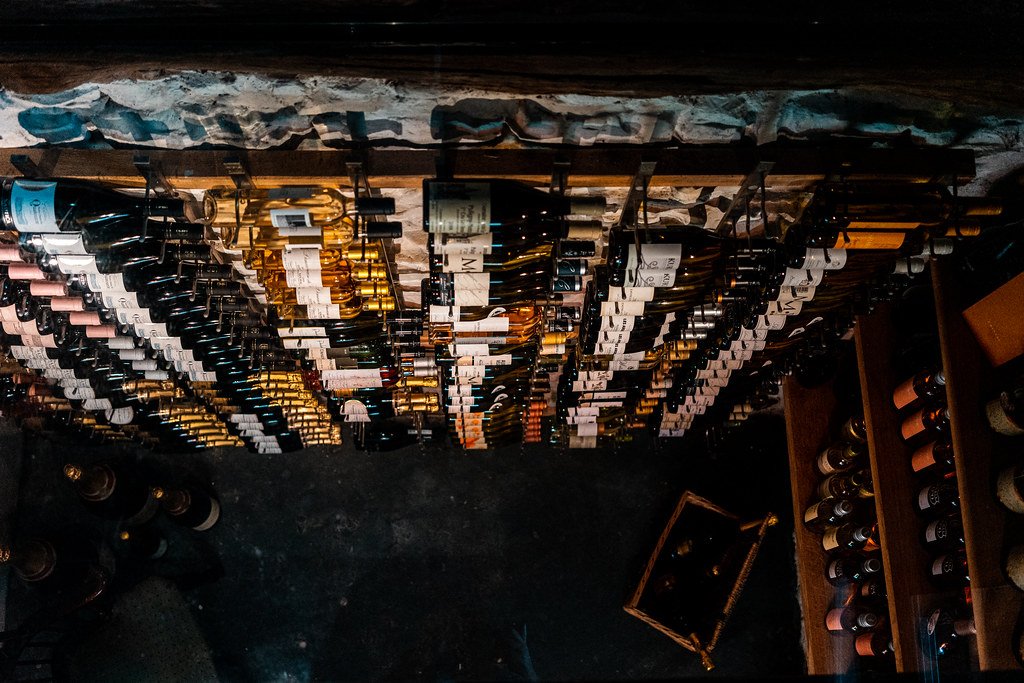
Premiumization has done horrible things to the wine business, so horrible that they go beyond cutting sales and alienating younger consumers. Thanks to premiumization, wine is becoming something not to drink and enjoy, but for collecting and for showing off. Case in point: these two Italian wines.

The Boffa Carlo Arneis 2017 ($15, purchased, 13.5%) is a beautiful, almost elegant white wine, with subtle lemon and stone fruit, nuanced minerality, and a whole that is greater than the sum of its parts. It’s a tremendous value for arneis, a lesser-known grape where prices can top out at $30.

The Mionetto is a $40 Prosecco (sample, 11%). It’s a well-made and enjoyable sparkling wine, but in the end, it’s a $40 Prosecco, not all that different or better than the legions of $12 Proseccos cluttering supermarket aisles.

So how did Italy, a country with thousands of years of winemaking chops, go from the more or less traditional approach that gave us the arneis to one based on premiumization and a $40 Prosecco? Because decisions are increasingly made based on marketing and category management, and not on wine.

My guess? Someone, somewhere decided Mionetto needed a product to compete with Champagne and high-end California sparkling wine. So we got a $40 Prosecco – not because the world was demanding a $40 Prosecco or because the grapes were of such high quality that they would produce a wine worth $40. We got it so an Italian wine would be able to sit on a store shelf next to Champagne and grab some of that market share. Because if a wine costs $40, it must be worth it, right?

The same thing has happened with rose, where the marketplace has been flooded with $25 pink wine that is almost no different from $10 and $12 rose in anything other than retail price. The reason? Because people who buy $25 red and white wines have been taught that cheap wine is crap, so why not sell them $10 rose that costs $25? A rose producer I know can launch into a rant on that subject even more quickly than I can, which should tell you how widespread the practice is.

Finally, remember that this post is not about price, but about value, and that expensive wines can offer, value, too. That’s the Wine Curmudgeon’s mantra. The wine business will have you believe that value is no different from price, because that’s how it makes its money. Because, $40 Prosecco. But we know better, don’t we?

Photo: “Hanging Bottles” by garryknight is licensed under CC BY 2.0

Wine of the week: Matua Sauvignon Blanc 2019

matua sauvignon blancThe Matua sauvignon blanc is Big Wine at its best — varietally correct, cheap, and delicious

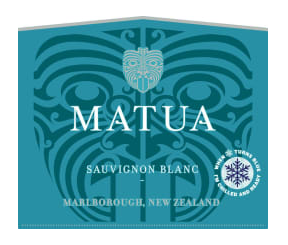
A blog reader told me that his Costco was selling the Matua sauvingon blanc for $7 a bottle. I told him to buy cases and cases.

That’s because the Matua sauvingon blanc ($10, purchased, 13.5%) is Big Wine at its best — a combination of best practices in mass market winemaking, economies of scale, and supply chain efficiencies. The result, from Treasury Wine Estates, is a wine that is simple but not stupid and tastes like it is supposed to — and which may be the best Big Wine product on the market.

The 2019 vintage, which seems to be current, is even a little more well done than past efforts — and those made the $10 Hall of Fame. Look for not too much New Zealand grapefruit, a noticeable if slight tropical middle, and a long, clean finish.

Highly recommended and a wine destined for the 2021 Hall of Fame, as well as the short list for the 2021 Cheap Wine of the Year.

Imported by TWE Wine Estates