Category:White wine

Expensive wine 137: St. Urbans-Hof Riesling Kabinett 2016

St. Urbans-Hof Riesling KabinettSweet? Yes, but the St. Urbans-Hof Riesling Kabinett shows how gorgeous sweet wine can be

The Wine Curmudgeon’s campaign to increase U.S. riesling consumption continues with the St. Urbans-Hof Riesling Kabinett. This vintage isn’t necessarily a typical approach to German riesling, given how cold and wet the year was, but it is a delicious one.

The St. Urbans-Hof Riesling Kabinett 2016 ($25, sample, 8.5%) is sweet – make no mistake about it. But this is not sweet as we understand it from focus group supermarket wine, but sweetness that comes from beautiful candied lemon fruit and a fresh, honeyed sweetness. In this, the acidity and minerality balance the sweetness. The former, though not necessarily noticeable, keeps the wine from being syrupy, while the latter cleans the palate at the finish. Who am I to argue with the Wine Spectator’s assessment: “Elegant.”

Highly recommended. Drink now, but would probably improve with a couple of more years in in the bottle. It also needs food – and how often do you hear that about sweet wine? The St. Urbans-Hof Riesling Kabinett would pair more effectively with something like sausage and braised cabbage than anything spicy.

Imported by HB Wine Merchants

Wine of the week: Sokol Blosser Evolution Lucky No. 9 2019

EvolutionHow about a white wine from an Oregon producer in a 1.5 liter box that works out to $9 a bottle?

We’ve heard lots about the west coast grape glut, but we haven’t seen it translate into much in the way of lower wine prices. Sokol Blosser’s Evolution white blend, the Lucky No. 9, might be the first of many.

That’s because it’s unusual to see a wine like the Evolution, a white blend that usually carries an Oregon appellation, in a box at this price. The 1.5-liter box works out to $9 a bottle; typically, the wine costs around $15. So what’s the catch here? It may well be all those grapes. The box has an American appellation, which means 75 percent of the grapes didn’t come from any one one state. My guess, from tasting it, is that it’s Oregon fruit with more than a fair share from California’s Central Valley, the center of the grape glut.

Which is is not say the Evolution white blend ($18/1.5 liter box, sample, 12%) isn’t worth drinking. Because it is – the kind of wine to chill, keep in the fridge, and drink when you feel like a glass. Look for the slightest hint of sweetness, and not nearly as much as I thought there would be. Plus, it’s hidden among a variety of white fruit flavors – some tropical, maybe some peach, and a pleasing sort of apricot stone bitterness.

This is a fine value, and I’m not the only one who think so. Give Sokol Blosser credit – it saw all those grapes sitting there waiting for someone to be creative and figured out how to make a quality cheap wine and still turn a profit. What a unique concept for the post-modern wine business.

Wine and food pairings 10: Lemon rosemary roasted turkey thighs

turkey thighsThe Wine Curmudgeon pairs wine with some of his favorite recipes in this occasional feature. This edition: three wines with lemon rosemary roasted turkey thighs.
The Wine Curmudgeon’s favorite holiday is Thanksgiving, which is uniquely American. How lucky are we, in the history of the world, to have what we have? And, given my appreciation of the holiday, I’ve never been able to figure out why we save turkey for one dinner a year.

Turkey is also uniquely American. In this, it’s plentiful, almost always inexpensive, is versatile, and is delicious when it’s cooked properly (something my mom mastered early on, which helped me appreciate turkey that much more). This recipe fits all the categories — it costs maybe $6 for three or four four adult-sized servings; the lemon and rosemary complement the thighs’ gaminess; and it’s a welcome respite from chicken.

Click here to download or print a PDF of the recipe. This is lemony and herbal white wine food (even rose, if it’s not too fruity). These three suggestions will get you started:

• Granbazan Etiqueta Verde Albarino 2018 ($20, purchased, 13.5%): This Spanish white is more nuanced than the albarino I prefer, the ones that are savory, practically salty, and taste almost lemony tart. The lemon fruit is still there, but it’s softer and much less savory. Having said that, it’s very well done and a fair price given the tariff and how much so many ordinary albarinos cost. Imported by Europvin

• CVNE Monopole 2019 ($11, purchased, 13%): Spain’s Rioja region is best known for red wine, but quality has improved considerably for its whites, often made with viura. The Monopole is a wine to buy, drink, buy again, and drink again. This vintage isn’t as quite as tart and lemony, but remains a  tremendous value. Imported by Arano LLC

•  Kruger-Rumpf Pinot Noir Rosé Dry 2019 ($13, purchased, 12%): This German rose may be difficult to find, but it’s intriguing: A bit of fizz, bright berry fruit, and refreshing acidity. Imported by Skurnik Wines

Blog associate editor Churro contributed to this post

Full disclosure: Once again, I forgot to take a picture of the dish; the one accompanying the post is from the Life Jolie blog. Imagine a little rosemary and lemon garnishing the turkey thighs.

More about wine and food pairings:
• Wine and food pairings 9: Mushroom ragu
• Wine and food pairings 8: Not quite ramen soup
• Wine and food pairings 7: Classic roast chicken

Slider photo: “Rome Elite Event: wine, food and nice people” by Yelp.com is licensed under CC BY-NC-ND 2.0

Wine review: Dr. Loosen Red Slate Riesling 2017

Dr. Loosen red slateGermany’s Dr. Loosen Red Slate riesling is one more reason why Americans should drink more riesling
Riesling is not that big a deal in the United States. There are many reasons for this, including the idea that real wine drinkers don’t drink sweet wine. Anther, also important reason, is that we don’t see a lot of quality riesling in the U.S., and especially if we don’t live on the East Coast.

Which is where the Dr. Loosen Red Slate riesling ($15, purchased, 12.5%) comes in. I bought it not because I knew the wine, but because we don’t drink enough riesling in the U.S. What did I know? That Dr. Loosen is one of Germany’s leading producers, and that it understands riesling’s perception problems in this country – hence, the word “dry” on the front label.

And I was not disappointed. The Dr. Loosen Red Slate riesling was all I could have hoped for – bone dry, a little petrol aroma, some lime, some zippiness, and a very clean back end. It’s not complex or especially subtle, and riesling aficionados might be a little disappointed that there isn’t more to the wine.

But it’s simple in the best sense, in that it’s made for everyday drinking without pandering to focus groups. The only real problem is the price, which is as high as $18 in some markets. That’s a combination of a couple of things, I think: the tariff, which adds 25 percent to the cost, and the weak U.S. dollar. The euro is at a two-year high vs. the dollar, and that might tack on another 10 percent.

Still, this is highly recommended if you can buy it for less than $15. Even at more than that, it’s still a better quality wine than much else at that price.

Imported by Loosen Bros.

Wine of the week: Feudo Zirtari Sicilia Bianco 2018

Feudo Zirtari Sicilia BiancoThe Feudo Zirtari Sicilia Bianco is a $10 Sicilian white blend that reminds me why I like Sicilian wine
The pandemic has limited my ability to find terrific cheap Italian wine, since I don’t get to Jimmy’s, Dallas’ legendary Italian grocery, as often as I used to. Fortunately, I was able to find the Zirtari Sicilia Bianco white blend elsewhere; it has long been one of the world’s great cheap wine values.

And this vintage of the Feudo Zirtari Sicilia Bianco ($10, purchased, 13%) shows why that’s true. It’s made with a native Sicilian grape, insolia, and chardonnay, which leads to a whole greater than the sum of its parts. There’s some spice and a little green apple or pear fruit from the insolia, while the chardonnay fills up the background. This is kind of quality cheap wine I used to see a lot on store shelves, but that has slowly vanished. Not sure if it’s just more importer and distributor problems, or someone somewhere decided we’d rather buy $15 bottles of European wine designed by a focus group instead of $10 wine that tastes like it came from Europe.

Highly recommended. Chill this and drink it on its own (the spice is always a revelation) or pair it with grilled shrimp or chicken with lots of herbs.

Imported by SM USA

Labor Day wine 2020

labor day wine 2020
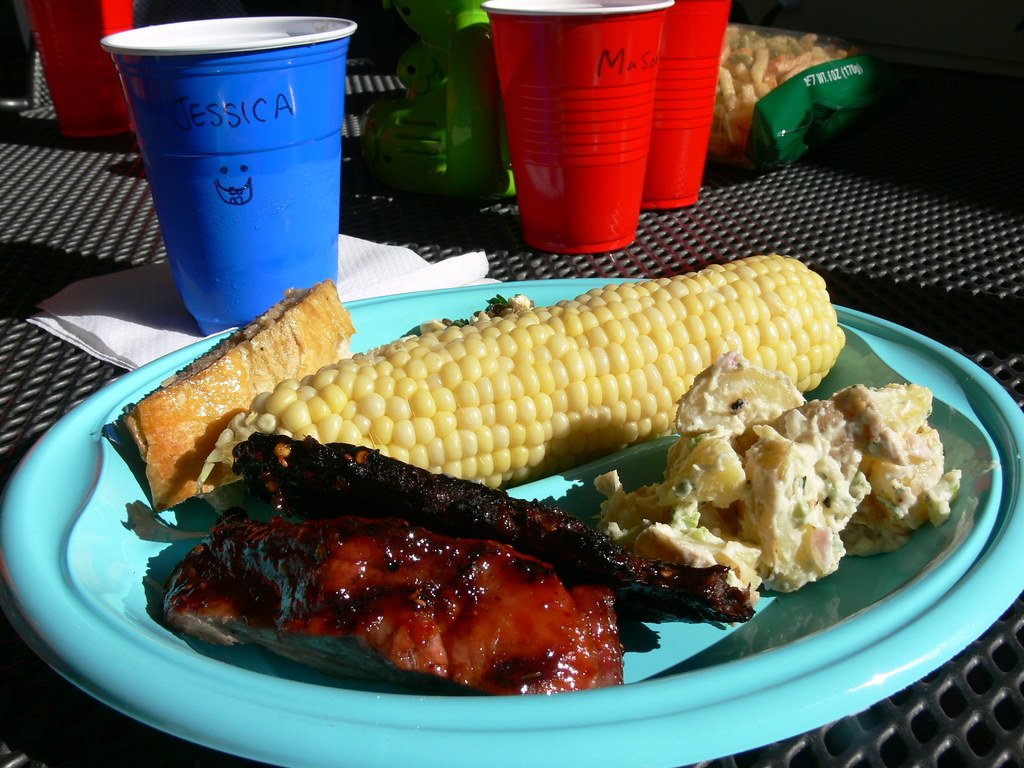
The WC has just the wines to pair with this plate of barbecue.

Labor Day wine 2020 — these wines will make your holiday that much more enjoyable

Labor Day marks the traditional end of summer, even a pandemic summer. Hence these wines, which should cheer up even a socially-distanced holiday barbecue. Churro, the blog’s associate editor, and the Wine Curmudgeon will be doing that, if Dallas’ 100-degree temperatures allow for it.

These four bottles will get you started for Labor Day wine 2020; don’t overlook the blog’s porch wine guidelines:

• McManis Cabernet Sauvignon 2018 ($12, purchased, 13.5%): This Lodi cabernet is balanced, and neither too ripe or too hot. Its New World fruit (black currants, even) and tannins actually hold everything together. This a big red wine that needs food, and especially red meat from the grill. Highly recommended.

• Anne Amie Cuvée A Amrita 2018  ($18, purchased, 12.8%): This goofy Oregon white blend with a bit of fizz is always enjoyable, and it’s even available closer to $15 if you look hard enough. The fizz is spot on, better than some Proseccos, and the sweetness is buried in the back behind some lemon and red apple fruit. Highly recommended, and just the thing for porch sipping.

• Schafer-Frohlich Dry Rose 2018 ($14, sample, 12.5%): This nifty German rose features ripe-ish strawberry fruit, a surprisingly full mouth feel, and a fresh — and not sweet — finish. Imported by Winesellers, Ltd.

• Fantini Trebbiano d’Abruzzo 2018 ($9, purchased, 12%):  This Italian white, a long time WC favorite, is as it always is — tart and lemony. Chill it, drink it, and don’t worry about what other people think about what you drink. Imported by Empson USA

Photo: “Linner!” by jessicafm is licensed under CC BY-ND 2.0

For more about Labor Day wine:
• Labor Day wine 2019
• Labor Day wine 2018
• Labor Day wine 2017

Mini-reviews 136: Four wines you probably don’t want to buy

wine reviews
“Damn, look at that review. The WC is in a foul mood this month.”

Reviews of wines that don’t need their own post, but are worth noting for one reason or another. Look for it on the fourth Friday of each month. This month, four wines you probably don’t want to buy, because I’m really, really tired of tasting wine that is so unpleasant.

• Saint Cosme Côtes du Rhone 2019 ($15, purchased, 14.5%): This French red used to be one of the most dependable $15 wines in the world. But this vintage is almost undrinkable. That’s not because it’s flawed or off, but because it has been manipulated to taste like it comes from a second-tier producer in Paso Robles – lots of sweet fruit, not a lick of tannins, and this hideous violet candy smell. Imported by Winebow

• Avalon Pinot Noir 2018 ($11, sample, 13.5%): This California red is the sort of pinot noir people buy because it’s cheap, and not especially because it tastes like anything. Think grape juice flavored with fake vanilla oak, in case any of you enjoy that.

• Jadix Picpoul de Pinet 2019 ($12, purchased, 14.5%): This French white is heavy and hot, and not anything picpoul should be – fruity, tart, and refreshing. Why would anyone make picpoul like this? Imported by Aquitane Wine Company

• Montalto Pinot Grigio 2019 ($12, sample, 12%): Someone, somewhere thought that Americans would love sweet Italian pinot grigio, and this is the result. My question? Why — isn’t there enough dry pinot grigio in the world? Imported by Mack & Schuhle