Tag Archives: albarino

Wine of the week: Adega Marea Alta Do Zoe 2020

Do Zoe albarinol bottle
Do Zoe Albarino 2020/$10-$13

This Spanish albarino does everything albarino should, and at a more than fair price

Spain delivers value on almost everything but albarino, a white wine made in the Rias Baixas region in the country’s northwest. Most quality albarinos cost upwards of $20, and I’ve tasted some at $15 and $18 that lack many of the qualities that make albarino so distinctive and so enjoyable.

So when I stumbled on the Do Zoe ($12, purchased, 12.5%), I knew something special was going on. It wasn’t overpriced. It tasted like albarino, and it hadn’t bee manipulated to make it more sauvignon blanc-like (a common occurrence around $15).

The Do Zoe is spot on albarino — savory, almost salty, with lemon fruit and a sort of mineral finish, as well as a sort of flowery aroma. It’s the kind of wine that reminds me why I appreciate the grape so much.

Why only $12? Probably because it’s blended – 90 percent albarino, plus four other little k known Spanish grapes that fill the wine out and give it a little more body.

Highly recommended, and a candidate for the Hall of Fame next year. Drink this on its own, as well as with grilled shrimp or similar sorts of grilled or fried seafood.

Imported by Monsieur Touton Selections

Mini-reviews 143: Citra, albarino, Lucky Rock, Chianti

“I need to get some of that albarino the WC likes.”

Reviews of wines that don’t need their own post, but are worth noting for one reason or another. Look for it on the fourth Friday of each month.

Citra Trebbiano d’Abruzzo 2019 ($10, sample, 12%): This Italian white is more tart, more stemmy, and cheaper tasting than the 2018, which seemed to signal a quality cheap wine worth buying regularly. This vintage, though, is closer to a $6. Disappointing. Imported by Winebow

Lagar de Cervera Albarino 2018 ($20, purchased, 12.5%): This is what albarino, a Spanish white, should taste like — some citrus, almost savory, clean, and fresh. It’s not simple, not over done, and speaks to so much that is wonderful about wine. I just don’t understand why it needs to cost $20. Imported by Favorite Brands

Lucky Rock Wine Co. Pinot Noir Country Cuvee 2019 ($22, sample, 14.3%): This California red is hot and sweet, firmly part of the pinot noir should taste like a cocktail movement and cost $20. For which, going by the critical raves for this wine, there is tremendous demand.

Coltibuono Chianti Classico RS 2018 ($12, sample, 13.5%): An old-fashioned and tart Italian red made with sangiovese. It reminds me of the house wine at a not very good spaghetti house. Imported by Dallas Terra

Photo: “veryserious wine drinker” by BRANDIlane is licensed under CC BY 2.0

Wine and food pairings 10: Lemon rosemary roasted turkey thighs

turkey thighsThe Wine Curmudgeon pairs wine with some of his favorite recipes in this occasional feature. This edition: three wines with lemon rosemary roasted turkey thighs.

The Wine Curmudgeon’s favorite holiday is Thanksgiving, which is uniquely American. How lucky are we, in the history of the world, to have what we have? And, given my appreciation of the holiday, I’ve never been able to figure out why we save turkey for one dinner a year.

Turkey is also uniquely American. In this, it’s plentiful, almost always inexpensive, is versatile, and is delicious when it’s cooked properly (something my mom mastered early on, which helped me appreciate turkey that much more). This recipe fits all the categories — it costs maybe $6 for three or four four adult-sized servings; the lemon and rosemary complement the thighs’ gaminess; and it’s a welcome respite from chicken.

Click here to download or print a PDF of the recipe. This is lemony and herbal white wine food (even rose, if it’s not too fruity). These three suggestions will get you started:

• Granbazan Etiqueta Verde Albarino 2018 ($20, purchased, 13.5%): This Spanish white is more nuanced than the albarino I prefer, the ones that are savory, practically salty, and taste almost lemony tart. The lemon fruit is still there, but it’s softer and much less savory. Having said that, it’s very well done and a fair price given the tariff and how much so many ordinary albarinos cost. Imported by Europvin

• CVNE Monopole 2019 ($11, purchased, 13%): Spain’s Rioja region is best known for red wine, but quality has improved considerably for its whites, often made with viura. The Monopole is a wine to buy, drink, buy again, and drink again. This vintage isn’t as quite as tart and lemony, but remains a  tremendous value. Imported by Arano LLC

•  Kruger-Rumpf Pinot Noir Rosé Dry 2019 ($13, purchased, 12%): This German rose may be difficult to find, but it’s intriguing: A bit of fizz, bright berry fruit, and refreshing acidity. Imported by Skurnik Wines

Blog associate editor Churro contributed to this post

Full disclosure: Once again, I forgot to take a picture of the dish; the one accompanying the post is from the Life Jolie blog. Imagine a little rosemary and lemon garnishing the turkey thighs.

More about wine and food pairings:
Wine and food pairings 9: Mushroom ragu
• Wine and food pairings 8: Not quite ramen soup
• Wine and food pairings 7: Classic roast chicken

Slider photo: “Rome Elite Event: wine, food and nice people” by Yelp.com is licensed under CC BY-NC-ND 2.0

Mini-reviews 126: White Burgundy, albarino, Estancia, petit verdot

white burgundyReviews of wines that don’t need their own post, but are worth noting for one reason or another. Look for it on the fourth Friday of each month.

Jean-Jacques Vincent Bourgogne Blanc 2017 ($20, purchased, 13%): This is the second time I bought this chardonnay from the Burgundy region of France, which shows that even those of us who do this for a living make mistakes. Bland, boring, and overpriced. Imported by Frederick Wildman & Sons

Raimat Saira Albarino 2016 ($10, purchased, 12.5%): This Spanish white is cheaply made, watery, and doesn’t much taste like albarino. It apparently exists for no other reason than to cost $10. Imported by Aveniu Brands

Estancia Sauvignon Blanc 2016 ($8, purchased, 13.5%): Estancia was once a dependable cheap wine producer. Now, it’s just another Big Wine brand. This California white is green and unripe and tastes very little like sauvignon blanc.

Cameron Hughes ‘Lot 638’ Petit Verdot 2016 ($15, sample, 14.4%): VinePair’s reviewer loved this Washington state red wine, raving about its “concentrated dark-berry fruit, especially blackberry and black currant.” That’s the exact reason I didn’t care for it – too ripe and too overdone, especially given the grapes involved.

Photo: “Lancers” by Rochelle Ramos is licensed under CC BY-NC-SA 2.0 

Mini-reviews 122: Albarino, Chianti, Viura, Eberle Cotes-du-Robles

Eberle Cotes-du-RoblesReviews of wines that don’t need their own post, but are worth noting for one reason or another. Look for it on the fourth Friday of each month.
Lagar de Cervera Albarino 2017 ($15, purchased, 12.5%): This Spanish white offers $12 worth of value, and it’s not especially albarino like. It’s a little soft wiithout the citrus zip, not all that savory, and not especially fresh. Very disappointing. Imported by Golden State Wine Co.

Renzo Masi Chianti Rufina 2018 ($15, sample, 13%): Very ordinary Italian red, made in a soft, fruity, less tart New World style so that it lacks all of the things that make Chianti interesting. Meh. Imported by HB Wine Merchants

Azul y Garanza Viura 2017 ($10/1-liter, purchased, 12.5%): Spanish white missing the lemony snap and crackle that viura should have. The same producer’s tempranillo is much more interesting. Having said that, the viura is more than drinkable and the price is terrific. Imported by Valkyrie Selections

Eberle Cotes-du-Robles Rouge 2017 ($34, sample, 14.1%): You get exactly what you pay for — rich, full and well-made Paso Robles red blend that has structure and restraint. But since it’s Paso, that means very ripe black fruit that keeps coming and coming.

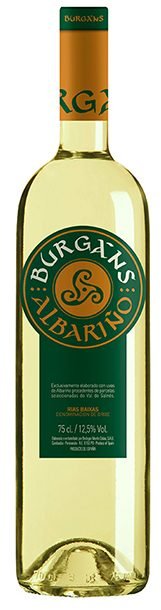
Wine of the week: Burgans Albarino 2015

burgans albarino$10 buys the top-quality Spanish Burgans albarino

This wine demonstrates once again why the wine business is so confusing and why so many of us give up. The Burgans albarino ($10, purchased, 12.5%) is made by the Spanish producer Martin Codax, which also makes an albarino for E&J Gallo. But the Gallo wine costs about one-third more than the Burgans.

And, not surprisingly, the Burgans is a more interesting wine. It’s more varietally correct, with more of the savory, almost salty flavor, that characterizes albarino. Plus, the lemon fruit is balanced by tropical fruit (a little banana?) and the minerality characteristic of that part of Spain. All in all, there is way more going on than there should be in a $10 wine that is a past vintage.

Highly recommended, and a candidate for the 2018 $10 Hall of Fame. Drink this chilled on its own on a warm fall day, or with grilled seafood or chicken.

Imported by European Cellars

Fourth of July wine 2016

Fourth of July wine 2016This weekend, we’re supposed to get our first 100-degree days in Dallas. That means lighter and fruitier – though still tasty and value-driven – Fourth of July wine 2016.

Keep the concepts behind summer wine (and porch wine) in mind as you decide on wine for this holiday weekend. It’s not so much the food that matters, but that lots of oak and high alcohol aren’t especially refreshing when it’s hot, humid, or both.

Consider these Fourth of July wine 2016 suggestions:

Muga Rosado 2015 ($12, purchased, 13.5%) This Spanish pink is consistently one of the best roses in the world. Look for crisp red raspberry fruit, bright acidity, and a long mineral finish. It’s so well done, in fact, that if I raise the price ceiling on the $10 Hall of Fame next year, this wine will be one of the main reasons.

Dancing Coyote Albarino 2014 ($12, sample, 13%): This California white helped introduce albarino to U.S. consumers, and I am most grateful. Look for crisp green apple fruit and minerality, though it’s not quite as salty (really) as a Spanish albarino. A tremendous value.

Hey Mambo Red 2014 ($10, sample, 13.5%): Great cheap California red blend the way it should be, with something else besides lots of berry fruit. That means freshness instead of that horrible cloying fruitiness, as well as proper soft tannins. Very well done, especially for Big Wine, and an example for others who think Americans will only drink wine masquerading as Kool-Aid.

Scharffenberger Brut Excellence NV ($20, sample, 12%): California bubbly that is softer than Spanish cava, not as sweet as Italian Prosecco, and a better value than Champagne. Look for some of the latter’s yeastiness and caramel, though the fruit is almost berryish from the 40 percent pinot noir. The bubbles are tight and long lasting, and the wine improves the longer it is open.

More Fourth of July wine:
Fourth of July wine 2015
Fourth of July wine 2014
Wine of the week: Charles & Charles rose 2015