
Category:Regional wine

Texas and Drink Local Wine’s sixth annual Regional Wine Week

Texas drink local wineRegional wine week started yesterday, and what kind of co-founder and past president would I be if I didn’t participate? So here are my links for this year’s effort, focusing on the changes in Texas wine since I started writing about it:

? How much more accepted is Texas wine than just five years ago? The culinary students I spoke to on Thursday night at Dallas’ El Centro College were interested not because they were supposed to be, but because they really wanted to know about Texas wine. Contrast this with the culinary students I taught at the Cordon Bleu, whose main interest in Texas wine came when I drew my not very accurate map of Texas on the board.

? Not only has Texas wine changed, but so have the people drinking Texas wine — the focus of a story I wrote for the Texas Wine and Trail website. The new generation of Texas wine drinkers I talked to this fall were not “the older Anglos who have powered the local wine movement in the state since the 1990s, and doing yeoman work in the process. Rather, they were younger and, at Grapefest and especially at its People ?s Choice wine tasting and competition, less white. I talked to a Chinese husband and wife who asked such detailed questions about what was going on and which wineries to visit that I couldn ?t answer all of them.”

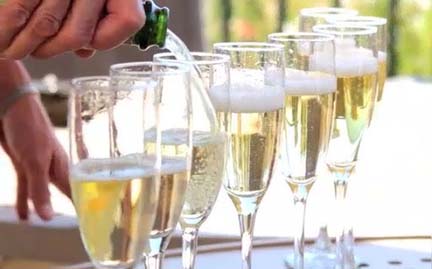
? A French producer made sparkling wine in the state 30 years ago, though the winery eventually failed. Still, one has to admire the effort: “Texas-made sparkling wine is rare, even today. Thirty years ago, when there were only a handful of wineries in the state, it was much less practical. Sparkling wine is difficult, costly, and time-consuming to make, requires top-notch grapes, and needs an established market for its products.”

? The Hill Country is the focal point for Texas wine for most consumers, and it has undergone huge changes, too — not only in the number of wineries and quality of the wine, but in how the region sees wine in terms of tourism and its economy. Ten years ago, wine was an afterthought; today, Highway 290, with its dozens of wineries, could be a wine trail in California.

? And what would a Texas wine post be without reviews of Texas wine?

Mini-reviews 52: Beach House, Trump, Hedges, Drouhin

Reviews of wines that don ?t need their own post, but are worth noting for one reason or another. Look for it on the final Friday of each month.

? Beach House Sauvignon Blanc 2013 ($10, sample, 13%): South African white was much different than I thought it would be — young and fresh and citrusy, with a bit of a pithy finish. It ?s a one-note wine, but delivers value for price.

? Trump SP Brut 2008 ($30, sample, 12%): Virginia sparkling wine from the former Kluge Estate continues the Kluge tradition of excellent bubbly. Lots of tight bubbles, crisp cherry fruit, an even finish, and a noticeable and welcome lack of oak.

? Hedges Family Estate Red Mountain 2011 ($25, sample, 13.5%): One of the best wines I’ve tasted this year — classic Washington state red blend with rich, black fruit and where the Washington state syrah stands out. Highly recommended.

? Joseph Drouhin Bourgogne Laforet 2011 ($17, sample, 12.5%): Pinot noir from France has some Burgundian character, which means it has a little earthiness and not that much fruit. But it’s a little thin, and the price is problematic.

Once more on the wine trail in Texas

Last weekend was Kerrville. This weekend is Grapefest. To paraphrase my pal the Italian Wine Guy, the more time I spend away, the more I appreciate getting back.

The blog, all those years ago, was about Texas wine more often than not. These days, it’s rarely about Texas wine — my audience is all over the world, so I don’t write about something most of the visitors can’t buy. But that doesn’t mean that Texas wine isn’t important to me.

I am reminded of that every year when I go to Kerrville. This year was no different — a smart, knowledgeable audience that asked intelligent questions and wanted to learn more about what was going on in Texas. More importantly, the quality of the wine we tasted was among the best in the six years I’ve been doing the festival.

And, as Tom Fikes of Duchman Family Winery noted more than once during the discussion of wines from Los Pinos, McPherson, William Chris, and Duchman, what we tasted were part of the next generation of Texas winemaking ? wine made with grapes better suited for Texas — climate and terroir, and wines made with grapes grown in Texas. As I’ve noted before, these are the two most important trends in Texas, and they are reshaping the business.

This is the fifth year that I’ll be speaking at Grapefest, which is best known for the People’s Choice Awards, a wine competition that is exactly what it sounds like. Almost 40 Texas wineries pour wine, and consumers taste and vote. Who needs wine experts anyway?

I’ll be speaking at 5:30 p.m. Friday, 11:30 a.m. on Saturday, and noon on Sunday — and indoors, for all you who want to come but don’t want to endure our 100-degree fall weather. The subject will be about Texas wine and cheap wine, and I may even plug The Cheap Wine Book, which should be available in e-book form later this week.

Expensive wine 53: Barboursville Vineyards Octagon 2009

Octagon-XII-Edition-2009One of the reasons regional wine has always done so poorly with the Winestream Media is that it doesn ?t lend itself to iconic and cult wines. The critics and reviewers prefer wines, usually red, made by celebrity winemakers that they can get all silly about.

There just aren ?t many of those in the other 47 states, whether because the wines aren ?t expensive enough or no one knows about them or the winemakers aren ?t famous enough. It certainly isn ?t about quality, because most of the top regional states produce top-flight expensive wine.

The best may be the Octagon ($50, sample, 13.5%), made by Luca Paschina, who would probably be a celebrity winemaker if he was working in California. Instead, he is in Virginia, where his consolation is making some of the best wine in the United States. His viognier always makes me smile, even at $22 (and I have wanted to do a Texas-Virginia viognier showdown for years). And the Octagon is a step beyond that.

It ?s a Bordeaux blend centered around merlot that shows off Virginia ?s terroir and style ? a powerful wine that isn ?t showy, high in alcohol, or too fruity. Look for dark fruit (plums?) and nooks and crannies of complexity, all of which is bound together by some amazing tannins. This is wine made to age, and may seem rough now. But give it some time, and you ?ll wonder how someone can make this great a wine and be so little known outside of Virginia.

Availability is limited, but it ?s still worth looking for. Highly recommended.

One more sign local wine has made the mainstream

If this wasn ?t enough, or even this, there ?s this ? that 11 regional winemakers made Michael Cervin ?s list of the 100 most influential winemakers in the United States.

Frankly, I was shocked, and had not even looked at the list when it came out. Cervin is a California wine writer who didn ?t ask me for recommendations, so I figured this would be another Winestream Media glorification of California cult wine.

Shows how much I know, and that I always end up breaking the first rule of wine writing, no matter how hard I try not to ? taste the wine before you judge it. Or, in this case, read the list before you judge it.

?We have to stop being so myopic in our choices about where wine comes from, ? says Cervin. ?This is a big deal that there are so many regional winemakers on the list. There ?s a paradigm shift underway, and it has been going on for a while. ?

The top-ranked regional winemaker was Texas ? Kim McPherson of McPherson Cellars at No. 20, and other notables included Andrew Meggitt of Missouri ?s St. James Winery at 64 and Fred Frank of New York ?s Konstantin Frank at 52.

Two things impressed me about the list ? that Cervin had done his homework, and knew who people like Missouri ?s Tony Kooyumjian of Augusta Cellars (89) and Kris Kane of Brix 21 in New York (88) were, and that his methodology was sound. Cervin just didn ?t rank winemakers based on his opinion, but got suggestions from retailers, sommeliers, and other wine professionals. This included Doug Frost, who knows more about regional wine than almost anyone else in the country, myself included. Cervin ?s standard for ranking: The winemaker had to make a range of great wine, and had changed the perception of wine made in his or her region.

?It ?s important that every state is given its due, ? says Cervin. ?If you dismiss them because of what they are, you ?re doing a complete disservice to wine as a whole. ?

Hear that, Winestream Media?

In fact, the list was so well done that it invites comment. Noticeably missing were Colorado ?s Guy Drew (and no one from Colorado made the list) as well as Luca Paschina of Barboursville Vineyards in Virginia. I was also surprised that one of New York ?s top riesling winemakers, like Fox Run ?s Peter Bell, wasn ?t included. And yes, Cervin said with a sigh, he had heard about names left out, and especially Paschina.

Which is just one more example of how many people care about regional wine. Why else would they complain?

The good old days of Texas champagne

bubblyThe Moyer Texas Champagne company lasted about a decade, long enough to reportedly supply wine for George H.W. Bush ?s presidential inauguration in 1988.

An Ohioan named Ken Moyer founded the company and made his first bubbly in 1983. He sold Moyer several years later to a French wine executive, Henri Bernabe, who vowed to ?compete head to head with the best of California. We plan to fill a void in the marketplace. ?

Texas-made sparkling wine is rare, even today. Thirty years ago, when there were only a handful of wineries in the state, it was much less practical. Sparkling wine is difficult, coslty, and time-consuming to make, requires top-notch grapes, and needs an established market for its products. Moyer and later Bernabe used methode champenoise to make their wine, complicating an already complicated business.

That ?s because Texas ? producers had neither the skill nor the quality fruit (nor much fruit at all) to do bubbly well then, and the idea that there was a market for it ? when it took 20 years for a Texas wine identity to develop ? is the definition of ?Champagne wishes and caviar dreams. ?

Yes, you ?re asking, but how did it taste? The Wine Curmudgeon never had any, but my pal John Bratcher, who sold the wine during his retail days in Lubbock, says he remembers two styles — dry and sweet, and they were OK, nothing more. What really hampered sales, though, says Bratcher, was the price, which was about as much as an entry-level Champagne cost in the mid-1980s.

The New York Times gives its seal of approval to regional wine

So now we can all take a deep breath, pat ourselves on the back, and enjoy the warm glow of a job well done.

Probably not. But we ?re a lot closer to that point then we were when Drink Local Wine took its first steps almost six years ago. That ?s what happens when perhaps the world ?s most important news operation writes this in a front page story in Sunday ?s business section:

As American palettes have evolved from Budweiser to Brunello di Montalcino, wineries have popped up in all 50 states, from the shores of Lake Michigan to the Texas Hill Country. While California dominates, accounting for 90 percent of the country ?s production, state governments nationwide are looking to wine to drive tourism and bolster agriculture.

Even more important is that the story was in the business section, with its hard news slant. This was not a ?Gee, isn ?t it cute, someone is making wine outside of California and France ? story, but a money-focused, results-oriented piece in a part of the paper where Gretchen Morgenson (who deserves about 20 Pulitzer Prizes for her work) tell us how Big Banking is playing fast and loose with our tax dollars. Can ?t get much better validation than that.

And the Times ? piece will make it OK for editors at newspapers, magazines, TV stations, and other news outlets to do regional wine stories ? even, and especially, if they had dismissed them before. That ?s the way the news business works: If the Times says something is a story, then it ?s a story. I can hear assignment desk bosses now: ?Say, isn ?t there a winery around here we can do something on

Yes, it would have been nice if Drink Local Wine had been mentioned, but who am I to quibble at a time like this? This spread, combined with Times wine guru Eric Asimov ?s enthusiastic endorsement of New York wine in 2011, reinforces what we have been arguing since 2008: That regional wine is both economically and critically viable, and that the wine business and its consumers ignore local wine at their own risk.

Like Texas, where the Perry administration sacrificed wine (as well as education and highways and green energy) to the governor ?s presidential ambitions in 2012, slashing the budget to establish his conservative credentials. We saw where that went. Hopefully, it ?s not too late for the state to restore the pittance it spent on wine research and marketing so that Texas isn ?t left behind as regional wine joins the mainstream.