Category:Regional wine

Pat Brennan, 1942-2021

Pat brennan
Pat Brennan, 1942-2021

Pat was a Texas wine pioneer, but more importantly, he was a genuinely nice guy

Pat Brennan, who died last week after a long illness, made his mark in the Texas wine business in any number of ways. Perhaps most importantly, he helped make viognier the state’s signature white grape, and his Brennan viognier was not just one of Texas’ best, but one of the best in the U.S.

Pat did such a good job with viognier that the one time he made a chardonnay, it sat on the tasting room shelf. “We educated our customers so well about viognier that they didn’t want to buy the chardonnay,” he said with a laugh.

But there was much, much more to Pat than that:

• A tremendous sense of humor, even when the joke was on him. I first met Pat during one of those wonderfully 100-degree Texas summer days when he was pouring his wine at a steak cook-off in a town called Hico. It was the first vintage of the viognier, and the polite thing to write in an obituary is to note that it wasn’t Pat’s best effort. Which he knew, and always laughed about when I told the story over the years to people tasting his wine for the first time.

• A genuinely nice guy, who always went out of his way to help others understand and appreciate Texas wine. It didn’t matter if it was someone in his tasting room or wine writers – Pat would open the bottles and start talking about what he was trying to do in Texas. Dave McIntyre of the Washington Post and I once drove the two-plus hours to Comanche to taste Pat’s wines because it was so much fun to do.

• And then there was Comanche, which is not only in the middle of the nowhere but was dry when Pat opened the winery there in 2001. That meant he couldn’t sell his wine from the tasting room, cutting off a key source of revenue. Pat didn’t gripe about it much; he just worked with others to get the law changed, which happened several years later.

• The cleanest winery I’ve ever seen – operating room clean. Which was not surprising, since Pat was a physician. In those days, regional wineries that were that spic and span were few and far between.

So if wine is about memories, and I’m convinced that it is, I’ll always remember Pat Brennan.

Photo: Carole Topalian via Edible Austin

Winecast 62: Kimberly Johnson, Philosophy Winery

Kimberly Johnson
Kimberly Johnson: Local wine has to make itself part of local food and local agriculture

Kimberly Johnson and the challenges of running a new, small regional winery during the pandemic — and when your daughter doesn’t drink wine

Kimberly Johnson and Denise Roles Matthews picked a terrific time to start Philosophy Winery. a small regional producer in Maryland — just before the beginning of the pandemic.

Which, oddly enough, wasn’t a problem. Their first wine, a 2019 rose, sold out.

“I have to say, we did very well,” says Johnson, Philosophy’s winemaker. “Everyone was home, they had nothing to do, but to buy on-line, whether it be wine or from Amazon. … We also hand delivered.”

So good news for Drink Local, despite the circumstances. In this podcast, we talked about the challenges facing small and regional producers these days — as well as what do when your daughter doesn’t like wine”

• It’s not enough to start a winery with good intentions. Johnson says she and Matthews treated the process like any other startup, complete with detailed business plan. Which, as she found out, is not necessarily a common practice.

• Local wine needs to make itself part of the local agriculture and food movements. The goal, says Johnson, is to convince consumers that wine is as local as eggs, cheese, and vegetables.  This means using local grapes.

• One key to Philosophy’s success: Selling at festivals, farmer’s markets, and the like — just like other local food products. You have to give consumers a chance to taste different things, she says.

Click here to download or stream the podcast, which is about 13 minutes long and takes up about 8 megabytes. Quality is good — I’m kind of muted, but  Johnson is loud and clear.

Is Gallo about to change the idea of winery tasting rooms forever?

Tasting rooms
Will wine drinkers soon be toasting each other with Gallo wine in company-branded tasting rooms?

Winery tasting rooms have traditionally been about Drink Local; Gallo’s plan could turn them into the wine equivalent of Disney stores

June 16 update: Bring on the Barefoot! The world’s biggest wine producer successfully negotiated the hurdles detailed in the first post and will build its warehouse, cannery, and bottling plant in rural South Carolina.

South Carolina Gov. Henry McMaster says the plan will hire almost 500 people over the next eight years, an impressive achievement for a county with around 1,000 residents.

The final agreement will allow Gallo to open three tasting rooms, but the company has not said where they will be.

Continue reading

Winecast 55: Wine America’s Michael Kaiser and helping small wineries make it through the pandemic

michael Kaiser
Michael Kaiser

Michael Kaiser: I haven’t been to a winery in nine months, and it’s my job – so you can imagine how difficult it has been for wineries that depend on visitors

Wine America, a trade group for U.S. producers, has played a key role in helping small wineries survive in the first nine months of the pandemic. Michael Kaiser, the group’s vice president of government affairs, has played a key role in that effort.

Foremost among that was passage of something called the Craft Beverage Modernization and Tax Reform ACT, a long way of describing a bill to change the way the federal government taxes alcohol producers. Yes, it’s a bit esoteric, but the bill’s passage means small wineries will face a more rational tax system – especially helpful during the pandemic.

We also talked about:

• What else can be done to help for regional wineries, both on the state and local level. Because, if the pandemic continues, Michael expects to see increasing numbers of wineries close.

• The tariff, and why it’s still with us. Michael makes a fine point: The wine tariff was intended to hurt the European Union, and it has. So, maybe, just maybe, we could see some progress in getting rid of it by the end of the year.

• New laws about can wine sizes, which should make it easier to make canned wine. This might sound esoteric as well, but it means we can finally buy canned in the same size can as we buy beer and soft drinks. And you didn’t know there was a difference, did you?

Click here to download or stream the podcast, which is about 25 minutes long and takes up 16 megabytes. Quality is good to excellent – you’ll probably notice three or so bits where I had to edit the recording because we lost our Zoom connection.

New Year’s sparkling wine 2020

New Yea's sparkling wine 2020New Year’s sparkling wine 2020 recommendations, because value and quality matter

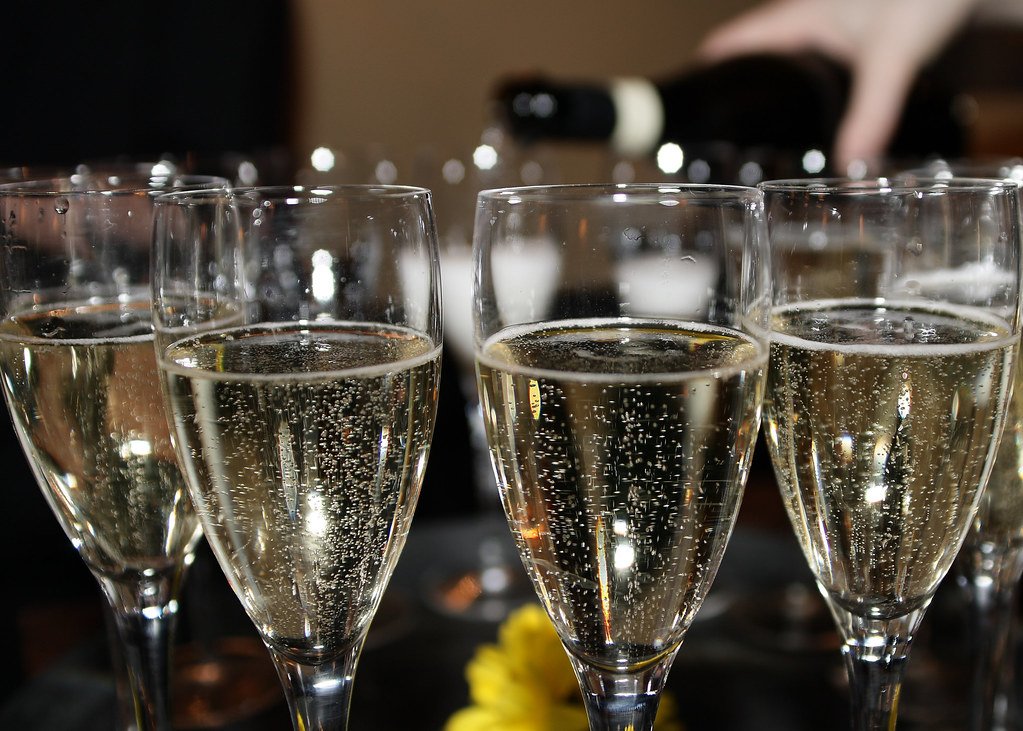
Once again, the blog focuses on value and quality for New Year’s sparkling wine 2020. Consider these wines for toasting, dinners, or just because you’re in the mood for bubbly. Also handy: The blog’s annual wine gift guidelines and the sparkling wine primer.

Dutcher Crossing Blanc de Blancs 2016 ($45, sample, 12%): California sparkler is top-notch and, given bubbly prices, a fair value. Look for crisp, green apple-y fruit, with some brioche in the background to remind you this is a high-class wine. Very tight bubbles. Highly recommended.

Bouvet Brut NV ($12, purchased, 12%): This French sparkler from the Loire does not taste like Champagne. Does it taste like quality bubbly, with tight bubbles,a  zingy mouth feel. and lemon apple fruit? Yep. Would that all sparkling wine at this price was this well made. Highly recommended. Imported by Kobrand

Empire Estate Blanc de Blancs NV ($19, sample, 11.9%): Price may be a problem, but this New York riesling sparkler, made with the charmat method, is quality wine — soft bubbles, some green apple fruit, decent minerality, and a long finish.

Casteller Cava NV ($12, purchased, 11.5%): This Spanish bubbly is among the few remaining great cheap Spanish sparkling wines, which have been devastated by consolidation and premiumization. Apple and pear fruit, tight bubbles, and a marvelous wine all around. Highly recommended. Imported by Ole & Obrigado

More on New Year’s sparkling wine
New Year’s sparkling wine 2019
New Year’s sparkling wine 2018
New Year’s sparkling wine 2017
Expensive wine 111: Pehu Simonet Champagne Face Nord Extra Brut NV
Enough with the Champagne glass conspiracy already – can’t we just drink and enjoy?

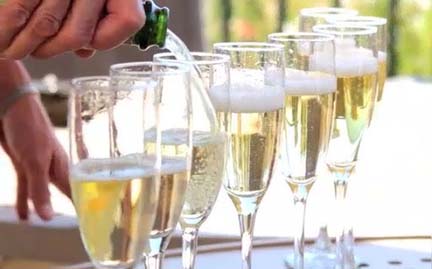
Photo: “Sparkling wine” by tristanf is licensed under CC BY 2.0

Winecast 53: Doug Caskey and Drink Local during the pandemic

doug caskey
Doug Caskey and his spiffy Colorado wine Zoom background.

“The situation isn’t good, but it’s difficult to make a monolithic assessment. The situation depends on where you are, and it can be all across the board.”

Colorado’s Doug Caskey has been one of the leaders in the local wine movement for almost as long as there has been one. He has been the executive director of the Colorado Wine Industry Development Board since 2000, and has served in a variety of roles with the Wine America trade group. As such, he is well-placed to discuss how the pandemic is clobbering regional wine.

Perhaps the biggest problem, Doug said, is that state laws classify wineries as bars. This means they suffer from the same restrictions as places people go to pick up girls and boys and to get drunk. Which, of course, is hardly the case with a winery tasting room. In addition, local wineries depend on events like weddings and concerts to stay in business, which are also limited by pandemic bar restrictions.

Among the topics we discussed:

• The recent spike in coronavirus cases doesn’t bode well for Drink Local, since wineries that have been able to re-open their tasting rooms may not be able to keep them open.

• The pandemic hasn’t been a boon for Drink Local at retail, despite all the glowing sales numbers. Consumers seem to be buying the best known brands instead of trying lesser known regional labels.

• The Trump wine tariff, advertised as a help to Drink Local, has actually been a tremendous hindrance. It has wreaked havoc on the wine supply chain, making it more difficult for local wines to get on store shelves.

Yurts, as a solution to outdoor winter dining. Yes, yurts.

Click here to download or stream the podcast, which is about 13 minutes long and takes up almost 9 megabytes. Quality is mostly excellent. And yes, I was able to post Doug’s Zoom background.

Wine review: Six white wines from New York’s Fox Run

fox runThese six white wines are some of the reasons why New York has come so far in wine quality

One of the great successes in Drink Local over the past 15 years has been New York state, which has grown, thrived, and earned rare critical acclaim. In fact, one of my great regrets with Drink Local Wine is that we never held a conference in New York’s Finger Lakes, home to some of the world’s best rieslings.

Fortunately, I’ve been able to taste New York wine regularly since the blog started, and so have been able to follow the Finger Lakes’ success. One recent example: Six white wines from Fox Run Vineyards, which was founded in 1984. Winemaker Peter Bell and co-owner Scott Osborn have long been ardent supporters of Drink Local, and I used to judge with Peter at the old Eastern International in upstate New York. His rant while we were tasting supermarket zinfandels one year has stayed with me since.

Each of these six wines are worth drinking, and several are even better than that (and most of the prices aren’t bad, either):

• Fox Run Silvan Riesling 2018 ($25, sample, 12.5%): This riesling shows why the Finger Lakes has earned its reputation. It’s long, complex, and intriguing, but also terroir-driven. That means it’s rich and full, but without the petrol or honey of a similar German riesling. Instead, there is zesty lime fruit and lots of minerality. Sill very young and probably needs a couple of years to open up. Highly recommended.

• Fox Run Dry Riesling 2018 ($15, sample, 11.7%): Very New York in style – oh so crisp, an echo of sweetness, a little lemon, maybe some oiliness (or maybe not), very long, and very clean.

• Fox Run Semi-Dry Riesling ($13, sample, 11.4%): This is exactly what an off-dry riesling should taste like — the sweetness is part of the wine, and not glopped on. This might have been my favorite of the batch, and I don’t go out of my way to find off-dry wine. Look for a bit of petrol and a bit of lime, both of which balance the sweetness. Highly recommended.

• Fox Run Traminette 2018 ($15, sample, 11.2%): This is a well made traminette, something never easy to do with this particular hybrid grape. There’s some spice, some tropical fruit, and noticeable (but not annoying) sweetness.

• Fox Run Chardonnay 2018 ($15, sample, 12.4%): One of the best domestic chardonnays at this price I’ve tasted in years — crisp green apple, clean, no hint of sweetness or the cloying tropical fruit that so many similarly priced wines have. If there is any oak, it’s hiding in the background where it should be. Tremendous value and highly recommended.

• Fox Run Kaiser Chardonnay 2018 ($15, sample, 12.5%) This tastes like Peter Bell’s take on all those fake, over-oaked, $12 to $18 supermarket chardonnays that make me crazy. Which, of course, it didn’t. Yes, the oak is pronounced, but the vanilla is balanced against the pear and apple fruit. If you like this style of wine, this will make you very happy.

More regional wine reviews:
Michigan wine 2019
Beard award semifinalists: One more victory for regional wine
Regional wine update: Virginia, Texas, Lake Erie