Category:Podcasts

Winecast 73: Randall Grahm and ingredient labels for wine

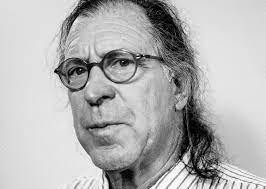
Randall Grahm
Randall Grahm: Labels will force winemakers to do a better job of making wine.

“The consumer has a right to know what’s in their wine”

Few people have worked harder or longer for ingredient labels on wine than Randall Grahm, who was using them on his Boony Doon wines at least a decade ago. So who better to talk to about the latest developments in adding ingredients and nutrition fact boxes?

We recorded this podcast a week ago Sunday, a couple of days before the federal government announced it would start the rulemaking process to add the labels to wine, beer, and spirits. Not surprisingly, Randall — whom I’ve known for longer than both of us would care to admit — predicted we’d get the labels sooner rather than later.

Know, too, that Randall was on his best behavior — so no name calling or punny insults. Rather, just solid, sensible reasons and analysis about ingredient and nutrition labels and how to make them work:

• One of the reasons that labels have become more accepted- — the rise of the natural wine movement, which makes a point to talk about what’s not in the wines.

• Why so much resistance still? Additives are a crutch to make wine easier to make, he said — “artificial fixes. … If you had to put everything on the label that you put in the wine, you’d have to be a much more fastidious winemaker.”

• Wine remains confusing to most consumers; labels will help make it less confusing.

• There is room for discussion about what needs to be included.  Randall suggests ingredients that remain in the wine should be listed, so yes to sulfites and grape juice additives like MegaPurple.

• Most of the objections the wine business makes to labels aren’t necessarily obstacles. It’s possible to add the information to back labels without a crisis, he said, and this comes from someone whose labels were artistic. Most big producers can afford to add the labels; perhaps there can be an exemption for smaller producers.

Click here to download or stream the podcast, which is about 15 minutes long and takes up 10 1/2 megabytes. Quality is good to excellent.

More wine podcasts:
• Winecast 72: Denise Clarke and the progress — and challenges — for Drink Local
• Winecast 71: Paul Tincknell and solving all of wine’s problems
• Winecast 70: Ray DelMuro of Refresh Glass and recycling wine bottles

Winecast 72: Denise Clarke and the progress — and challenges — for Drink Local

Photo od Densie Clarke
Denise Clarke

“You’re making a commitment to s special product”

Denise Clarke is one of the pioneers of the regional wine movement. She was there when we held the first Drink Local Wine conference in Dallas, worked with us for the Colorado event, and has been spreading the gospel ever since as a wine marketer and wine educator.

So who better to talk to about Drink Local, as much of the country celebrates its local wine month in October? We talked about the progress regtional wine has made, as well as the challenges that remain. Included in our discussion:

• Yes, quality continues to  improve, and those of you who haven’t tried a regional in a while should try again. Denise says she hears that a lot, and wishes wine drinkers would be more open minded.

• Hybrid grapes, which traditionally have been spurned by many winemakers and most wine drinkers, have come into their own thanks to the regional wine movement. We discussed chambourcin, which makes terrific varietal wine, but there are many others.

• Regional wine must do a better job marketing its product, focusing on what sets it apart from mainstream wine — that it’s less traditional, less formal, and more fun.

• One surprising challenge: That there are fewer wine writers interested in Drink Local — not because they aren’t interested, but that there are fewer media outlets that run regional wine writing.

Click here to download or stream the podcast, which is about 14 minutes long and takes up almost 9 megabytes. Unfortunately, the quality is not what it should be, and especially for the first minute. But bear with it..

More wine podcasts:
• Winecast 71: Paul Tincknell and solving all of wine’s problems
• Winecast 70: Ray DelMuro of Refresh Glass and recycling wine bottles

• Winecast 69: Nick Vorpagel and the dilemma of the independent wine retailer

Winecast 71: Paul Tincknell and solving all of wine’s problems

Paul Tincknell
Paul Tincknell: We can’t buy ourselves out of wine’s problems.

The blog’s wine marketing guru solves wine’s generation gap and offers insight on making wine popular again

Paul Tincknell, a partner in the Napa marketing consultancy of Tincknell & Tincknell, is one of the really smart people in the wine business. And I would say that even if he wasn’t a long-time friend of the blog.

He and I have discussed wine’s problems many times — the generation gap, abstinence, premiumization, its reliance on the aging Baby Boomers, and so on and so forth. So I asked him to do this podcast to offer his perspective and his solutions, and they make very good sense.

Included in our discussion:

• Wine is not like beef or milk, where a one size fits all marketing approach — “Got Milk?” — could be effective. The industry is fragmented and splintered, and not just between big and small producers, but because of pricing. Milk and beef inhabit a narrow price range; wine’s is enormous, and high-end producers have little in common with those on the lower end.

• Wine spends very little marketing, anyway, and especially compared to beer and spirits. And no, we’re not quite sure why that is.

• Wine’s approach to its customers is wrong-headed. It sells them wine to drink for special occasions, and not wine to drink because wine is enjoyable. Paul describes this as “celebratory” vs. “cultural;” that is, no one sees wine as something to drink with dinner unless dinner is a big deal — a holiday, date night, or a dinner party. So why can’t we have a bottle of $10 supermarket wine on Wednesday night to drink with sheet pan chicken? Because the industry doesn’t encourage that. It wants us to buy a $25 or $30 bottle for a dinner that takes four hours to cook and requires expensive and hard to find ingredients.

Click here to download or stream the podcast, which is about 22 minutes long and takes up 15 megabytes. Quality is excellent. Even better, I hardly interrupted, save for one rant about too complicated recipes.

More wine podcasts:
• Winecast 70: Ray DelMuro of Refresh Glass and recycling wine bottles
• Winecast 69: Nick Vorpagel and the dilemma of the independent wine retailer
• Winecast 68: Clara Klein and restaurant wine after the pandemic

Winecast 70: Ray DelMuro of Refresh Glass and recycling wine bottles

Ray DelMuro of Refresh Glass
Ray DelMuro: It’s all about rescuing bottles.

“People tell me they recycle wine bottles because of the way it makes them feel, but they ignore the economic realities of recycling.”

Ray DelMuro of Refresh Glass in the Phoenix area may know as much abut wine bottle recycling as anyone. His company has been doing it for 15 years, works with hundreds of thousands of bottles a year (soon to become millions), and keeps expanding. Currently, his company takes in glass from across the west coast.

So believe DelMuro when he says that glass recycling rates are so poor (less than one-third) because it’s an expensive, bulky, and awkward business, especially when compared to other recyclables. Paper and aluminum can be bundled and are relatively light and easy to load and transport, for instance; glass is none of those.

In fact, we had a fine discussion talking about why recycling economics are so crucial to the process, as well what wine drinkers can do to help:

• If you want to do more than leave your bottles on the curb, find a glass recycler in your area. Put the bottles in a box (preferably the one they came in), and make sure to remove the cork or screwcap.

• One key to expanded wine bottle recycling is finding new uses for recycled glass. These include fiberglass home siding, road building materials, and other construction uses.

• There is an urgency in the industry to improve that recycling rate, and more money is available for research and new technologies.

Click here to download or stream the podcast, which is about 17 1/2 minutes long and takes up 12 megabytes. Sound quality is very good to excellent.

Winecast 69: Nick Vorpagel and the dilemma of the independent wine retailer

Nick Vorpagel headshot
Nick Vorpagel: $15 may well be the new $10 wine.

Nick Vorpagel: “We don’t carry Mark West pinor noir. I suppose there’s a place for that, but it’s not us.”

The pandemic’s supply chain problems don’t seem to be going away, and especially for small retailers. Throw in inflation and higher prices, and it’s not easy out there.

That’s the assessment of Nick Vorpagel of Wisconsin’s Lake Geneva Country Meats, the blog’s unofficial independent wine retailer. He says shipping woes have continued and it’s still difficult getting imported wine. Sometimes, European wine is in short supply and sometimes it’s Australia and New Zealand. Nick calls those rolling supply chain outages — “something is going to be short for a while, and you just don’t know what it is.”

Among the subjects we discussed:

• There seems to be little hope that wine prices moderate any time soon. This is from a combination of supply bottlenecks and large retailers gobbling up the wine that is available so that they don’t run out, further cutting supply.

• In addition, producers and retailers seem to be taking price hikes whether they’re warranted or not, just to be on the safe side. And discounts and wine on sale? Not anytime soon.

• All of which means it’s time to start worrying about what to drink during the holidays, says Nick. He says he has been told to order for Christmas this summer, a couple of months earlier than usual.

• Some values do remain, including South Africa, Spain, and Portugal (vinho verde!). South America? Not so much. And be wary if you see a fancy bottle selling for $15 with a 2020 Napa Valley label; it could well be smoke-damaged wine being sold under a different label. And we shed a few tears for the once-great Seguras Viudas cava.

Click here to download or stream the podcast, which is almost 25 minutes long and takes up about 17 megabytes. The sound quality is very good to excellent, though there is way too much giggling on my part.

Winecast 68: Clara Klein and restaurant wine after the pandemic

Clara Klein
Clara Klein, Sunday Vinyl: We have challenges, but we’re dealing with them.

Clara Klein: “The restaurant wine business is good.”

Know all that bad news we’ve heard about restaurant wine prices? Clara Klein, the lead sommelier at Sunday Vinyl in Denver, says it’s not necessarily so.

Klein, the blog’s official restaurant wine expert, returned to discuss what she is seeing as the restaurant wine business works its way out of the pandemic. She is seeing some significant changes in restaurant wine, including better pricing and more choices. “It’s important not to dumb it down — we’re having too much fun,” says Klein.

Among the subjects we discussed:

• Rose season should proceed on schedule, with prices more or less the same and decent selection. Which, of course, is good news for the blog’s 15h annual rose extravaganza next week.

• She is working diligently to keep pricing fair and selection high. How about a quality bottle of restaurant wine for $35? Sunday Vinyl also has expanded its wine by the glass offerings and has added tasting flights for some of the most expensive bottles on its list. That way, says Klein, customers can get a chance to taste rare wines they would not otherwise be able to afford.

• Working conditions have improved as well — health insurance and 401K plans included. In this, she says, the restaurant has been able to attract more and better qualified employees.

Finally, you’ll notice what is perhaps the first discussion of Greek wine on the blog. Which, as I note, is almost surely the last discussion, given how difficult it is to find Greek wine in most of the country.

Click here to download or stream the podcast, which is about 19 minutes long and takes up 13 megabytes. The sound quality is very good to excellent.

Photo courtesy of 5280, using a Creative Commons license

Winecast 67: Felicity Carter on what wine drinkers want

felcity carter
Felicity Carter: “There will be a lot wine on the shelves, but where it will come from is whatever buyers can get their hands on.”

Felicity Carter: We don’t know what’s going to happen next in wine — “all is in chaos.”

Felicity Carter is the former editor of Meininger’s Wine Business International, one of the industry’s leading trades, and is currently the executive editor of the The Drop, a consumer wine newsletter. Which means she probably knows more about the wine business than many of the so-called experts. (And, in the interest of transparency, I have written for her at both sites.)

One example of how Felicity sees things others don’t: Her take on consumer wine trends. Two decades ago, Yellow Tail’s slightly sweet red wines were all the rage. Today, the trendy wine style is the slightly sweet red blend. In other words, the same wine in different packaging.

We talked about a variety of consumer wine trends and even got in a shot at wine writers. The podcast, which is about 13 minutes long and takes up 9 megabytes — download or stream it here (and ignore what seems to be me shouting):

• Consumers seem to be split into two groups. Some of us are looking for more interesting wines, as well as sustainable and natural wines (which makes this the longest natural wine discussion in blog history). Others, meanwhile, still want cabernet sauvignon, rose, and sparkling wine. In addition, low alcohol and “healthy wine” seems to be gaining attention.

• Climate change is starting to affect wine production, so how and where we get the wines we want is becoming more difficult to figure out.

• Most foreign producers want to sell their wine in the U.S. which help fill shelves here. Why do they want that? Because we’re willing to pay higher prices than everyone else.

• Many of the wine trends we hear about come from wine writers trying to impress and aren’t necessarily actual trends. When’s the last time any of us had a blaufrankisch?

• And shiraz is pronounced, “sheer-azz” Down Under.