Category:Podcasts

Winecast 66: Tim McNally and the airline-ization of the wine business

Tim McNally
Tim McNally: Pricing wine for the wine industry’s benefit, but not for the consumer’s.

Tim McNally: Wine has copied the airline business — it’s not about selling the most seats, but raising prices and selling fewer seats to make more money

New Orleans’ Tim McNally is a radio host, a wine judge, and an award-winning author. As such, he has followed the wine business closely — and his analysis seems to be spot on. Wine, which once used to sell its product at all prices, is increasingly focused on selling its most expensive products to the detriment of everything else. In this, it has copied the airline business, which once tried to sell as many seats as possible at the lowest prices. Today, it sells fewer seats, but at higher prices and makes record profits when there isn’t a pandemic.

In other words, premiumization.

Tim and I have known each other for almost as long as I have been doing this, and I highly respect his opinion. We talked a lot about the airline comparison in the podcast, which is about 15 1/2 minutes long and takes up 12 megabytes — download or stream it here. Included in the discussion:

• The parallels between wine and the airlines are obvious, once you make the connection — both have focused on consolidation and cost cutting.

• The difference is that the airlines offer a more or less indispensable service. We can do without wine, and that seems to be the consumer reaction to premiumization

• Tim doesn’t see a solution to this, given the short-term profitability that premiumization offers.

• He is also pessimistic about finding a way to attract younger consumers to wine, noting that wine can be difficult to figure out and that the wine business, which has never much cared about educating its customers, isn’t much interested these days, either.

• And, of course, the first Mardi Gras in New Orleans in two years.

Winecast 65: Fred Peterson on owning a winery, making wine in California, and staying in business

fred peterson
Fred Peterson: “This is the golden age for the wine drinker. It’s more challenging for small wineries.”

Fred Peterson has either made wine, grown grapes, or owned a winery in California for about as along as there has been a modern California wine business. Which leads to some funny stories and an interesting look at how the wine world has changed.

Fred Peterson’s self-named California winery, today run by his son Jamie, is about as typical as a U.S. winery gets. It makes about 7,000 cases a year, has limited distribution outside of California, and sells about half of its wine out of the tasting room. In other words, challenging economics: It costs about $60 a case to produce one of its reds, but the wine sells for $90 a case. Most experts recommend that it should sell for $120 a case for the business to be successful.

So the winery starts in a hole even before it sells anything.

“Making the wine, growing the grapes, that’s the enjoyable part,” says Fred, who has spent almost 50 years in wine. “It’s hard work, but it’s definitely fun. Selling the wine is the real work.”

We talked about the upside down economics of the wine business, in which the only real profit for small producers comes when they sell. Included in our discussion:

• The value of his property in Sonoma’s Dry Creek Valley was about $10,000 an acre in the early 1980s. Today, it’s worth as much as $150,000 to $200,000 an acre — but there’s no way to get the money out without selling.

• The price of quality, old vine zinfandel has quadrupled in 30 years, but so has the cost of growing the grapes. So, despite that increase, growers are essentially in the same place they were in the 1980s — breaking even unless they farm thousands of acres.

• Big Wine makes money because it sells tens of millions of bottles, and can settle for lower margins. Small producers don’t have that luxury — Peterson’s 7,000 cases a year may be fewer than some of the biggest producers give out annually as samples.

So why does Fred keep doing it? “Because I can connect to people who love wine, which is why we all really want to do this,” he says.

Click here to download or stream the podcast, which is about 18 minutes long and takes up 12.5 megabytes. Quality is excellent (and overlook Fred’s couple of slips with words we don’t usually use on the blog).

Winecast 64: Paul Tincknell and wine’s failure to address the neo-Prohibitionists

Paul Tincknell
Paul Tincknell: We need to talk about wine and health honestly — the good and the bad.

Wine marketing guru Paul Tincknell returns for another podcast, in which we rant about wine, health, and the wine business’ failure to deal to with all those people who say wine with dinner is binge drinking.

Paul Tincknell, a partner in the Napa marketing consultancy of Tincknell & Tincknell and the blog’s official wine marketing expert, wants the wine business to honestly talk about wine’s health problems — and its benefits. Otherwise, he says, we’re stuck with campaigns that claim anyone who drinks wine will get breast cancer.

His point: Drinking is not a black and white health issue, even though the temperance movement paints it that way. And if the wine business doesn’t call the neo-Prohibitionists on their false claims, no one will.

Included in our discussion:

• Why no one in the anti-drinking movement is going after Starbucks and its 370 calorie, fat and cholesterol bomb better known as the Caffe Mocha.

• The infamous back label drinking warning, and how it does almost no good.

• That wine needs to promote moderate and responsible drinking, which is much different from the binge drinking that wine with dinners has called.

• Wine ingredient and nutritional labels in Europe, why wine in the U.S. needs to adapt the same thing.

Click here to download or stream the podcast, which is about 18 minutes long and takes up 12 megabytes. Quality is excellent. And yes, I know I didn’t properly introduce Paul, since I was so eager to denounce Starbucks. And his calm rationality throughout is a fine counterpoint to my ranting.

Winecast 63: Chris Keel and the independent retailer during the pandemic

chris keel
Chris and Deedra Keel of Fort Worth’s Put a Cork in It

Chris Keel’s small wine shop in Fort Worth, Put a Cork in It, evolved and adapted over the past 18 months, offering a number of retail lessons

Chris Keel’s wine shop is tiny, and it isn’t in a typical retail location. Yet, somehow, his Put a Cork in It shop has thrived for more than 15 years and emerged from the pandemic battered but unbowed.

Chalk that up to Chris and wife Deedra, who have terrific wine sense, a great business knack, and know what their customers want. In this case, it’s a small but excellent inventory, priced properly, and absent of the fads and foolishness that propel the wine business.

“We had to shift from more people coming in to less people coming,” says Chris. “But we’re so small, we adapt quickly and chaos is normal.”

I’ve known Chris almost since the store opened; he let me do a couple of cheap wine book signings. So when Chris talks about wine retail, he’s worth listening to. He mentions several top-notch value wines in the podcast: Gonnet Le Reveur”Cotes du Rhone red; the Italian Banfi Col di Sasso red, and a 1-liter rose from Spain, called Arco.

We also discussed:

• Change in approach: The Keels went from three tastings a week to none — and haven’t had one in the past 18 months. Given that tastings drove purchases, they had to find a different way to drum up business. That meant special orders, something most retailers dislike, and then dislike some more. But that has paid off in increased customer loyalty.

• Delivery mattered: Chris never thought his shop would be able to offer delivery, but he was able to find a group of people to help. At its height, the store made as many as 15 deliveries every day. Which is impressive for an operation staffed by a husband and wife and one employee.

• Keeping focus: Put a Cork in It has always focused on less expensive wines,, and that didn’t change. Yes, it was harder to find quality wines costing less than $12 or less, what with the Trump tariff and the pandemic. But Chris added more Italian wines, and that helped bridge the gap.

Finally, we talked about bringing younger consumers to wine, since the store is near the TCU campus. Chris said tastings were especially successful, and he hopes to resume his outreach to 20-somethings once tastings resume.

Click here to download or stream the podcast, which is about 14 1/2 minutes long and takes up about 10 megabytes. Quality is very good.

Winecast 62: Kimberly Johnson, Philosophy Winery

Kimberly Johnson
Kimberly Johnson: Local wine has to make itself part of local food and local agriculture

Kimberly Johnson and the challenges of running a new, small regional winery during the pandemic — and when your daughter doesn’t drink wine

Kimberly Johnson and Denise Roles Matthews picked a terrific time to start Philosophy Winery. a small regional producer in Maryland — just before the beginning of the pandemic.

Which, oddly enough, wasn’t a problem. Their first wine, a 2019 rose, sold out.

“I have to say, we did very well,” says Johnson, Philosophy’s winemaker. “Everyone was home, they had nothing to do, but to buy on-line, whether it be wine or from Amazon. … We also hand delivered.”

So good news for Drink Local, despite the circumstances. In this podcast, we talked about the challenges facing small and regional producers these days — as well as what do when your daughter doesn’t like wine”

• It’s not enough to start a winery with good intentions. Johnson says she and Matthews treated the process like any other startup, complete with detailed business plan. Which, as she found out, is not necessarily a common practice.

• Local wine needs to make itself part of the local agriculture and food movements. The goal, says Johnson, is to convince consumers that wine is as local as eggs, cheese, and vegetables.  This means using local grapes.

• One key to Philosophy’s success: Selling at festivals, farmer’s markets, and the like — just like other local food products. You have to give consumers a chance to taste different things, she says.

Click here to download or stream the podcast, which is about 13 minutes long and takes up about 8 megabytes. Quality is good — I’m kind of muted, but  Johnson is loud and clear.

Winecast 61: Michael Wangbickler and what comes next for wine

michael wangbickler
Michael Wangbickler: Wine tourism looks like it’s back, but serious questions remain about wine demand.

Michael Wangbickler: The pandemic exposed a lot of a weaknesses in the wine business

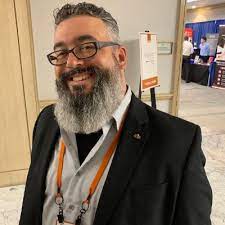
Michael Wangbickler, who runs Napa’s Balzac Communications, is one of the most clear-eyed people in the wine business — no wishful thinking, no this is going to happen because we want it to, no rose-colored glasses. This is one reason why Balzac is one of the premier marketing companies in the wine business. So who else better to talk to about what comes next for wine in the post-pandemic, young people aren’t interested, and hard seltzer days we’re in?

I’ve known Mike for years; he was one of the people who made Drink Local Wine work when we changed the way the world thought about regional wine. And yes, I’m jealous of his beard. We talk about it, as well as the future of wine marketing and wine criticism, on Mike’s “Hit the Bottle” podcast — complete with production effects. It focuses on trends in the wine business, so our discussion is quite detailed for those of you so inclined. And, not surprisingly, I am critical of the Winestream Media.

In this podcast, we talked about the changes on the way for wine, good and bad. Plus, we learn I didn’t drink when I turned 18:

• The pandemic did spur innovation among many producers, who recognized they couldn’t sell wine the same way they had for years. For one thing, many have 21st century websites in the 21st century.

• Direct to consumer — buying directly from wineries — will continue to grow, and despite the legal difficulties. Mike thinks it’s one of the few ways smaller producers can replace the business they lost when restaurants shut down for a year. And he’s not optimistic about the return of the restaurant wine business.

• He also isn’t optimistic about big changes in three-tier, despite reforms made during the pandemic. Change will come gradually, depending on the political climate in each state. That has much to do with the biggest producers and the biggest wholesalers, who have the political clout to prevent wholesale changes.

• Don’t expect a wine boom coming out of the pandemic. People were drinking less before the pandemic, so why would they drink more now? Premiumization, though, will continue — younger consumers drinking more expensive wine as they drink less. They’re also going to drink so-called “healthy” wine — Mike thinks that’s a key trend.

Click here to download or stream the podcast, which is about 15 1/2 minutes long and takes up about 10 megabytes. Quality is excellent — have I finally figured out Zoom?

Winecast 60: Mike Dunne and quality, affordable California wine

mike dunne
Mike Dunne: Egos and the high cost of doing business make it difficult to find quality, affordable California wine.

Mike Dunne: It is difficult to find quality, affordable wine — but some do exist

Mike Dunne, the long-time wine and food editor at California’s Sacramento Bee newspaper, has often chided the Wine Curmudgeon for not including more California wine on the blog. Hence, this podcast: Mike and I talk about why there isn’t more quality, affordable California wine —  and how to find what there is.

The reasons for these wines’ scarcity? They start with California’s high cost of doing business and include– not surprisingly — winery ego. Interestingly, many quality, affordable wines never make it out of California because they sell out in the state.

Mike suggests looking for wines from less well-known parts of California, like Lake County and Monterey, and varieties that aren’t cabernet sauvignon and chardonnay — chenin blanc or petite sirah, anyone?

Among Mike’s wine suggestions:

• J. Lohr’s Wildflower, a red wine made with the quite rare valdiguie grape (about $10). Serve it chilled — a perfect porch wine.

• The Shenandoah Special Reserve Zinfandel (about $11). Mike raves about this red — brambly, fruity and delicious.

• Korbel’s Blanc de Noir (about $14) and one of the blog’s old pals, the Barefoot Bubbly (about $10). These California sparkling wines, says Mike, provide more value than you’d think. He also told a fine story about dust mops and the E&J Gallo sales staff; Gallo, of course, owns Barefoot.

Click here to download or stream the podcast, which is almost 17 minutes long and takes up about 12 megabytes. Quality is mostly excellent, save for a couple of static-y bits toward the end.