









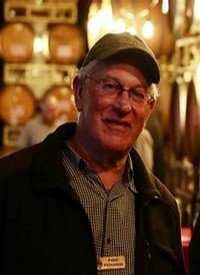
Fred Peterson has either made wine, grown grapes, or owned a winery in California for about as along as there has been a modern California wine business. Which leads to some funny stories and an interesting look at how the wine world has changed.
Fred Peterson’s self-named California winery, today run by his son Jamie, is about as typical as a U.S. winery gets. It makes about 7,000 cases a year, has limited distribution outside of California, and sells about half of its wine out of the tasting room. In other words, challenging economics: It costs about $60 a case to produce one of its reds, but the wine sells for $90 a case. Most experts recommend that it should sell for $120 a case for the business to be successful.
So the winery starts in a hole even before it sells anything.
“Making the wine, growing the grapes, that’s the enjoyable part,” says Fred, who has spent almost 50 years in wine. “It’s hard work, but it’s definitely fun. Selling the wine is the real work.”
We talked about the upside down economics of the wine business, in which the only real profit for small producers comes when they sell. Included in our discussion:
• The value of his property in Sonoma’s Dry Creek Valley was about $10,000 an acre in the early 1980s. Today, it’s worth as much as $150,000 to $200,000 an acre — but there’s no way to get the money out without selling.
• The price of quality, old vine zinfandel has quadrupled in 30 years, but so has the cost of growing the grapes. So, despite that increase, growers are essentially in the same place they were in the 1980s — breaking even unless they farm thousands of acres.
• Big Wine makes money because it sells tens of millions of bottles, and can settle for lower margins. Small producers don’t have that luxury — Peterson’s 7,000 cases a year may be fewer than some of the biggest producers give out annually as samples.
So why does Fred keep doing it? “Because I can connect to people who love wine, which is why we all really want to do this,” he says.
Click here to download or stream the podcast, which is about 18 minutes long and takes up 12.5 megabytes. Quality is excellent (and overlook Fred’s couple of slips with words we don’t usually use on the blog).