Tag Archives: wine rants

Seven things that should be banned from the holiday wine experience

holiday wine
“I know I saw a bottle of white zinfandel in there. I demand to know who brought it!”

No, wine shaming is not OK, and six other things we don’t need when it comes to holiday wine

Almost everyone who writes about wine – whether Winestream or Mainstream Media – laments how difficult it is to do wine for the holidays.

Phooey.

So when I saw this post from Lifehacker, I thought: We need something like that for holiday wine. Hence, seven things that should be banned from the holiday wine experience:

1. Bragging about how cheap the wine was. Even the Wine Curmudgeon is sometimes guilty of that, for which I am always severely reprimanded. The point, or course, is that the wine is enjoyable. Price only matters if someone asks.

2. Bragging about how expensive the wine was. The WC has never done this – but those of you who have done it know exactly who you are.

3. Bringing a bottle of wine to dinner that no one but you has ever heard of or could possibly like — because, of course, the goal is to show you know more about wine than anyone else.

4. Bringing Two-buck Chuck, Winking Owl, or any of the others in the $3 wine reviews to dinner because they’re cheap and for no other reason. It’s a holiday, dammit. It’s OK to spend $10 for wine for the people that you care most about.

5. Wine shaming (see No. 3). In other words, when you see a bottle of white zinfandel or Apothic on the table, it’s not OK to snigger, point to the bottle, and make a snarky comment.

6. Launching into an interminable discussion about wine and food pairings and how you spent three weeks and consulted seven sommeliers to find the perfect wine for this particular holiday dinner (see No. 3 again). No one cares. And why should they?

7. “Taste this, it’s really good,” and making someone try something they obviously don’t want to try. Wine is not a mud pie to force on your little sister, so don’t treat it like one.

Photo: CHUTTERSNAP on Unsplash

Will listing bottle weights in wine reviews help save the planet?

wie bottles
“Bottle weight.. we don’t need no stinkin’ bottle weight.”

Maybe not, but it’s much more effective than giving yet another 92 to yet another overpriced wine

Who knew wine bottle weights would be one of the next great battlegrounds in the fight against climate change? But that appears to be the case.

• In February, wine critic Jancis Robinson announced she would list bottle weights in her reviews, with the idea that great wine doesn’t need to be in a heavy bottle.

• In June, a variety of wine writers (myself included) got an email with an open letter from Italian producer Max de Zarobe, asking that we take a winery’s sustainability efforts into account when scoring their wine.

• Last week, Dave McIntyre wrote a piece in the Washington Post decrying heavy wine bottles for the environmental obscenity that they are – low recycling rates and carbon footprint among many faults. And which, frankly, made the most sense of almost all of the stuff I’ve read on the subject, and I’d say that even if Dave wasn’t my friend.

Heavy wine bottles once mattered – say, 200 years ago, when wine was shipped in horse carts over rutted European roads and the bottle needed to be robust enough to stand up to the punishment.

Today, the heavy bottle is nothing more than marketing – call it an enological phallic symbol for an industry dominated by men who sell big, expensive bottles of wine to other men. A woman executive, whose company uses the lightweight PET bottle (made of plastic), told me her harshest critics weren’t consumers, but older men in the wine business who were aghast that her company didn’t do what tradition demanded.

Which, of course, speaks volumes about how effective listing bottle weights in reviews would be. I’m not against it; in fact, I ranted about the subject seven years ago — yes, seven years ago. Two of the worst offenders then were Bonterra and its “organically-farmed wine” and a Downton Abbey wine. What better way to convince consumers you’re making “real wine” than with a heavy bottle?

In other words, the people who make decisions in the wine business could care less about bottle weights. If they did, they would have downsized years ago. Lighter bottles mean cheaper production and shipping costs and less wear and tear on equipment. If saving serious money didn’t convince them, then why would the bottle weight in a review?

And, frankly, I don’t think the wine drinkers who read Robinson and rest of the Winestream Media care much, either. What matters to them are points, not how heavy. If it’s 94 points and a heavy bottle, who cares?

Having said that, I’ll start listing bottle weights for the most egregious offenders, if only to follow Dave’s example. Most of the wines I review, given their price, long ago gave up any heavy bottle pretense. And though listing weights may not do much, it’s still more than most of the rest of the wine business is doing.

Photo: “Two boxes of green wine bottles” by wuestenigel is licensed under CC BY 2.0

Suck on this, premiumization: 14 bottles of wine for $148

wine buying
Hat or no, it’s still possible to buy terrific $10 wine.

It’s still possible to buy quality $10 wine, despite the perils and pitfalls of the past 18 months

Yes, the pandemic, supply shortages, and premiumization are wreaking havoc with quality cheap wine. But does that mean the Wine Curmudgeon is worried? Daunted? Intimidated?

Of course not.

My shopping trip last week netted 14 bottles of wine for $148 (which included tax the case discount) – and each of the wines is top-notch, the kind of thing I’m happy to write about on the blog. How did I do it? I followed the cheap wine checklist and bought intelligently:

• Rose, where it’s almost impossible not to find $10 wine worth drinking.

• Portugal and South Africa, which continue to offer quality for more than a fair price. In this case, a red blend from Badenhorst and a red and white blend from Boekenhoutskloof, two South African producers, and a vintage vinho verde from Aveleda.

• Spanish producers, who suffered badly during the Trump tariff, seem to have cut prices to move product with the holiday season approaching. I bought two whites and a red for $32 – standbys Zestos blanco, Flaco tempranillo, and El Coto blanco.

• And, of course, Gascon whites – the always reliable Mont Gravet.

So suck on that, premiumization. You can try as hard as you want to make me buy crummy $15 wine, but it’s not going to work.

Photo: Alfonso Cevola

More about buying cheap wine:
• Premiumization be damned: $139.36 for 14 ½ bottles of cheap wine
• Panic wine buying
• Cheap wine checklist: $82.67 for a case of wine

Please, wine business, don’t market your product like this

wine ads
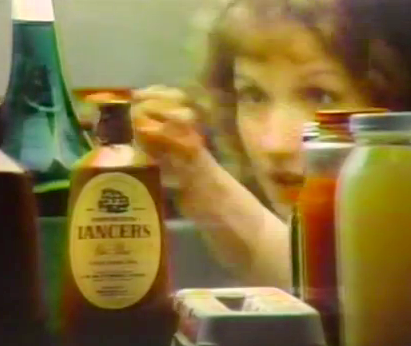
“You don’t need Lancers to catch that cute guy — cook him some vegan eggs.”

These three ads are templates for how to alienate the people you want to attract

Dear Wine Business:

I’ve seen a variety of TV ads recently that struck me as both awful and exactly the kind of thing you’d think was oh so hip and just what wine needed to reach younger people. So, because one of my reasons for being as the Wine Curmudgeon is to try to save the wine business from itself, I’m writing you this note:

Don’t do it! Wasn’t the Roo bad enough?

• Kelly’s vegan eggs: The irony here (other than the idea of vegan eggs) is that the series of ads for a product called Just Egg got a glowing review in Adweek. Now, the review did use words like tropes, hunky, and multi-tasking, so I may not be cool enough to understand it. Still, any ad that says a woman can get that hunky guy by cooking vegan eggs for him, as the Kelly ad does, is pathetic and sexist – aren’t we past the “My wife, I think I’ll keep her” stage?

• The Geneisis SUV: Some woman jumping off a cliff. Fashion models. Sex. More fashion models. More sex. I thought car ads were supposed to feature the car, but I guess not. This is exactly the kind of image ad that wine has traditionally loved, and which has given wine a reputation as aloof, bougie, and snotty.

• UNTUCKit: This commercial solves the greatest problem facing the republic today – “I couldn’t find a shirt that looked good un-tucked.” How do we know it’s the greatest problem facing the republic today? Because the ad tells us so. Again, the sort of arrogance that the wine industry loves to promote, and about as silly as it gets. Does this guy actually think men worry about what their shirt looks like un-tucked?

I hope this advice helps. As always, let me know what else I can do.

The Wine Curmudgeon

Shocking news: Wine with dinner won’t kill you

wine and health
“Of course we’re smiling. We’re not going to die after drinking wine with this dinner.”

New British study says infamous 2018 research that said we’re all going to die was flawed

One of the blog’s tenets when it comes to wine and health studies is to check the methodology. If the study seems flawed in some way – and way too many studies about wine and health from reputable peer-reviewed journals do – then something fishy is going on.

Hence, the infamous 2018 study in Britain’s Lancet, one of the world’s most influential medical journals, and which claimed that any amount of drinking was dangerous. This week, the fish really started smelling.

The Times newspaper of London reported on Wednesday that a soon-to-be published paper in “The International Journal of Epidemiology” found that the Lancet research was “flawed.”

Said one of the new study’s authors: “One cannot now say any amount of alcohol is harmful in the same way as one can say any amount of smoking is harmful.”

The authors note that the “risk of developing a range of illnesses increases with any amount you drink on a regular basis.” The idea, they say, is not to encourage drinking, but to understand that “a little alcohol is acceptable but a lot is harmful.”

Which, of course, is not a surprise to any of us who were paying attention. What I found most interesting was the mathematical analysis used to refute the Lancet study – in other words, checking the methodology. The math showed that the results found in the Lancet research were not consistent with what should have happened.

Which raises the question of how the Lancet research made it past the peer review process. Perhaps the next study can look at that.

Photo: “Chalet N Wine Cellar Dinner” by jurvetson is licensed under CC BY 2.0

Is there good news for wine delivery on the horizon?

wine deliveries
How many of us have had to resort to this to get wine deliver?.

Apparently, wine drinkers aren’t the only ones fed up with Fed Ex and UPS

Imagine my surprise when I saw this headline: “A wave of e-commerce logistics startups is threatening to break the UPS and FedEx duopoly”

Apparently, wine drinkers aren’t the only ones who are fed up with the way Fed Ex and UPS control the delivery market. The story reports that “a slew of new players, juiced by millions in venture capital funding, is entering the package logistics fight to see if they can’t can’t change a decades-old power dynamic.”

Look past the fancy writing, and you’ll discover that UPS and Fed Ex have lost market share, that their on-time and delivery performances are declining, and that they’re even telling unprofitable customers to look for another company to deliver their packages.

Which is no surprise to the blog’s readers. We’ve been talking about this since before the pandemic, when I ran a couple of posts listing wine delivery horror stories. I followed that up last month for the Pix.wine site, which also elicited a fair amount of traffic and comment.

That’s the good news. The bad news? For one, the story doesn’t specifically mention wine or alcohol delivery – and especially its particular and infuriating delivery requirements. For another, all the fancy writing (yes, the story even mentions unicorns) details more hopes and dreams than actual, concrete solutions. After all, just because someone throws venture capital money at a problem doesn’t mean the problem will be solved.

Still, this is the best news wine drinkers have had in a very long time. As, as I joked with the editor of the Pix piece, any news is better than chasing the delivery truck down the street.

Three signs the wine apocalypse is a lot closer than you think

wine scams
Now you see it, now you don’t: Trust us. Snicker, snicker.

Check out these sales pitches: Wine drinkers are such idiots we’ll believe anything we’re told

These three items, all urging wine drinkers to spend money for no good reason other than to spend money, showed up at WC world headquarters recently. All I could do was shake my head and wonder if the wine apocalypse was even closer than I thought it was – and it’s not like I don’t expect it sooner rather than later.

And no, I’m not going to mention any names because companies that do crap like this don’t even deserve bad publicity:

• Join our wine club, buy a wine, and maybe get a bottle of one of the the rarest wines in the world. The bottle in question is Domaine de la Romanee-Conti, which is in such short supply that even the one percent have difficulty buying it. There is, literally, almost none of it in the world. But if you join: “Just $30 could get you this $2,400 bottle!” So why would this wine club use this come on? Because wine drinkers are idiots, and we’ll believe anything.

• It’s not the wine in the cellar that matters – it’s turning your wine cellar into art. I wish I was making this up, but no: “High tech wine spaces, from cellars to tasting rooms, are designed to rise out of the basement and become a focal point of your home. Only 52 are created each year, no matter the demand, in order to preserve their singularity, exceptional architecture, and authenticity.” And, if that’s not enough, “each piece will change your experience of wine from the moment the bottle is purchased to the last drop poured.” Silly me. I thought it was what the wine tasted like.

• The following came from a subscription wine club, featuring Italian wine no one has ever heard of. The selling point? Its wines aren’t loaded with sugar, which evil winemakers dump into their wines with abandon, all the while twirling mustaches: “The high sugar content of typical wines is the primary contributor to the dreaded morning-after headache most consumers experience the day after enjoying a few glasses of wine.” First, “typical wines” don’t have much sugar. It disappears during fermentation. Second, I wasn’t aware sugar caused hangovers. I thought it was the alcohol. But what do I know? I’m just an idiot wine drinker.