


Tag Archives: wine prices

It’s official: Cheap wine is irrelevant, part III

rose wine
“Is there anything better than $100 rose?”

If you thought the first two cheap wine is irrelevant posts showed how screwed up wine is, wait until you read this one

Just in time for the blog’s 15th annual rose extravaganza next week – 12 “must have” roses for this summer, from a group of leading “restaurant professionals.” And not one of them costs less than $46 on a restaurant wine list, and two cost $100 or more.

For rose? Rose??? Rose?????

Yet there it is, from one of the wine business’ most important trade websites: These are roses “that sommeliers and beverage directors across the U.S. clamor for. … what they’re stocking up on as rosé season kicks off once again.”

Obviously, retail pricing wouldn’t be nearly as ridiculous; those that list for about $50 would cost about $35 at your local wine shop. But it’s not like $35 isn’t ridiculous, either. How many of us are going to pay $35 for a bottle of rose?

In this, one more piece of evidence – after this and this — that the wine business doesn’t much care about those of us who aren’t the one percent. Consider: I can get a bottle of actual Champagne from a good producer at one of Dallas’ leading high-end restaurants for $90. I love rose, but if I’m going to spend that much money, I’ll buy the bubbly. Who wouldn’t?

So what’s going on here? Two things, I think:

First, restaurants are restaurants, and if the pandemic didn’t change restaurant wine pricing, nothing will. I’m supposed to talk to someone who did a study about the pandemic’s effect on restaurant wine this week, and I’ll be sure to ask about these prices. They seem counter-intuitive if you’re trying to lure diners back.

Second, snobbery. It pains me to write this, after all the years I’ve spent trying to de-snobify wine. But that seems to be where we are in the second decade of the 21st century. It’s hip and cool or whatever to put a $100 rose on a wine list, and those of who don’t understand that it’s hip and cool or whatever don’t matter.

Photo: “Boyfriend and girlfriend drinking wine closeup. Pink colors for Valentine day” by shixart1985 is licensed under CC BY 2.0.

Ask the WC 32: Wine prices, wine and health, Ukraine

men drinking wine
“Only $4800 for wine for a year? We spend that much on a couple of cases.”

This edition of Ask the WC: How much trouble does the WC have finding cheap wine to review? Plus, the latest wine and health update and Ukraine wine.

Because the customers always have questions, and the Wine Curmudgeon has answers in this irregular feature. You can Ask the Wine Curmudgeon a wine-related question by clicking here.

Greetings, Cheap Wine Guru:
I saw the post about how you bought 11 bottles of wine for about $11 each. How is that possible, given inflation and premiumization and all the rest?
$10 wine

Dear $10:
The short answer is that I spend a lot of time looking for wine to review that meets the blog’s criteria. The long answer is that I shop at close to a dozen retailers, including national supermarket chains, and it takes up a fair amount of my working week. Ironically, given the way the wine business works, I review very few samples — most are either too expensive, too poorly made, or both. In 2021, I spent $4,800 looking for wine for the blog.

Dear Wine Curmudgeon:
Are you going to write a definitive wine and health post? There is so much confusion out there about whether wine will kill someone.
Healthy wine drinker

Dear Healthy:
Drink wine in moderation. That pretty much covers it. The rest — allowing for my lack of medical credentials — is smoke, mostly from neo-Prohibitionists who want everyone to quit drinking everything because too much alcohol is dangerous. Which, of course, is absolutely true. But hot dogs may be even more deadly (nitrites!), and I haven’t seen any of the researchers who are doing junk like this conducting similar pseudo-studies about hot dogs.

Hi, WC:
You haven’t written anything about Ukraine and what’s going on there. How come?
Surprised

Dear Surprised:
I started a Ukraine post a couple of times — there is wine in the country, believe it or not — but could never quite figure out what to say. I’ve mostly stayed away from politics on the blog and there really wasn’t a way to write about Ukraine without injecting politics into it. But know that my family left that part of Eastern Europe more than 100 years ago, and the reasons then are just as applicable now.

Photo: MART PRODUCTION from Pexels

More Ask the WC:
Ask the WC 31: Pinot noir, minimum pricing, wine apocalypse
Ask the WC 30: BYOB, wine for friends, California fires
Ask the WC 29: Birthday gifts, larger bottles, and on-line

Wine history lesson 4: Those damned high prices

1970s Bordeaxu prices
Who knew that the 1970s wine prices that retailers complained about would seem almost too cheap today? Right click on the image for easier viewing.

Think the WC complains about high prices? Listen to retailers’ laments about skyrocketing prices 50 years ago

Consider this quote:

“There will at least be a leveling‐off in prices and perhaps a slight drop in the less expensive wines.”

Hard to believe, given what we know about how the wine business works these days. Prices don’t go down; the entire point of wine is for prices to go up. But this comes from a time when the law of supply and demand still applied.

The quote is from a November 1970 story discussing French wine prices for that vintage, which wouldn’t be released for a couple of years. It notes that prices for the past couple of vintages increased because of short supply, but now that supply was more in balance, “leading retailers in New York say there probably will be some adjustments. The cost of a premier cru Bordeaux should, at worst, be no higher than the ’69, while the lesser chateaux may fall further.”

And, if it’s possible to believe, those high prices are 10 to 20 times less than what they are today. Talk about The Twilight Zone.

How was that possible, 50 years ago?

• Much, much less demand for French wine in the U.S. — and, actually, wine in general. Most wine sold in this country until the 1980s was sweet and dessert wine; the market for table wine was limited to big cities like New York.

• In fact, a limited market for French wine outside of France and Great Britain. Wealthy Chinese and Russian consumers (then the Soviet Union), who have done so much to drive up wine prices, were hardly factors at all.

• No Robert Parker, and all that he did (as well as those who followed him) to send prices on their upward spiral. Parker’s first Wine Advocate, with its 100-point scale, appeared in 1978, but he didn’t make his mark until 1982, “the vintage famous for launching the career of the world’s most successful wine critic.” Parker, the first mass market wine critic (more or less), made Bordeaux – and all wines eventually – accessible to people who may not have known about them. Talk about increasing demand.

The other irony about all of this? One important retailer in the story  lamented the high price of Bordeaux, complaining that there had been dramatic increases since the mid-1960s.

Which has led us to where some retailers charge $20 for the red Chateau Bonnet; similar wines probably cost less than a $1 back then.

Photo: Sherry-Lehmann Wine & Spirits Co. May 1978: Old, Rare Bordeaux Letter

More wine history lessons:
Wine history lesson 3: Bring on the French wine!
Maynard Amerine on quality, price, and value
Wine business history: The more things change, the more they stay the same

Inflation? What inflation? 10 bottles of wine for $114

wine dinner
“I think the WC is right. I haven’t noticed wine prices going up that much.”

Inflation, shortages, and supply chain woes may be showing up in the rest of the economy, but they don’t seem to have hurt cheap wine yet

Gas prices may be close to $4 a gallon in parts of the country, and the cyber-ether is full of hand-wringing about the U.S. economy and the ravages of inflation, the supply chain kerfuffle, socio-political unrest, and all of the the rest of the specters haunting our post-(hopefully) pandemic world.

But wine prices going up? So far, I haven’t seen it.

Yes, there are still shortages and empty shelves. My local Aldi has moved on from the cheap imported wine that made me a regular customer, and is instead stocking not so cheap (and very ordinary) California wine. Which, no doubt, is because of all those supply chain problems. And it’s still difficult finding certain wines, be they Italian and Spanish reds or the $10 roses I drink year round. My kingdom for a Zestos rose!

But there is still plenty of value. The wine business, for whatever reason (and no, I have no idea what they may be) is holding the line on prices. During a recent shopping expedition, I bought 10 bottles for $114, or about what I usually pay. The wines included:

• South Africa’s Ken Forrester petit chenin blanc, one of my all-time favorite wines and difficult to find even in the pre-pandemic world.

• A couple of Spanish viuras including the 1-liter Spanish Azul y Garanza. The Azul, which is always a value, has been in short supply for the past 18 months.

• An $11 cremant from the Loire, a sparkling wine from Cote Mas. The Mas wines can be uneven, but this was a steal (and more on it later).

• A $15 Australian riesling, the Pewsey Vale. Aussie riesling is another great value around $15, and again has been difficult to find in Dallas for years.

• A $10 red Bordeaux, the Chateau La Freynelle. The white has always been fine $10 wine; have not seen the red for a very long time, as well.

Photo: cottonbro from Pexels

More about buying cheap wine:
Suck on this, premiumization: 14 bottles of wine for $148
Premiumization be damned: $139.36 for 14 ½ bottles of cheap wine
Panic wine buying

Wine prices 2022

bottle lot
How much will these wines cost in 2022? Your guess is as good as mine.

Wine prices 2022 are a conundrum – a riddle wrapped in a mystery inside an enigma

This is the first of two parts looking at wine prices and wine trends in 2021. Part I: Wine prices 2022. Part II: Wine trends 2022.

One of the most basic rules of writing? Don’t say at the beginning of your piece that it isn’t worth reading – because, then, why would anyone bother?

But as I pieced together all the bits that would go into the blog’s 14th annual (more or less) wine price trends post, I realized that no one has any idea what wine prices will do – even those who are supposed to. That’s because we’re in an unprecedented economic environment, where everything going on – pandemic, supply chain, inflation, and all the rest – have never really happened at the same time before.

Nothing illustrates this better than an analysis from Chris Bitter of Vintage Economics, titled, “Has Premiumization Peaked?” and which concludes that maybe it has and maybe it hasn’t. I note this not to criticize Bitter or his piece, but to reiterate that almost no one is sure about what will happen.

So, as best I can, a look at the various of factors tugging wine prices in various directions. How the tugging will work out is anyone’s guess:

• A grape glut, which no one will actually call by that name. Yes, we’ve heard about reduced harvests in parts of Europe and in New Zealand, but there are way too many grapes – way, way too many – elsewhere in the southern Hemisphere. And California has been chugging along, too, producing near-record harvests even in “down” years. So too many grapes, which means prices should go down.

• Continuing demand for some high-end grapes, like cabernet sauvignon and chardonnay, and for some high-end wines, which puts pressure on prices in the other direction. If I need cabernet for $25 and $30 wine, there will be less of it available for $15 wine and which will raise the price.

• Lots and lots of wine sitting in warehouses. I wrote about this a couple of years ago, and there has been no sign that there still isn’t lots of wine sitting in warehouses. So too much inventory, lower prices.

• The 1 percent scarfing up all the ultra-premium wine they can find, which has led to higher prices all the way down the prestige chain. Hence, the $10 Chateau Bonnet red Bordeaux costs $20 – not because it’s worth it or even because of premiumization, but because the 1 percent have bid up the prices of the most exclusive Bordeaux wines, and those wines have dragged the rest along with them.

• Decreased consumption, by any measurement. Plus, restaurant wine sales have not returned to anywhere near normal. So pressure on prices going down.

• Continuing wholesaler consolidation, with two more significant deals in the past couple of months. This may be the most important factor keeping prices higher, given the over-sized role wholesalers play in the U.S. system. The top four or five control so much of the market – maybe two-thirds now – that they can wiggle around the law of supply and demand. Or, as a very smart person wrote me, “The big wholesalers are ignoring all the problems through mergers and acquisitions. Why bother growing the consumer base when it is much easier to just buy someone else’s consumers? Expansion is expansion, even if it is at the detriment of the industry as a whole. They’ll just keep carving up the market pie into bigger and bigger slices for themselves, even though the pie is getting smaller.”

Photo: brandy turner on Unsplash

More about wine prices:
Wine prices 2021
Wine prices 2020
Wine prices 2019

Update: Yes, the wine supply chain is out of whack

shipping containers
Not enough shipping containers means not enough wine on store shelves

Can’t find your favorite wines on store shelves? Blame the pandemic (but at least we have enough lorry drivers)

In June, Dave McIntyre of the Washington Post wrote that we’d be seeing higher wine prices and widespread shortages through the rest of the year. Turns out he was spot on.

We talked about higher prices in June; today, it’s the supply chain discombobulation that has persisted for the first nine months of the year. The good news? At least we don’t have the problem the British have, where Brexit chased foreign lorry drivers (or truck drivers, as we call them) out of the country. So there aren’t enough people to drive trucks to deliver wine. Says one restaurateur: “We’ve had days without any red wine at all.”

How obvious are the shortages in the U.S.? A Google search will find all sorts of examples; closer to home, one leading Dallas retailer held a rose sale a couple of weeks ago, but didn’t have any Charles & Charles, Bieler Pere et Fils, Zestos, or Jolie Folie – all wines that it normally has in huge amounts and that I buy a lot of.

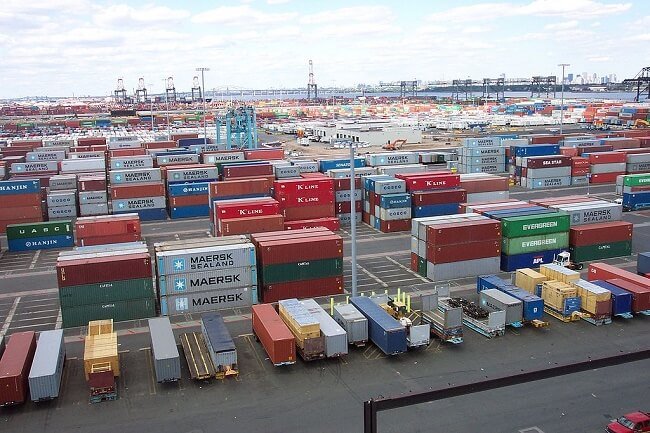
The wine supply chain snafu revolves around a combination of things. Perhaps the most important is a shortage of containers, says a Portuguese wine importer. The containers are the huge steel boxes loaded with merchandise that ships carry between ports; they’re unloaded directly onto train flat cars. If there aren’t enough containers, then wine sits in warehouses waiting to be shipped.

Second, long delays unloading ships at U.S. ports. The reasons for this are a bit vague, since it seems counter intuitive that there would be delays if there aren’t as many containers. But, as the story in the above link notes, there is “record-low container ship schedule reliability and port and inland congestion in the US and elsewhere keeping cargo in transit longer than usual.”

When will this end? The Post article guessed at the holiday season, but the Portuguese importer told me he wasn’t as optimistic. Some importers are already predicting Champagne shortages this year, though it’s not clear if that’s just a British problem.

Until then, we’ll just have to buy what we can when we can. Though I do miss the Zestos.

Ask the WC 29: Birthday gifts, larger bottles, and on-line

birthday wine
Happy birthday — now let’s drink my birthday wine.

This edition of Ask the WC: Wine as a birthday present, plus buying larger bottles and making sense of on-line wine

Because the customers always have questions, and the Wine Curmudgeon has answers in this irregular feature. You can Ask the Wine Curmudgeon a wine-related question by clicking here.

Hi, WC:
I can’t find anything on the blog about buying wine as a birthday present — lots of wine for holidays and Christmas, but not birthdays. How did you miss that?
Birthday shopper

Dear Birthday:
That’s a good point, and one would have thought I’d have touched on the subject once or twice in almost 14 years. General guidance — buy someone what will they like, and not what you think they should like. Plus, of course, bubbly. More specifically, wine for a birthday (or similar special occasion) is about memories — reminding someone about a wonderful experience they once had or something they did with you that neither of you will ever want to forget. I can buy a certain bottle of sparkling wine, and still remember exactly where I was and what I was doing when I drank it.

Hello, Wine Curmudgeon:
A friend sent me this article about wine in larger bottles. Needless to say, it didn’t make much sense to me. Can you explain?
Confused

Dear Confused:
Ah, the wine geek larger bottle story. No wonder you were confused. The wine geek theory goes that the world’s best wines last longer and age more gracefully if they’re in larger bottles, as opposed to the standard 750 ml bottle. So most of the information in the story doesn’t apply to most wine drinkers, since we don’t regularly spend $100 for a bottle of wine, regardless of size. Besides, as happens very time I buy a 1.5-liter bottle of the La Vieille Ferme rose (which is the equivalent of two standard bottles), I drink too much of it. And I’m a professional and should know better.

Hey WC:
I’m a fairly traditional wine shopper, which means I either buy it at the market or at Costco or a chain retailer. So, needless to say, I’ve been confused by this on-line and delivery stuff. Do you have any words of wisdom?
Retail shopper

Dear Retail:
The biggest problem with on-line wine (save for delivery charges) is that you can’t read the label — so no idea about alcohol levels, the grapes in the blend, and he importer (if there is one) without a lot of Googling. And there’s no guarantee about vintage, either. Otherwise, it’s not that much different. I wrote a post about it here; just find a decent on-line retailer and go from there.

Photo: “Wine for Colin’s birthday #wine #food #vscocam” by jeremiah.andrick is licensed under CC BY 2.0

More Ask the WC:
Ask the WC 28: Wine Curmudgeon ethics, sweet red wine, and wine spending
Ask the WC 27: Pandemic wine sales, red Burgundy, wine competitions
Ask the WC 26: Wine gifts, supermarket wine, blog ads