



Tag Archives: wine advice

Ask the WC 35: Kroger merger, Fred Franzia, AVAs

Wine display in a supermarketThis edition of Ask the WC: The Kroger-Albertson’s merger and wine, plus Fred Franzia and lots of new AVAs

Because the customers always have questions, and the Wine Curmudgeon has answers in this irregular feature. You can Ask the Wine Curmudgeon a wine-related question by clicking here.

Hi, Jeff:
You write a lot about the retail part of the wine business, and as far as I know you’re the only one who takes grocery store wine seriously. So how will this proposed Kroger-Albertson’s merger affect those of us who buy wine in the grocery store?
Worried

Dear Worried:
I’d be worried, too. This merger, announced last week, would turn the of the two biggest supermarket chains in the country into one. How do we know to be worried? Because the business media has fallen all over itself saying what a great idea it is. How can reducing competition for food — especially these days — be a good idea for anyone but the companies merging? Unless, of course, you think higher prices and less choice is a good idea.
•

Dear Wine Curmudgeon:
Fred Franzia’s death seemed to cause a lot of controversy. Why was that? He just made cheap wine, didn’t he?
Cheap wine drinker

Dear Cheap:
Because, he made cheap wine, of course. And he liked to rag the wine business about it, which offended it that much more. I was surprised, though, at the vitriol when he died, and not just the Eric Asimov piece. I talked to several people in the wine business, who are otherwise quite intelligent and rational, and all were almost giddy about Franzia’s death. He had that kind of a reputation.
•

Hi, Wine Curmudgeon:
I don’t understand  about all these new wine regions. Why is that?
Confused

Dear Confused:
Wine regions in the U.S. are called American Viticultural Areas, or AVAs for short. They’re supposed to highlight the wines of that region and show that the conditions in the region make the wines unique. They’re based on the European model, and for the most part do a good job — even for less known regions. The Texas High Plains AVA is unique, and much different from the Monticello AVA in Virginia. Having said that, they have become an integral part of wine marketing — call it a government seal of approval for wine quality. Which isn’t the case, and was never supposed to be the case. They’re just supposed to denote different geographical regions. So you can be excused for being confused.

More Ask the WC:
• Ask the WC 34: Wine prices, wildfires, supply chain
• Ask the WC 33: Wine consumption, bad wine, Earth Day
• Ask the WC 32: Wine prices, wine and health, Ukraine
Ask the WC 34: Wine prices, wildfires, supply chain

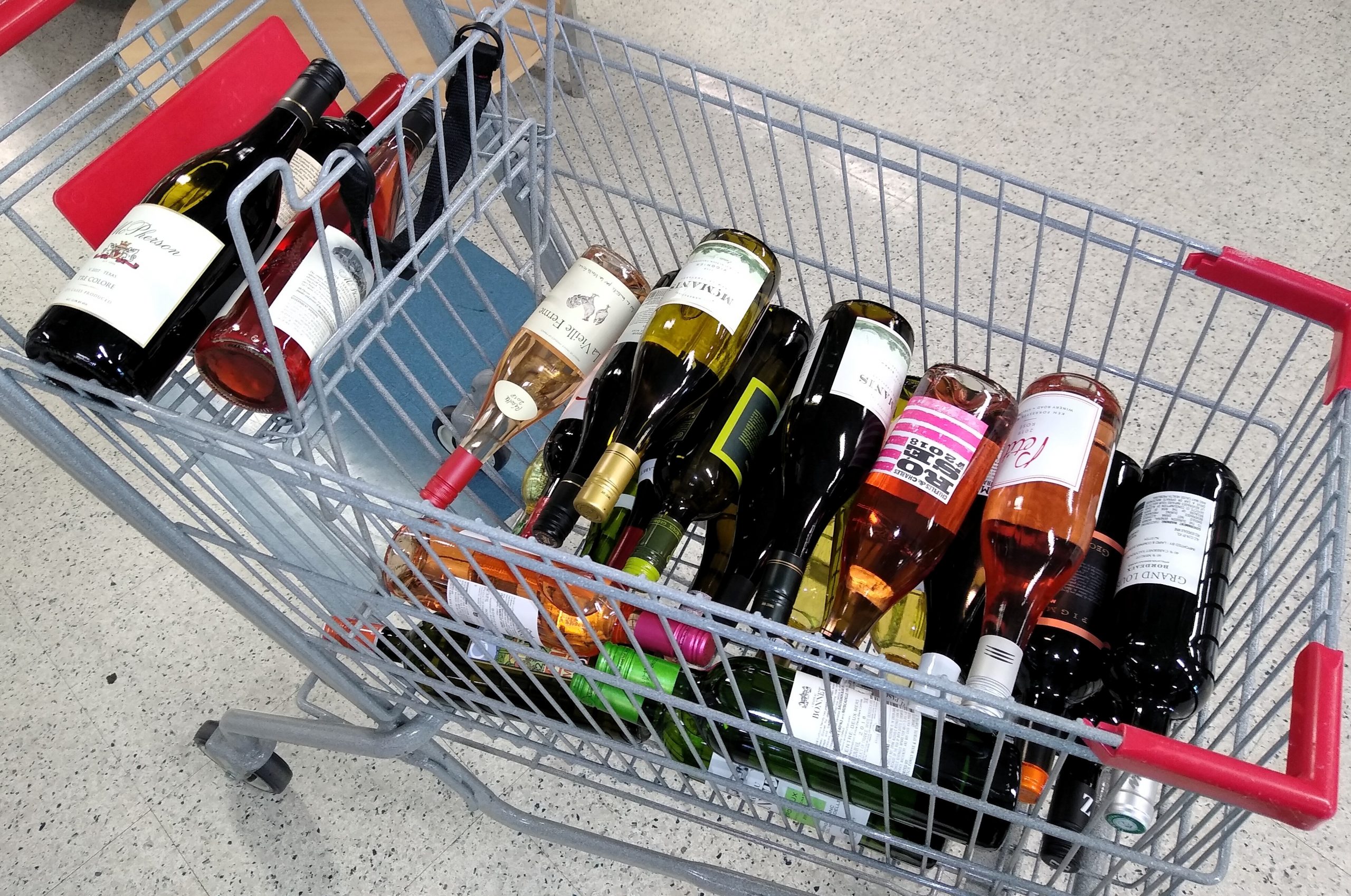
shopping cart with wine bottles
Never fear — despite price increases, there seem to be plenty of $10 and $12 wine in stores.

This edition of Ask the WC: Why wine prices continue to defy the law of supply and demand, plus wine country wildfires, and good news — and bad — for the supply chain

Because the customers always have questions, and the Wine Curmudgeon has answers in this irregular feature. You can Ask the Wine Curmudgeon a wine-related question by clicking here.

Hey, WC:
How come wine prices keep going up? Or at least they seem to where I live (East Coast).
More cheap wine

Dear Cheap:
I was asked this question on this radio show and this radio show. (And please forgive the shameless, shameless, plug.) The confusion is that, as wine consumption has been declining, prices have been increasing. Which seems to defy the law of supply and demand. As near as anyone can tell, the price hikes are more about the cost of glass bottles and shipping than the price of wine. In addition, some retailers and wholesalers are raising prices just because.
•

Oh Curmudgeonly One:
You haven’t written anything about wine country wildfires this year. How come?
Curious

Dear Curious:
Because, thankfully, so far, this season’s worst wildfires have avoided California wine country. In fact, I talked to the blog’s official wine marketer (who lives in Napa) about this the other day, and he said it has been a fine, pleasant and wonderfully normal summer so far. So let’s hope for the best.
•

Dear WC:
What’s the latest on wine and the supply chain?
Geeky blog reader

Dear Geeky:
The good news, according to this story, is that much of the worst of the supply chain snafus of the past couple of years seem to be over. The backup at the port of Los Angeles, the busiest in the western hemisphere,  is one-fifth of what it has been. The bad news? Cyber-attacks, mostly from Russia and Europe. The story says there have been as many as 40 million attacks a month.

More Ask the WC:
• Ask the WC 33: Wine consumption, bad wine, Earth Day
• Ask the WC 32: Wine prices, wine and health, Ukraine
• Ask the WC 31: Pinot noir, minimum pricing, wine apocalypse

Porch wine 2022

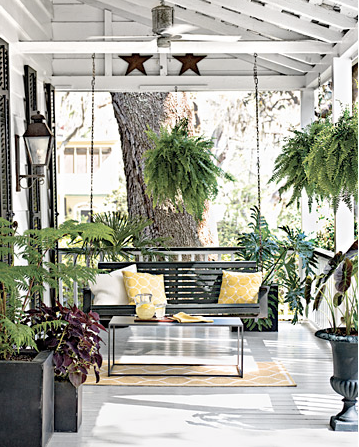
Chairs on a front porch
Does the chicken have the ice cubes?

Once again, why porch wine matters — and bring the ice cubes

I usually don’t update the porch wine post every year, but this year is special — and not just because of the 100-plus temperatures in Dallas. And those of you in Dallas who are angry at the blog’s unofficial weather forecaster — don’t you have something better to do?

Rather, I’m updating the post this year because Esther Mobley of the San Francisco Chronicle, of the most important members of the Winestream Media, says it’s OK to put ice cubes in your wine.

Welcome to the fight, Esther.

Porch wine is about lighter wines, red and white (and of course, rose), that are lower in alcohol and that offer relief from the heat. The idea with a porch wine is to drink something that won’t make the sweat bead on your forehead. The blog’s original porch post is here, and there is even a porch wine terms post.

And keep the ice cubes handy. These four wines will get you started:

• Zestos Blanco 2020 ($12, purchased, 12.5%): This Spanish white is one of the all-time great cheap wines, and the 2020 vintage may be the best ever — subtle and interesting, with less tart white fruit and maybe even some spice. Sure to make the shortlist for the 2022 Cheap Wine of the Year. Highly recommended. Imported by Ole & Obrigador

• Librandi Segno Bianco 2020 ($12, purchased, 12.5%): Well-made, varietally correct Italian white that uses the little known greco bianco grape. That means some lemon fruit as well as very clean and very crisp, if a bit thin. Imported by Winebow

• Château Laulerie Bergerac Rose 2021 ($10, purchased, 12%): Yummy cabernet sauvignon-based rose from southern France, with a little merlot to round it out. Almost raspberry fruit, some garrigue, and long on the finish, almost stony. Highly recommended. Imported by Skurnik Wines

• Brunellesco Montepulciano d’Abruzzo 2019 ($10, purchased, 12%): This Italian red is much more savory and herbal than other wines from the Montepulciano d’Abruzzo region. The cherry fruit isn’t the only selling point. Highly recommended. Imported by Monsieur Tonton Selections

Photo: Taliesin vis Morguefile

More about porch wine:
• Memorial Day and rose 2022
• Update: Porch wine for the long, hot summer
• Wine of the week: Vinho verde 2022
• Wine of the week: Domaine Duffour Cotes de Gascogne 2020

Ask the WC 33: Wine consumption, bad wine, Earth Day

wine drinkers
“I didn’t know world wine production was decreasing — thanks, WC.”

This edition of Ask the WC: The decline in world wine consumption, plus how to tell when wine goes off and Earth Day

Because the customers always have questions, and the Wine Curmudgeon has answers in this irregular feature. You can Ask the Wine Curmudgeon a wine-related question by clicking here.

Dear Wine Curmudgeon:
Are there any actual statistics about the decline in wine consumption? Or are you just making that up?
A skeptic

Dear Skeptic:
How about The International Organisation of Vine and Wine, or OIV, which tracks world wine production? “In 2021 extremely low world wine production volume is expected, at a level similar to 2017. This would be the third consecutive year where the global production level is below average n 2021.” So less production means less consumption.
•

Hi, WC:
I opened a wine the other day, and it smelled all funky and gross. Did it go bad? How can you tell?
Bad wine?

Dear Bad:
I get this question a lot, and most recently at a wine class I did a couple of weeks ago (emerging from the pandemic). Yes, wine can go bad — heat, light, and too much age can spoil it. The wine can taste like badly made brandy, taste like over-cooked tomato soup, or even not have much flavor at all. Ironically, about the time of the wine class, I wrote a piece for Pix.wine about this exact subject.
•

Hey, Jeff:
You didn’t write anything about Earth Day and wine last week!
Green wine drinker

Dear Green:
I wrote an Earth Day piece a couple of years ago on the old blog, and no one read it. So I prefer to remind the wine business about its obligation to the planet the other 364 days a year — here and here, for example. And don’t worry — I’ll keep doing it.

Photo: Kelsey Chance on Unsplash

More Ask the WC:
• Ask the WC 32: Wine prices, wine and health, Ukraine
• Ask the WC 31: Pinot noir, minimum pricing, wine apocalypse
• Ask the WC 30: BYOB, wine for friends, California fires

Ask the WC 32: Wine prices, wine and health, Ukraine

men drinking wine
“Only $4800 for wine for a year? We spend that much on a couple of cases.”

This edition of Ask the WC: How much trouble does the WC have finding cheap wine to review? Plus, the latest wine and health update and Ukraine wine.

Because the customers always have questions, and the Wine Curmudgeon has answers in this irregular feature. You can Ask the Wine Curmudgeon a wine-related question by clicking here.

Greetings, Cheap Wine Guru:
I saw the post about how you bought 11 bottles of wine for about $11 each. How is that possible, given inflation and premiumization and all the rest?
$10 wine

Dear $10:
The short answer is that I spend a lot of time looking for wine to review that meets the blog’s criteria. The long answer is that I shop at close to a dozen retailers, including national supermarket chains, and it takes up a fair amount of my working week. Ironically, given the way the wine business works, I review very few samples — most are either too expensive, too poorly made, or both. In 2021, I spent $4,800 looking for wine for the blog.
•

Dear Wine Curmudgeon:
Are you going to write a definitive wine and health post? There is so much confusion out there about whether wine will kill someone.
Healthy wine drinker

Dear Healthy:
Drink wine in moderation. That pretty much covers it. The rest — allowing for my lack of medical credentials — is smoke, mostly from neo-Prohibitionists who want everyone to quit drinking everything because too much alcohol is dangerous. Which, of course, is absolutely true. But hot dogs may be even more deadly (nitrites!), and I haven’t seen any of the researchers who are doing junk like this conducting similar pseudo-studies about hot dogs.
•

Hi, WC:
You haven’t written anything about Ukraine and what’s going on there. How come?
Surprised

Dear Surprised:
I started a Ukraine post a couple of times — there is wine in the country, believe it or not — but could never quite figure out what to say. I’ve mostly stayed away from politics on the blog and there really wasn’t a way to write about Ukraine without injecting politics into it. But know that my family left that part of Eastern Europe more than 100 years ago, and the reasons then are just as applicable now.

Photo: MART PRODUCTION from Pexels

More Ask the WC:
• Ask the WC 31: Pinot noir, minimum pricing, wine apocalypse
• Ask the WC 30: BYOB, wine for friends, California fires
• Ask the WC 29: Birthday gifts, larger bottles, and on-line

Ask the WC 31: Pinot noir, minimum pricing, wine apocalypse

wine advice
“Mmmmm. … tannat. .,. yummmm.”

This edition of Ask the WC: When is pinot noir not pinot noir? Plus what’s minimum pricing and whether the wine apocalypse is coming

Because the customers always have questions, and the Wine Curmudgeon has answers in this irregular feature. You can Ask the Wine Curmudgeon a wine-related question by clicking here.

Hey, WC:
I liked the McManis pinot noir review, but some of it didn’t make sense. How can a wine be called pinot noir if there are other grapes in it?
Confused about pinot

Dear Pinot:
A varietal wine — a wine that has the name of the grape of the label — doesn’t have to be made only with that grape. Federal law allows varietal wine to have as much as 25 percent of something else, and most pinot noir that costs less than $30 often has 25 percent of something else. I wrote a trade story about this a decade ago, when inexpensive pinot became popular. One winemaker told me that his company used tannat, grenache, syrah, zinfandel, petite sirah, refosco, and dornfelder in pinot noir. The goal was to make the wine darker in color and fruitier, since traditional pinot is neither. So, when I write — as I did in the McManis review — that most inexpensive pinot tastes like a red blend, that’s because it was made to taste that way.
•

Oh Curmudgeonly One:
What’s this minimum pricing I keep hearing about, where the government sets alcohol prices? That doesn’t sound very free enterprise. We don’t do it in the U.S., do we?
Free markets rule

Dear Markets:
Yes, we have minimum pricing in the U.S. Most notably, it’s in Connecticut and Michigan; the state decides the minimum a retailer can charge, though it may exist in other forms elsewhere given the tangle that is U.S. liquor regulation. The rationale is that if liquor costs too little, we’ll buy too much and all be drunk — the infamous “public health and safety” standard that allows states to regulate alcohol in their own way. So no, no free market in the U.S. in booze.
•

Dear Wine Curmudgeon:
I’m getting a little tired of you talking about the wine apocalypse all the time, and how wine is going away. It’s a $100 billion business. isn’t it? How can that disappear?
Irritated and annoyed

Dear Irritated:
Wine sales in the U.S. are about $70 billion annually, so yes, not going away tomorrow. But that’s hardly good news. Wine sales have been flat for years (and may actually have decreased, depending on who did the study), per capita consumption has decreased, and younger people aren’t interested in wine. Hence the concern among those of us who love wine but refuse to be blinded by the industry’s obsession with prices and scores. And do you think I like writing about this stuff? Hardly. But someone has to do it.

Photo: Joey Nicotra on Unsplash

More Ask the WC:
• Ask the WC 30: BYOB, wine for friends, California fires
• Ask the WC 29: Birthday gifts, larger bottles, and on-line
• Ask the WC 28: Wine Curmudgeon ethics, sweet red wine, and wine spending

The WC video: Holiday wine tips one more time

Top-notch holiday wine buying advice never goes out of style

Call this the blog’s newest holiday tradition — the Wine Curmudgeon opening a bottle of sparkling wine live and in one take. And I don’t even have any initials after my name. The original post ran here.

So solid holiday wine buying advice, which is always welcome. Click on the Watch on YouTube link to see the video; it’s age-restricted because we’re talking about alcohol.

Many thanks to host Michael Sansolo as well as everyone at the Private Label Manufacturers Association who put this together. Even better, they didn’t laugh too hard at the WC’s reaction after being told he would have to wear makeup.

Would that we had been able to continue the series, which was going to focus on buying quality wine at the supermarket. But the world intervened, as it often does.

And, as long as we’re on holiday wine suggestions, a shameless plug: First, a 12-month subscription to the blog (discounted, of course), as well as the cheap wine book.