Tag Archives: expensive wine

Winebits 669: Halloween wine, expensive wine, intellectual property

halloween wine
“Trick or wine?”

This week’s wine news: Dress up like a box of wine for Halloween. Plus, Eric Asimov on why we can’t afford the world’s great wines and intellectual property rights vs. the First Amendment.

• The right costume? Want to be a box of wine for Halloween? A Detroit radio station reports that Franzia is making that possible. “The Francia boxed wine costume is only $25 and comes in two flavors, Chillable Red and Sunset Blush.” There is also a wine backpack, so you can drink wine while you look like it. No word on how many points the costume gets, though I wouldn’t be surprised if someone, somewhere, gave it a score.

• No great wine for us: The New York Times’ Eric Asimov rants about one of the Wine Curmudgeon’s favorite topics: The ridiculous prices of the world’s great wines. “Among the many ways the rich are different from you and me: Only they can afford grand cru Burgundy. That wasn’t always the case. … For example, back in 1994, a bottle of Comte Georges de Vogüé Musigny 1991, a grand cru, retailed for $80 (the equivalent of $141 in 2020, accounting for inflation). Today, that bottle costs about $800.” The piece is well worth reading, and speaks to a post I’m working on for next week about the absurdity — and even obscenity — of expensive wine prices.

• Nuts to the First Amendment: Because, of course, there’s money involved. The Libation Law Blog reports that “Beer, wine, and liquor trade groups are coming out of the woodwork” to support an appeal by Jack Daniels whiskey against a parody dog toy called Bad Spaniels, which looks like the Daniels bottle. Their support comes despite long entrenched and well-established First Amendment protection for parody, satire, and the like that made it possible for me to write this. Or this. Or this. But in the second decade of the 21st century, getting rich trumps all. Sadly, this is not the first time we’ve seen the wine business throw its weight around, spouting intellectual property. So nuts to you, beer, wine, and liquor trade groups. I’m going to look for one of these for Churro, the blog’s associate editor. Then he can write a post about playing with it.

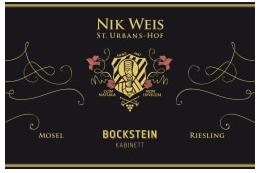
Expensive wine 137: St. Urbans-Hof Riesling Kabinett 2016

St. Urbans-Hof Riesling KabinettSweet? Yes, but the St. Urbans-Hof Riesling Kabinett shows how gorgeous sweet wine can be

The Wine Curmudgeon’s campaign to increase U.S. riesling consumption continues with the St. Urbans-Hof Riesling Kabinett. This vintage isn’t necessarily a typical approach to German riesling, given how cold and wet the year was, but it is a delicious one.

The St. Urbans-Hof Riesling Kabinett 2016 ($25, sample, 8.5%) is sweet – make no mistake about it. But this is not sweet as we understand it from focus group supermarket wine, but sweetness that comes from beautiful candied lemon fruit and a fresh, honeyed sweetness. In this, the acidity and minerality balance the sweetness. The former, though not necessarily noticeable, keeps the wine from being syrupy, while the latter cleans the palate at the finish. Who am I to argue with the Wine Spectator’s assessment: “Elegant.”

Highly recommended. Drink now, but would probably improve with a couple of more years in in the bottle. It also needs food – and how often do you hear that about sweet wine? The St. Urbans-Hof Riesling Kabinett would pair more effectively with something like sausage and braised cabbage than anything spicy.

Imported by HB Wine Merchants

Winebits 666: Wine ads, wine country fires, expensive wine

wine ads
“Come on. ..you know sex sells wine.. even if it doesn’t.”

This week’s wine news: Wine ads are missing the point by emphasizing sex. Plus, a wine country fire update and expensive wine foolishness

• Sex doesn’t sell: A new study, published in the academic journal Sex Roles, casts doubt on whether sex actually sells products. This result should be especially important for wine marketers, who rely on sex almost as often as they do snobbery to sell wine. The Italian study found that women were less likely to find a product attractive and were less likely to purchase it if the product used sexual female models than if the ad was neutral. Men, even more surprisingly, were unaffected by ads’ sexualization. Said the authors: “The present study has practical implications for marketers because it suggests that ‘sex does not sell.’ In addition, considering both the psychological damage and practical inefficacy of sexualized ads, our findings have important implications for public policy.”

• Scorched vines: The Wine Spectator does a fine job recapping this fall’s California wine country wild fires, “More than 200 wineries are in evacuation zones. A few vintners have managed to return to their properties to assess damage in recent days. But evacuation orders remain in place for much of the area, keeping many out.” I did a Napa radio show a couple of weeks ago, and it looked like the worst of the fire season was over. But then the Glass Fire sprang up last week.

• Betting on wine: We’ve written several times about the Kafka-esque reality of Liv-Ex, a stock exchange for the world’s most expensive wines. I mention it again to show one should drink wine instead of investing in it. A smart investor, according to the Liv-Ex article, would have seen a 20 percent return in a decade by investing in specific Robert Parker-favorited wines. Wow — two percent a year? Can’t I get that with a bank CD and then drink the wine?

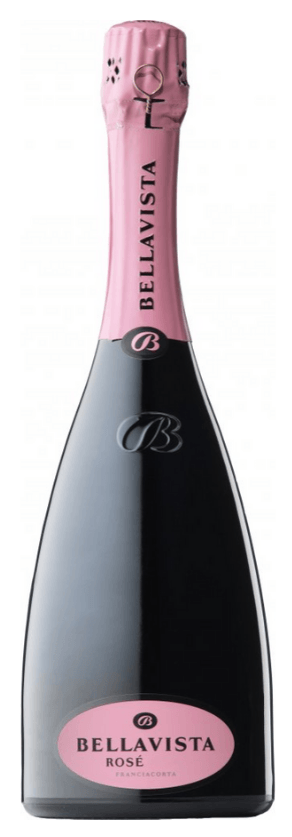
Expensive wine 136: Bellavista Vendemmia Rose 2014

Bellavista Vendemmia roseThe Bellavista Vendemmia rose, an Italian Champagne-style sparkling wine, provides value and lots of quality

Most Italian sparkling wine is Prosecco, which rarely costs more than $15, offers a bit of sweetness, and has decent bubbles. Franciacorta, which is made in the Champagne style and uses the same grapes, is much less common; Italian producers make 200 times more Prosecco than Franciacorta.

Hence, Franciacorta is pricey and not always easy to find. I got to taste the Bellavista Vendemmia Rose courtesy of the Italian Wine Guy, who apparently took pity on me for having to drink wine like this.

Still, the Bellavista Vendemmia Rose 2014 ($44. sample, 12.5%) is well worth the effort to find, and it’s certainly worth its mid-double digit price. It’s a nuanced, sophisticated sparkling wine, and much appreciated after all the stuff I’ve had to plow through the past six months in the pursuit of wine journalism. Look for some brioche aroma, lots of berry fruit (strawberry? raspberry?), those wonderfully tight bubbles that show top-notch Champagne-style wine, and a long, clean, and minerally finish.

Highly recommended. Drink this on its own, but it’s a terrific food wine – socca, anyone?

Imported by TMT USA

Expensive wine 135: Domaine Louis Michel Chablis Butteaux Premier Cru 2015

Louis Michel Chablis ButteauxThe Louis Michel Chablis Butteaux doesn’t taste like other Chablis, but that’s not necessarily a bad thing

This is not the kind of Chablis that many of us expect – minerally, taut, and steely. Instead, the Louis Michel Chablis Butteaux is rich and full, much softer than I usually want from Chablis. And that difference is just another part of the joy of wine.

How different is the Louis Michel Chablis Butteaux 2015 ($30, purchased, 13%)? The winery’s website lists scores from five major international critics for this vintage of its chardonnay from the Chablis region of France’s Burgundy. Each score is different, and the two French scores are the lowest. That five people who taste this kind of wine for a living disagree about its quality (even allowing for the inefficiency of scores) speaks volumes about how unique this wine is.

Because it is. My tasting notes are just as perplexed: “Softer, less traditional style of Chablis, with less minerality and more ripe apple fruit. And what is it in there that almost tastes like oak?” Because this Chablis doesn’t see oak (and most, in fact, don’t).

So what’s going on here? Chalk it up to what the late and much missed Diane Teitelbaum told me years ago: Wine is not supposed to taste the same. It’s supposed to be different – otherwise, what’s the point? This producer, in this part of Chablis with this terroir, doesn’t make wine that tastes like the wine that other producers make in other parts of Chablis, with different terroir.

This difference is not about good or bad; this is a high quality wine that will probably benefit from another couple of years in the bottle. It’s just different, and that’s something I have learned to appreciate.

Imported by Vineyard Brands

Pricing note: Price is suggested retail or actual purchase price before the October 2019 tariff

Winebits 657: Expensive wine, phylloxera, French wine

This week’s wine news: The Wine Curmudgeon isn’t the only one thinks expensive wine is too expensive. Plus, we may be close to a victory over phylloxera, wine’s greatest scourge, and the trials of French wine in the pandemic era

phylloxera• Too pricey: David Morrison, writing on the Wine Gourd, doesn’t mince words: Prices for high-quality wines “are outrageous compared to what they were half a century ago, relatively speaking. Put another way, high-quality wine is much less affordable these days.” His result is based on a study published earlier this year, which found that high-quality wine prices are much more expensive than what their inflation-adjusted prices should be. Apologists for expensive wine (for all wine princes, in fact) always cite inflation as the culprit, so it’s good to see two reports that show them to be wrong. In fact, inflation is rarely the issue; if I was up to it, I would do a post detailing how technology and supply chain efficiencies have wrung inflation out of much of the way wine is priced. Rather, the cause is premiumization and the idea that all wine should cost more because it should. When wine is touted as an investment like real estate, diamonds, and gold, instead of something to drink, how can we expect rational pricing?

• An end to phylloxera? Phylloxera is a louse that sucks the sap out of the roots of grape vines, which kills the wines. An infestation at the turn of the 20th century almost destroyed the French wine industry, and the louse still wreaks havoc on vineyards in the 21st century. It’s resistant to pesticides, and the only way to prevent it is to graft non-vinifera rootstock onto vinifera vines (vinifera is the species for the European wine grapes that make the world’s best wines, like merlot and chardonnay). Now, though, scientists may be one step closer to eradicating phylloexera after identifying its genome – the bug’s complete set of DNA. The research could eventually lead to resistant rootstocks, eliminating the need for costly grafting.

• Wine woes in France: The French wine market has collapsed, with the Trump tariff and the pandemic playing key roles. This piece from the New York Times tells the story all too well: “And so some of the succulent and subtle white wine for which this region is famous, nurtured on the stony, sunbathed Alsace slopes, will wind up as hand sanitizer.” One Alsatian producer is dumping one-third of its production – almost unprecedented. The story reminds us wine is made by people, some of whose families have been doing it for hundreds of years, and that trade wars have consequences that we may not consider.

Photo courtesy of Helena Lopes, using a Creative Commons license

A tale of two Italian wines: Boffa Carlo Arneis and Mionetto Prosecco di Valdobbiadene Superiore di Cartizze 

Italian wineThe former is a lovely $15 wine, while the latter is a $40 Prosecco. How can Italy be going in two completely different directions?

Premiumization has done horrible things to the wine business, so horrible that they go beyond cutting sales and alienating younger consumers. Thanks to premiumization, wine is becoming something not to drink and enjoy, but for collecting and for showing off. Case in point: these two Italian wines.

The Boffa Carlo Arneis 2017 ($15, purchased, 13.5%) is a beautiful, almost elegant white wine, with subtle lemon and stone fruit, nuanced minerality, and a whole that is greater than the sum of its parts. It’s a tremendous value for arneis, a lesser-known grape where prices can top out at $30.

The Mionetto is a $40 Prosecco (sample, 11%). It’s a well-made and enjoyable sparkling wine, but in the end, it’s a $40 Prosecco, not all that different or better than the legions of $12 Proseccos cluttering supermarket aisles.

So how did Italy, a country with thousands of years of winemaking chops, go from the more or less traditional approach that gave us the arneis to one based on premiumization and a $40 Prosecco? Because decisions are increasingly made based on marketing and category management, and not on wine.

My guess? Someone, somewhere decided Mionetto needed a product to compete with Champagne and high-end California sparkling wine. So we got a $40 Prosecco – not because the world was demanding a $40 Prosecco or because the grapes were of such high quality that they would produce a wine worth $40. We got it so an Italian wine would be able to sit on a store shelf next to Champagne and grab some of that market share. Because if a wine costs $40, it must be worth it, right?

The same thing has happened with rose, where the marketplace has been flooded with $25 pink wine that is almost no different from $10 and $12 rose in anything other than retail price. The reason? Because people who buy $25 red and white wines have been taught that cheap wine is crap, so why not sell them $10 rose that costs $25? A rose producer I know can launch into a rant on that subject even more quickly than I can, which should tell you how widespread the practice is.

Finally, remember that this post is not about price, but about value, and that expensive wines can offer, value, too. That’s the Wine Curmudgeon’s mantra. The wine business will have you believe that value is no different from price, because that’s how it makes its money. Because, $40 Prosecco. But we know better, don’t we?

Photo: “Hanging Bottles” by garryknight is licensed under CC BY 2.0