Liz Thach: $12 to $20 is the sweet spot for U.S. wine.
Liz Thach of Sonoma State University talks about premiumization, the wine tariff, wine prices and what else to expect in 2020
Sonoma State University’s Liz Thach, MW, PhD, is one of the most respected wine business analysts in the country, so her take on what will happen next year with wine prices, premiumization, and the tariff is worth a podcast. And Thach doesn’t offer much hope for those of us who appreciate quality cheap wine:
• Yes, the grape glut in California is good news for consumers. But she also expects wine prices to continue to thrive between $12 and $20, as premiumization continues.
• The tariff will benefit California producers, and especially hurt Spanish wine. Australia, long out of favor with U.S. consumers, may also benefit.
• French wine won’t be hurt as badly as Spain, given its higher prices.
Click here to download or stream the podcast, which is about 9 ½ minutes long and takes up 3.6 megabytes. The sound quality is almost excellent, despite Skype’s refusal cooperate.
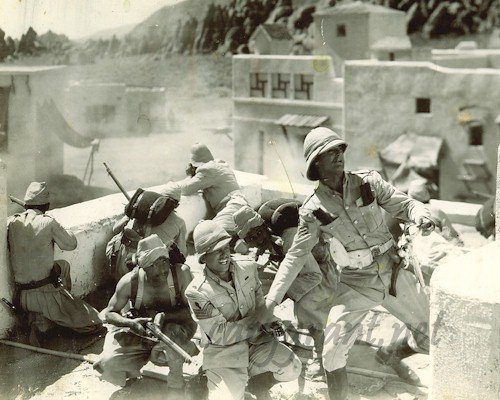
Look out! They’re shelling us with premiumization and the wine tariff!
You keep a stiff upper lip, try to ignore the frustrations and complications, and soldier on – because quality cheap wine is worth it
How do you write about quality cheap wine when the wine industry and the federal government have gone out of their way to make quality cheap wine an anachronism?
Because, as we celebrate the blog’s 12th birthday, that’s the situation I find myself in. Premiumization and the 25 percent European wine tariff have made it all but impossible to find the kind of $10 and $12 wine that’s worth writing about. I feel like a character in one of those British Raj movies where the garrison is stranded in a fort on a remote hilltop and we’re being picked off one by one and we know the relief column isn’t going to arrive in time.
Yes, there is still plenty of cheap wine on store shelves, but just because a wine is cheap doesn’t mean it’s worth drinking.
The irony here is that I seriously considered ending the blog after this final birthday week post (with a Hall of Fame wrap-up in January). And if I had known about the wine tariff when I was pondering the blog’s fate this summer, it would have been that much easier to close it after 12 years.
Changing my mind
But two things happened to make me change my mind: First, and most practically, the site’s hosting company charged me for another year in August. So, if I closed the blog with this post, I would have been stuck paying for nine months of service I didn’t use. Second, four people whose opinions I admire and respect pointed out that if I didn’t keep doing this, who would? And that despite my frustration with the blog, there is and will be a need for it.
For the frustrations have been endless. These days, it’s not just about paying homage to our overlords at Google or dealing with out-of-touch producers and distributors and too many incompetent marketers. Or fending off the sponsored content and the fluff pieces that so many others in the wine writing business have turned to in an attempt to make money at something where there is little money to be made.
These days, it’s about making sense of a business that is divorced from reality. Which, frankly, makes me feel like I’m using a croquet mallet to comb my hair.
Am I missing something here? Aren’t declining sales a bad thing? Shouldn’t an industry do something to reverse the decline, instead of furthering it by raising prices?
But not, apparently, if it’s the wine business in the second decade of the 21st century. Because, of course, premiumization. I’ve probably written entirely too much about the subject, but mostly because I can’t believe anyone in wine still takes it seriously. Though, and this is welcome news, there are others who are beginning to question its validity. Damien Wilson, PhD, who chairs the wine business program at Sonoma State University, is blunt: Premiumization can be a path to ruin, since sales decline and higher prices scare off new wine drinkers.
The less said about the tariff the better. It’s as counterproductive as premiumization, and its adherents are blinded by politics to economic reality. That the tariff could forever wreak havoc on U.S. wine consumption is beyond their comprehension.
So let me shepherd my ammunition, keep my head low, and hope against hope that the relief column gets through. And keep a very stiff upper lip.
Looks like it’s time to crank out another Barefoot epic.
The Wine Curmudgeon’s most popular posts 2019
The blog is truly part of the Internet as we celebrate its 12th annual Birthday Week.
This means two things: Its reason for being is not necessarily cheap wine, but whatever Google sends its way when someone searches for a wine, a wine term, or wine news. Only the 2019 $10 Hall of Fame made the top 10 list this year. In the old days, two, three and even four Halls of Fame were among the 10 most popular sites.
Second, that the blog is truly international — Beijing was the top city for visitors, with 3.6 percent, easily ahead of Chicago and New York, while Guangzhou (1.1%) was eighth. The U.S. remains the top country, but its share declined by about one-quarter, while China moved up to second from fourth last year.
Meanwhile, traffic was down a couple of percentage points. I think. The blog still got approximately 600,000 visitors between November 2018 and November 2019, but it’s becoming increasingly difficult to be more precise without paying for a sophisticated third-party app. Google Analytics, for example, says I got about one visitor a month.
What else happened between 2018 and 2019?
• Blog readers continue to get younger (more than half younger than 40) and the number of women continues to increase (2 1/2 out of five). Again, murky counting.
• The most common search term was “Wine Curmudgeon,” followed by “residual sugar in wine.” Apparently, Google has associated the site with my efforts to label sweet red wine as sweet, instead of pretending it’s dry.
The most popular posts from 2019 — as well as a couple of other highlights — are after the jump: Continue reading →
This 1984 King Solomon wine commercial knows what it’s about: “33 percent more wine than the regular size”
The Wine Curmudgeon’s TV wine ad survey has found the good (very little), the bad (almost all) and now this — a 1984 spot on a local Philadelphia station for something called King Solomon wine.
This ad is odd, and not just because of its content. For one thing, Pennsylvania was a control state (and still mostly is), so the only place to buy King Solomon wine would have been a state store. And, given this is a concord wine sold because it’s cheap, it’s difficult to believe a state store would have carried it. Apparently, the company that marketed it was well known in Philadelphia, producing a variety of off-brand spirits and wines. so maybe it had some clout with the state.
The other thing I can’t figure out: What does a genie have to do with the Biblical King Solomon?
Still, the ad is on message: The wine is cheap, there’s a lot of it, and it will get you drunk — “a big, bold, two-fisted wine.” How many other TV wine ads actually say what they mean?
Get ready for the WC’s holiday wine video later this month
We tried another tack on wine videos this week in New York, and everyone seems hopeful that it will do what our first attempt in the spring didn’t do. That is, find a way to make a wine video that people will enjoy watching.
I recorded the video with Michael Sansolo as part of the Private Label Manufacturer’s Association Store Brands USA series; his show is “Shopping with Michael.” Michael asked questions, I answered, and all seemed to go well. I even opened a bottle of sparkling wine on camera with nary a misstep.
The video should go up later this month, and I’ll update this post with the link. And it’s live — Holiday wine tips.
Full disclosure: I’m doing some consulting for the private label trade group in its quest to convince U.S. retailers to step up their store brand wine effort. Because, of course, Winking Owl.
As such, I spent a couple of days on the wine beat in New York City:
• Hotel wine prices continue to astound me. How about $56 for a bottle of $8 Chateau Ste. Michelle riesling? That seems a bit much, even for mid-town Manhattan.
• It’s always weird to walk through a New York City supermarket, and especially a well respected one in an upscale area near the UN, and not see wine for sale. But that’s our old pal the three-tier system at work. Wine shops can’t sell potato chips in New York state, and supermarkets can’t sell wine.
• We spent a lot of time talking about wine on the set, even when we weren’t shooting the video (and not to worry – “on the set” is about the only video/film jargon that I know). That’s because, as someone said, “Wine is so confusing.” It was a great joy to open a bottle of $2.99 wine for several people and explain why it cost $2.99 and why it tasted that way. In fact, one reason the PLMA wants to do the wine videos is to help supermarket shoppers who are baffled by the Great Wall of Wine.
• Welcome to the 21st century: A bomb-sniffing dog checks out your luggage when you check into the Hilton near the UN.
Ancient Rome, and how its wine business dealt with natural disasters, mass production, and wine critics
Does the following sound familiar?
They refined production by using barrels and cultivation techniques that allowed them to make more for less cost. … experts estimate that a bottle was being consumed each day for every citizen.
No, this isn’t a description of Big Wine and the U.S. wine boom that lasted from the 1980s to the beginning of the 21st century. It’s the role of wine during the Roman Empire, about 1,800 years before any European had ever heard of Napa or Sonoma.
• The Roman Empire’s version of Napa Valley, perhaps in and around Pompeii. The city, near what is now Naples on the Mediterranean, was a key Roman wine center. When it was wiped out in 79 when the Mount Vesuvius volcano erupted, “the vineyards were destroyed, and the cost rose so rapidly that only the rich could afford it.”
• High land values. In 92, Emperor Domitian banned new vineyards in Rome and ordered the uprooting of half of the vineyards in use so grain could be grown. Farmers had been planting vines and taking out grain to replace the vineyards lost in Pompeii. Because, of course, vineyard land had become more valuable.
• Their own Winestream Media. Pliny the Elder, who was killed in Pompeii, was among the most important Roman wine critics, and not just because he wrote: “In vino veritas (in wine there is truth).” Book 14 of his 37-volume Naturalis Historia covered wine, which included a ranking of Rome’s top vineyards. Book 17 discussed viticulture and defended the notion of terroir. And Roman critics, as I discussed in the cheap wine book, were notorious for their disdain for the wine most people could afford to buy.
Slider photo courtesy of Aveine, using a Creative Commons license
These four 2020 wine trends are more click bait than anything else
The Wine Curmudgeon is constantly on the alert for wine foolishness and silliness, since those things usually mean someone is after your money. So when several experts posted their 2020 wine trends, my hooey meter went into overdrive.
Hence, four 2020 wine trends you don’t have to worry about:
• Cannabis-infused wine. Yes, legal weed is still it its infancy and it may yet prove to be the next big thing. But so far, it has been a disaster. How big a disaster? Just ask Constellation Brands, which dumped more than two dozen wine brands this spring to focus on cannabis. Along the way, the company has invested at least US$4 billion in Canadian weed producer Canopy, and Canopy has yet to turn a profit.
• Pop-up wine bars. Apparently, the experts didn’t consider liquor laws or the three-tier system, which would make this almost impossible in most of the U.S.
• Piquette. Lots and lots of websites and experts ask sommeliers about the hippest trends, since they figure sommeliers are hipper than the rest of us. Thus, piquette. This isn’t exactly wine, but is fizzy and has low alcohol, which do seem to be legitimate trends. The catch? Piquette is made by just a handful of small producers on the East Coast, which means that no one will be able to buy it unless they visit a bar or restaurant which has a very hip sommelier.










 by Wine Curmudgeon Posted On


 Get ready for the WC’s holiday wine video later this month
 Ancient Rome, and how its wine business dealt with natural disasters, mass production, and wine critics
