



Category:Regional wine

Jonesy’s in Denver: Regional wine done right

There has been a lot of cyber-ink spilled recently over how difficult it is for restaurants to sell regional wine, and how they don't deserve the criticism they have received from people like Todd Kliman and I.

So I give you Jonesy's Eatbar in Denver, which started life serving mostly local beer and discovered — happily — that it could sell local wine as well. I ate at Jonesy's last week when I was judging Colorado wines in Denver, and had a nice chat with the restaurant's Leigh Jones about the Colorado wines on her affordable and interesting wine list.

Leigh said Jonesy's has no trouble selling Colorado wines, even though she had very little idea when it opened that there would be demand for it. But given the restaurant's extensive local craft beer list and its focus on comfort food, it made business sense to sell local wine. Best yet, she said, it's a decision that has been profitable. Now, to be fair, I can see where regional wine would have an edge at Jonesy's, which is neither snotty nor overpriced, and where the goal is to have fun and not impress food snobs.

We had two Colorado wines with dinner — Infinite Monkey Theorem's 2009 rose (about $15 retail, sample), which was dry, fruity (almost watermelon) and paired quite well with the various appetizers on the table, including some knockout samosas; and Bookcliff Vineyards' Reserve Cabernet Franc (about $26 retail, sample), which is a good example of how Colorado does cabernet franc — more fruit than one expects, but balanced and food friendly.
, ,

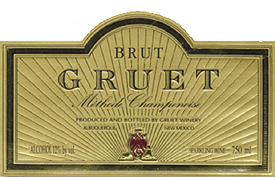
Gruet, Texas and the deal that fell through

First, Gruet was in the Texas wine business. Then, it wasn ?t. And don ?t worry if those two sentences are confusing, because Gruet ?s 16-day foray into the Lone Star state has left quite a few people confused.

The simple explanation is that Laurent Gruet, who runs the critically- and popularly- acclaimed New Mexico sparkling wine house, bought Texas ? bankrupt Cap*Rock Winery for $6.5 million at auction on July 12. Then, some two weeks later, Gruet said he didn ?t have the money and withdrew his bid. And yes, the state ?s collective wine jaw dropped when that happened.

The less simple explanation? There isn ?t one. No one knows what Gruet was thinking when he spent money he didn ?t have. He isn ?t talking about it, and that includes my attempts to reach him by phone last week. More, after the jump:

Continue reading →

Todd Kliman and local wine

Todd Kliman has been taking a lot of heat for his recent article taking restaurants to task if they serve local food but mostly ignore local wine. I'd repeat some of the comments, but this is a family blog.

The criticisms, though, generally revolved around two things: Todd knows nothing about the restaurant business and local wines stink. I'm quite familiar with these arguments myself, since I hear them all the time. And the truth of the matter? They're excuses, not reasons, and neither is true. If you don't want to serve local wine, then don't serve local wine. But don't shoot the messenger — especially when it's a message that needs to be heard. More, after the jump.

Continue reading →

Striking another blow (or three) for regional wine

More kudos to hand out on the regional wine front:

? Dena Peterson, the chef at the Modern Art Museum of Fort Worth, is putting together a dinner to honor the great Diana Kennedy, the doyenne of regional Mexican cuisine and one of the most important people in the history of the regional food movement. And the wines at the dinner? Regional, of course. Peterson told me she needs to finalize the list with Kennedy, but not to expect to see anything from Europe or California; instead, Texas certainly, Mexico probably, and perhaps something from South America. Peterson is to be commended, especially since so many other chefs doing similar dinners think the wine world ends at the Napa and Sonoma county lines. If you're in the Fort Worth area August 13, go to the dinner. I was lucky enough to interview Kennedy several years ago (negotiating the Mexican phone system in the process), and she is the kind of person who impresses even those of us who are difficult to impress. I can still hear her fussing me for daring to suggest that some store-bought tortillas are of decent quality.

? The inestimable Todd Kliman has fired another broadside at the local food movement and its hypocrisy when it comes to local wine — and in the cyber-pages of the tony Local Beast. (It's not often I get to link to something that chi-chi, is it?) My favorite bit of Todd's article: He quotes a sommelier as saying "The quality in most of these wines you're talking about is just not that great." Todd's rejoinder? "The quality of most wine isn't that great." My experience, when sommeliers say silly things like that, is that they haven't tasted local wines in a while and are basing their opinion on a wine they tasted once about 10 years ago. Or, worse, they have tasted regional wines recently, but went into the tasting with their mind already made up about how bad the wine was going to be. Which is how the Wine Magazines do it.

? Perhaps the most important recent development was the announcement that the Wine Bloggers Conference, which has traditionally been as California-centric as possible, will hold its 2011 event in Virginia. Yes, that Virginia, where DrinkLocalWine.com staged its 2010 conference. My cohort in DLW, Dave McIntyre, is characteristically modest about the role we played in the process, but I don't mind taking our fair share of the credit. Heck, even the Virginia people are giving it to us. Dave and I got a very nice note from Annette Boyd of the state's wine marketing board, which sponsored DLW: "I ?m not sure that we would have been on anyone ?s radar if it weren ?t for the Drink Local Wine conference.  This has been an amazing opportunity for Virginia wines. Thanks guys."

, , , , ,

Wine review: Biltmore Winery

Long before there was regional wine, there was North Carolina's Biltmore Winery. It has been making wine since the early 1970s, and producing professional-quality wine for almost 30 years. In fact, Biltmore has been doing this for so long and so successfully that it has added a line of California wines to keep up with demand; the winery produces more than 160,000 cases a year.

The Wine Curmudgeon, of course, is most interested in the North Carolina wines, and I'm happy to report that Biltmore continues to do the state and regional wine proud. I was especially impressed with the cabernet sauvignon ($19, sample) and viognier ($15, sample). Both are made to reflect what winemaker Sharon Fenchak can get from North Carolina grapes, and not to fit some marketing flavor profile.

The cabernet, though only 13 percent alcohol, is ripe and full, with some cherry fruit and well done tannins. In this, it's similar to what I've tasted from Virginia — a New World-style wine, but one that maintains an Old World-style perspective. The viognier has honeysuckle aromas, a rich mouth feel and a tingly finish. It has been aged in oak, but this doesn't overwhelm the wine. It's another in a long line of well-executed regional viogniers that show up most California viogniers that I've tasted.

, , , , ,

Restaurants that understand regional wine

Restaurants that do local food, but not local wine, take a lot of heat from those of us in the local wine movement. Dave McIntyre, the co-founder of DrinkLocalWine.com, has had to slap a couple of Washington-area restaurants around because they were doing local food wine dinners with California wine (and sometimes not very impressive California wine).

So when the Wine Curmudgeon gets a chance to point out that some restaurants do understand that local wine pairs with local food, he welcomes the opportunity. So, after the jump, a tip of the Curmudgeon's fedora:

Continue reading →

Lone Star International Wine Competition

The Lone Star competition is the first event ever that the Wine Curmudgeon judged, which is why I’m always so glad to return each year. It runs today and tomorrow, with a huge Twitter Taste-off featuring the medal-winning wines on Tuesday. Yes, I’m going to Twitter — @wine_curmudgeon.

The competition is run by the Texas Wine and Grape Growers Association, and features Texas and regional wines. But since it’s international, it includes wine from California and other foreign countries. I’ll have a full report later this week.

, ,