


Category:Red wine

Wine of the week: Luzon Verde 2021

Luzon Verde bottle
Luzon Verde 2021/$8-$15

The name might be confusing, but this Spanish red is more than enjoyable

Finding red wines to feature as wine of the week has become progressively more difficult over the past several years; even before the pandemic, in fact. Yes, price increases and premiumization have complicated things, but I’m also finding fewer red wines that are interesting and varietally correct.

There are still plenty of cheap red wines, but why would I want to write about yet another smoooth one?

So I tried the Luzon Verde 2021 ($12, purchased, 14%). In the old days, I probably wouldn’t have bothered. The alcohol for this Spanish red, made with the monastrell grape, is a bit higher than I like and its name confused me. Verde, in Spanish, means green, which seemed odd for a red wine – and no, I’m not going to recommend a wine just because it’s organic (which, apparently, accounts for the “verde”).

Which is why the first rule of wine criticism is to taste the wine before you judge it. The Luzon Verde is Spanish wine at its everyday best — fruity (dark berries), but not too heavy, hot, or tannic. and quite approachable. It does need food, but Thanksgiving is coming up yes?

So enjoyable, professional, and much more than competent, as well as an encouraging sign for future red wines of the week.

Imported by Aviva Vino

Wine of the week: Quintay Clava Coastal Reserve Pinot Noir 2022

Quintay Clava Coastal Reserve Pinot Noir bottle
Quintay Clava Coastal Reserve Pinot Noir 2022/$12-$17

Chilean pinot noir stands on its own — and tastes like pinot noir

I once wrote a trade piece about trends in pinot noir, and quoted a supermarket-style winemaker who said quality pinot could be made pretty much anywhere in the world, and by blending pretty much any grape with the required 75 percent of pinot noir.

Which explains why pinot noir that costs less than $40 so rarely tastes like pinot noir anymore, but more like a red blend – and sometimes sweet. (That so much pinot that costs more than $40 is also lacking is a post for another day.)

Which is also why I was so pleased to taste the Quintay Clava Coastal Reserve Pinot Noir 2022 ($15, sample, 13%). It’s Chilean pinot noir that tastes like pinot noir, with the understanding that the Chilean style is not the same as the French. And that this is pinot and not a sweet red blend stripped of acidity and tannins.

As my tasting notes ask: “Who knew anyone did this sort of wine any more?”

The Clava differs from France’s red Burgundy in that it tastes fresher and isn’t funky – none of that forest floor or mushroom stuff that pinot lovers geek out about. Instead, it has berry fruit (raspberries?), soft tannins, and just enough acidity. It is simple, but it’s not stupid by any means.

All in all, and even including the price, it’s very well done and highly recommended. Pair this with fall red meats, as well as roast chicken.

Imported by Global Vineyard Importers

Expensive wine 173: Jordan Alexander Valley Cabernet Sauvignon 2018

Jordan Alexander Valley Cabernet Sauvignon bottle
Jordan Alexander Valley Cabernet Sauvignon 2018/$40-$70

California cabernet sauvignon doesn’t get much more dependable than Jordan

The wine business has gone through so many changes in the past decade that it’s sometimes difficult to keep up with all of them – even for those of us who get paid to do so. But one thing hasn’t changed – the quality and style of Jordan’s cabernet sauvignon.

No, this isn’t a hipster wine, and yes, it’s probably on every steak house wine list in the country. But that’s why Jordan endures, and has since its founding in 1972. A friend who was getting into wine in the late 1980s swore by Jordan, and it’s easy to to see why. Fads come and go, but the Jordan style doesn’t.

This vintage ($60, sample, 13.8%) is a wonderful example of that style. It’s classic, traditional California cabernet. That means a big wine, dark and ripe, but not so big that it seems larger than everything else on the table. If nothing else, the sub-14 percent alcohol speaks to that. The berry fruit is layered, there is the usual sort of mocha and hint of oak that these kinds of wines have, and the tannins are very soft.

It’s a food wine, certainly, and a food wine for a meal that takes in much more than meat loaf. It’s ready to drink now, but could also cellar for at least a few more years.

Wine of the week: Masciarelli Montepulciano d’Abruzzo 2020

Masciarelli Montepulciano d'Abruzzo bottle
Masciarelli Montepulciano d’Abruzzo 2018/$9-$13

The long-time WC favorite offers even more value this time around

The blog has long featured red wines from Italy’s Montepulciano d’Abruzzo region. They’re almost always well made, inexpensive, and created with value in mind. Plus, they’re terriifc with food.

But this vintage of the Masciarelli Montepulciano d’Abruzzo ($12, purchased, 13.5%) is even better than that. It’s not just a Hall of Fame wine, as the Masciarelli has often been, but a wine that will show up on the shortlist for the 2024 Turner cheap wine award.

That’s because this vintage – and I think the age has helped – is darker, deeper, and more interesting. Or, as my tasting notes says: “Wow.”

It’s earthy and rustic, but not heavy or off putting or too rough, as some cheap wines are. There is fresh, juicy cherry fruit, but it has that current of acidity so that the fruit isn’t cloying (as some cheap wines are). This is how to make a simple wine for every day drinking at a more than fair price.

Highly recommended, and just the thing as the weather gets cooler. So red sauces, sausages on the grill, and even something like a cherry tomatoes and gnocchi.

Imported by Vintus

Wine of the week: Excelsior Cabernet Sauvignon 2020

Excelsior Cabernet Sauvignon bottle
Excelsior Cabernet Sauvignon 2020/$7-$14

How well-made is this cheap South African red? They’re selling it at high-end retailers

Imagine my surprise when I saw this on the shelves of one of Dallas’ most expensive wine shops. It’s the kind of place where the only $10 wines are usually half bottles of something more expensive.

So I bought it – not because I knew anything about it, but because if it was there, something must be going on.

Which, as I later found out after talking to several retailers, there was. South Africa’s Excelsior wines may be the next great cheap wine brand, and almost every store owner I talked to raved about their price and quality.

The 2020 cabernet sauvignon ($9, purchased, 14%) may be the best of the bunch. Yes, simple, given what it costs, but oh so well done. This is $10 cabernet that tastes like cabernet, without a bit of sugar, gloppy fruit, or all that fake oak. And how often do we see that? It’s stunningly balanced, with firm tannins, plum and black cherry fruit, and that distinctive cabernet aroma.

Pair this with red meat, of course, but it’s also so well balanced that it would go with roast turkey or serve as the base for coq au vin (which, if and when it ever cools off here, I will do).

Highly recommended, and certain to enter the Hall of Fame next year as well as to make the shortlist for the Turner cheap wine of the year award.

Imported by Cape Classics

Expensive wine 172: 10000 Hours Cabernet Sauvignon 2018

10000 Hours Cabernet Sauvignon bottle
10000 Hours Cabernet Sauvignon 2018/$27-$40

Washington state red is a classic example of the region’s approach

The wine business has not been kind to Washington state over the past several years, with the recent Ste. Michelle Wine Estates production cuts just one more kick in the teeth. But none of this has anything to do with Washington state wine quality, as the 10000 Hours Cabernet Sauvignon demonstrates.

We’ve reviewed several 10000 Hours wines on the blog, and not because they were samples. As regular readers know, too many of the samples I get tend to make me stare skyward existentially.

But not in this case. The 10000 Hours Cabernet Sauvignon 2018 ($32, sample, 14.5%) is classic Washington state cabernet sauvignon, which means a bit eucalyptus aroma and a very rich and very very full wine that needs food.

But, as with the best of these kinds of wines, it’s not hot despite the high alcohol, there isn’t too much vanilla or too much oak, and it’s eminently balanced. The tasting notes talk about some coffee flavors, and that may be there, but there is certainly lots and lots of deep red fruit. The age helped to make the wine rounder and more agreeable (and there is still a fair amount of this wine on store shelves, despite the age).

This is a wine to to think about when as the weather cools (which may actually be happening here). Serve it with red meat and let it open for a bit before drinking.

Wine of the week: Two Vinos de Arganza Mencias

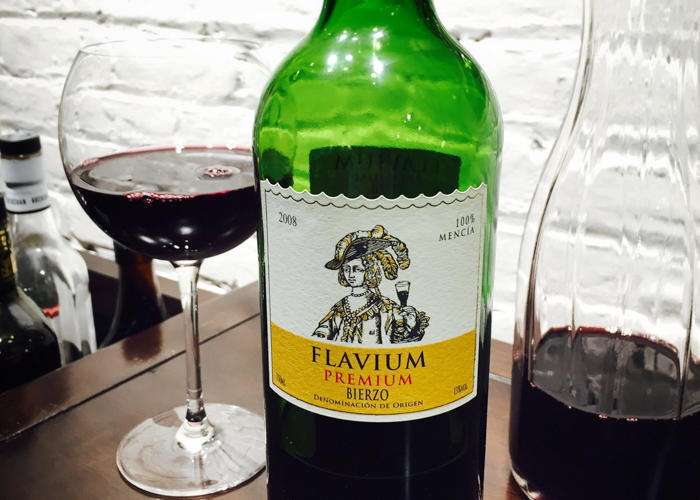
Vinos de Arganza wine bottle and glass
This is one of the wines, anyway.

Once again, wine availability is a wonderful thing

These wines are made by the same Spanish producer from the same mencia grape and come from the same vintage and the same region. They’re mostly the same price and they taste mostly the same.

In this, they’re both fine $10 red wines and worthy of the blog. My question: Why are they both on sale at the same time from the same retailer?

Chalk it up to the mysteries of wine availability.

Because, like the Rapitala Grillo a couple of weeks ago, none of this makes much sense otherwise. Just know there is a lot of wine on the market (“Shh, don’t call it a glut”), and producers, importers, wholesalers, and retailers are doing all they can to sell it.

Hence, the Arganza Flavium Premium 2020 ($10, purchased, 13%) and the Arganza Flavium Seleccion ($10, purchased, 13%).

The Premium is the more interesting of the two — earthy, some tart berry fruit, and just enough tannins to have some, but not enough to get the way. Call it highly recommended and a candidate for next year’s Hall of Fame. The Seleccion isn’t as deep or as layered as the Premium, but still a fine bottle of $10 Spanish red wine. There’s a little smokiness on the back that I didn’t expect; otherwise, some not too ripe berry fruit and even some herbs.

So, like the Rapitala Grillo, buy either or both if you can find them. Just don’t try to figure out why all of this is going on. Trust me — it’s not worth it.

Imported by Monsieur Touton Selection