
Tag Archives: wine writing

Birthday Week essay 2021: The WC’s plan to save the wine business from itself

wine lecturing
“I know, I know — it’s not like ingredient labels are such a revolutionary idea.”

These six steps will reinvigorate wine in the U.S., and (dare we hope?) make wine cool again

Dear Wine Business:

It’s time to put our differences aside. I know you don’t like me, and I certainly have countless reasons to be fed up with you. But wine’s future is at stake, so it’s time to work together to solve the existential crisis facing something that we love and that makes our life that much more enjoyable.

Younger consumers don’t drink wine, don’t want to drink wine, and don’t care about wine. It’s not just the infamous Gallup poll that showed this, which described the typical wine drinker as a 50-something, college-educated woman and that young people – if they drink – barely drink wine at all. There’s also this from the Wine Intelligence consultancy, which says that wine has lost the two generations younger than the Baby Boomers.

Hence, as the blog celebrates its 14th annual Birthday Week, the Wine Curmudgeon’s six proposals to save the wine business from itself – and to make wine cool again:

1. Market wine to younger consumers in language they understand. Wine is notorious for crappy marketing, with its one size fits all, scenic vineyards and deep-voiced narrator approach. Wine is fun; why not sell it to Gen X, the Millennials, and Gen Z that way? How about showing young people – some of whom aren’t white — drinking wine together and having a good time? It works for Coke, and we all know how unhealthy soft drinks are.

2. Bring back the Fighting Varietals, but in 21st century guise. How about a California version of the La Vieille Ferme red, white and rose wines – quality, cheap bottles with a cute animal label? That fits what one of your own pleaded for a couple of years ago: “some sexy brands at $7 or $8 per bottle.” Because that’s exactly what the Fighting Varietals were in the late 1980s – affordable, quality wine that was so affordable and so well made that they helped jump start the 25-year-long Wine Boom.

3. Embrace the health message. Driving drunk was a rite of passage for the Baby Boomers; Gen X and Millennials invented the designated driver. The wine business has failed to acknowledge this difference. Spirits and even beer have a robust health message associated with their product; wine has a line on the back label. Encouraging moderation is not only the moral thing to do, but it could even sell more wine.

4. Really embrace the health message. One of wine’s most important analysts has long pleaded with the business to sell wine as the most natural of all alcoholic beverages. Which, of course, has fallen on deaf ears. Most younger consumers almost certainly don’t know how natural wine is – no added sugars, no artificial ingredients, mostly just yeast and grapes. Compare that to a hard seltzer, which contains sugar, “natural flavors,” citric acid, and sodium citrate.

5. Stop ignoring the neo-Prohibitionists and their exaggerated claims about the dangers of moderate drinking. How can you let them get away with saying wine with dinner is all but binge drinking and that drinking any amount of alcohol is as deadly as cigarette smoking?

6. Ingredient and nutrition labels. This is 2021, not 1971. There is no reason not to use those. None. How else will younger consumers know that a glass of wine has only 125 calories, while one canned cocktail brand, boasting just 5 percent alcohol, has 180 calories and almost 10 times the U.S. recommended amount of sodium?

I hope this helps. Yes, you may have screwed the pooch with younger people, as one editor put it to me. But it’s not too late to change. As always, let me know what else I can do.

Your pal,
The Wine Curmudgeon

Photo: Dreamstime.com

More Birthday Week perspective on the wine business:
• Wine as expensive shiny baubles instead of something to savor and enjoy
How do you write about quality cheap wine when the system is rigged against it?
Have we reached the end of wine criticism?

Five things the Wine Curmudgeon learned in moving the blog from free to paid

wine writing
“Where are all the reviews!!!”

And yes, most of the changes were improvements

The blog’s 14th annual birthday week starts today. So here are five things I’ve learned about wine writing, the Internet, and the wine business in the eight months that the blog hasn’t been free:

1. No need or reason to deal with SEO ever again. For which the Wine Curmudgeon is more grateful than he can describe. SEO, for those of you who haven’t had to acknowledge Google as your master and overlord, stands for search engine optimization. All posts must follow a variety of “suggestions” to make it easier for Google to find the post (or website or whatever) so that it can show up on the first page of search results. This used to make me crazy – how can I write a quality review if I have to make sure the name of the wine is in the headline, the subhed, and in the post three or four times? That’s not writing; that’s nursery school repetition.

2. No more complaints about the ads. These usually came in two forms: Either the ads stopped the page from loading quickly, or the ads were stupid. I couldn’t do much about the first reason, but the second was usually the fault of the person complaining. Most of the ads that showed up (given the way the Internet works) were tailored to the person’s web browsing habits, age, and demographics. So they saw what they were clicking on elsewhere. Ironically, most of the people who complained about the ads (yes, I kept a list) didn’t move to the paid version.

3. Too many marketing and PR people telling me what to run on the blog. I actually had discussions (some email, some on the phone) with people who didn’t understand why I made the editorial decisions. “But this is something your readers need to know about,” I heard over and over. And over. And over. And no, I don’t know why this happened so much in the past eight months.

4. I will never, ever, ever have to write a $3 wine review again. This was always one of the most popular posts – thank you, SEO – and it was always a tremendous aggravation to write. It’s not so much that the wines were terrible, which they were. It’s that they were the same terrible every year, and I would get emails from people who didn’t understand why the wines were the same terrible. I’m not criticizing them for liking them; I don’t judge people by the wine they drink. I just wish they didn’t expect me to like them, too.

5. “You don’t run enough wine reviews.” One man canceled his $7 a month subscription because the 200 or so reviews that appear each year weren’t enough. Which taught me you can’t please everyone, though I still catch myself trying to do just that.

Photo: A Koolshooter from Pexels

Bring on Bogle’s ghost story writing contest!

ghost stories
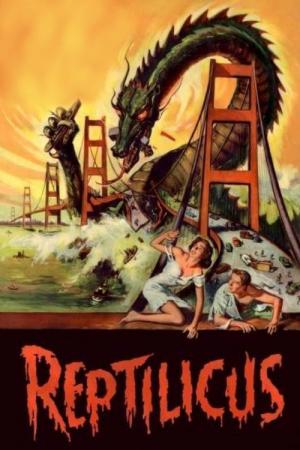
And they thought Reptilicus was bad? Just wait until they see the three-tier monster.

The WC knows more than a few terrifying wine stories that could lead to the $5,000 prize

Yes, I know the Wine Curmudgeon has had his problems with Bogle over the past couple of years. But I see a way to make amends.

It’s the winery’s 2021 Original Ghost Story Writing Contest, in which the winner gets a $5,000 first prize and the chance for their piece to be turned into a short film. But it has been a while since my writing won anything, and I didn’t get five grand for that.

Besides, who knows more about the horrors of the wine business than I do?

How about these possibilities?

Adapting this story, about aliens visiting Earth and their first encounter with wine – and wine scores.

• The three-tier system that ate Pittsburgh. The Supreme Court can’t stop it! State legislatures can’t stop it! Watch it devour city after after city, leaving cranky wine writers in its wake!

• The invasion of the alcohol snatchers. What? Drink only a 13 percent wine? Only a 14 percent wine?! Only a 15 percent wine?!! Not after strange pods start showing up in the homes of California winemakers.

• The Stepford focus groups. It seems like a quiet and otherwise normal suburb. But it has a deep, dark secret – all the wine drinkers are exactly alike and all the wine is oh so ….. smoooth.

• Hush, hush sweet wine. Strange things start happening in a small Southern town – and all the wine suddenly tastes sweet – when a woman’s cousin comes home. Yes, probably not a winner given my criticism of Bogle, but I can see the first five scenes of the film in my head.

wine critics

The seventh annual do-it-yourself wine review

wine reviews
Let’s see: “This rose tastes like a red when you close your eyes.” Now that’s wine writing!

The blog’s seventh annual do-it-yourself wine review — because no matter how much we hope otherwise, wine remains entirely too pompous

The do-it-yourself wine review has long been one of my favorite blog features, allowing me to prick wine’s pomposity, get some humor on the site, and pretend I know how to use HTML.

This year: Four rose wine reviews, and yes, I sort of stole most of the answers from actual reviews. As always, thanks to Al Yellon, since I stole the idea from him all those years ago.

This year, you’ll need to go to the old website to enjoy the post, since Substack doesn’t allow the necessary coding. So follow this link, and then click the drop-down menu and choose your favorite line.


This California rose:

This French rose:

This Italian rose:

This Spanish rose:

More do-it-yourself wine reviews:
The sixth do-it-yourself wine review
The fifth do-it-yourself wine review
The fourth do-it-yourself wine review

Alexa, who is the Wine Curmudgeon?

Alexa
“Hmmm, I don’t know that one.”

There’s viral, there’s Andy Warhol’s 15 minutes of fame, and then there’s Alexa

Alexa, who is the Wine Curmudgeon?

“This is what I found on Wikipedia: Curmudgeon is an American-brewed old Ale.

No, Alexa. The Wine Curmudgeon. Who is the Wine Curmudgeon?

“Hmmm, I don’t know that one.”

OK, Alexa. Who is Robert Parker?

“According to Wikipedia, Robert Parker is a U.S. wine critic. … He is the mostly widely known wine critic in the world.”

OK, Alexa, so who is the Wine Curmudgeon?

“Hmmm, I don’t know that one.”

Sigh. OK, Alexa. Who is Jancis Robinson?

“Jancis Robinson is a new Liverpool poet.”

Really? That must be news to her. So who is the Wine Curmudgeon?

“Hmmm, I don’t know that one.”

OK, Alexa. So who is Eric Asimov?

“Eric Asimov is a wine and food critic for the New York Times. … He is the sister of Nannette Asimov, a writer for the San Francisco Chronicle.”

No kidding. So who is the Wine Curmudgeon?

“Hmmm, I don’t know that one.”

Alexa, here’s an easy one. Who is Dave McIntyre?

“Dave McIntyre is the author of 10 books, including The Fall series.”

Wow. He never told me that. So, Alexa, one more time: Who is the Wine Curmudgeon?

“Hmmm, I don’t know that one. But if you are ready to celebrate national Star Wars Day, I am the droid for you.”

Churro, the blog’s associate editor, contributed to this post

Winebits 682: Big Wine, wine writing, on-line wine

Big wineThis week’s wine news: The Winestream Media discovers Big Wine, plus a wine writer discovers conflicts of interest and wine drinkers grapple with on-line shopping

Big Wine, indeed: This post did not come from the Wine Curmudgeon or one of the few independent voices in wine writing who pays attention to these things. Rather, this harsh look at Big Wine came from the trade site for the Wine Enthusiast, one of the gatekeepers of traditional wine writing. It laments the “corporatization” of the U.S. wine business and even uses the M word – monopoly. This news is not new, of course, and regular visitors here have been reading it for years. But that we’re seeing it on a site that is one of the pillars of the current system may speak to a growing sense of unease with the status quo. And a note to the writer: E&J Gallo accounts for almost one out of every four bottles of wine made in the U.S., which should have been at the top of your story.

Conflicts of interest: Spanish wine writer Miguel Hudin asks the “massive” question that we don’t ask enough in this business: “How objective can you actually be when you’ve been flown somewhere and put up on someone else’s dime who is expecting coverage which should in theory be positive coverage?” His descriptions of the way the wine writing world works these days is past depressing, including the admonition he got for complaining about food he paid for. It’s good to see the subject brought up by someone who isn’t a cranky ex-newspaperman, and that Hudin understands the uphill road he travels in writing about this: “Oh Miquel, relax and enjoy the freebies! You’re being too critical and difficult!” No, Miquel, you’re not.

Going on-line: We’ve had several mentions on the blog recently of wine drinkers’ reluctance to shop on-line. But, apparently, the wine drinking demographic isn’t worried about buying other stuff over the Internet, reports the Washington Post: “… one of the most significant and unexpected shifts, experts say, was the almost immediate embrace of online shopping by people in their 60s, 70s and 80s.” Which, of course, is the same age group that still dominates U.S. wine purchases. The next question: How soon until this group feel as comfortable buying wine over the Internet as it does toilet paper?

“Monetizing” the blog: Is it worth the trouble?

monetizing blog
“Pay up, or never read about cheap wine again!”

How should the WC turn a profit on the money-losing blog?

Jan. 10 update: Thanks to everyone who emailed suggestions, kind words, and encouragement. I was especially surprised that so many of you said I was giving the blog away for free when I should be charging money for it. Wrote one reader: “l subscribe to Netflix, AppleNews+,and various financial newsletters, why not a wine letter?”

Why was I surprised? Because I’m a cranky ex-newspaperman and was taught that circulation is all that matters. Which, as so many of you noted, is a very old-fashioned and irrelevant concept in 2021.

So I’ll look at the best way to do subscriptions  and report back. And not to worry, it will include a discount for everyone from the blog who signs up.
———————————————————————————————————————————————————–
The end of 2020 marks another milestone for the blog – I’ve lost money on it for 13 consecutive years. Which raises the question: Is there any way to make the blog profitable? Should I even try?

The blog’s primary goal when it started was marketing, to get my name and work out among the wine world. If I made money with it, so much the better. The blog has done the former beyond any expectation. I’m continually talking to people who know the blog and who know what I do even though there doesn’t seem to be any reason they should.

But money? Not so much. Again, in the blog’s early days, that didn’t matter. I had a more or less thriving freelance business, supplemented by teaching and a little consulting. But the pandemic has put a kibosh on the freelance business, which had already been in decline. And the latter were always supplements, and never a way to make a living (and, for what it’s worth, haven’t fared all that well over the past couple of years, either). So yes, now it would be nice if the blog turned a profit.

Many of you, at this point, probably want to ask: “But what about all those ads, Jeff? Don’t they make a difference?” Yes, if you’re the New York Times or ESPN or any site that gets millions and millions of visitors. A half-million isn’t enough: I’ve never earned more than $600 or $700 a year from ads. That doesn’t even cover half of the cost of the site’s hosting service.

So that brings us back to “monetizing” the blog – it it worth the trouble? Because, in the post-modern, 21st century world of blogging, making money on the blog means doing one of a variety of choices that are less than appealing:

Sponsored content: Sponsors pay me money, I run posts they write to plug their products, and you may or may not be the wiser. “Oh, look, the WC found something nice to say about Winking Owl!” The surprise is not that I find sponsored posts morally reprehensible; I am who I am, after all. Rather, that so many wine sites that pride themselves on objectivity take the money and run the posts.

Premium content: Pay a fee to get special, subscriber-only content. The blog’s reason for being is to make wine accessible, so making part of it inaccessible to most visitors doesn’t make much sense.

Begging for money: It’s not called that of course, but that’s the result. Typically, there’s a button on the blog visitors can click to send money. Or there are sites like Patreon, which all the really hip sites use. Neither sounds like me, does it?

A paywall: The Wine Spectator and Wine Advocate have paywalls. Enough said.

Pay to go ad-free: This is the least annoying of the choices, but it raises more questions. How much do I charge? How much will it cost to set up? Will anyone care?

Hence, nothing will likely change, and the blog will continue to limp along financially. Unless, of course, someone else has a better idea? You can leave a comment or send me an email.