
Tag Archives: wine news

Winebits 809: Wine prices, winemaking waste, Anchor Steam

cheap wine record album coverThis week’s wine news: Even the 1 percent are complaining about wine prices, plus using winemaking waste and Anchor Steam offers a lesson for the wine business

Oh so high: Arthur Coggill, writing in Decanter, laments the high cost of Rordeaux – just like the rest of us. I mention this because Coggill buys “investment grade” wines for a high-end British wine retailer, so I assume he doesn’t spend most of his time watching the shops for cheap wine the way I do. The story has way too much jargon (and especially for those of us who don’t understand British post-Brexit economics), but the gist of it, I think, is that wine costs too much because it does, and small French producers are among the biggest losers, including wine drinkers.

Bring on the waste: Waste from winemaking could be a valuable source of ingredients for nutraceuticals, pharmaceuticals and food coloring. The research, done at Australia’s Monash University, found that red grape waste, including skins, seeds, and stalks, can be used for ingredients in dietary supplements and as natural food colorings. Currently, much grape waste in Australia is used as compost, and so “the potential value of the bioactives it contains goes unrealized,” said the study.

So long: Anchor Steam, which was making craft beer even before there was craft beer, has closed. It was a victim of “changing consumer habits, rising costs and lingering supply-chain challenges,” things that not even its 127 years in business could change. Also, reports CNN, employees said its Big Beer owner had perfected the art of bad management. Do any of those – all of those? — sound familiar to those of us who follow wine? Because if someone can run Anchor Steam into the ground, imagine what they could do to a respected and much appreciated wine company.
Convenience store wine 2023

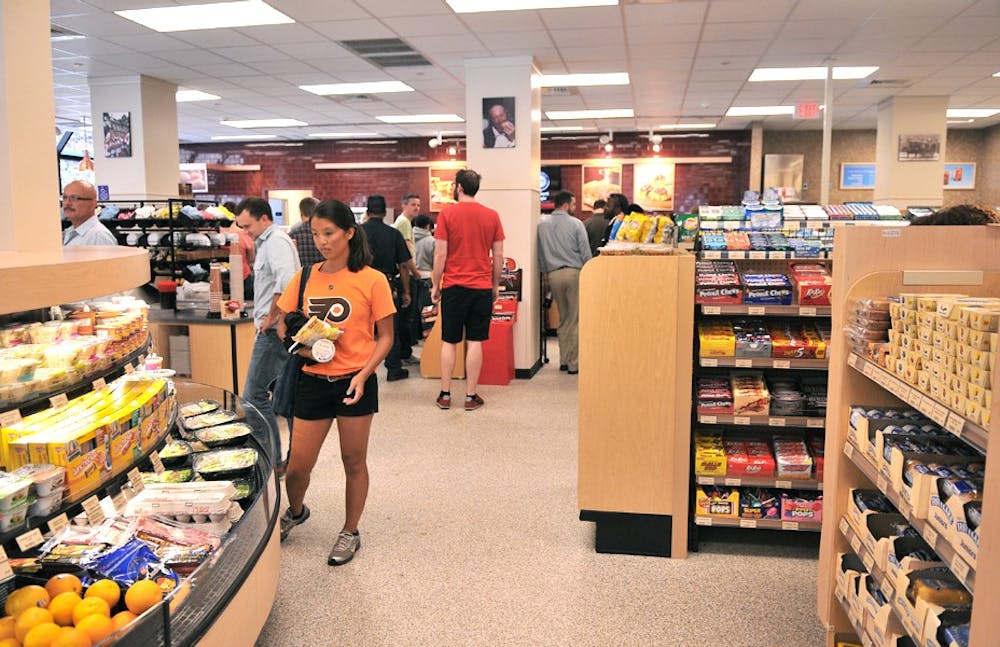
Wawa store interior
“Where are they keeping the wine these days?”

Convenience store wine sales rebounded in 2022, remaining a wine bright spot

Jeff Lenard, an executive with the national convenience store trade group, was in California last month on business. “And you know what I saw?” he asked. “I went to an ampm [convenience store] in Elk Grove that did wine tastings every day.”

In other words, the boom is back in convenience store wine sales.

In 2022, average store wine sales increased 11.1 percent, compared to a 7.5 percent decline in 2021. That increase was the fourth in the past five years in  7-Elevens, QuikTrips, Wawas, and all the rest scattered throughout the country.

The figures, compiled by the National Association of Convenience Stores, also found that almost 70 percent of convenience stores in the U.S. now sell wine. That’s up a couple of points from last year and from 58 percent in 2020 – an impressive increase and a huge number, since many states, including New York, don’t allow c-store wine sales (c-store being the cool kids term for convenience stores).

Why should we care about c-store wine sales? Several reasons:

• Because it’s a non-traditional retailer, showing that wine doesn’t have to be limited to the usual suspects (many of whom aren’t moving much product these days).

• It’s less formal, taking away lots of the foolishness in wine buying. Buy wine at a convenience store, and no one is going to shame you for choosing pink moscato.

• Millennials between 28 and 36 years are “the most invested in convenience store sales,” making purchases two to three times per week. And we know how Millennials usually feel about wine, don’t we?

More about convenience store wine:
Convenience store wine 2022
Convenience store wine 2021
Convenience store wine during the pandemic


Winebits 808: Sparkling wine, three-tier system, wine bottles

two champagne glassesThis week’s wine news: The country’s best-selling U.S.-made sparklers, plus a defense of three-tier and a new eco-friendly wine bottle


Oh so popular: Yes, premiumization has run amuck. So what are the best-selling U.S.-made sparkling wines? A bunch of supermarket stuff costing around $10, of course. But that’s the wine business, yes? Liz Thach, writing in Forbes, lists Andre, Cooks, Korbel, and Barefoot for both volume and dollars – hardly the high-end stuff we’ve been led to expect. She seems surprised, too. The story mentions a couple of reasons for this, including the popularity of these wines for cocktails. But we can’t overlook the supply chain: Most wine in the U.S. is now sold in supermarkets, and these are supermarket wines, as opposed to the more expensive California stuff.

Speaking of which: Our friends at the Wine & Spirits Wholesalers Association, who venerate the three-tier system the way I do good writing, says we still need three-tier despite all the calls for change. The reason? How else will retailers be protected from fraud, minors trying to buy wine, and the like? Their source is a sting conducted by the Massachusetts booze cops, which found the underage can buy alcohol illegally. Shocking, yes? My other favorite part of the release is the WSWA’s charge that on-line wine sales are a monopoly, and that monopolies aren’t good. Shocking, yes? Especially since the 10 biggest wholesalers control two-thirds of the U.S. market.

Good idea; crummy release: Ron Rubin, a well-respected producer in California, sent out a news release about its new econ-friendly bottle, which may or may not be made of glass. It’s supposed to be completely recyclable, lighter, and smaller; I assume it’s a new way to make a glass bottle, but nothing actually says that. If you’re going to tout a product that is supposed to be better than what currently exists, then just don’t say it is. Say what it is and why it is. Otherwise, what’s the point?

Winebits 807: Alcohol-free wine, Cooper’s Hawk, bad news

woman with shocked expresson
“Non-alcohol wine tastes bad?”

This week’s wine news (a day early because of the July 4 holiday): The challenge of alcohol-free wine, plus Cooper’s Hawk is thriving even if wine isn’t

It’s not easy: Chilean mega-producer Concha y Toro, which has worked extensively with alcohol-free wine, has not seen much success. “I’m not seeing or tasting any wine that is enjoyable with zero alcohol. The jump between 12 or 14 percent abv to zero is too much,” the company’s technical director and winemaker Marcelo Papa told the JustDrinks trade magazine. This is a common problem with no- and low-alcohol wine; take the booze out, and the wine loses much of its flavor. It’s significant that a producer as big as Concha y Toro is having problems, and especially given what various studies suggest zero-booze wine is the next big thing. If a Big Wine company can’t make a quality product, what does that say about the product’s long-term feasibility?

Continued success: Cooper’s Hawk, the winery/restaurant, is a bright spot in both the wine and restaurant landscapes, reports Nation’s Restaurant News. Its sales jumped almost 30 percent over the last year, putting it the top 100 of all restaurant chains for sales. In addition, its estimated sales per unit were up almost 14 percent,  and only The Cheesecake Factory and Ocean Prime have higher average unit volumes. The reason for its success? Its customers have fun: “The chain’s model is unique in that it’s both an upscale restaurant and a wine club with some 600,000 members, up by about 20 percent over the past couple of years. … The chain is also a beneficiary of increasing demand for experiential restaurants and, with its wine club, feeling part of a greater community, all stemming in part from the pandemic-related lockdown.”

More bad news: Shanken News Daily, part of the Wine Spectator empire, is such a cheerleader for the wine business that it could find a way to put a positive spin on the return of Prohibition. But even it admits the slump in wine sales isn’t good: “After 27 consecutive annual gains, wine industry volumes fell for the second year in a row in 2022, according to the 2023 edition of The U.S. Wine Market.” And it expects another decline this year. The numbers in this report are consistent with all of the rest, some of which I have noted here (and many of which I haven’t, since all the bad news even gets to me). The point of mentioning the Shanken report? That if it says things are bad, they must really be bad. $10 wine, anyone?

Winebits 806: Doug Caskey, smuggling, wine history

Doug Caskey
So long, Doug. You’ll be missed

This week’s wine news: Doug Caskey, a long-time champion of Drink Local, retires. Plus major wine smuggling ring in China and wine history in the Americas

So long, Doug: Doug Caskey, one of Drink Local’s greatest champions, has retired after an outstanding, 23-year tenure as the director of the Colorado Wine Industry Development Board. I’ve known Doug for much of that time, and there are few people who cared more about getting Americans to understand that local wine was a thing, just like local food. Needless to say, that was never an easy task, but Doug didn’t let that get to him in the way it did so many of the rest of us. He also understood the intricacies of navigating wine’s legal system, something that came in handy more than once during all the years we were trying to get the world to taste local wine. Plus, who else would have thought of holding our Colorado Drink Local conference in a former church?

A lesson learned? The Chinese, whose system of government isn’t quite as open as ours, have suffered through yet another wine smuggling scandal. For 14 months, a gang bootlegged high-end French wine, worth more than US$3 million, between Hong Kong and Shanghai, in the face of what the story in the link calls some of the toughest border controls in recent Chinese history. The WC mentions this not just because it’s an interesting story, but to point out once again the difficulty of policing alcohol restrictions. Even the Chinese were shocked: “The discovery of this wine smuggling network has sent shockwaves through China’s law enforcement agencies, highlighting the lengths to which some individuals will go to evade taxes and profit from illicit activities.” Take note, neo-Prohibitionists.

600 years ago? Spanish colonizers may have been drinking wine in the Americas as early as the 16th century, reports a study in the journal Archaeological and Anthropological Sciences. There is evidence that there was grape wine in the Caribbean during the earliest stages of European colonization. Evidence on an island near Puerto Rico suggested that whatever else inhabitants were doing, they were drinking wine. Says the sutdy: “After early European settlements suffered starvation as a result of a failure to adapt to local culinary practices, the colonists adopted local customs. But one thing they held onto was their wine.”

Yes, all those wine and health studies are flawed

woman using laptop
“Trust the WC to find experts to refute all those wine and health studies.”

Say the experts: “The state of nutrition research is poor”

When the first high-end dog foods came on the market, I asked one of the leading researchers in the field if there was any science that could prove that the pricey stuff was better for pets than the stuff sold in gigantic bags at the supermarket.

No, he told me, save for the stool test — and that was more practical than scientific. The stool test, I asked? Yes, he said; dogs produce more stool when they eat cheaper dog food.

We laughed, and he told me why there was no science to prove anything one way or the other. The only way to show that one food was healthier was to get two groups of dogs, feed each group one of the foods for its entire life, and then hope for the best. “And what researcher would want to spend so much of their career pursuing something that may not turn out to be prove anything at all?” he asked.

I was reminded of that story this week when two Harvard medical researchers said pretty much the same thing in discussing human health studies, including all the foolishness about drinking more than one glass of wine in a lifetime. Anupam B. Jena and Christopher M. Worsham, writing in the New York Times, found that:

“The state of nutrition research is poor, and the problems afflict much of the research into dietary and lifestyle claims around things like coffee, wine, dark chocolate, fad diets, the amount you exercise — you name it. This in part explains other recent flip-flopping around whether moderate drinking is good for you: A recent review found the research methods used in many past studies on the benefits of drinking alcohol to be flawed.”

The piece is worth reading, if a bit nuanced. The gist? That correlation does not imply causation, so that if “people who consume more sweeteners are more likely to have Type 2 diabetes, did the sweeteners cause the diabetes? Or are the people who use more sweeteners also more likely to have diabetes because of other aspects of their diet or health?”

Substitute wine for sweeteners, and you get the point.

The researchers suggest a variety of ways to overcome the flaws in these studies, including those dealing with alcohol. Best yet, they understand the pressure to publish studies, which gives us silliness like the so-called wine, cigarette, and cancer connection.

As they write: “But filling the research void with studies that do little to help us understand the cause-and-effect relationships of our real-life dietary decisions does little to advance understanding; in fact, it sows confusion.”

Because legitimate scientific research is about a lot more than the amount of a dog’s stool. Would that more researchers understood that.

Photo: kristinhardwick via Morguefile

Winebits 805: Ken Forrester, alcohol to go, New York

Ken Forrester petit chenin blanc
Please? In Dallas?

This week’s wine news: Ken Forrester, one of the WC’s favorites, plus alcohol to go is here to stay and no wine for New York groceries

Drink chenin: South Africa’s Ken Forrester, who makes some of the world’s best chenin blanc (and, yes that includes this region) will be in the U.S. this summer. Hopefully, as he puts it in this interview, he can get Americans to drink more chenin blanc. This is something the WC has long advocated, and my lamentations in not being able to find the Forrester chenin in Dallas have been repeated on the blog all too frequently. So listen up, second-tier: Ken Forrester chenin. Please?

Booze to go: Nation’s Restaurant News is calling alcohol to go “the most significant change to state alcohol laws since the end of the Prohibition in 1933” – and that it’s not going away any time soon. I recorded a podcast with Jeff Carroll, one of the country’s leading authorities on the subject, and it should be posted sooner rather than later, and he is equally as optimistic about the future of local wine, beer, and spirits delivery. The magazine calls the trend a critical lifeline for restaurants, especially during the pandemic, and sees it only growing. Some 34 states have legalized it in one form or another; given the way the alcohol regulation system works in the U.S., that’s an amazing number.

Not in New York: The state’s legislature, as predicted here, refused to let supermarkets sell wine in the session just ended. New York is the largest state in the country without grocery wine sales, a law that dates to the end of Prohibition. However, liquor stores will be able to stay open until 10 p.m. on Sundays, which made the WC jealous. Liquor stores in Texas, by state law, are closed on Sunday. To be honest, I’d almost rather have Sunday liquor store hours than supermarket wine sales.