

Tag Archives: wine news

Winebits 818: Cheap wine, South African wine, shrinkflation

Man shopping at wine store
“Yes, shinkflation!”

This week’s wine news: A cheap wine wins a major competition, plus kudos for South African wine and a way to fight silly high wine prices

Cheap wine wins: How did a $3 wine made with pressed grape pomace (the stuff left over after pressing the juice) plus sugar and water win a major wine competition award? The story is here, and it’s – sadly – not all that hard to believe. The effort was part of a Belgian TV show to test “perceived quality” — that how we perceive something influences our opinion of it: “The poor-quality wine, before being sent to the competition, was transferred into a specially created bottle, with a beautiful fake label bearing the name of a non-existent winery and the impressive name ‘Le Château Colombier.’ ” What I like most is that the TV show used wine to test its thesis, because wine is so much about perceived quality.

Go South Africa: Yet another major wine publication has joined the WC in waxing poetic about the improved quality of South African wine. Caitlin A. Miller, writing for sevenfifty.com, quotes one expert: The “wines are some of the greatest values ever. I firmly believe that South Africa is the most exciting place on the planet making wine.” The story is a bit long, and I’m not sure the reasons that South Africa isn’t appreciated are quite so complicated, but the point is well made. Want quality wine at a fraction of the price? Then go South Africa.

Shrinkflation: Want to fight back against wine prices that seem to go up for no other reason than they do? Then maybe Carrefour, the giant French supermarket chain, has the answer. It has added “shrinkflation” warning stickers to a wide range of products, reports CNBC. The label says: “This product has seen its volume or weight fall and the effective price by the supplier rise.” In other words, what used to be a seven-ounce can of tuna is now six ounces, but costs as much as the seven-ounce can. The WC has seen this sort of thing happen with wine, where one vintage costs $12 and the same bottle from the same vintage costs $14 two months later. Give me the stickers, and I’ll put them on the bottles.

Yes, there is a grape glut

woman looking at ocean
“Sigh. What will the world do with all those extra grapes?”

So what happens next? Your guess is as good as mine

The long forecast grape glut has officially been acknowledged. On Sept. 8, noted wine critic John Mariani wrote on a Forbes website: “there is an astoundingly large wine glut in the world. …” On Sept. 12, Mike Veseth, the Wine Economist, wrote: “The world is awash with wine. …”

This comes on top of a freelance piece I wrote last week for Meininger’s, the wine trade magazine: “As US demand drops, California worries about an excess of grapes.”

Which leaves us with two questions: Why is there a glut and what will happen to prices?

Who knows? This is the wine business, after all, whose behavior has been so irrational for so long that even the experts are baffled.

One thing most agree on: The glut has been caused by a drop in demand, and not from an excess of supply from too many big harvests, as is usually the case. In fact, this supply situation is quite unusual; the last time it happened in the U.S. was 30 years go.

The drop in demand is true not only in the U.S. but around the world. In Australia, Veseth reports, the excess is being measured in the number of Olympic-size swimming pools. Consumers everywhere are buying less wine, so more wine is stacking up on retail shelves, in wholesaler warehouses, in winery storerooms, and at bulk suppliers.

What’s less certain is why the drop in demand. Most of the wine industry people I talked to suggested the usual reasons: the Neo-Prohibitionists and less interest in wine among younger consumers, who have so much more booze to choose from. Interestingly, most discounted the effect of premiumization and higher prices, which really didn’t surprise me. Wine has gleefully yoked its future to higher prices, so how could that be the problem?

Mariani cites the the generation gap, as well as political complications in China and Russia. Veseth, who shoots a couple of holes in the generation gap theory, isn’t so sure: “I would be more satisfied if there were an economic theory to explain the economic fact of wine’s over-supply.”

There is, Prof. Veseth. It’s called too high prices. Explanations don’t get more economic than that, though there is still no guarantee that the glut will drop prices. Because, of course, wine.

Also worth noting: In the 1990s, the last time we saw less demand create an oversupply like this, some very smart people at Bronco Wine Co. worked with Trader Joe’s and invented the Charles Shaw wines – the legendary Two-buck Chuck. Hopefully, there are still some very smart people in the wine business who can figure something like that this time.

Photo: Bango via Morguefile.com


Winebits 817: Mel Master, Rioja, North Carolina

Wine in racksThis week’s wine news: Mel Master, one of the world’s great cheap wine advocates, dies, Plus, shakeups in Rioja and North Carolina.

Mel Master dies: Master, the man behind great labels like Mont Gravet, Tortoise Creek, and Le Charmel, has died. He was 79. The obituary is quite vague about what happened, though it notes his wife, Janie, died as well. I was lucky enough to meet Masters once, and we discussed his ability to buy grapes and to turn them into terrific wines at more than a fair price. The 2015 Gravet carignan was one of the all-time great cheap wines (and even the very tough critics at an American Wine Society seminar thought so). Masters will be much missed, and especially because wine needs his talents more than ever, given the grape glut around the world and how he could have turned it into something cheap and delicious.

Trouble in Rioja: A group representing more than 200 producers in Rioja has left the group that regulates wine production in the Spanish wine region. The story in the link is a little dense for those of us who don’t follow Spanish wine politics, but it apparently has something to do with Big Wine, consolidation, overproduction, and premiumization in Rioa. Sound familiar? Decanter reports that the breakaway group opposes says the “current strategy and decision-making ‘goes against the business models of small and medium-sized producers.’ ” I’m not sure how will affect U.S. wine drinkers, but it’s worth noting that Rioja and California seem to have much in common as wine continues to struggle with its problems.

Booze on Sunday! The blog’s readers in North Carolina will be glad to know that the state will likely separate itself from Texas when it comes to selling spirits on Sunday. We can’t do it here, and those there may get the chance sooner rather than later. A bill in the state legislature would permit seven-day sales of spirits as well as holiday sales (with local option), and allow cocktails to-go and delivery of mixed beverages. My favorite bit? “Alabama, Mississippi, North Carolina, South Carolina, Texas and Utah are the only remaining states that prohibit seven-day spirits sales.”

Gallo’s high-end wine conundrum

woman with wine glass
“I never considered that — just .36 percent.”

Why did a 100-million case winery buy two wineries that don’t make enough wine to matter to the bottom line?

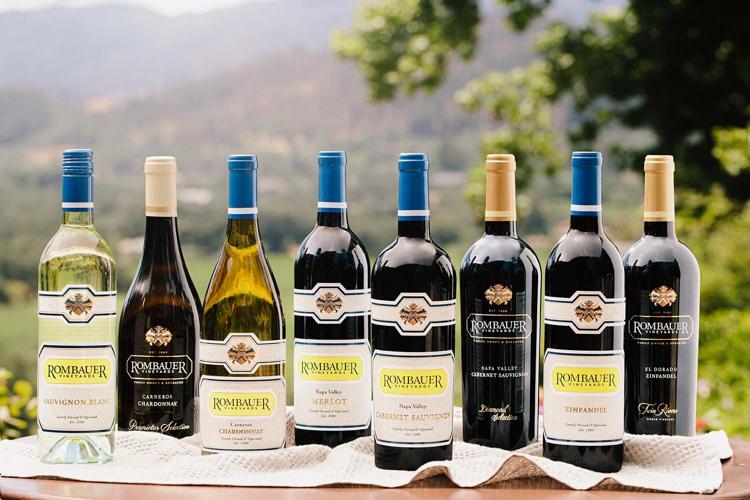
E&J Gallo, the world’s biggest winery, sent more than a few tremors through the wine business last week when it bought high-end labels Rombauer and Massican.

These are distinctively non-Gallo brands; about the only thing they have in common with the Barefoots and Apothics that that generate Gallo’s vast profits is that they’re made in California. Rombauer, best known for its buttery chardonnay, makes $100 wines, while Massican is a boutique white producer.

In one respect, the acquisition makes perfect sense, given wine’s sales slump — and especially for labels costing $15 and less — as well as the industry’s hyper-drive to premiumization. In addition, as several wine people told me, Gallo gets expensive Napa land; access to Rombauer’s wholesalers and restaurant customers; and more leverage with retailers for the pricey wines it already owns, like J, the sparkling maker.

In another, though, it’s almost baffling. Gallo makes 100 million cases a year, while Rombauer does 350,000 and Massican maybe 10,000. That’s 360,000 cases annually, or about .36 of Gallo’s total (if my math is correct). Even allowing that the new brands are more expensive, the effect will be minuscule. How can the acquisitions make any difference to Gallo’s bottom line?

To answer that question, consider one of the great missteps in the history of one the most successful U.S. companies ever, McDonald’s. In 1998, McDonald’s bought Chipotle, Boston Market, and a regional pizza chain called Donato’s. The idea was to expand from fast-food burgers to something more expensive that would broaden McDonald’s appeal.

Sound familiar?

Everyone – including me, who did a lot of restaurant trade writing then – thought it was a masterstroke, and most of the stories in the trade and business media spoke to McDonald’s genius.

As I did more reporting on the story, I talked to a really smart stock analyst. He laughed when I asked him about all that brilliance. He said to me – and this has stuck with me since — “What possible difference could these three small chains make to a $12 billion company?”

And, sure enough, McDonald’s almost ruined Chipotle, discovered what a mess Boston Market was, and did ruin Donato’s. Eventually, it sold all three and has never done anything like that again.

This is not to say that Gallo will screw up Rombauer and Massican; its track record speaks otherwise. Rather, it’s to note that even smart companies do things that don’t turn out the way they were supposed to, even if they had all the best reasons for doing so.

Photo: Matilda Wormwood via Pexels

Winebits 816: Gallo, France, sex

Rombauer wine bottles
Yes, in the same company portfolio as Black Box and Barefoot.

This week’s wine news: Gallo buys two high-end wineries, plus the French will pull vines and a wine sex scandal (because aren’t we tired of reading the rest of this?)

Gallo goes high end: E&J Gallo, the world’s biggest winery, has added two distinctly non-Gallo brands to its portfolio. Last week, the company that owns Barefoot and Apothic and focuses on wine that most of us can afford to buy, bought producers who do just the opposite – Rombauer, best known for its oaky chardonnay, and Massican, a Napa house that makes pricey whites. In one respect, this makes perfect sense, given wine’s sales slump (and especially the decline among labels costing $15 and less) and wine’s addiction to pressurization. But, in another, it’s almost baffling. How can two wineries, whose production is less than 1 percent of the Gallo total, make any difference to the company’s bottom line? I’m going to write more about this on Thursday, parsing the numbers and trying to make sense of it all.

Less grape vines: Grape growers in in the Bordeaux region may rip out as much as 15,000 acres of vines as part of a French government plan to reduce the amount of wine the country makes. The story in the link repeats many of the same arguments I’ve heard in the some 20 years the French have been trying to solve this problem: The country makes too much wine and the only way to solve the problem is to grow fewer grapes. Which, if you check the world’s production numbers, hasn’t solved much of anything. The French still make the most wine in the world, alternating the title with Spain and Italy.

Sex! Ordinarily, I wouldn’t use this bit, but as the sub-headline notes, at least it’s not more grim wine news. In this case, reports thedrinksbusiness.com, “The former mistress of Pierre-Emmanuel Taittinger has been convicted of harassment after chasing him with a knife and threatening to cut off his penis.” Tattinger’s family controls the self-named Champagne house, so there is apparently lots of money and time for this sort of thing. The story includes hints about sex clubs, another mistress, and unnamed “sexual proclivities.”

Winebits 815: Utah, expensive wine, paper bottles

This week’s wine news: Will Utah make it easier to buy booze? Plus, even very high-end wine is in a slump and one more attempt at paper bottles

Utah STATE LIQUOR STORE -
Will Utah be forced to close its state-owned liquor stores?

In Utah? Utah, infamous for perhaps the most restrictive alcohol laws in the country, may see some changes. A group – if it can collect 134,000 signatures in the 3.3-million person state – wants a referendum to make it easier to buy wine, beer, and spirits. That would include abolishing the state store system and allowing sales at retailers like Trader Joe’s, Costco, and the local Harmons grocery chain. The story plays it straight on whether this thing has a chance, but the WC – who knows Utah’s alcohol reticence first hand – has his doubts.

Slowing auction market: Believe it or not, even the very rich are cutting back on their wine purchases. So says the man who oversees sales for global auction house Christie’s. Adam Bilbey told thedrinksbusiness that the market for the super-premium wines his company sells is “currently undergoing a difficult period of cooling prices. …” And, he adds, he doesn’t expect that to end any time soon. Bilbey attributes much of this to China’s economic woes, but it does the make the WC ponder: If the 1 percent are cutting back, what does that mean for the rest of us?

More paper bottles: A British trade magazine asks: “Could paper bottles be the future of wine and spirit packaging?” The story discusses the Frugalpac effort (which, of course, we’ve had on the blog) to convince wine and spirits producers to give up on glass for its much lighter paper bottle — made with recycled paper and which itself can be recycled. Regular readers will know the WC has long advocated for ABG – anything but glass – and hopes this has a chance. Though, unfortunately, it still looks like a novelty item.

Update: Wine prices 2023, part 3

Yes, it looks like some wine prices are falling

Lindeman's ad Total Wine
Yellow Tail ad Total wine
Finally, after years of waiting, it looks like wine prices are starting to go down. The not so good news is that it’s in lower priced, supermarket-style wines that cost less than $10. Wines in the $10 to $15 range still – stubbornly – seem to be holding their prices.

The pictures at the top of the top of the post, from Total Wine in Dallas, tell the story. What Total is charging, and even allowing for Total’s lower than most margins, doesn’t cover the cost of making the wines – maybe the glass for the bottles, but not the grapes, labor, or shipping to the U.S.

And why is that? Because warehouses are full of these kinds of wines, the less than $10 brands that have been especially pummeled by the slump in wine demand. So sell them as cheap as necessary to move them, since all they’re doing otherwise is taking up expensive warehouse space.

I’ve spent the past week talking to grape brokers, wine analysts, retailers, and the like for a freelance piece about all of the grapes, bulk wine, and bottled wine around the world – and, yes, in the U.S. — languishing unsold. The irony? I’ve been told that some expensive wines, including those $100 and up, aren’t selling, Which, of course, isn’t supposed to happen any more.

Demand is so flat, one high-end producer told me, that he isn’t going to raise prices this year – and might even cut a price or two. Not only didn’t his cost of grapes increase, but his other costs, like bottles, seems to have stabilized.

So when will prices for those $10 to $15 wines that we focus on the on the blog start to fall? Hopefully, sooner than we realize.