

Tag Archives: wine news

Can a wine glut boost the wine business?

People tasting wine
“$10? Really? That’s damn fine wine.”

Of course – if the wine business wants to turn out quality $10 wine

Dear Wine Business:

Once again, the Wine Curmudgeon takes keyboard in hand to offer some help in your current crisis. Which, if possible, just got worse. Turrentine Brokerage, one of the most respected companies in all of wine, reports that bulk wine levels – dare I say? — are past a crisis (complete with fancy colored charts):

“Total California statewide gallons actively for sale are now up to 22.4 million. This volume of wine has only been available on the market four times before, and each time was after a record or near-record sized harvest. In contrast, the 2022 harvest was the lightest in a decade. The elevated volume of bulk wine actively for sale shows the concern of wineries over slowing consumer sales.”

In other words, wineries are making less wine because they finally figured out consumers are buying less wine. That means the wine they don’t use goes to the bulk market, where it waits for someone else to buy it – and waits and waits and waits. Because “current inventory can feel more like a liability than an asset, so don’t get left behind because you are hoping for a higher price.”

Since there won’t be one.

Fortunately, the WC has a solution to this problem: Cheap wine.

I can’t take credit for all of this. Much of it must go to the blog’s official European correspondent, who told me: “This should surely be a moment for someone to create a good value $10 brand.”

To which I said, “Eureka,” and wrote this post.

In fact, there is nothing unusual about this. “Wineries” make wine all the time without actually growing any grapes; instead, they buy grapes and wine on the bulk market, invent a name for the wine, bottle it, and sell it. These days, it’s mostly done with higher-priced wine because of premiumization, but I’ve been doing this long enough to remember terrific $10 brands like Line 39 and Yellow + Blue that did the same thing.

So why not do it again? The quality wine is available, and at more than fair prices, says Turrentine. Besides, what do you have to lose by trying? It’s not like the wine is going anywhere, and there’s more than an even chance that consumers might buy quality $10 wine. And then buy some more.

Or at least that’s what they tell me.

Your pal,
The Wine Curmudgeon

Winebits 804: Jack Daniels, Constellation, wine samples

Bad Spaniels dog toy and dog
Churro, the blog’s associate editor, is aghast at the Supreme Court ruling

This week’s wine news: The Supreme Court says no to wine parodies, plus a look at how wine giant Constellation Brands screwed up beer and the end of wine samples

No more parodies? The Supreme Court ruled against the Jack Daniels dog toy, putting the future of any kind of commercial parody in doubt. This is one more indication that the rights of Big Business – the “intellectual property” scam – trump the rights of those of us who don’t have high-priced lawyers to defend our right to fair comment. I’ve written about the case many times; what you need to know now is that the court ruled 9-0 that a law written to protect corporations’ trademarks is not unconstitutional, and that a lower court erred when it said the toy was covered by the First Amendment’s free speech protections. One tiny consolation: The toy can still be sold, and Jack Daniels must refile its suit. Expect a settlement, since the toy company can hardly afford to fight this whole thing again.

What a mess: VinePair’s Dave Infante recounts the sad, pathetic story of Big Wine’s Constellation Brands and its foray into craft beer. Its losses? Perhaps in the hundreds and hundreds of millions of dollars: “Of all the Big Beer buyers that overspent their way into the American craft brewing industry last decade, none has underdelivered on those acquisitions worse than Constellation.” The piece is well worth reading because Constellation sold much of its wine business to E&J Gallo to focus on beer, and has also wracked up millions in losses in its investment in legal marijuana. All of which was about premiumization – not only with wine, but beer.

No more samples? How do you sell wine without letting wine buyers sample the product? It’s easy, writes a wine marketer named Ben Salisbury. “Any sommelier/wine buyer anywhere can jump online and ‘shop’ for options completely unhindered by pesky distributor sales reps peddling whatever wines are on their priority lists.” That no one will know what the wine tastes like seems to be a minor inconvenience. If I understand the piece correctly,  selling wine is becoming more about a “partnership” with the supplier than anything else. Is it any wonder I wonder about the future of the wine business?

Post office wine shipping bill introduced again

wine deliveries
Ah yes, the power of a monopoly.

And, once again, it will probably go nowhere

We’ve detailed many times on the blog that the FedEx and UPS wine shipping monopoly is only good for FedEx and UPS – and a mess for the rest of us. Which is one of many reasons why we need Congress to pass legislation allowing the U.S. Postal Service to ship wine.

Which also explains why the bill, recently introduced (and for at least the third time), is almost certainly doomed to failure.

Neither shipping company wants it, and both FedEx and UPS spend millions of dollars lobbying Congress to get their way. In addition, the bill must overcome the objections of a variety of alcohol distributors, including our old pals at the Wine & Spirits Wholesalers of America, who see any from of direct shipping as a threat to their God-given monopoly to sell us wine, beer, and spirits.

Finally, there is the almost incomprehensible hatred that some Republicans have for the postal service, and that makes putting together enough votes for passage difficult to begin with. (This attitude is especially worrisome to the Wine Curmudgeon, since several of my freelance clients still send checks in the mail, and I could tell you stories about how long the checks take to get here.)

You’ll also hear that we can’t let the postal service deliver wine because it wouldn’t be safe – protecting minors and so on and so forth. Which is just more self-serving blarney; the same laws, ID checks, and licensing would apply for using the post office just as it does for FedEx and UPS.

Still, given that the postal service wants to deliver wine, that its unions want it to deliver wine, and that key members of Congress want it to deliver wine, there is always hope. And, frankly, given the postal service’s financial woes, allowing alcohol shipping makes perfect sense. It would help the agency and help consumers. Isn’t that better than protecting a couple of monopolies?

Winebits 803: Wine marketing, wine sales, ancient wine

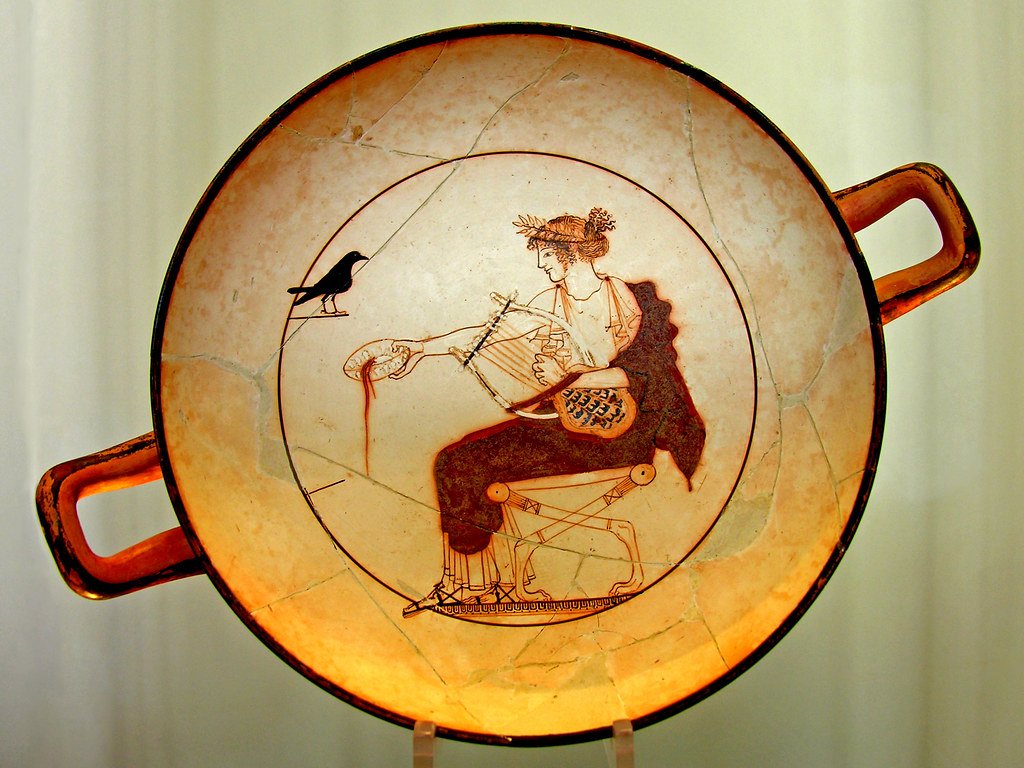
Apollo drinking cup
The ancient Romans punished women fro drinking.

This week’s wine news: Yes, wine marketing is terrible. Plus more bad news about wine sales and another insight into ancient wine

Pay more attention: Lulie Halstead, the founder of the Wine Intelligence consultancy and a long=time pal of the blog, doesn’t pull any punches: “From what I’ve seen in more than 20 years knee-deep in the world of wine marketing, many wine businesses simply don’t ‘do’ marketing very well.” Which, as regular readers know, is one of the WC’s perpetual lamentations. Halstead covers all the bases: Winespeak, too many choices, and too much confusion. Compounding that, she writes, is that producers don’t care enough about marketing and when they do, it’s mostly about price cutting: “But we as marketers don’t help ourselves. We really don’t.” Hopefully, someone other than a cranky ex-newspaper reporter will read the piece and take heed.

Even worse news: The latest wine sales data is so bad that even the group that compiles the numbers noticed: “negative growth” may be the new normal. The survey, which measures the amount of wine wholesalers sell, found that wine fell almost seven percent in volume between April 2022 and March 2023. It was especially bad for restaurants, where one of the gauges found that it was significantly cheaper to drink at home – so consumers were staying at home. The culprit for all this? The survey hedges a bit, but does mention higher prices. Shocking news, yes?

No drinking for women? The WC has long been fascinated with any and all news about ancient wine, and this one is particularly interesting: “During the earliest periods of Rome’s history and up until the Middle Republican period, it was a socially sanctioned custom for husbands to punish their wives for drinking. Many Ancient Roman sources speak of female drinking and adultery concurrently.” I wonder: Have the neo-Prohibitionists thought of doing this?

Federal government moves one step closer to ingredient labels for wine

wine ingredent label
A version of this coming by 2026?

First part of process could happen in next couple of weeks

We may be one step closer to ingredient labels on wine. I’ve been told that the Treasury’s Tax and Trade Bureau, which regulates alcohol, could publish an ”Advanced Notice of Proposed Rulemaking” for the labels in the next couple of weeks. That would be the first step in a three-year or so process that would require alcohol producers to include ingredient labels.

The advanced notice is the “pre-rule” phase for ingredients, in which the TTB will ask for comments and consider what’s said before it moves to a “Notice of Rulemaking” for ingredients and asks for comments for that. My sources tell me that the TTB will almost certainly publish a notice of rulemaking and ask for comments, probably sometime in the second half of next year.

The notice of rulemaking is the final stage before ingredient labeling. If and when it happens, it would probably be another 18 to 24 months before the actual rule is published – so we likely won’t see ingredient labels before 2026.

That’s about a year later than the first estimates; chalk it up to the excitement that has kept the Treasury Department and White House busy over the last six months.

It’s still little more than an educated guess abut what ingredient labels will look like or will have to include. One possibility: Only ingredients that are in the finished product and not those that disappear during the winemaking process. For example, we don’t know if individual grape names will be required or if “grape juice concentrate” will be sufficient for products like Mega Purple.

There does seem to be momentum for allowing producers to use QR codes that link to a winery website. That way, producers won’t have to change the ingredient label each vintage; rather, they can change it on the website, which is cheaper and more efficient.

I wrote an overview of the entire process for this trade site (allowing for the change in timeline).

Winebits 802: SVB, “champagne,” ancient grapes

Wall Street street sign
The SVB failure: “bloodsport in Santa Clara.”

This week’s wine news: Perspective on the SVB failure, plus more fake champagne and 1,300-year old wine

Circle K wine update: No luck in finding the convenience chain’s private label wine, as noted last week. The store near my house didn’t have any, and no word from the company’s media types about where I could buy it. But I will persevere.

SVB: Bill Meagher, writing for North Bay Biz, offers some perspective on the Silicon Valley Bank failure: “An old cop source of mine used to say, ‘You want to see how people are for real, grab them by the wallet.’ … in March eating your young became a bloodsport in Santa Clara.” His description of how Big Tech, which sucked at SVB’s teat to get started, tuned on the bank is eye opening. It’s also worth noting that “local wineries began getting calls from SVB rivals anxious to help the failed bank’s clients find a new home for their deposits and banking business” almost as soon as the bank’s woes became public.

No. not Champagne: The WC can’t get enough of the Champagne/champagne stories. The latest? French border police destroyed 35,000 bottles of a Haitian soft drink called “Couronne Fruit Champagne.” The BBC reports that the bottles were seized two years ago, and that a court last year ruled that they could be destroyed for violating EU laws for geographical designations. All together now: “Only sparkling wine from the Champagne region of French can be called Champagne.”

Ancient wine: Researchers may have found 1,300-year-old grape seeds in Israel that can shed light on the origins of a ‘mysterious’ Gaza wine and the history of grapevine cultivation in the desert. The seeds, or pips, were found at an ancient Byzantine monastery in the Negev desert and were likely from a white grape — potentially the earliest of its kind documented anywhere in the world. The archaeologists say it could be linked to the sweet white wine – the Gaza wine – that there are many references to in historical records but have never been found. The wine was shipped across the Byzantine Empire, as well as to Germany, France and Britain,where it is thought to have been enjoyed by the nobility — the 1 percent wine of its time.

Winebits 801: New York, Circle K wine, Villa Maria

women holding wine glass
“Do we really want to buy wine at a supermarket?”

This week’s wine news: Once more, the New York wine and supermarket puzzle. Plus, Circle K chain debuts its own wine and the legendary Villa Maria may close

New York and supermarket wine: New York doesn’t allow supermarkets to sell wine; that’s reserved for liquor stores (which can’t sell potato chips, but that’s another story). The state’s big grocers have been trying to change the law, left over from the repeal of Prohibition, for even longer than I’ve been writing about wine. Another bill has been introduced in the state legislature, and though the story in the link is reasonably optimistic about its chances, the Wine Curmudgeon would not bet on its passage. The package stores have powerful allies in the legislature, and have successfully fended off challenges not only from supermarkets but from big box wine retailers like Total Wine. I used to think the answer to this was easy – let supermarkets sell wine and be done with it. If it works in Texas, why not? But as consolidation has overwhelmed wine retailing, I’m beginning to wonder if it would only benefit the grocers and not consumers.

Circle K wine: Regular readers know that the WC keeps a close eye on the convenience store wine business, but even I was surprised to see this: Circle K is selling its first private-label wines in 3,000 U.S. stores. They include Sunshine Bliss (under $8) and Fine Wines ($10 to $25). The story doesn’t go into much detail about who makes the wine or where they’re from, but there’s a Circle K near WC world headquarters, so it’s worth a trip. I’ll report back if the store has the wines and what they taste like.

The end of Villa Maria? Villa Maria, one of the legendary names in New Zealand wine, may be close to the end, reports New Zealand’s Newsroom website. The company, which went through mysterious bankruptcy proceedings several years ago, may move many of its operations to the United Kingdom, and the story hints at layoffs and the sale of the winery. If so, it’s the end to a winery that helped make New Zealand a key part of the world wine business.