



Tag Archives: wine advice

The Wine Curmudgeon doesn’t hate expensive wine

wine curmudgeon expensive wine“So, Jeff,” the conversation begins, “Why don’t you like expensive wine?”

This isn’t the most common question I’ve been asked over the past eight years, but it’s common enough. These days, unfortunately, it’s not only more common, but there’s often an edge in the voice of the person asking it. As in, “So you’d rather drink crappy wine just to prove a point?”

Of course not. I love wine; why would I want to deprive myself of the pleasure it brings, regardless of price? How many times have I bored the cyber-ether with my odes to white Burgundy or Oregon pinot noir?

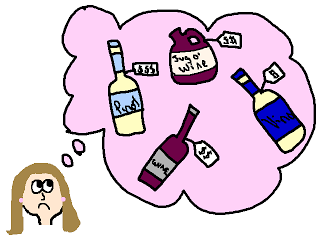
Because I don’t dislike expensive wine. I dislike poorly-made wine and overpriced wine, where profit is all that matters and quality is barely a consideration. I dislike dishonest wine from producers who use winemaking tricks or marketing sleight of hand to fool the consumer. I dislike pretentious wine, which we’re supposed to like because our betters tell us we should.

Cheap wine can be any of those things just as easily as expensive wine can, and I call out that kind of cheap wine all the time. Hasn’t anyone read my Cupcake reviews?

The difference, wine being wine, is that too many still assume that those qualities can’t possibly apply to the wine they bought for $24.99. After all, it came from a retailer who winked and nodded with them as if they were pals in on a big secret, and didn’t the wine get 93 points from this really smart guy who has the best palate in the world, and which we know because he tells us so?

So when I write something about their wine that they don’t like, as I am wont to do, they assume it’s because I don’t like expensive wine. Otherwise, they’d have to acknowledge that they’ve been suckered by a system as unwinnable as any three-card monte.

Allow me to quote my friend Dave McIntyre, who has said many nice things about me over the years: “Siegel doesn’t equate cheap with bad, like so many others do. He sniffs out inexpensive wines that are well made and provide exceptional value, and his passion is sharing them with the world.”

How can anyone object to that?

More about cheap wine:
? Can cheap wine do this?
? Cheap wine and wine that is made cheaply
? The backlash against cheap wine
? Wine I like



Do-it-yourself New Year’s wine resolutions for 2015

New Year's wine resolutionsWhat better post for the day after New Year’s than the Wine Curmudgeon’s second annual Do-it-yourself wine resolutions? Just click on the drop-down menus and select your wine resolutions for 2015. Those who get the blog via email or RSS may have to go the website to use the menus. The 2015 $10 Hall of Fame will post on Monday.

In 2015, I’m going to drink:

In 2015, wine scores will:

In 2015, I’m going to buy wine:

In 2015, the most important wine trend will be:

New Year’s resolution image from Mayor Gia, using a Creative Commons license

Winebits 360: New Year’s wine

New Year's wineNew Year’s wine advice and news from around the Internet, though not everyone is boycotting Champagne:

? Red wine, too: Dave McIntyre at the Washington Post offers bubbly to drink, as well as still wine. And Dave made one of the best wine videos I’ve ever seen — professional, informative, and to the point, with sparkling wine pointers. It’s amazing what you can do if the people making the video know what they’re doing. I’m jealous, too, given how much effort I’ve put into videos. It’s at the bottom of this post.

? Bring on the experts: The IntoWine website offers seven suggestions, including two cavas (neither of which I know), a cremant, and a Prosecco. Most are reasonably priced, and one expert calls out Champagne in a way that not even I’ve done, labeling the most popular brands “mass-produced grocery store Champagne.”

? Watching the budget: Laurie Daniel at the San Jose Mercury News has 12 wines for the New Year costing $30 or less, all from the United States. This is as good a rundown of California sparkling wine as you’re going to find, and Laurie (who I’ve judged with) knows her stuff. How else to feel confident enough to recommend the $14 Michelle Brut Rose from Washington’s Chateau Ste. Michelle?

Ask the WC 6: Box wine, wine closeouts, open wine

wine questionsBecause the customers always have wine questions, and the Wine Curmudgeon has answers in this irregular feature. Ask me a wine-related question by clicking here.

Wine Curmudgeon:
Are there any box wines that you would find acceptable for someone who can’t afford $15 or $20 for wine every night ? I have been buying several of the Almaden wines and find them quite good. Are they, or is it just my unsophisticated taste buds? Could I be getting a better taste for my buck?
Bottles aren’t necessary

Dear Bottles:
Box wine comes in varying degrees of quality, just like wine in bottles. Many are of higher quality than the Alamaden, though they won’t be as sweet. You can try Bota Box, Black Box, Bandit/Three Thieves, and Big House, for example. But realize you don’t have to spend $15 or $20 for a bottle; check out the $10 Hall of Fame or the $10 wine link at the top of the page.

?

Curmudgeonly one:
How do wineries get rid of excess inventory, if they make too much and have to sell it off? Can you find good deals on wine this way?
Looking for a bargain

Dear Looking:
It’s difficult to do thanks to our friend, three-tier. Can’t have a warehouse sale, since it’s illegal, and it’s rare to find a wine retailer that specializes in closeouts and discontinued items like Big Lots because the process is so difficult. Some retailers buy excess wine and discount it, but there isn’t much rhyme or reason to how they do it. You need to find a good retailer and ask them to let you know when they have that kind of sale. In fact, most excess wine sits in a distributor warehouse until it is sold, returned, or destroyed (which is what multi-national Treasury did in 2013).

?

Wine Curmudgeon:
How long will an open bottle of wine stay good? Is there anything I can do to make it last longer?
Can’t drink a bottle in one sitting

Dear Can’t drink:
The answer to this used to be simple — if you didn’t finish an open bottle within 24 hours, it oxidized and tasted like bad brandy. Hence, closures like the VacuVin. But improvements in winemaking have complicated the issue, and I’ve had wine, including cheap wine, that stayed drinkable for a couple of days after it had been opened. My suggestion? Put it in the refrigerator and hope for the best if it’s there longer than 36 hours.

More Ask the Wine Curmudgeon:
? Ask the WC 4: Green wine, screwcaps, mold
? Ask the WC 3: Availability, prices, headaches
? Ask the WC 2: Health, food pairings, weddings

studio microphone

Wine Curmudgeon on Winemaker’s Academy podcast

winemaker's academyIn which Winemaker Academy’s Matt Williams interviews me about how to make better wine, and the discussion is not technical at all. Because that’s not what I do.

Rather, I offer perspective from the consumer side. This is crucial, I think, because winemakers, faced with the difficulties inherent in winemaking, sometimes don’t have time or the the motivation to understand there is another perspective. If they like oak, the wine gets oak. even if the wine doesn’t need it. If they like Bordeaux-style wines, they make Bordeaux-style wines, even if the grapes aren’t suited for it. The term for this is tasting room palate, and it’s to be avoided at all costs.

My thanks to Matt for letting me share this with his winemaking community, because I don’t think it’s something they hear very often.

Four wine myths that confuse consumers

four wine mythsThe genesis for this post came from the Lifehacker website, which occasionally does wine items that make me want to throw something at the computer screen. The various authors mean well, but usually just recycle urban legends and wine myths that have little to do with wine in the 21st century.

The most recent was an item that claimed you could determine wine quality from the quality of the label. Just rub it, and if the label has raised lettering or if it feels like more expensive paper, then the wine is safe to buy. Otherwise, the wine is more than likely swill. There is some truth to this, in that producers sometimes put more expensive labels on cheap wine to entice the consumer. I have a label here, from a $10 wine from a multi-million case producer, that has raised lettering. The wine? No better or no worse than most $10 grocery store wine.

But to say that label quality has anything to do with wine quality is foolish (and Lifehacker was called on it by more than one commentator, including me). What determines wine quality? What’s in the bottle — and not what’s on the bottle, how the bottle is made or how it’s closed, or even if it is a bottle. The key to quality is finding producers who understand that and who spend their money on the wine and not marketing the wine. And you can’t find those producers by rubbing labels; you have to drink wine.

Keeping that in mind, here are three more myths about wine quality that come up all too often:

• Screwcaps: I still hear, almost 20 years after screwcaps became common, that they’re a sign of inferior wine. If that’s true, then I guess the only good wine in the world still comes from France. Because the screwcap myth is that outdated.

• Punt: That’s the hollow space on the bottom of the wine bottle, and it’s supposed to be a sign of wine quality. Two-buck Chuck (and most $3 wine, in fact) doesn’t have a punt. But most producers still use punts not because it makes their wine better, but because it’s easier — given how the bottle manufacturing process works — than switching to punt-less bottles.

• Legs: Those are the lines that form on the side of the glass, and are caused by the alcohol and sugar content of the wine. More alcohol means more legs, but doesn’t mean better wine. This myth probably dates to the mid-20th century (or even earlier), when most great wine did come from France. In those days, the exceptional vintages, which were usually warmer, yielded riper grapes that produced higher alcohol wines. Hence, equating legs with better wine.

For more on wine myths:
• Five wine facts that aren’t necessarily wine facts
• Can cheap wine do this?
• Cheap wine and wine that is made cheaply

The difference between cheap wine and wine that is made cheaply

cheap wine
Quality? Who cares about quality?

It’s not enough to advocate cheap wine; consumers need to know how to tell the difference between cheap wine and wine that is made cheaply. The Wine Curmudgeon was reminded of this yet again when I struggled through the 2014 five-day, $3 wine challenge, where the producers cared more about price than they did about quality.

The knock against cheap wine used to be that it couldn’t be made well. That hasn’t been true for at least two decades, but the argument has remained the same. Much of the blame for this rests with producers, who have been content to use improvements in winemaking and grape growing to make palatable wine, but not much more.

Call it, as one retailer told me, the wine equivalent of fast food. It fills the hole, and that’s all the consumer thinks it’s supposed to do. Ironically, this means value isn’t as important as it should be. Two Jack in the Box tacos for 99 cents are both cheap and a value, but why would you eat them unless it’s 2 a.m. and you’ve been drinking all night?

Wine should be more than that. Otherwise, we might as well drink light beer — same buzz, fewer calories, and just as cheap. Hence, how to tell the difference between cheap wine and wine that is made cheaply:

• Is the wine varietally correct? Does the cabernet sauvignon taste like cabernet sauvignon, the merlot like merlot, and so forth? Or have all the varietal differences been taken out, in favor of making a smooth wine?

• Is it interesting? Most boring cheap wine tastes the same. The reds have lots of sweet fruit, some fake oak, and a minimum of tannins and acidity — another way to get to smooth. Chardonnay made this way tastes of vanilla and apple sauce, riesling is sweet and nothing more, and pinot grigio has a dollop of sweet white fruit and a vaguely turpentine flavor. An interesting wine is the opposite: You’re eager for the second sip, and you taste things that you make you smile.

• Does the label seem like it got more attention from the producer than the wine? After you’ve tasted the wine, does the it taste as cute or clever or hip as the label implied it would taste? Or is it just ordinary grocery store merlot?

? Do you want to buy it again? Not, “I’ll buy it again because it’s cheap and tasted OK,” but “Wow, that was really good. I want to share this with all my friends.” This is not an easy concept for most wine drinkers, who are so happy to find a wine that doesn’t offend them that they convince themselves that the wine is better than it is.

• Did the winemaker make an effort, or just go through the motions? And no, you don’t have to be a wine geek to figure this out. Crappy writing is crappy writing, and you don’t need a PhD in English to see the difference. Shoddy clothing is shoddy clothing, and you don’t need Vera Wang to tell you why. All you need to do is to pay attention to what you’re drinking, something else we’re afraid to do because it’s wine, and we’ve been told we don’t know enough to have an opinion.

More about cheap wine:
• Can cheap wine do this?
• Cheap wine can be intimidating
• When cheap wine tastes cheap

Image courtesy of The Wandering Palate, using a Creative Commons license